
Biting Flies and Midges in Dogs: A Comprehensive Guide to Protection
Content
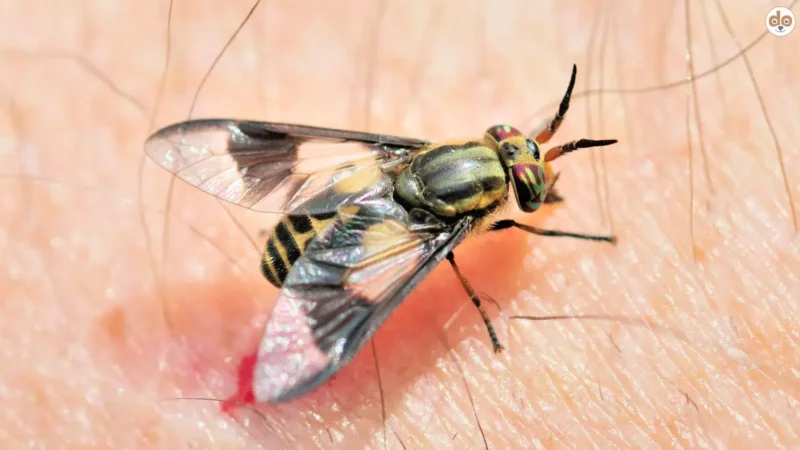
If you enjoy walking your dog by lakes, rivers or through damp forests, you may know the problem: The dog comes home, scratches itself, shakes its head, and small red patches appear on the ears or belly. Blackflies (Simuliidae) and biting midges (Culicoides) are tiny – between 1.5 and 5 mm – and yet they can thoroughly ruin a dog’s summer. Not because they bite like mosquitoes, but because they literally tear the skin to get to the blood. This is painful, causes irritation, and in sensitive animals it can lead to serious allergic reactions.
What exactly are blackflies and biting midges?
Short answer: very small, blood-sucking pests. Long answer: Simuliidae and Culicoides belong to the most annoying insects in damp, wooded regions – and they are hardly visible before they bite. Unlike mosquitoes, they do not have a proboscis, but small, cutting mouthparts.
- Size: 1.5 to 5 mm – barely visible to the naked eye until you feel the bites.
- Habitat: Lakes, ponds, rivers, but also damp gardens and parks – everywhere where water stands or flows.
- Activity: Especially in the early morning hours and in the evening. Anyone outside with their dog at these times is most likely to encounter them.
What blackflies and biting midges can do to a dog
The bites are unpleasant – that is the mild version. Depending on the dog and frequency, it may stay at that, or it may become more serious.
Painful bites
Because blackflies tear the skin rather than pierce it, small wounds form that react immediately. Ears, nose and belly are particularly affected – thinner skin, less fur. The dog scratches, bites at the spot, and the skin swells. With multiple bites, this adds up quickly.
Allergic reactions
Some dogs react more sensitively than others. Itching, redness, swelling – many owners know this. In dogs with already sensitive skin, however, rashes or eczema can also occur. Anyone who knows their dog tends to overreact should take precautions rather than wait and see.
Disease transmission
In rare cases, blackflies and biting midges can transmit parasitic or bacterial infections. In dogs, the risk is significantly lower than in horses or cattle – but it exists in principle, especially in regions with high insect density.
How you can protect your dog from blackflies and biting midges
Insect repellents for dogs
The most effective agent known to research so far is permethrin. A study in the Journal of Veterinary Parasitology (2014) showed that permethrin can reduce the number of blackfly bites on dogs by up to 90% – provided it is applied regularly, as the effect wanes.
- Permethrin-based products: Very effective, protect for several hours. Safe for dogs when dosed correctly – dangerous for cats, however, which is important to know.
- Pyrethroid-based products: Derived from chrysanthemum flowers, effective against flies and mosquitoes, somewhat milder than synthetic permethrin.
- DEET-containing agents: Keep your hands off. Toxic for dogs, even if the agent works on humans.
Protective clothing for dogs
If you do not want to – or cannot, because the dog reacts allergically – apply chemicals to your dog’s coat, you can rely on physical protection. Lightweight breathable fabric keeps insects away without any active ingredient.
- Fly sheets for dogs: Cover the body, well suited for walks near forests or by water bodies. In summer, the fabric should really be lightweight, otherwise the dog suffers more from the heat than from the midges.
- Fly masks for dogs: Protect head, ears and eyes – exactly the spots blackflies prefer.
Advantage: For dogs with allergies or sensitive skin, an effective, completely chemical-free alternative – even if the dog struggles with the outfit for the first few minutes.
Natural repellents
If you rely on essential oils, you should have realistic expectations. They work – but shorter and weaker than chemical agents. A study in the Journal of Ethnopharmacology (2016) examined various essential oils against blackflies: lemongrass and lavender oil had a deterrent effect, but lasted significantly shorter than permethrin preparations.
- Essential oils: Lavender, lemongrass, tea tree oil and eucalyptus oil have a deterrent effect on insects. Always apply diluted – pure they can irritate the skin.
- Coconut oil: Slightly repelling, simultaneously cares for the coat. No miracle cure, but a pleasant addition.
- Garlic as a feed additive: Some animal owners swear by it – the study situation does not support this. And in larger quantities, garlic is poisonous for dogs. This is not an agent you should try out lightly.
Making the environment slightly less insect-rich
A few simple adjustments help prevent infestation – without great effort.
- Avoid damp areas at peak times: Blackflies and biting midges prefer wetlands, and they are most active in the morning and evening. Skip lakes, rivers and swampy meadows precisely when the animals are on the move.
- Clean, dry sleeping places: Standing water nearby attracts insects. Keeping the dog’s lying place clean and dry is no black magic, but helps noticeably.
- Fans: No-see-ums are poor fliers. A fan near the sleeping area – indoors as well as outdoors – keeps them away quite reliably. This is one of the simplest tricks of all.
If the dog has already been bitten
Sometimes you arrive too late. Then it is about relieving the itching and containing inflammation.
- Cool compresses: Simple, quick, effective – relieve swelling and itching immediately.
- Antihistamines: In the case of severe allergic reactions, the vet can prescribe antihistamines or anti-inflammatory agents. Do not dose on your own initiative.
- Ointments against itching: Creams formulated specifically for dogs reduce itching and support the healing of small wounds.
What really helps – summarised briefly
Permethrin sprays are the product with the strongest research basis – up to 90% fewer bites according to research from 2014. Protective clothing is the best chemical-free alternative, especially for dogs with sensitive skin. Essential oils such as lemongrass or lavender have a short-term deterrent effect but need to be renewed more frequently. Avoiding damp areas in the morning and evening hours and keeping the sleeping area dry further reduces the risk. And if a bite does occur: apply a cool compress, go to the vet for a strong reaction. The most reliable approach is a combination of several of these measures – none of them provides complete protection on its own.