
Wirehair
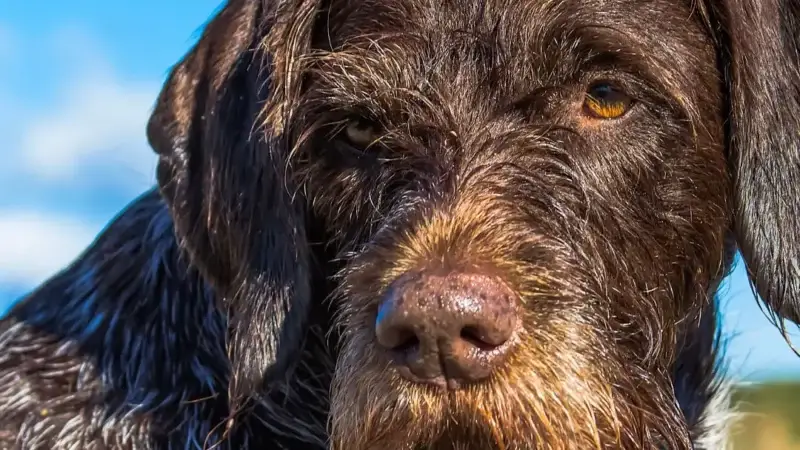
Wire hair is a coat type with hard, wiry individual hairs and dense undercoat, originally bred in hunting and working dogs.
Content
Wirehair is a coat type with hard, wiry individual hairs and a dense undercoat, originally bred in hunting and working dogs.
Why do some dogs have wiry coats?
The wiry coat developed through selective breeding for dogs that had to work in rough terrain. The hard guard hairs form a natural protective layer against thorns, branches, and moisture. Unlike soft fur, water beads off wirehair rather than being absorbed.
The undercoat insulates against cold, while the wiry guard hairs prevent dirt from reaching the skin. This combination made wirehaired dogs ideal companions for hunters and farmers.
Which dog breeds have wirehair?
The German Wirehaired Pointer embodies this coat type in its purest form. Its coat is so dense that it can enter water even at sub-zero temperatures. Fox Terriers use their wiry coats to push through thorny undergrowth without risking injury.
Schnauzers of all sizes also have wirehair, recognisable by their characteristic “beards” and “eyebrows”. Border Terriers possess a dense wiry coat that lies close to the body, while Irish Terriers and Griffon Korthals round out the group of classic wirehair breeds.
How do I recognise genuine wirehair?
Genuine wirehair feels hard and springy, almost like a wire brush. If you stroke against the grain with your hand, you feel distinct resistance. In warm weather, you can observe water droplets beading off the coat rather than soaking in.
Wirehair shines less than smooth fur and often has a slightly dull appearance. This is normal and indicates that the hair structure is intact.
How do I care for wirehair correctly?
Wirehair requires a specific technique: stripping or “hand-stripping”. Here, you pluck out loose, dead hairs by hand, usually every 8–12 weeks. A professional dog groomer charges between €60 and €120 for this, depending on the dog and region.
Clipping is taboo for genuine wirehair. The clipper cuts off the hard guard hairs, leaving only the soft undercoat standing. As a result, the coat loses its protective function and becomes soft like cotton wool.
Between stripping sessions, you brush two to three times a week with a stripping brush. After walks in the woods, check the coat for burrs and small twigs that tend to get caught in the dense wirehair.
Do wirehaired dogs shed less?
Wirehaired dogs do indeed shed fewer hairs indoors, but only with proper care. The dead hairs remain stuck in the coat until you remove them by stripping. Without regular stripping, the coat mats and the dog sheds anyway.
You hardly notice anything during the moulting period in well-cared-for wire-haired dogs. This makes them pleasant housemates for people who want to have few dog hairs on their clothes.
More from the Wiki
All wiki entries →Plum
The plum is a stone fruit of the genus Prunus. Its stone contains cyanogenic glycosides; the …
Rhubarb
Rhubarb is a knotweed whose leaves are rich in soluble oxalic acid. For dogs, the leaves …
Why is dog faeces white?
White dog faeces occurs when normal digestion is disrupted or certain substances change the colour of …
Dog licks its anus, what to do?
Anal licking in dogs is a normal grooming behaviour that serves for cleaning and emptying the …