
01Summary
In a paragraph
If you only have 30 seconds.
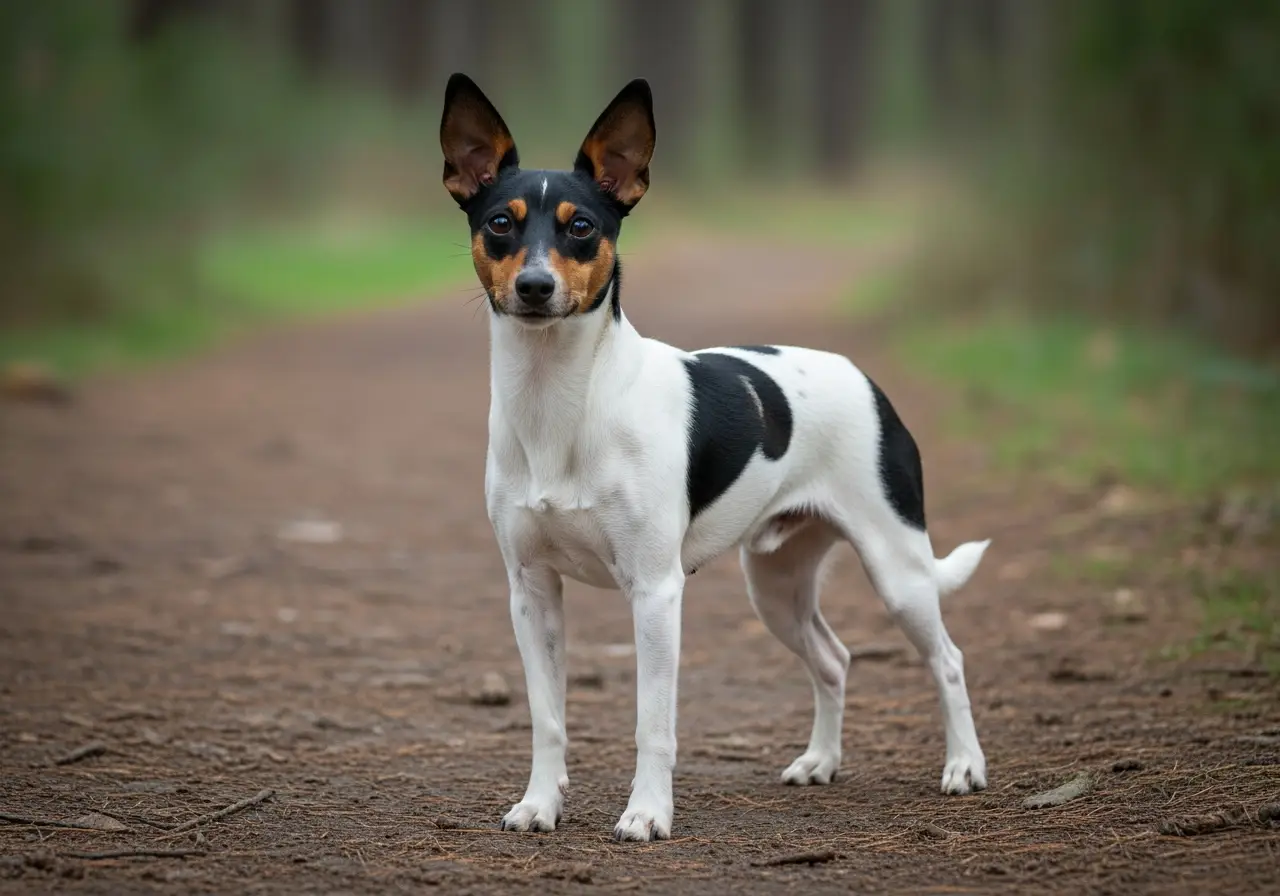
The Ratonero Valenciano is a compact Spanish terrier type that has been selected over centuries for pest control in stables and on farms. Its prey drive is not a residual instinct, but its core programming. Anyone bringing this dog into their daily life needs clear leadership, sufficient exercise, and realistic expectations of a dog that thinks independently and reacts quickly.
02Introduction
What makes the Ratonero Valenciano special
Ratonero Valenciano: small Spanish rat hunter from Valencia, quick and alert, and very rare outside Spain
03Profile
Key facts and suitability
- Origin
- Spanien
- Original purpose
- Rat hunting
- FCI
- No. 370 · Group 3 · Section 1
- height at the withers
- 30–40 cm
- Weight
- 5–8 kg
- Life expectancy
- 14–16 Years
- Coat type
- Short-haired
- Minimum exercise
- 60 min/day
- Puppy price
- 600–1'200 CHF
- Waiting period
- 2 months
- Sports
- Agility
04Temperament
How the Ratonero Valenciano shows up in everyday life
During the morning walk, the core programme of the Ratonero Valenciano becomes apparent immediately: The nose works, the eyes scan ground level, and every movement in the bushes triggers immediate attention. The dog does not walk relaxed beside the owner; it works. This behaviour is not a training problem, but the result of generations of targeted selection for prey hunting.
Internally, the Ratonero Valenciano requires daily mental and physical stimulation at a high level. A walk without nose work or search tasks is not sufficient. The dog demands active enrichment; if the owner does not provide this, it will show restlessness, barking, or self-initiated activity. Its need for social contact is high: the dog forms an intense bond with its primary caregiver and requires their presence and interaction.
Externally, the Ratonero Valenciano behaves watchfully and initially reservedly towards strangers. It is not a dog that immediately greets every visitor. This reserve is not a sign of fear, but rather typical terrier caution. With sufficient socialisation, it remains controlled without becoming overly reactive. Towards other dogs, it shows the assertiveness typical of terriers, particularly towards animals of the same sex or those that encroach on its space.
At home, it is attentive and present. It accepts rest periods if the stimulation is appropriate. Those who give it structured tasks (nose work, search games, controlled off-leash runs in secure areas) will have a focused, eager-to-learn dog. Those who underestimate these needs will experience a dog that seeks out its own enrichment.
05Needs
What this breed needs daily
The Ratonero Valenciano requires 60 to 90 minutes of active exercise daily. It is not just the duration that counts, but the quality: sniffing walks, search tasks and controlled off-leash runs in secure areas meet its needs significantly better than simply covering distance on a lead.
Mental stimulation is equal to physical exercise. Nose work, fetch exercises, simple trick training sessions or structured search games keep its mind occupied. Without this component, the dog shows restlessness, excessive barking or destructive behaviour, not out of malice, but due to unmet needs.
Being left alone must be built up gradually. The dog tolerates absences of up to about four hours if the habituation has been consistent. Longer absences without preparation lead to stress reactions. A regulated daily rhythm with reliable activity times supports stability.
The pronounced prey drive requires a securely fenced area for off-leash runs. Fences under 1.20 metres in height are not a reliable barrier. On a lead, the dog needs an owner who recognises distracting stimuli early and leads consistently.
Training should be clear, varied and consistent. The Ratonero Valenciano learns quickly but immediately questions inconsistent signals. A dog training school with experience in terrier breeds is particularly useful in the initial phase.
Exercise
High
mental work
A lot
Social needs
High
training
Medium
06Sport & Mental and Physical Stimulation
What sports the Ratonero Valenciano is suited for
Realistic in terms of physiology and genetics – not every breed suits every sport.
Structurally and physiologically suitable: Suitable for mantrailing, dummy work and tracking.
07Quick Check
08Suitability
Who this breed is suitable for – and who it isn't
✓Matches
The Ratonero Valenciano suits active individuals or couples who dedicate at least 90 minutes daily to exercise and structured enrichment. Those who enjoy nose work, trick training or agility will find an eager-to-learn partner.
Families with children from about eight years old, who are trained in handling dogs and respect the dog as an independent animal, are also suitable, provided that daily life offers sufficient structure and retreat options for the dog.
Owners with experience in handling independent or high-drive breeds are clearly at an advantage. Those who have already worked with terriers or other hunting-oriented dogs know the dynamics and understand how to lead consistently and calmly.
A secure property or regular access to fenced off-leash areas is not optional, but a prerequisite. Keeping the dog in an apartment is possible if daily stimulation is reliably ensured.
As the breed is extremely rare outside Spain, the owner also needs to be willing to engage intensively with reputable sources, accept long waiting times and possibly organise an import from Spain.
×Doesn't match
The Ratonero Valenciano does not suit owners looking for a calm, passive companion dog. Those who see the dog primarily as a lap dog or quiet apartment companion fundamentally underestimate its drive profile.
Households keeping small animals such as rabbits, guinea pigs or hamsters are unsuitable. The prey drive towards rodents is genetically anchored and cannot be reliably neutralised through training.
People who are away from home for more than four hours daily and cannot organise reliable care will overwhelm the dog regarding its need for social contact and stimulation requirements.
Those who expect a friendly, open-to-strangers dog because it appears small and compact will be surprised by the typical terrier reserve towards strangers. Small size does not automatically mean uncomplicated social behaviour.
First-time owners without experience in handling independent dogs should only consider the Ratonero Valenciano if they use professional training support from the start and are prepared to invest considerable time in training and socialisation.
10Line reality
Show line, working line, breeder market
The Ratonero Valenciano is not bred in clearly separated working and show lines, as is the case with FCI-recognised breeds with a long exhibition tradition. Since the breed is under Spanish association control exclusively and is hardly widespread internationally, there is no differentiated line system in the classical sense.
Within Spain, however, differences can still be observed between breeders who select more for workability and drive strength, and those who primarily breed for exterior and show suitability. These differences are difficult to verify for buyers outside Spain, as breeding records and evaluation protocols are not accessible via international association databases.
For interested parties in the German-speaking area, this means: Direct communication with the breeder about breeding goals, work tests and health screenings is essential. Anyone looking for a dog with a moderate drive profile should explicitly ask about lines that are not primarily selected for maximum hunting performance. Those looking for a strong-drive, willing-to-work dog will find it more likely with breeders focusing on functionality.
11Health · Reality
What you need to plan for medically with your Ratonero Valenciano
The Ratonero Valenciano is considered a robust breed with a life expectancy of approximately 12 to 15 years. Reliable epidemiological studies specifically on this breed hardly exist due to the small population size outside Spain. The following information is based on breed-typical patterns of comparable small terrier breeds and general veterinary knowledge.
Patellar luxation is a common orthopaedic condition in small dog breeds. According to a study by the University of Veterinary Medicine Hannover (2020), up to 7% of all small dog breeds under 10 kg are affected. An examination of the kneecaps before purchase and regular check-ups at the vet are recommended.
Dental problems occur disproportionately frequently in small dogs. Crowded teeth, tartar buildup, and periodontitis are common findings. Regular dental care from puppyhood and annual dental check-ups at the vet significantly reduce the risk.
Overweight is an underestimated risk in small, active breeds if mental and physical stimulation is insufficient or the amount of food is not adjusted. Overweight puts strain on joints and demonstrably shortens life expectancy.
Since no FCI breeding approval conditions with mandatory health examinations exist, the responsibility for health screening lies entirely with the breeder. Buyers should request proof of patella assessment and dental status of the parent dogs.
12Structured data
Health by the numbers
Prone to diseases
Dental problems
Recommended health tests
Dental check
13Myths ↔ Reality
What is often said incorrectly about this breed
Five myths, five realities, five sources.
Small dogs do not have a significant prey drive and do not run away.
The Ratonero Valenciano was selected over generations for independent prey hunting. Its prey drive is deeply rooted genetically and cannot be switched off through training. Without secure terrain or consistent leash management, there is a considerable risk of escape and accidents. Small body size says nothing about the intensity of the drive.
The Ratonero Valenciano is an uncomplicated beginner's dog because of its size.
The breed shows pronounced independence and typical terrier stubbornness. Inconsistent handling is quickly exploited by these dogs. Without clear structures and continuous training work, behaviours such as excessive barking, prey drive outbursts or resource guarding develop. Body size does not reduce the effort required for guidance.
Anyone who imports a Ratonero Valenciano from Spain automatically receives a healthy dog with complete breeding documentation.
Since the breed is not FCI-recognised, breeding and health screening are subject exclusively to Spanish association rules. The verifiability of health certificates, pedigrees and breeding facility conditions is significantly restricted for buyers in the German-speaking area. An independent veterinary examination before purchase is strongly recommended.
A Ratonero Valenciano can easily live together with small animals such as rabbits or guinea pigs.
The breed was bred for detecting and killing small rodents. The prey drive towards small animals is strongly pronounced and cannot be reliably suppressed by habituation alone. Keeping small animals together requires consistent spatial separation and carries a permanent risk.
14animal welfare
The animal welfare perspective
Breeder market, designer versions, animal shelter reality — what no one writes in the puppy ad.
Outside Spain, the Ratonero Valenciano is one of the rarest dog breeds in existence. It practically does not appear in German, Austrian or Swiss animal shelters. This rarity protects the breed from the excesses of the mass market on the one hand, but creates specific risks on the other.
The low awareness and high demand among enthusiasts of Spanish terrier breeds attract unscrupulous providers. Anyone who comes across cheap puppies from Spain on the internet that are available without a waiting period and with minimal paperwork should exercise extreme caution. Breeding operations that respond to demand without being able to name breeding goals, health screenings or socialisation concepts are a clear warning sign.
Since the breed is not FCI-recognised, there is no binding international framework for breeding approval conditions. This does not mean that all Spanish breeders work unscrupulously, but verifiability for buyers in the DACH region is limited. Anyone buying a Ratonero Valenciano needs to be willing to communicate directly with the breeder, obtain references and, in case of doubt, insist on an independent veterinary assessment.
Designer versions or crosses under the name Ratonero Valenciano exist sporadically on the market. Anyone looking for a purebred dog should have pedigrees and breeding book entries checked with the Spanish association RSCE.
In Switzerland, rehoming via animal welfare organisations is a theoretically equivalent option for this breed, but practically hardly feasible, as dogs of this breed do not occur in DACH animal shelters. Spanish animal welfare organisations occasionally rehome terrier mixes that resemble the Ratonero Valenciano. Anyone open to a dog with a comparable profile may find an alternative there.
15Costs · Transparency
What this breed realistically costs
The purchase price for a Ratonero Valenciano from reputable Spanish breeding is typically between 800 and 1,500 euros. In addition, there are import costs for buyers in the German-speaking region: transport costs, EU pet passport, rabies vaccination and, if necessary, quarantine costs add up to an additional 200 to 500 euros.
The annual keeping costs for small active breeds are typically between 1,200 and 2,000 euros. This includes food (approx. 300–500 euros/year), basic equipment and care (approx. 150–300 euros/year) as well as routine vet consultations including vaccinations and parasite prevention (approx. 300–500 euros/year).
Pet insurance for small dogs costs between 30 and 80 euros per month depending on the provider and scope of cover. Given possible orthopaedic interventions for patellar luxation, with surgery costs ranging from 800 to 2,500 euros per joint depending on severity, insurance is recommended.
Dog training school and training in the initial phase are not an optional expense for this breed. Group training costs between 15 and 30 euros per session depending on the region. Individual training ranges from 60 to 120 euros per hour.
16Puppy search
What you need to consider when choosing a breeder
- As the Ratonero Valenciano is hardly established outside Spain, the search for a puppy usually begins with direct contact with Spanish breeders or the breed club under the RSCE.
- Long waiting times of a year or more are not exceptional.
- A reputable breeder states specific breeding goals, provides health certificates for the parent animals and allows a visit to the breeding facility before purchase.
- Puppies offered without personal contact, without the possibility of inspection or at unusually low prices are a clear warning sign.
- Clear regulations apply for importing from Spain into the EU: microchip, EU pet passport, rabies vaccination and a minimum age of 15 weeks upon entry are mandatory.
- Compliance with these requirements must be checked before purchase.
- In Switzerland, rehoming via animal welfare organisations is practically impossible for this specific breed.
- Anyone looking for a dog with a similar profile can contact Spanish animal welfare organisations, which occasionally rehome terrier mixes.
- This option is equivalent to a purchase decision and should be actively considered.
FAQ
Frequently asked questions about the Ratonero Valenciano
Is Ratonero Valenciano suitable for beginners?
Ratonero Valenciano is considered suitable for first-time dog owners.
Is Ratonero Valenciano a family dog?
Ratonero Valenciano is considered suitable for families with good socialisation and species-appropriate care.
How much exercise does Ratonero Valenciano need?
At least around 60 minutes of exercise per day. As an active breed, more so — plus mental stimulation.
Does Ratonero Valenciano suit an apartment?
With enough exercise and enrichment, Ratonero Valenciano can also be kept in an apartment.
What is the size and weight of Ratonero Valenciano?
Fully grown, Ratonero Valenciano reaches about 30–40 cm at the withers and weighs around 5–8 kg.
What is the life expectancy of Ratonero Valenciano?
The life expectancy of Ratonero Valenciano is approximately 14–16 years.
Which diseases are common in Ratonero Valenciano?
Dental problems
17Breed clubs
Official breed clubs in DACH
19Related
Similar breeds – and their differences
You might also be interested in



Participate
Do you have a good photo of your Ratonero Valenciano?
We are looking for expressive images for our breed profiles. Submit yours; the editorial team reviews every submission before publication.
Does this breed suit you?
Rare Valencian small dog – hardly available in Switzerland