
01Summary
In a paragraph
If you only have 30 seconds.
The German Hunting Terrier is not a companion dog with hunting ambitions; it is a working animal that has been consistently selected for performance underground. Its need for mental work and its exercise needs are both at the highest level. Anyone who keeps this dog without hunting or equivalent stimulation will face massive behavioural problems within weeks. The breed demands experience, consistency, and a real task, every day.
02Introduction
What makes the German Hunting Terrier special
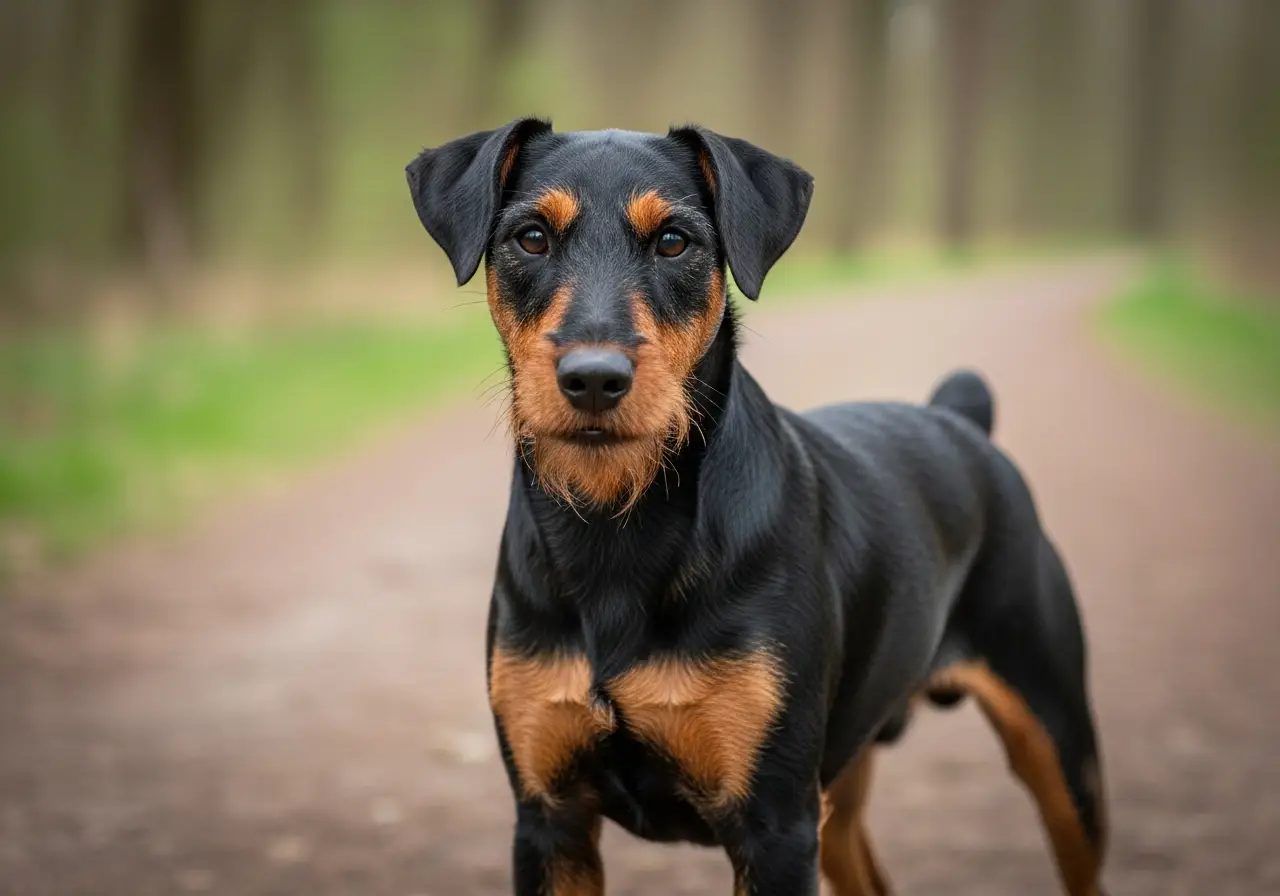
The German Hunting Terrier is a tough German hunting terrier, FCI Group 3, specifically bred for underground hunting, withers height 33–40 cm.
03Profile
Key facts and suitability
- Origin
- Deutschland
- Original purpose
- Underground hunting, tracking dog, versatile hunting terrier
- FCI
- No. 103 · Group 3 · Sektion 1: Hochläufige Terrier. Mit Arbeitsprüfung.
- height at the withers
- 33–40 cm
- Weight
- 7–10 kg
- Life expectancy
- 10–15 Years
- Coat type
- Wire-haired
- Minimum exercise
- 90 min/day
- Puppy price
- 800–1'500 CHF
- Waiting period
- 9 months
- Sports
- Hunting · Underground work · Scent work
04Temperament
How the German Hunting Terrier shows up in everyday life
The morning run shows what distinguishes the German Hunting Terrier from other terriers: it does not run beside you, it works. Every ground ripple, every scent, every mouse hole by the roadside activates its nose work. If you let it off lead, it is out of sight in seconds. This is not an obedience problem, this is its profile.
Internally, this dog needs intensive mental stimulation daily (mental workload requirement: highest level) and at least two hours of physical activity. Nose work, scent trails, earth search work, or hunting use are not extras; they are basic provision. A walk in the park is not enough.
Externally, it reacts reservedly to cautiously towards strangers. It does not build spontaneous bonds with visitors. This does not mean aggression, but also no warmth. Anyone who hosts guests and expects a dog that greets them joyfully will experience disillusionment with the German Hunting Terrier. These two poles (high need for social contact with the primary caregiver, low openness towards strangers) must not be confused.
In everyday life with the primary caregiver, it shows attachment through cooperation: it follows when it has a task. It observes when it is waiting. It demands attention when under-stimulated, by scratching, barking, destroying. It accepts rest phases if it has really worked before. Without stimulation, there is no true rest.
Caution is advised with children: its temperament and drive strength make it suitable for households with toddlers only under very experienced guidance. It is not a patient playmate; it is a working dog that needs clear structures.
05Needs
What this breed needs daily
The German Hunting Terrier requires at least 120 minutes of active exercise daily, and this does not mean a leisurely stroll. Accompanying you while jogging or cycling, field work, swimming, and retrieving exercises in challenging terrain only partially meet its exercise needs.
Mental stimulation is at least as important. Its need for mental work is at the highest level. Scent work, mantrailing, earth dog trials, or regular hunting use are the formats for which it was genetically designed. Structured nose work (daily, not occasional) is mandatory, not optional.
It tolerates being left alone for up to about four hours if sufficiently stimulated. An under-stimulated hunting terrier left alone in an apartment is a guarantee of damage and stress-related behaviour. The order is crucial: work first, then rest.
A secure outdoor area is not a matter of comfort; it is a safety issue. Its pronounced prey drive makes off-leash exercise in unsecured areas permanently risky. A sturdy fence setup with sufficient height and dig protection is essential equipment.
Socially, it needs a clear, consistent primary caregiver with experience handling high-drive dogs. It will immediately exploit any inconsistency in leadership, not out of malice, but because it makes its own decisions when no one else takes charge. Attending a dog training school with experience in working dogs is strongly recommended during the rearing phase.
Exercise
Very high
mental work
A lot
Social needs
Medium
training
Experts
06Sport & Mental and Physical Stimulation
What sports the German Hunting Terrier is suited for
Realistic in terms of physiology and genetics – not every breed suits every sport.
Structurally and physiologically suitable: Suitable for mantrailing, dummy work and tracking · CaniCross / bikejoring possible.
07Quick Check
08Suitability
Who this breed is suitable for – and who it isn't
✓Matches
The German Hunting Terrier suits active individuals or couples with a hunting background or comparable experience with high-drive working dogs. Anyone who dedicates at least two hours daily to exercise and nose work, owns a secure outdoor area, and knows consistent leadership from personal experience will find an exceptionally capable partner in this breed.
Suitable owners are those who provide the dog with a real task: hunting operations, scent work, mantrailing, or earth dog trials on a regular basis. A rural environment with access to terrain is a clear advantage. The dog needs structures it experiences daily, not just at weekends.
Experienced dog sportspeople who are familiar with working dogs and bring a clear training concept can also keep this breed, provided they accept the prey drive as a permanent management issue rather than a problem that resolves itself over time.
Households with older children (from 12 years) who are themselves experienced in handling dogs may be suitable, if the adults take full responsibility for leadership and the dog is stimulated daily. The dog is not a child’s playmate; it is a working animal that requires respect and clear boundaries.
×Doesn't match
The German Hunting Terrier does not suit first-time dog owners, without exception. Anyone who has not yet gained experience with high-drive, independently thinking dogs will be permanently overwhelmed by this dog, regardless of motivation and willingness to commit.
The breed is not suitable for households where the dog is left alone for more than four hours daily, or for owners who do not have access to secured terrain and structured nose work. Anyone who believes the prey drive can be compensated for by city life and dog parks underestimates the genetic depth of this selection.
Families with small children under eight years should not choose this breed. Its temperament and drive strength are difficult to reconcile with the unpredictable behaviour of small children, even with the best training.
Anyone looking for an amiable, stranger-friendly dog that warmly greets visitors is mistaken about this breed. The low openness towards strangers is not a training deficit; it is breed character. Anyone trying to solve this point with “lots of socialisation” confuses external reaction with internal need. Multi-cat households or households with small animals are also unsuitable: the pronounced prey drive makes permanently safe cohabitation with small animals nearly impossible.
10Line reality
Show line, working line, breeder market
The German Hunting Terrier knows no split into show and working lines; this is a significant difference to many other hunting dog breeds. Breeding has been exclusively performance-oriented since the breed's origin. The FCI standard requires a working test; dogs without proof of performance are not used for reproduction in reputable breeding programmes.
This means in practice: A puppy from club breeding will with high probability carry the full working profile of the breed, including high prey drive, pronounced prey motivation, courage, and hardness. There is no "calmer family line" for interested parties to fall back on.
Regional differences in breeding orientation are minimal. Both the German Hunting Terrier Club (Deutscher Jagdterrier-Club e. V.) and the Swiss Club for German Hunting Terriers (SCDJT) orient themselves towards the same performance standard. Anyone who buys a German Hunting Terrier receives, regardless of country of origin, a dog with the same genetic basic profile. This is both strength and burden: no surprises regarding temperament, but also no room for compromise in keeping.
11Health · Reality
What you need to plan for medically with your German Hunting Terrier
The German Hunting Terrier is considered a robust, performance-oriented breed with a life expectancy of 12 to 14 years on average. This range is realistic for a medium-sized working terrier and solid in comparison with other breeds.
As breeding is consistently oriented towards performance and requires working tests, dogs with health compromises were historically excluded from breeding. This reduces certain hereditary diseases compared to pure show lines. Nevertheless, breed-specific risks exist that owners should be aware of.
Injuries during hunting are the most common health risk: bite wounds when working with wild boar, cuts in undergrowth, and exhaustion after intense underground hunting require regular veterinary aftercare. Anyone using the dog for hunting should factor in pet insurance with accident cover.
Hip dysplasia (HD) is less common in this breed than in larger hunting dog breeds, but should be documented via X-ray when selecting breeding dogs. Reputable breeders provide HD findings for the parent animals.
Recommended preventive examinations: annual weight check (overweight is rare in sufficiently stimulated hunting terriers, but possible in under-challenged dogs with reduced exercise), dental check (strong teeth, but tartar with incorrect nutrition), as well as eye and ear inspection after field work. Parasite prophylaxis is particularly relevant for dogs with regular forest use; tick protection and regular faecal examinations for endoparasites are standard.
12Structured data
Health by the numbers
Prone to diseases
Hip dysplasia, generally very robust breed
Recommended health tests
Hip X-ray
13Myths ↔ Reality
What is often said incorrectly about this breed
Five myths, five realities, five sources.
"The hunting terrier is small, so it is easy to keep.
Body size says nothing about the effort required for keeping. The German Hunting Terrier needs at least two hours of active exercise daily plus demanding nose work or hunting guidance. An under-stimulated hunting terrier develops destructive behaviour that is out of all proportion to its body size. A small apartment and little time are the wrong environment for this breed.
"With good training, the prey drive becomes controllable.
The prey drive of the German Hunting Terrier is genetically anchored and has been a central breeding goal since the breed's origin. Training can promote impulse control and make the dog more manageable, but it does not eliminate the drive itself. Anyone who keeps a free-roaming hunting terrier without a secure environment takes on a permanent risk that cannot be resolved by training alone.
"The hunting terrier is an aggressive dog.
The FCI standard explicitly describes the German Hunting Terrier as neither shy nor aggressive. It is courageous, hardy, and temperamental, but aggression towards people does not correspond to the breed standard. Problematic behaviour almost always arises from under-stimulation, lack of consistency, or incorrect living conditions, not from breed-typical aggression.
"As a hunting dog, it only suits hunters.
A hunting licence is not a formal prerequisite for keeping. What matters is whether the owner can provide the dog with equivalent stimulation, such as through mantrailing, scent work, earth search work, or comparable activities that channel drives. Without this stimulation, keeping the dog regularly fails, regardless of whether the owner hunts or not.
"The hunting terrier gets along well with other dogs if it is socialised early.
Early socialisation is important and has a positive effect. However, it does not completely override the genetically predisposed tendency towards dominance towards conspecifics. In particular, towards dogs of the same sex, the German Hunting Terrier can react dominantly or even conflict-seeking despite good socialisation. Multi-dog households require careful planning and experienced guidance.
14animal welfare
The animal welfare perspective
Breeder market, designer versions, animal shelter reality — what no one writes in the puppy ad.
The German Hunting Terrier belongs to the breeds that disproportionately often end up in animal shelters and rescue stations, not due to character weakness, but due to systematic misjudgement by first-time buyers. The typical reasons for surrender are documented: uncontrollable hunting behaviour, conflicts with other dogs in the household, and complete overwhelm of owners by the workload and exercise needs.
The backyard breeder market exploits the breed's appearance: a compact, black-and-red terrier looks handy and robust. Platforms such as classifieds portals regularly list litters without performance records of the parents, without club membership, and at prices that do not factor in health tests. Anyone buying there receives a dog without a documented temperament profile and bears the full risk.
Designer versions of the German Hunting Terrier hardly exist so far, as the breed receives little attention in the mainstream. This is a relative advantage: breeding is still largely in the hands of performance breeders. However, this situation is not guaranteed; rising interest through social media presence could change that.
Keeping-related problems arise almost without exception from under-stimulation. A hunting terrier that receives two hours of exercise and structured nose work daily is a stable, obedient dog. The same dog without this stimulation develops behavioural patterns within weeks that burden neighbours, cohabitants, and other pets.
Adopting an adult German Hunting Terrier from a reputable rescue station is a fully valid alternative to buying a puppy. Adult dogs come with a known temperament profile, which facilitates assessing whether the dog fits one's own life situation. The German Hunting Terrier Club e.V. and the SCDJT place dogs from kennel closures and surrenders. This option deserves the same seriousness as puppy placement.
15Costs · Transparency
What this breed realistically costs
A puppy from a reputable breeder with club membership, performance records of the parents, and health documentation usually costs between 1,000 and 1,500 euros (Germany/Austria) or 1,200 and 1,800 CHF (Switzerland). Offers significantly below this often originate from uncontrolled breeding without performance testing.
Annual keeping costs range from 1,500 to 2,500 euros depending on the activity profile. Included are: high-quality food (approx. 600–900 euros/year for an active working dog), grooming needs (low, as short or rough coats are easy to care for), basic equipment and accessories, as well as training costs for tracking or nose work.
Veterinary costs for basic care (vaccinations, parasite prophylaxis, annual check-up) amount to approx. 300–500 euros annually. With hunting use, treatment costs for injuries are added; bite wounds or cuts can cost 200 to over 1,000 euros depending on severity. Pet insurance with accident cover is strongly recommended for dogs used in hunting; the annual premium ranges from 300–600 euros depending on provider and coverage.
16Puppy search
What you need to consider when choosing a breeder
- A reputable breeder of German Hunting Terriers is a member of the Deutscher Jagdterrier-Club e.
- or the Schweizerischer Klub für Deutsche Jagdterrier (SCDJT) and provides proof of working tests for the parent dogs.
- The breed is bred with working test certification; a breeder without performance records for the parents is a warning sign.
- The puppies should grow up with the mother dog; the mother’s behaviour provides important clues about the temperament of the offspring.
- Reputable breeders ask questions; they want to know whether the interested party brings hunting experience and what kind of stimulation is planned.
- Purchase prices below 800 euros are a warning sign.
- Reputable breeders with health tests and performance records usually charge between 1,000 and 1,500 euros.
- Adoption via animal shelters and breed rescue organisations is an equally valid option.
- German Hunting Terriers often end up in rehoming because their drive strength was underestimated.
- An adult dog from rehoming comes with a known temperament profile, which can be an advantage for experienced owners.
- Information on rehoming can be obtained from the Deutscher Jagdterrier-Club e.
- (djt-club.de) or the SCDJT (jagdterrier.ch).
FAQ
Frequently asked questions about the German Hunting Terrier
How much exercise does German Hunting Terrier need?
At least around 90 minutes of exercise per day. As an active breed, more so — plus mental stimulation.
What is the size and weight of German Hunting Terrier?
Fully grown, German Hunting Terrier reaches about 33–40 cm at the withers and weighs around 7–10 kg.
What is the life expectancy of German Hunting Terrier?
The life expectancy of German Hunting Terrier is approximately 10–15 years.
Which diseases are common in German Hunting Terrier?
Hip dysplasia, generally very robust breed
17Breed clubs
Official breed clubs in DACH
19Related
Similar breeds – and their differences
You might also be interested in
Participate
Do you have a good photo of your German Hunting Terrier?
We are looking for expressive images for our breed profiles. Submit yours; the editorial team reviews every submission before publication.
Does this breed suit you?
Not a family dog – a working dog for experienced hunters. Extremely sharp in hunting, bite-resistant, hardly keepable as a pure companion.