
01Summary
In a paragraph
If you only have 30 seconds.
The Jack Russell Terrier is not a lap dog in a small body, but a working terrier genetically programmed for earth hunting. It brings high exercise needs, pronounced prey drive and an independence that requires consistent handling. Anyone who underestimates this breed gets a dog that organises its own stimulation, rarely to the delight of the household.
02Introduction
What makes the Jack Russell Terrier special
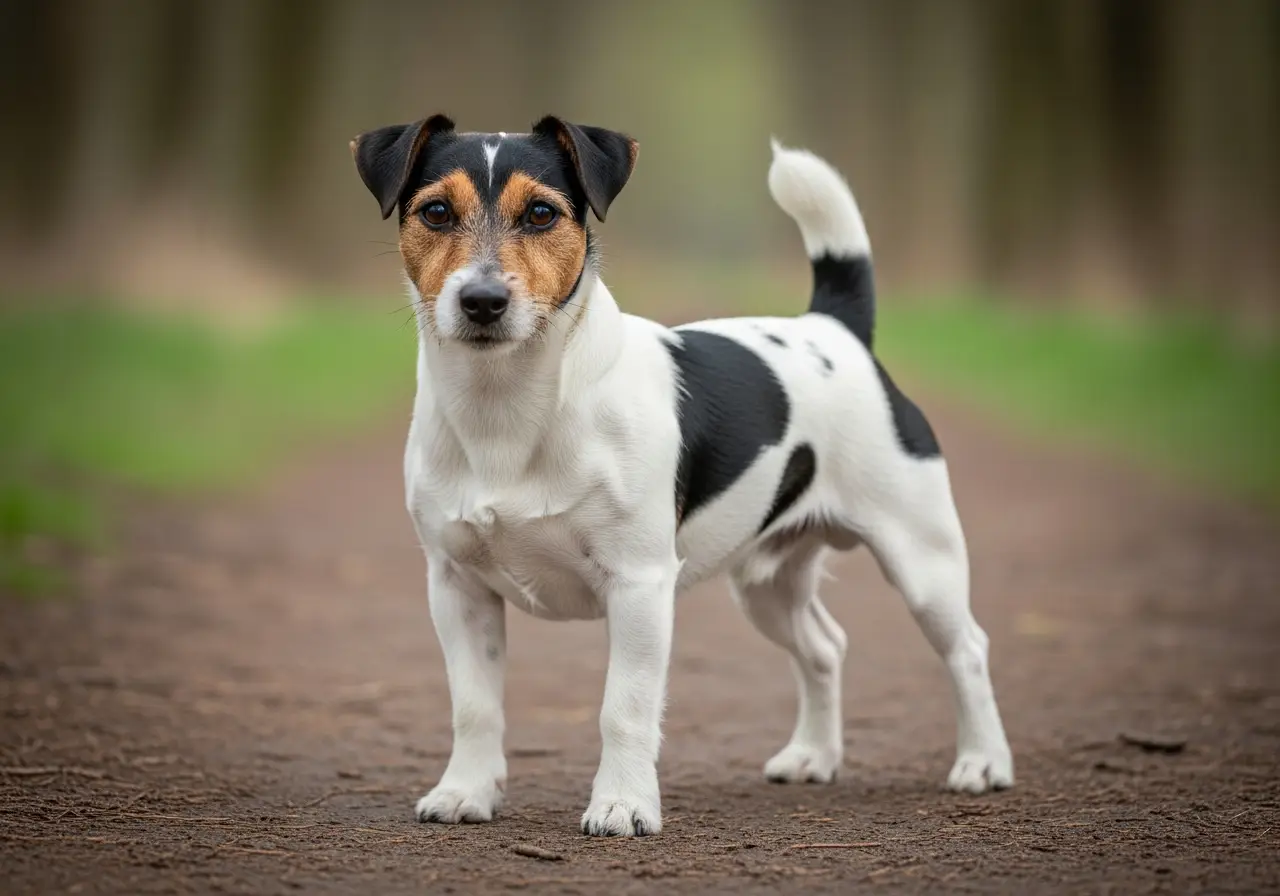
The Jack Russell Terrier is a British small terrier, FCI Group 3, extremely energetic and willful, withers height 25–30 cm.
03Profile
Key facts and suitability
- Origin
- Grossbritannien
- Original purpose
- Fox hunting, earthdog work
- FCI
- No. 345 · Group 3 · Sektion 2: Kleinere Terrier
- height at the withers
- 25–30 cm
- Weight
- 5–8 kg
- Life expectancy
- 13–16 Years
- Coat type
- Short-haired
- Minimum exercise
- 60 min/day
- Puppy price
- 1'000–1'800 CHF
- Waiting period
- 6 months
- Sports
- Agility · Earthdog work · Obedience · Lure Coursing
04Temperament
How the Jack Russell Terrier shows up in everyday life
The morning run shows what makes the Jack Russell Terrier unique: it does not simply move forward, it scans the terrain, reacts to every movement in the bushes and makes independent decisions in fractions of a second. The prey drive is not an occasional impulse, but a genetically anchored behavioural programme.
Internally, what the dog needs: The Jack Russell Terrier has a high need for mental work (value 4 out of 5) and an equally high need for movement. It requires not only physical exercise, but tasks that appeal to its desire to solve problems. Search games, nose work, fetching sequences or structured terrain training are not extras, they are basic care. A Jack Russell that only goes for a walk every day is not sufficiently stimulated.
Externally, how the dog reacts: It behaves watchfully to neutrally towards strangers (value 3 out of 5). It is not a dog that greets every visitor joyfully. It observes first, then decides. This reserve is not a lack of socialisation, but typical terrier self-confidence. Anyone who misinterprets this as shyness or aggression reacts incorrectly.
In everyday life, this means: On returning home, it receives a short greeting, then quiet time; it regulates itself if the owner remains consistent. On the lead, it requires clear guidance because every stimulus in the outside environment can activate its prey drive. With other dogs, it shows assertiveness, especially when leadership is lacking. It tolerates being left alone for up to about four hours, provided this was built up early and gradually.
05Needs
What this breed needs daily
The Jack Russell Terrier requires at least 90 minutes of active exercise daily, a significant part of which should be structured activity with the owner, not free roaming. Terrain runs, cycling on paved paths or dog sports such as agility and mantrailing meet its endurance needs.
Mental stimulation is equal in importance to physical exercise. Search tasks, nose work, fetching training with variations and short, varied training sessions of 10–15 minutes several times a day keep its mind occupied. Monotonous repetitions bore it quickly; it requires variation and challenge.
The prey drive demands special attention in open terrain. Off-lead exercise is only advisable in secure areas or after solid recall training. Building a reliable recall is one of the central training tasks and requires months of consistent work.
Social interaction with the owner is important for it; it is not a dog that is content with the company of other dogs. It requires a clear primary caregiver who takes on leadership and sets boundaries consistently. Impulse control exercises should be integrated into everyday life from the beginning.
Being left alone must be built up early and gradually. Four hours are realistically achievable; longer periods require care solutions. A dog that is regularly left alone for longer than it tolerates develops stress behaviour; barking, digging or destructive chewing are common consequences.
Exercise
High
mental work
A lot
Social needs
Medium
training
Demanding
06Sport & Mental and Physical Stimulation
What sports the Jack Russell Terrier is suited for
Realistic in terms of physiology and genetics – not every breed suits every sport.
Structurally and physiologically suitable: Suitable for mantrailing, dummy work and tracking · CaniCross / bikejoring possible.
07Quick Check
08Suitability
Who this breed is suitable for – and who it isn't
✓Matches
The Jack Russell Terrier suits owners who can plan at least 90 minutes of active exercise with the dog daily, not as an occasional option, but as a fixed part of everyday routine. Suitable are active individuals or couples with experience in dog training who enjoy dog sports, nose work or structured terrain training.
Families with children from about eight years of age are suitable if the adults take on leadership and the children are practised in respectful interaction with dogs. A secure exercise area, garden or regular visits to a dog park facilitate everyday organisation, but do not replace structured enrichment.
Owners who already have experience with independent or high-drive breeds cope better with the temperament of the Jack Russell than first-time owners without prior knowledge. Anyone who actively practises dog sports (agility, mantrailing, obedience) will find a willing partner in this breed that seeks challenges.
People in rural environments with access to open land and the willingness to consistently train recall and impulse control also create good prerequisites. The decisive factor is not the type of housing, but the time invested daily and consistency in handling.
×Doesn't match
The Jack Russell Terrier does not suit owners who can plan less than 90 minutes of active enrichment per day or restrict exercise to occasional walks. Anyone who is away from home for eight hours and has no reliable care solution structurally overloads this breed.
First-time owners without dog experience and without a willingness to attend accompanying dog training school should carefully weigh the decision. The Jack Russell actively questions inconsistent handling; it tests boundaries not out of malice, but because its work drive demands structure. Anyone who misinterprets this as stubbornness and does not counteract it will quickly lose control.
Anyone looking for a calm, low-demand companion dog and assessing the Jack Russell as uncomplicated due to its size is making a wrong decision. Body size says nothing about energy requirements; this misconception is one of the most common reasons for surrender in animal welfare.
Households with small animals such as rabbits, guinea pigs or birds carry an increased risk because prey drive remains active even indoors. Families with very young children under five years of age should bear in mind that the dog reacts quickly to stimuli and sets clear boundaries; without sufficient supervision, conflict situations arise.
10Line reality
Show line, working line, breeder market
The Jack Russell Terrier exists in two functionally different lines, which show noticeable differences in everyday life.
Working lines were selected for suitability for hunting: high endurance, strong prey drive, pronounced independence and willingness to work underground. Dogs from these lines are generally more intense in temperament, react more strongly to prey stimuli and require experienced owners with clear leadership skills. In Switzerland and Austria, there are breeding clubs that offer working tests according to FCI specifications, an indicator of a focus on working lines.
Companion and show lines were selected more strongly for social compatibility and typification. The prey drive is generally present, but less intensely pronounced. These dogs are often somewhat more accessible in dealing with strangers and show less pronounced reactions to the smell of game. They are more suitable for active owners without a hunting background who prefer structured dog sports.
The distinction is relevant when buying a puppy: A breeder who provides evidence of working tests and keeps parent dogs with proven hunting use will, with high probability, produce dogs with a stronger work drive. Anyone looking for a dog for agility or companion dog sports should specifically ask about companion lines and assess the behaviour of the parent dogs.
11Health · Reality
What you need to plan for medically with your Jack Russell Terrier
The Jack Russell Terrier is considered a robust breed with a life expectancy of 13 to 16 years, one of the highest among FCI-recognised breeds of comparable size.
Breed-specific health risks include patellar luxation (kneecap dislocation), which occurs disproportionately frequently in small terrier breeds. A study by the University of Bern (Bellumori et al., referenced in VetCompass data) shows that patellar luxation is diagnosed in up to 7% of cases in small breeds. An examination of the parent dogs before purchase is recommended.
Eye problems — including primary lens luxation syndrome (PLL) — are genetically determined and can be identified through DNA tests of breeding animals. Reputable breeders provide PLL test results. Congenital deafness (BAER test) occurs with increased probability in white-based dogs; the BAER test should be carried out on puppies from affected lines.
Overweight is an underestimated risk. The Jack Russell Terrier tends to gain weight with insufficient exercise and overly generous feeding, which puts strain on joints and heart health.
Preventive examinations: annual veterinary check-up, dental status from the third year of life, eye examination if symptoms occur, weight control every six months. In cases of lameness, visual changes or behavioural abnormalities, a veterinary investigation without delay is indicated.
12Structured data
Health by the numbers
Prone to diseases
Patellar luxation, eye problems (leukodystrophy), heart problems
Recommended health tests
Patella screening, eye examination
13Myths ↔ Reality
What is often said incorrectly about this breed
Five myths, five realities, five sources.
"The Jack Russell is an easy-care city dog because of its size."
Body size says nothing about energy needs. The Jack Russell Terrier was selected for endurance and willingness to work, not for adaptability to quiet households. Its exercise need is at least 90 minutes of active stimulation daily, plus mental enrichment. Keeping in an apartment is possible but requires consistent daily activity.
"Jack Russells are aggressive and bite more frequently than other breeds."
The FCI standard describes the Jack Russell Terrier as 'bold and fearless, friendly with quiet self-confidence'. Undesirable biting behaviour usually arises from under-stimulation, lack of socialisation or inconsistent leadership, not from breed-typical aggressiveness. The breed shows independence and assertiveness, which can escalate without clear structure.
"A garden replaces daily enrichment."
A garden offers open space, not stimulation. The Jack Russell Terrier needs structured activity with humans, search work, fetch training, field runs or dog sports. A dog running alone in the garden often develops digging behaviour, barking problems or escape attempts because the prey drive remains unchannelled.
"Jack Russells and cats basically do not get along."
Living together with cats depends on early socialisation and individual prey drive. Many Jack Russells grow up without problems with cats if the introduction is structured. The decisive factors are the timing of socialisation and the intensity of the individual prey drive; general incompatibility is not substantiated.
"The breed is particularly suitable for children because it is robust and playful."
The Jack Russell Terrier does not tolerate unstructured interactions well. It reacts quickly to stimuli, sets clear boundaries and has a pronounced self-confidence. Children must learn to interact with it respectfully. Without clear rules and supervision, conflicts can arise. The breed is suitable for families with children who are experienced in handling dogs.
14animal welfare
The animal welfare perspective
Breeder market, designer versions, animal shelter reality — what no one writes in the puppy ad.
The Jack Russell Terrier is among the most frequently surrendered terrier breeds in shelters and animal welfare organisations in the German-speaking region. The reasons are documented and recurring: underestimated exercise needs, undesirable hunting behaviour in everyday life and being overwhelmed by the independent temperament. This is no coincidence; it is the direct consequence of a purchasing decision based on body size rather than breed character.
The backyard breeder market exploits the popularity of the breed. Jack Russell puppies are offered on classifieds portals without affiliation to a breeding association, without health certificates and at prices that do not cover the costs of reputable rearing. These dogs often come from environments where neither preventive healthcare nor socialisation is carried out systematically. This increases the risk of behavioural problems and hereditary diseases.
Designer variants (such as crosses with Chihuahuas or other small dogs, marketed as "Mini-Jack" or similar) are not recognised breeds and are subject to no breeding standards. Health and behavioural predictions are difficult for these dogs.
Rehoming via animal welfare organisations is a factually equivalent alternative to buying. Many rehomed Jack Russells are adults, have a known background and already show their actual temperament, making it easier to assess how well they fit your living situation than with a puppy. Organisations such as the German Animal Welfare Federation or country-specific shelters regularly rehome Jack Russells along with advice on suitability for keeping them.
If you decide on a puppy, you are responsible for making an informed decision: check affiliation with a breeding association, see the parent dogs in person and request health certificates.
15Costs · Transparency
What this breed realistically costs
The purchase price for a Jack Russell Terrier from reputable breeding with association membership is between 800 and 1,400 euros in Germany and Austria, and between 1,200 and 1,800 CHF in Switzerland. Offers significantly below this without verifiable documentation suggest backyard breeders or commercial rearing.
Annual living costs consist of: food (quality dry food or fresh meat) approx. 400–700 euros/year depending on the feeding method, grooming needs depending on coat type (smooth-haired minimal, rough-haired with regular trimming approx. 150–300 euros/year at the groomer), basic equipment (lead, collar, transport box, sleeping area) one-off approx. 200–400 euros.
Basic veterinary costs (annual vaccination, deworming, routine check-up) are approx. 150–300 euros/year. Unforeseen treatments, for example for patellar luxation or eye problems, can quickly reach 800–2,500 euros. Pet insurance for this breed costs approx. 30–70 euros/month depending on the provider and coverage, significantly reducing financial risk in the event of major procedures.
Dog sports, training groups or individual sessions at a dog training school are not optional extras for this breed, but recommended investments: approx. 200–500 euros/year depending on intensity.
16Puppy search
What you need to consider when choosing a breeder
- A reputable breeder provides health certificates for the parent dogs, including examinations for patellar luxation, eye problems and, for working line dogs, proof of hearing health.
- Puppies are given away no earlier than eight weeks of age, are microchipped, vaccinated and dewormed.
- The breeder asks questions about the living situation and refuses a sale if the prerequisites do not match.
- Warning signs are: puppies without access to the mother, sales via intermediaries, missing documentation, prices significantly below 800 euros without understandable justification, and offers on commercial classifieds portals without affiliation to a breeding association.
- Adoption through animal welfare organisations is an equally valid option.
- Jack Russell Terriers are among the most common terrier breeds in animal welfare, often with a known background and completed socialisation.
- Animal welfare dogs require a settling-in period but offer the opportunity to assess temperament and behaviour before taking them on.
- Breeding clubs such as the Klub für Terrier e.V.
- (Germany), the Parson and Jack Russell Terrier Club (Austria) or the Russel Terrier Club Schweiz maintain breeder lists with club affiliation.
- These lists are a sensible starting point but do not replace a personal visit to the breeder.
FAQ
Frequently asked questions about the Jack Russell Terrier
Is Jack Russell Terrier suitable for beginners?
Jack Russell Terrier is considered suitable for first-time dog owners.
Is Jack Russell Terrier a family dog?
Jack Russell Terrier is considered suitable for families with good socialisation and species-appropriate care.
How much exercise does Jack Russell Terrier need?
At least around 60 minutes of exercise per day. As an active breed, more so — plus mental stimulation.
Does Jack Russell Terrier suit an apartment?
With enough exercise and enrichment, Jack Russell Terrier can also be kept in an apartment.
What is the size and weight of Jack Russell Terrier?
Fully grown, Jack Russell Terrier reaches about 25–30 cm at the withers and weighs around 5–8 kg.
What is the life expectancy of Jack Russell Terrier?
The life expectancy of Jack Russell Terrier is approximately 13–16 years.
Which diseases are common in Jack Russell Terrier?
Patellar luxation, eye problems (leukodystrophy), heart problems
17Breed clubs
Official breed clubs in DACH
19Related
Similar breeds – and their differences
You might also be interested in



Participate
Do you have a good photo of your Jack Russell Terrier?
We are looking for expressive images for our breed profiles. Submit yours; the editorial team reviews every submission before publication.
Does this breed suit you?
Enormously popular but often underestimated. Small body, huge energy. Consistent leadership necessary.