4 sourcesUpdated September 12, 2026Responsible editor: Roger KleinText: Miriam Schäfer
01Summary
In a paragraph
If you only have 30 seconds.
The Bullmastiff is a British guard molosser with a calm presence and pronounced territorial behaviour. It was selected for independent action, which makes it a reliable guard dog but also a dog that requires consistent leadership from experienced owners. Joint dysplasias, heart problems, and a life expectancy of 7 to 10 years are part of the risk profile of this breed.
02Introduction
What makes the Bullmastiff special
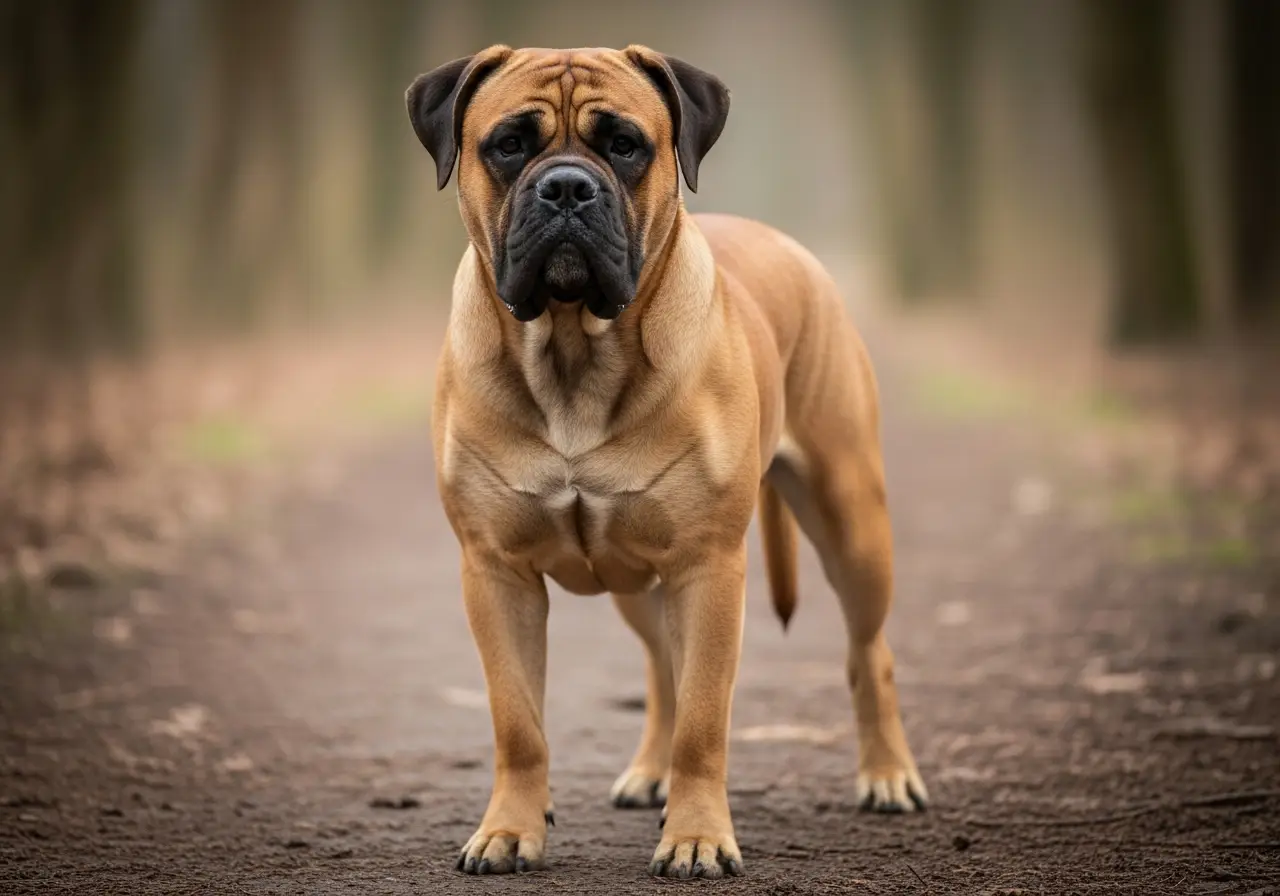
The Bullmastiff is a British guarding Molosser, FCI Group 2, developed for hunting poachers, with a short life expectancy and a withers height of 61–68 cm.
03Profile
Key facts and suitability
- Origin
- Grossbritannien
- Original purpose
- Hunting poachers on forester estates
- FCI
- No. 157 · Group 2 · Section 2.1
- height at the withers
- 61–68 cm
- Weight
- 41–59 kg
- Life expectancy
- 7–10 Years
- Coat type
- Short-haired
- Minimum exercise
- 45 min/day
- Puppy price
- 1'500–2'500 CHF
- Waiting period
- 9 months
- Sports
- Schutzhund · Obedience
04Temperament
How the Bullmastiff shows up in everyday life
When returning home, the Bullmastiff greets its primary caregiver calmly and attentively, no hectic jumping, no exuberant barking. It registers the arrival, processes it and then returns to its place. This calmness is not disinterest, but an expression of its self-confident basic attitude.
The Bullmastiff requires structured enrichment daily: controlled walks, clear tasks and a reliable daily structure. Its need for mental work is moderate but present; monotonous repetitions without variety lead to indifference towards commands. Nose work and calm search tasks are well suited.
Towards strangers, the Bullmastiff behaves reservedly to dismissively. Its guarding instinct is genetically anchored: It observes unknown persons, assesses the situation independently and reacts without warning upon perceived threat. This independence was historically intended; in everyday life, it demands consistent management. Visit situations must be actively prepared; the dog does not automatically accept guests just because the owner appears relaxed.
Towards other dogs, it frequently shows dominant behaviour, especially towards animals of the same sex. Keeping multiple dogs is possible but requires careful introduction and clear structures.
In everyday life with children, the rule is: The Bullmastiff is not a playmate that can be handled arbitrarily. Children must know how to handle a large, powerful dog and respect it. Its body weight alone can unintentionally knock a child down. Supervision is mandatory in every situation, not as mistrust towards the dog, but as responsibility towards both.
05Needs
What this breed needs daily
The Bullmastiff requires 60 to 90 minutes of controlled exercise daily. Calm, structured walks are more effective than uncontrolled free running. Loose-leash walking is not an option but a basic prerequisite; an adult male dog can reach up to 59 kg in body weight and pulls accordingly.
In puppy and young dog age, joint-sparing growth is decisive. Stairs, long running on hard surfaces and intensive jumping loads are to be avoided in the first 18 to 24 months of life. The skeleton grows slowly; incorrect loading in this phase significantly increases the risk of hip and elbow dysplasia.
Mental stimulation is best achieved through nose work, calm search tasks and clearly structured obedience training. The Bullmastiff does not require high-performance sports; it requires clear tasks and reliable structures. Unclear or inconsistent leadership leads to it making its own decisions, which becomes problematic given this physical strength.
A securely fenced property is sensible but no replacement for active enrichment. The dog must not be left to itself permanently in the garden; isolation promotes territorial behaviour and makes socialisation more difficult.
The Bullmastiff tolerates being left alone for up to about five hours if it is stably integrated into everyday life and has received sufficient exercise. Longer absences without a care solution are not compatible with this breed. The bond with the primary caregiver is close; a dog that remains alone permanently develops behavioural abnormalities.
Exercise
Medium
mental work
Medium
Social needs
Medium
training
Demanding
06Sport & Mental and Physical Stimulation
What sports the Bullmastiff is suited for
Realistic in terms of physiology and genetics. Not every breed suits every sport.
Structurally and physiologically suitable: not an endurance sport (brachycephaly / BOAS).
07Quick Check
08Suitability
Who this breed suits and who it doesn't
✓Matches
The Bullmastiff suits owners with proven experience in handling large breeds with a strong guarding instinct. Anyone who has already handled a Molosser or a comparable breed brings the necessary foundation.
A stable living environment with sufficient space is a prerequisite; a detached house with a securely fenced property significantly eases everyday life. Urban environments with high public traffic are demanding and require particularly consistent management.
Families with children from about ten years old, who are experienced in handling large dogs and adhere to clear rules, can live with a Bullmastiff if the adults take on the leadership role and actively manage visit situations.
Owners who devote 60 to 90 minutes daily to structured exercise and are willing to invest long-term in training and dog training school create the necessary foundation. Anyone who understands the breed's reserved behaviour towards strangers and its tendency towards dominance towards other dogs, and plans everyday life accordingly, keeps this breed responsibly.
×Doesn't match
The Bullmastiff is not suitable for first-time owners without experience with large breeds that have a strong guarding instinct. Those who have never handled a dog or have only worked with small, socially open breeds regularly underestimate the demands of this breed.
Households where people are away from home for eight or more hours daily and cannot organise reliable care solutions are overwhelmed by a Bullmastiff. The close bond with the primary caregiver and the maximum alone time of about five hours cannot be ignored permanently.
Those who assess the reserved attitude towards strangers as "it will sort itself out" or believe that the dog will become open and approachable with sufficient socialisation misunderstand the genetic basis of guarding behaviour. This confusion between willingness to bond with the family and openness towards strangers is a common mistake.
Cramped urban living conditions without a retreat, households with very small children under six years of age, and people who cannot or will not provide physical leadership strength should not choose this breed. Those who cannot emotionally and financially cope with high vet costs and a short life expectancy also make an unsuitable choice with the Bullmastiff.
09Related
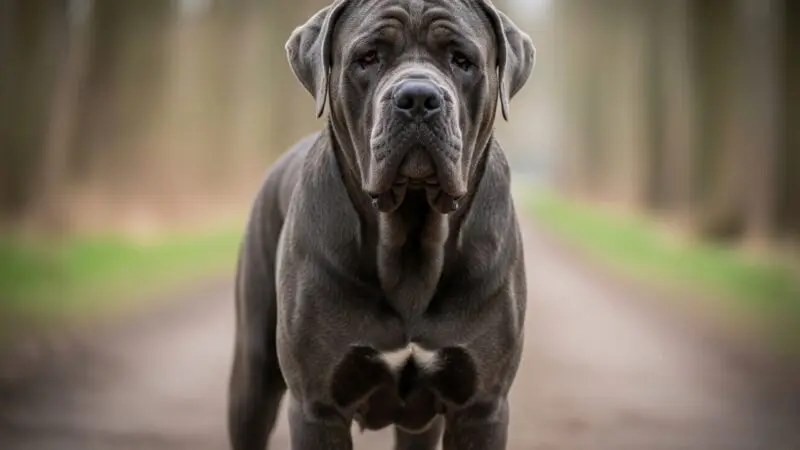
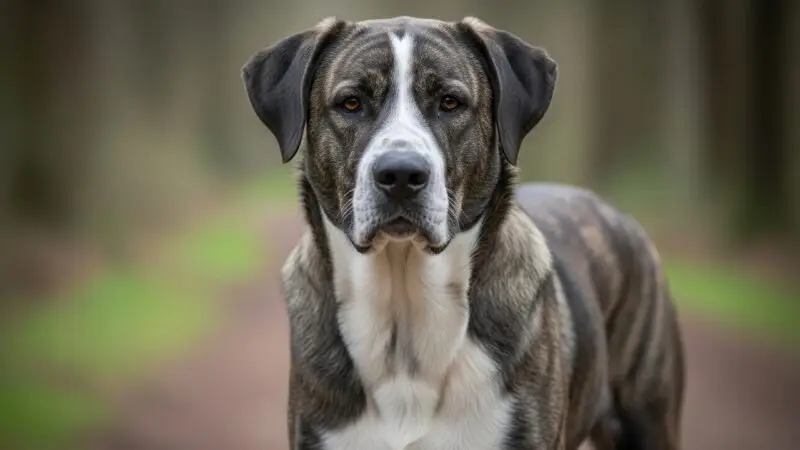
Similar breeds and how they differ

10Line reality
Show line, working line, breeder market
The Bullmastiff is bred today predominantly as an exhibition and companion dog. A clear separation into working and show lines, as exists with some other guardian breeds, does not exist to a comparable extent; the FCI standard does not prescribe a working test.
Nevertheless, differences exist within the breed: Some breeders focus on exterior and exhibition success, others on character, health and working properties in the sense of the original purpose. The latter line produces dogs that can be used in protection work or in companion dog tests.
In Great Britain, the country of origin of the breed, breeding lines with a stronger focus on working properties exist. These dogs are often built somewhat lighter and show more pronounced drive strength. For the everyday owner without ambitions for protection work, such lines are more demanding to handle.
Anyone buying a Bullmastiff should specifically ask the breeder about the breeding goal: exhibition success, health or working properties? The answer influences which dog you actually receive and what leadership experience is necessary for it.
11Health · Reality
What you need to plan for medically with your Bullmastiff
The life expectancy of the Bullmastiff is 7 to 10 years, significantly below the average for medium-sized breeds. This short lifespan must be factored into the decision to choose the breed, both emotionally and financially.
Hip dysplasia (HD) and elbow dysplasia (ED) are among the most common orthopaedic problems in the breed. X-ray examinations of both parent dogs before breeding are indispensable.
Heart diseases, particularly dilated cardiomyopathy, occur disproportionately frequently in molosser breeds. An annual heart examination by a specialist vet is recommended. Gastric torsion (Gastric Dilatation-Volvulus, GDV) is an acute emergency risk in deep-chested large breeds: owners must know the symptoms and act immediately in an emergency.
The shortened muzzle restricts thermoregulation. Intense physical exertion should be avoided at temperatures above 25 degrees Celsius; heat collapse can occur quickly. Eye examinations for entropion and other breed-typical changes are part of preventive care.
Weight control is crucial: overweight puts additional strain on joints and the heart. Regular weight checks at the vet, at least twice a year, are sensible. Preventive examinations every six months are not excessive caution for this breed, but standard practice.
12Structured data
Health by the numbers
Prone to diseases
Hip dysplasia, elbow dysplasia, heart problems, gastric torsion (bloat), skin fold infections, breathing problems
Recommended health tests
Hip and elbow X-rays, cardiac examination, BOAS screening
13Myths ↔ Reality
What is often said incorrectly about this breed
Five myths, five realities, five sources.
„The Bullmastiff is naturally aggressive and dangerous.
The FCI standard describes the Bullmastiff as reliable, enduring and loyal. Aggressiveness is not a breed standard, but a result of faulty socialisation or lack of guidance. Controlled readiness to guard and uncontrolled aggression are two fundamentally different behaviours. Reputable breeding actively selects against excessive sharpness.
„As a large dog, the Bullmastiff needs a lot of space and hours of exercise daily.
The Bullmastiff is not an endurance athlete. Its exercise need is around 60 to 90 minutes of controlled activity per day. Excessive strain, especially in puppy and young dog age, severely damages the joints. Rest phases and joint-friendly growth are more important than maximum exercise time.
„The Bullmastiff is not a family dog due to its size.
In experienced, clearly structured households, the Bullmastiff can be a stable family dog. It forms close bonds with its primary caregiver. Prerequisites are clear rules, confident children and active management in visitor situations. The physical strength of the dog requires that all family members are safe in handling it.
„The Bullmastiff is a brachycephalic breed like the French Bulldog due to its short muzzle.
The Bullmastiff has a shortened muzzle, which is explicitly described in the FCI standard. However, it cannot be equated with highly brachycephalic breeds such as the French Bulldog or Pug. Nevertheless, heat stress can limit tolerance, and veterinary examination is necessary in case of breathing noises or exercise intolerance.
„A well-trained Bullmastiff is suitable for any owner.
The Bullmastiff questions leadership if it appears inconsistent or uncertain. It reacts sensitively to the body language of its primary caregiver. Experience with large breeds with a strong guarding instinct is not just a recommendation, but a basic prerequisite. For first-time owners without appropriate prior knowledge, this breed poses a considerable risk.
14animal welfare
The animal welfare perspective
Breeder market, designer versions, animal shelter reality: what no one writes in the puppy ad.
The Bullmastiff regularly ends up in animal shelters and breed protection organisations, not because the breed is unreliable, but because the requirements are underestimated before getting a dog. Common reasons for surrender include lack of leadership experience, underestimated vet costs, and the emotional burden of the short life expectancy.
On the backyard breeder market, Bullmastiffs are sometimes offered without health tests and without breeding approval. Puppies from such sources carry an increased risk of HD, ED, and heart problems, costs that only become visible years later. Low purchase prices create a false impression regarding actual living costs.
Designer variants such as excessively wrinkled or extremely short-muzzled types exist on the fringes of the breed. These animals deviate from the FCI standard and carry an increased risk of breathing problems and skin infections in the folds. A look at the FCI standard protects against such extreme types.
Problems related to keeping often arise from isolation: A Bullmastiff kept permanently in the garden with little contact with the primary caregiver develops uncontrolled territorial behaviour. This is not a character flaw of the breed; it is a predictable consequence of incorrect living conditions.
Rehoming an adult Bullmastiff is a fully valid alternative to buying a puppy. Adult dogs from rehoming organisations often come with a known background, an assessed character and completed socialisation. Breed protection organisations accompany the rehoming process professionally and assess the suitability of the receiving households, which increases the accuracy of the match for both parties.
15Costs · Transparency
What this breed realistically costs
A Bullmastiff puppy from reputable breeding with pedigree, health tests and breeding approval costs between 1,800 and 3,000 euros or CHF in Germany and Switzerland. Offers significantly below this usually come from breeding operations without health screening.
The annual food costs for an adult Bullmastiff are between 800 and 1,500 euros depending on the type of feeding. Grooming costs are moderate; the short coat requires little effort, but nail trimming and ear cleaning are required regularly.
Veterinary costs for this breed should be planned at above-average levels: preventive examinations, heart checks, X-rays and age-related treatments add up to an average of 600 to 1,200 euros per year. In the event of illness (gastric torsion, joint surgery, heart treatment), individual costs of 3,000 to 8,000 euros can arise.
Dog liability insurance is mandatory and legally required in several federal states. The annual premium for large breeds is between 100 and 250 euros. Given the breed-specific health risks, pet health insurance for the dog makes sense and costs between 600 and 1,400 euros annually depending on the provider and scope of benefits. The total costs over the dog's lifetime should be calculated realistically before getting a dog.
16Puppy search
What you need to consider when choosing a breeder
- A reputable breeder has breeding dogs X-rayed for hip and elbow dysplasia (HD/ED) and provides the results without being asked.
- Heart examinations and eye examinations are also part of the standard for responsible Bullmastiff breeding.
- Anyone who does not show these documents or evades questions is not a suitable contact.
- The puppy should grow up in the mother family when visiting the breeder, visibly socialised and not kept in isolation.
- A reputable breeder asks counter-questions: about the living environment, experience, and everyday situation.
- Anyone who accepts every buyer without assessment does not select for suitability of keeping.
- Caution is advised with offers without a pedigree, suspiciously low prices, and puppies shown without the mother dog.
- Imports from countries without comparable breeding standards carry additional health risks.
- Adopting an adult Bullmastiff through breed protection organisations or animal shelters is an equally valid option.
- Adult dogs come with known character traits, which can be a real advantage for a breed with a pronounced guarding instinct.
- The Club für Molosser e.V.
- and the SKG maintain contacts with breeders and rehoming centres.
FAQ
Frequently asked questions about the Bullmastiff
Is Bullmastiff a family dog?
Bullmastiff is considered suitable for families with good socialisation and species-appropriate care.
How much exercise does Bullmastiff need?
At least around 45 minutes of exercise per day.
What is the size and weight of Bullmastiff?
Fully grown, Bullmastiff reaches about 61–68 cm at the withers and weighs around 41–59 kg.
What is the life expectancy of Bullmastiff?
The life expectancy of Bullmastiff is approximately 7–10 years.
Which diseases are common in Bullmastiff?
Hip dysplasia, elbow dysplasia, heart problems, gastric torsion (bloat), skin fold infections, breathing problems
Participate
Do you have a good photo of your Bullmastiff?
We are looking for expressive images for our breed profiles. Submit yours; the editorial team reviews every submission before publication.
Does this breed suit you?
Calm, loyal guard dog with a short life expectancy. Not for first-time owners. Requires little exercise but clear guidance.