
01Summary
In a paragraph
If you only have 30 seconds.
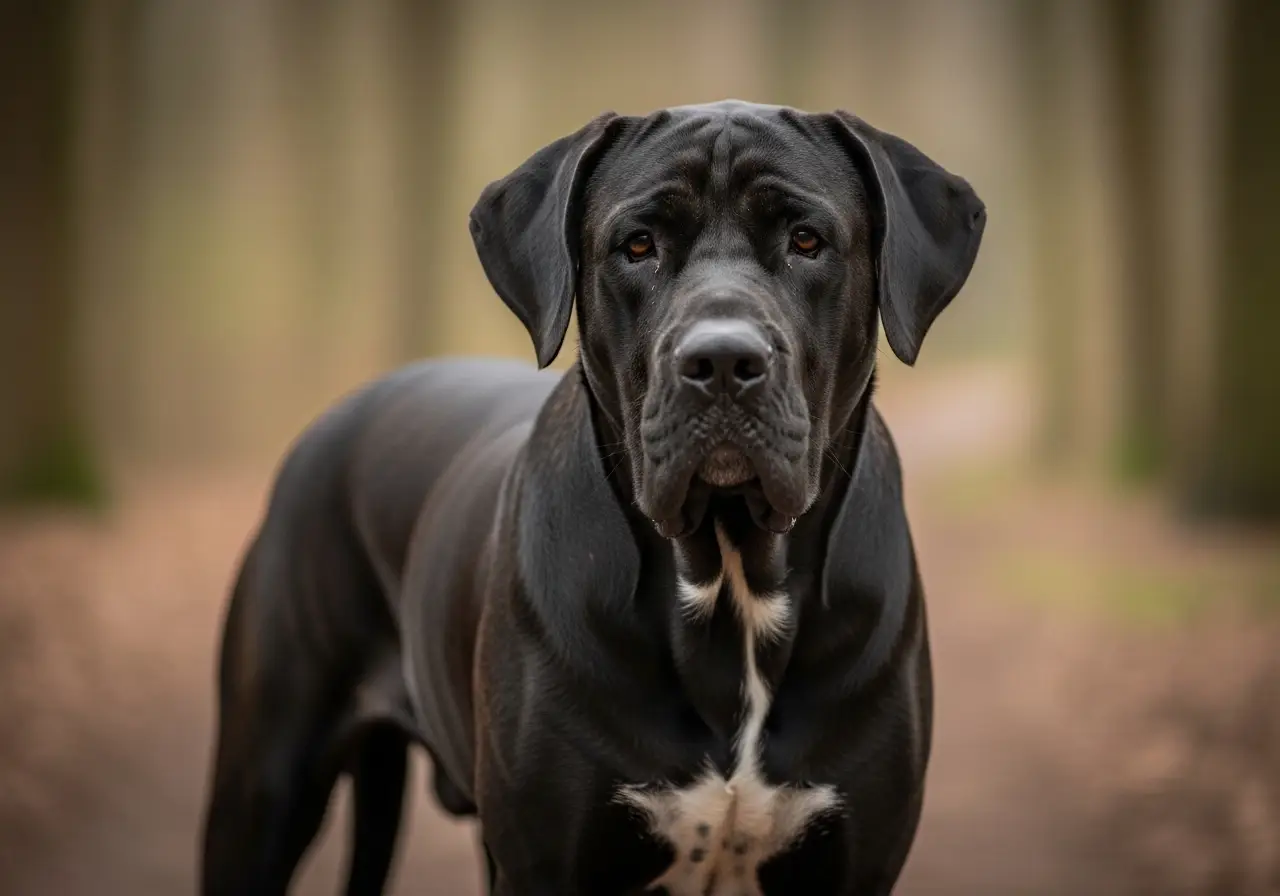
The Fila Brasileiro is a heavy Brazilian Molosser whose guard and territorial behaviour is genetically deeply rooted. The so-called Ojeriza, a pronounced rejection of strangers, is not a training problem but a breed standard. Anyone keeping this dog needs proven experience with guard breeds, a secured property, and the willingness to manage visitor situations consistently. In several German states, there is a ban on keeping the breed.
02Introduction
What makes the Brazilian Mastiff special
The Brazilian Mastiff (Fila Brasileiro) is a heavy Brazilian guard and tracking dog, FCI Group 2, extremely alert, withers height 60–75 cm.
03Profile
Key facts and suitability
- Origin
- Brasilien
- Original purpose
- Farm protection, tracking, hunting
- FCI
- No. 225 · Group 2 · Sektion 2.1: Molossoide, Doggenartige Hunde
- height at the withers
- 60–75 cm
- Weight
- 40–60 kg
- Life expectancy
- 9–11 Years
- Coat type
- Short-haired
- Minimum exercise
- 60 min/day
- Puppy price
- 1'500–3'000 CHF
- Waiting period
- 12 months
- Sports
- Schutzhund
04Temperament
How the Brazilian Mastiff shows up in everyday life
When returning home, the Fila Brasileiro demonstrates what its bond means: it greets its primary caregiver calmly but with clear presence—no frantic jumping, but a heavy, physically close arrival. This calmness masks the intensity of the bond.
Internally, what the dog needs: The Fila has a moderate need for social contact that is directed exclusively towards its closest reference group. It requires a clear daily structure, consistent guidance and an environment that provides it with security. Mental work in the classic sense is less prominent than the reliability of the leadership relationship. Without this reliability, it reacts with uncertainty, and uncertainty in a dog of this size and protective readiness constitutes a serious risk.
Externally, how the dog reacts: The Fila shows genetically anchored aversion towards strangers. This is not situational distrust that dissipates through habituation. Visitors entering the property are perceived as intruders. Situations involving visitors require consistent management: the dog must be spatially separated or kept on a lead before strangers enter the area.
It behaves dominantly towards other dogs, particularly towards animals of the same sex. In everyday life on public paths, it requires an experienced hand on the lead, not because it is uncontrollable, but because its reactions are quick and powerful.
The divergence between internal calmness and external aversion is the central misunderstanding regarding this breed: a relaxed Fila in the house does not mean that it remains relaxed in encounter situations.
05Needs
What this breed needs daily
The Fila Brasileiro requires 60 to 90 minutes of controlled exercise daily. What is decisive here is not the distance covered, but the quality of guidance: the dog must be led on a lead, not pulling it. Off-leash running without secured terrain is incompatible with this breed.
A securely fenced area (minimum fence height of 1.80 metres, stable construction) is almost a prerequisite for keeping the dog. The property serves not only as an exercise area but as a defined territory that the dog perceives as its protective zone.
Mental stimulation in the Fila occurs less through classic nose work or play forms than through the daily structure itself. Clear rules, predictable routines and a consistent primary caregiver provide it with the orientation it needs. It registers inconsistency, even in small everyday situations, and tests boundaries.
Being left alone is possible if the dog is stably integrated into the family structure. Regularly, this should not exceed five hours. A dog that is alone on a property must be secured so that unauthorised access is impossible, for reasons of animal welfare and liability.
Socialisation during the puppy phase is crucial but does not change the fundamental structure of Ojeriza. It helps the dog to categorise stimuli and react in a controlled manner, not to accept strangers as neutral. Attending a dog training school with experience in guard and Molosser breeds is not an option but a requirement.
Exercise
Medium
mental work
Medium
Social needs
Medium
training
Experts
07Quick Check
08Suitability
Who this breed is suitable for – and who it isn't
✓Matches
The Fila Brasileiro suits owners with proven experience in handling guard or Molosser breeds, not general dog experience, but specific knowledge of dogs with pronounced territorial behaviour.
The living environment must include a detached property with stable fencing at least 1.80 metres high. Rural or quiet peripheral locations are suitable; stimulus-intensive urban environments with frequent public traffic are not.
Suitable owners are those who can dedicate 60 to 90 minutes daily to controlled exercise and are willing to manage visitor situations consistently, meaning: securing the dog before strangers enter the property, without exception.
Families with older children from around twelve years of age who are trained in handling the dog may be suitable, provided both parents have the necessary experience and the children understand the leadership rules. Toddlers and the Fila Brasileiro do not make a suitable environment, as the dog's size and reaction speed pose a significant risk.
Owners who fully meet legal requirements (liability insurance, proof of expertise, official approval depending on the state) and do not view these as a burden but as part of responsible ownership are the right target group for this breed.
×Doesn't match
The Fila Brasileiro is not suitable for owners without specific experience with guard or Molosser breeds. Anyone who has previously kept dogs described as approachable or social underestimates the structural demands of this breed.
Households in multi-storey buildings, flats without a secured property, or environments with regular visitor traffic, tradespeople, delivery services, neighbours entering the property are not suitable. Each of these situations requires consistent management that is not sustainable long-term if the infrastructure is lacking.
Anyone who views Ojeriza as a "training problem" that can be solved with enough patience has not understood the nature of this breed. Anyone who believes a calm Fila in the house means an approachable dog in encounter situations confuses internal bonding calmness with external social compatibility, a dangerous misconception.
Furthermore, owners who can dedicate less than five hours daily to the dog or live in states where keeping it is prohibited are not suitable. Owners who consider the legal requirements (proof of expertise, mandatory approval, insurance) disproportionate should also not choose this breed. The administrative effort is part of the ownership profile, not an exception to it.
10Line reality
Show line, working line, breeder market
The Fila Brasileiro does not have clearly defined working and show lines in the sense of other breeds. Breeding was historically functionally oriented, and this approach continues to shape breeding philosophy to this day, at least in Brazil, where the dog is considered a national cultural asset and temperament tests are part of breeding eligibility.
Outside Brazil, the breeding population is small. Reputable breeders in Europe focus on temperament testing and health examinations. Nevertheless, a grey area exists: some breeders select primarily for size and appearance, which can result in dogs whose temperament is less stable than that of animals from lines consistently tested for function.
Another distinction concerns origin: dogs from Brazilian breeding lines with documented temperament testing often differ in temperament and trainability from animals whose lineage lies exclusively in Europe and where temperament tests have not been carried out systematically.
Anyone looking for a Fila Brasileiro should explicitly ask for the temperament test results of the parent dogs and inspect the breeding records. A breeder who does not provide this information transparently is not a reliable contact for a breed with this profile of requirements.
11Health · Reality
What you need to plan for medically with your Brazilian Mastiff
The Fila Brasileiro belongs to the large, heavy Molosser breeds with an increased risk of orthopaedic diseases. Hip dysplasia (HD) and elbow dysplasia (ED) are the most common findings: studies on comparable Molosser breeds show HD prevalences of 20 to 40 percent, depending on breeding line and examination standard (OFA database, status 2023). Reputable breeders X-ray both parent animals before breeding and disclose the results.
Life expectancy is between 9 and 11 years. Overweight visibly shortens this span and additionally burdens the joints; for a dog weighing up to 60 kilograms, weight control is not a recommendation but a medical necessity.
The risk of gastric torsion (Gastric Dilatation-Volvulus, GDV) is increased in large, deep-chested breeds. Meals should be divided into two to three portions daily; intensive exercise immediately after eating should be avoided. GDV is a life-threatening emergency; owners should know the symptoms and identify the nearest emergency vet in advance.
The skin folds on the face and neck require regular checks for moisture and signs of inflammation. Neglected folds develop intertrigo, a painful skin inflammation that requires veterinary treatment.
Preventive examinations include: annual weight checks, joint assessment from the second year of life, heart auscultation (Molossers have an increased risk of cardiomyopathy), and eye examinations. Veterinarians with experience in large Molosser breeds are preferable for care.
12Structured data
Health by the numbers
Prone to diseases
Hip dysplasia, elbow dysplasia, heart problems, gastric torsion (bloat), skin fold infections
Recommended health tests
Hip and elbow X-rays, heart examination
13Myths ↔ Reality
What is often said incorrectly about this breed
Five myths, five realities, five sources.
“The Fila Brasileiro is aggressive and unpredictable, a dangerous dog per se.
Ojeriza is a genetically anchored, directed rejection of strangers, not an uncontrolled aggression pattern. A well-led Fila reacts predictably and under control. It becomes dangerous when leadership is lacking or the environment overwhelms the breed. The FCI standard describes this behaviour as typical for the breed, not as a flaw.
“With consistent training, the Fila Brasileiro becomes friendly towards strangers.
Aversion towards strangers is not a matter of upbringing but a selection trait that has been reinforced over centuries. Training can channel the behaviour and make it controllable, but it does not alter the genetic basis. Anyone looking for an amiable family dog for situations involving visitors is choosing the wrong breed.
"The Fila Brasileiro is a calm dog that requires little stimulation.
The Fila does indeed appear composed in a domestic environment, which masks its needs. It requires 60 to 90 minutes of controlled exercise daily, as well as a clear daily structure. Without sufficient guidance and mental engagement, it develops undesirable behaviours that can have serious consequences given the size and strength of such a dog.
"As a restricted breed, the Fila Brasileiro is banned throughout Germany.
The legal situation varies significantly by federal state. In Bavaria, North Rhine-Westphalia and other states, there is either a ban on keeping the dog or restrictions requiring a permit. In other federal states, keeping the dog is possible under certain conditions. The current status must be checked separately for each federal state; last updated in 2024.
"The Fila Brasileiro is a good dog for experienced dog owners in general.
General experience with dogs is not sufficient. The Fila requires specific experience with guard and Molosser breeds, knowledge of handling pronounced territorial behaviour, and the ability to lead confidently both physically and mentally in stressful situations. Anyone who has previously kept Labradors or German Shepherds often underestimates the demands of this breed.
14animal welfare
The animal welfare perspective
Breeder market, designer versions, animal shelter reality — what no one writes in the puppy ad.
The Fila Brasileiro is on the breed list in several German federal states, including Bavaria and North Rhine-Westphalia, where it is banned or may only be kept with official permission. This legal situation leads to a specific animal welfare problem: dogs acquired in states with a ban, or whose owners do not meet the requirements for permission, end up disproportionately often in rehoming or are kept illegally.
The backyard breeder market exploits the rarity of the breed. Puppies from untested parent animals, without temperament tests and without health examinations, are offered at prices below the level of reputable breeders. The risk: unstable temperament, increased health burden, and dogs that are not manageable for inexperienced owners. The low purchase price is paid for by high follow-up costs and, in the worst case, by biting incidents.
Designer versions or crosses with the Fila Brasileiro exist on the fringes of the market. They promise a more moderate temperament with a similar appearance, a claim that is not genetically substantiated and gives buyers a false sense of security.
Problems arising from keeping often do not stem from ill will, but from underestimation: owners who consider the Ojeriza manageable, who do not have suitable property, or who underestimate the time required for consistent leadership, overwhelm themselves and the dog. The result is surrender to animal shelters, which rarely find suitable new owners for this breed.
Rehoming an adult Fila Brasileiro with a documented history is a serious option for experienced owners. Organisations specialising in guard and Molosser breeds carry out temperament assessments and rehome only to vetted owners. This is not a compromise; it is responsible placement.
15Costs · Transparency
What this breed realistically costs
The purchase price of a Fila Brasileiro puppy from reputable breeding in Europe ranges between 1,500 and 2,500 euros. Offers significantly below this often come from untested breeding without temperament tests and health examinations of the parent animals.
The annual living costs for a dog of this size are considerable: high-quality food for an adult Fila costs between 800 and 1,400 euros per year, depending on body weight and food quality. Care costs are comparatively low; the short coat does not require professional grooming, but regular fold checks.
Veterinary costs average between 400 and 800 euros annually for routine care, vaccinations, and preventive examinations. Orthopaedic treatments for HD or ED can incur individual costs of 2,000 to 6,000 euros. Pet insurance with surgical coverage is recommended for this breed; monthly premiums range between 60 and 120 euros depending on the provider and scope of cover.
In addition, many federal states incur costs for proof of expertise, official permission, and increased dog taxes for listed dogs; these vary greatly by municipality and can amount to several hundred euros annually. Liability insurance specifically for listed dogs is mandatory and costs between 150 and 400 euros per year.
16Puppy search
What you need to consider when choosing a breeder
- Reputable Fila Brasileiro breeders provide temperament test results for both parent animals, carry out hip and elbow X-rays according to recognised standards, and require buyers to provide proof of experience with the breed or comparable guard breeds.
- A breeder who does not allow visits on site or mediates puppies without a personal conversation is not a reliable contact.
- Before purchase, the legal situation in your own state must be checked: In several German states, keeping the breed is prohibited or requires approval.
- Approval should be obtained before getting a dog, not afterwards.
- Mediation through animal welfare organisations is an equally valid option.
- Adult Fila Brasileiros often end up in rehoming because owners have underestimated the requirements.
- An adult dog with documented history and temperament assessment can be a better choice for experienced owners than a puppy whose temperament development is still open.
- No reputable platform recommends breeders by name; research via the responsible breed club and demand access to stud books and health documents.
- Purchase prices significantly below the market average are a warning signal, not a bargain.
FAQ
Frequently asked questions about the Brazilian Mastiff
How much exercise does Brazilian Mastiff need?
At least around 60 minutes of exercise per day.
What is the size and weight of Brazilian Mastiff?
Fully grown, Brazilian Mastiff reaches about 60–75 cm at the withers and weighs around 40–60 kg.
What is the life expectancy of Brazilian Mastiff?
The life expectancy of Brazilian Mastiff is approximately 9–11 years.
Which diseases are common in Brazilian Mastiff?
Hip dysplasia, elbow dysplasia, heart problems, gastric torsion (bloat), skin fold infections
17Breed clubs
Official breed clubs in DACH
19Related
Similar breeds – and their differences
You might also be interested in

Participate
Do you have a good photo of your Brazilian Mastiff?
We are looking for expressive images for our breed profiles. Submit yours; the editorial team reviews every submission before publication.
Does this breed suit you?
One of the heaviest guard dogs at all. Extremely hostile towards strangers. Banned in several countries – check legal situation absolutely.