
01Summary
In a paragraph
If you only have 30 seconds.
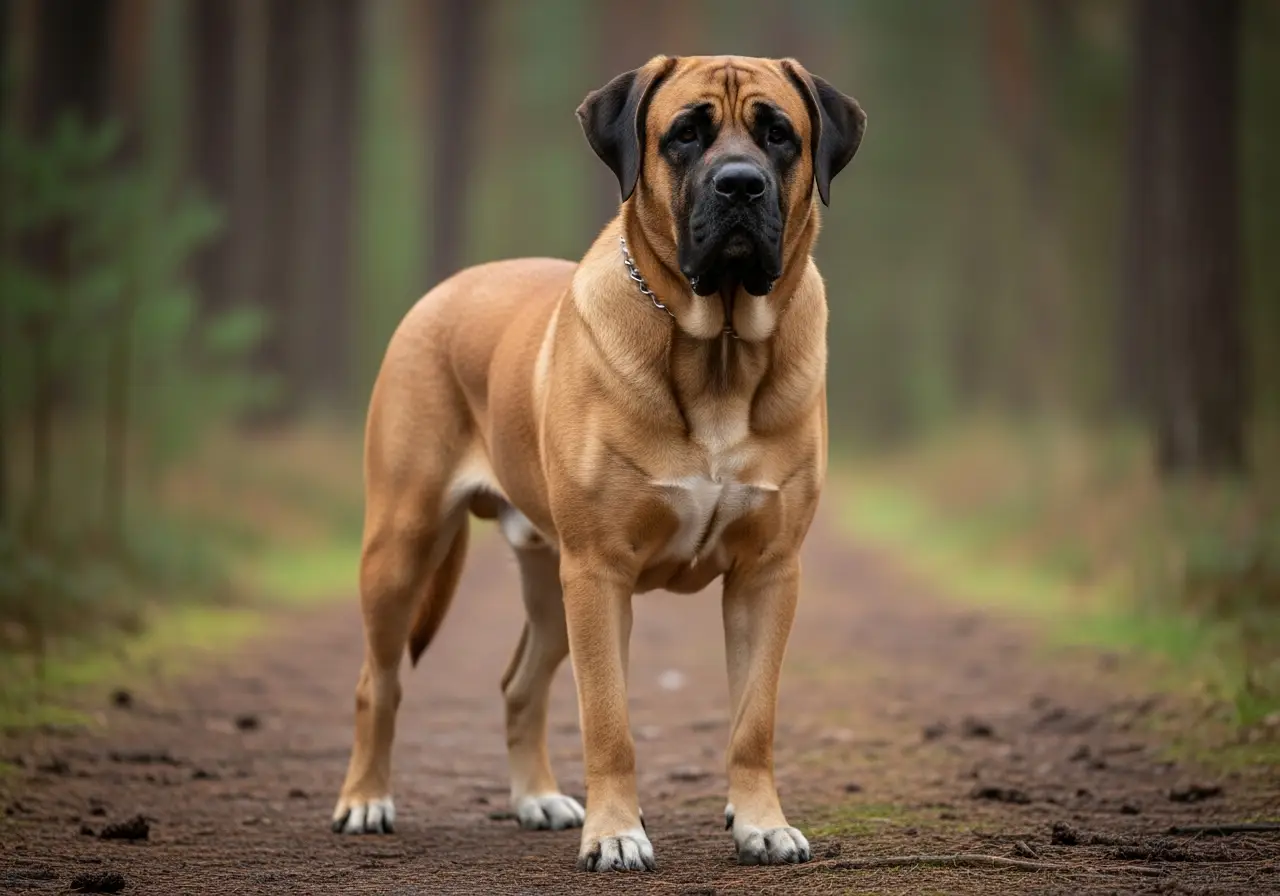
The Broholmer is a rare Danish Molosser with a massive build, calm temperament and pronounced territorial behaviour. Its composure tempts one to underestimate its space requirements and demands for leadership. Anyone who takes on this dog assumes responsibility for an animal that demands physical presence, clear boundaries and long-term consistency, not occasionally, but daily.
02Introduction
What makes the Broholmer special
The Broholmer is a rare Danish mastiff, FCI Group 2, former farm dog of Danish kings, calm and gentle, withers height 70–80 cm.
03Profile
Key facts and suitability
- Origin
- Dänemark
- Original purpose
- Guard dog, companion dog of Danish kings
- FCI
- No. 315 · Group 2 · Section 2.1
- height at the withers
- 70–80 cm
- Weight
- 40–70 kg
- Life expectancy
- 8–12 Years
- Coat type
- Short-haired
- Minimum exercise
- 45 min/day
- Puppy price
- 1'500–2'500 CHF
- Waiting period
- 12 months
- Sports
- Obedience · Therapy dog
04Temperament
How the Broholmer shows up in everyday life
When you come home, the Broholmer greets its primary caregiver calmly, with no hectic jumping and no exuberant barking. It stands up, comes over, and registers the situation. This calmness is not a lack of interest, but an expression of its high self-confidence, which the FCI standard explicitly names as a temperament requirement.
Internally (i.e., in what the dog needs daily), the Broholmer shows a moderate need for social contact. It wants closeness to the family, not isolation. Several hours alone per day will overwhelm it in the long term. Mental work in moderation, a clear daily structure and calm handling stabilise its behaviour. Without this structure, it develops independent solutions, and these rarely go unnoticed in a dog of this size.
Externally, i.e., in its reaction to external stimuli, the Broholmer behaves quite differently. It remains reserved towards strangers. It observes, assesses, and decides. This guarding instinct is typical of the breed and not a fault. In everyday life, this means that visitors must be introduced calmly, and unknown persons on the property trigger guarding behaviour. Anyone who expects "friendliness towards everyone" fundamentally misunderstands the breed.
With children who are steady and calm, he shows patience. Toddlers running towards him uncontrollably overwhelm him, not out of aggression, but because his sense of space and body size create situations that no one can control. With other dogs, he is tolerant with early socialisation, but may show dominant behaviour, especially towards same-sex conspecifics.
05Needs
What this breed needs daily
The Broholmer requires approximately 60 to 90 minutes of controlled exercise daily. This includes structured walks, not uncontrolled off-leash running on public areas without recall. A secure, sufficiently large property is not a comfort solution, but a basic requirement. The fencing must withstand the physical strength of an adult male dog.
During growth, up to approximately 18 to 24 months, overloading of the joints is to be actively avoided. Long running distances on hard surfaces, extensive stair climbing and intensive jumping stress damage joint development. This applies particularly to a breed with an increased risk of HD and ED.
The Broholmer requires mental stimulation in moderation. Nose work, obedience exercises and clear daily rituals are sufficient. It is not a dog that demands hours-long training sessions; it is a dog that demands consistency. Unclear rules, changing reactions from the owner or missing boundaries lead to independent behaviour that is difficult to correct.
A need for social contact exists: the Broholmer is not a kennel dog. It requires contact with the family, a clear primary caregiver and a stable environment. Being left alone must be built up gradually; four hours are considered a realistic maximum for a well-conditioned adult dog. Beyond this, stress signals arise that can manifest in destructive behaviour.
Exercise
Medium
mental work
Medium
Social needs
Medium
training
Demanding
07Quick Check
08Suitability
Who this breed is suitable for – and who it isn't
✓Matches
The Broholmer suits owners with proven experience in handling large, self-confident dogs. Anyone who has already handled a Molosser or another dominance-strong dog and was able to set clear boundaries brings the basic prerequisites.
A house with a secure property is a prerequisite, not a recommendation. Anyone living in an apartment must ensure daily access to calm, spacious exercise opportunities and design socialisation in urban environments particularly intensively.
Families with children from approximately eight years of age who are calm and steady in dealing with large dogs come into consideration if the parents clearly take on the leadership role and the dog is not left to the child.
People with a regulated daily routine who can plan 60 to 90 minutes for structured exercise daily and are prepared to maintain consistent training in the long term will find a calm, loyal companion in the Broholmer. Anyone who values a dog with a natural guarding function and knows how to use this trait responsibly makes a well-founded choice with the Broholmer.
×Doesn't match
The Broholmer does not suit owners keeping a dog for the first time. The combination of body size, guarding instinct and independence demands experience; anyone who does not bring this will overwhelm themselves and the dog.
Anyone who is out of the house for more than four hours daily and cannot organise reliable care should not choose this breed. The Broholmer tolerates no permanent isolation.
Anyone who has frequently changing visitors, strangers on the property or a socially intensive environment and cannot actively steer the dog's socialisation underestimates the territorial behaviour of this breed. The reserved reaction towards strangers is not a training error; it is innate temperament.
Anyone planning to keep a Broholmer as a calm, low-maintenance large dog in an apartment is mistaking its composure for lack of needs. Both axes, internal need for social contact and external vigilance, require active management, not passive tolerance. Anyone who fails to make this distinction lives with a dog whose behaviour they no longer control.
10Line reality
Show line, working line, breeder market
The Broholmer does not exhibit pronounced line differentiation in the sense of working lines versus show lines, as documented for example in the German Shepherd Dog or Labrador Retriever. The breed was rebuilt from a very small gene pool after the Second World War, which prevented a divergence into specialised lines.
The Danish rebuilding programme from 1975 onwards focused on temperament structure and health, not on performance tests or show success as primary breeding goals. The Danish Kennel Club accompanied this process and placed value on a balanced, self-confident dog with a functional physique.
In practice, this means that interested parties will not find clearly separable line types, but must still pay attention to the breeding philosophy and breeding goals of individual breeders. Some breeders place greater emphasis on show conformation, others on temperament work and suitability for everyday life. A conversation with the breeder about concrete breeding goals, temperament tests of the parent dogs and health examinations is therefore essential, even if no formal line designations exist.
11Health · Reality
What you need to plan for medically with your Broholmer
The Broholmer belongs to the large Molosser breeds and thus carries structurally increased health risks. According to the FCI standard and breeding associations, life expectancy is approximately 8 to 12 years, with well-managed, normal-weight dogs reaching the upper limit more frequently than overweight ones.
Hip dysplasia (HD) and elbow dysplasia (ED) are among the most relevant hereditary diseases of the breed. Reputable breeders provide X-ray reports of both parent dogs; a dog without documented HD/ED examination of the parents should not be used for breeding. Specific prevalence figures for the Broholmer are not recorded in large studies due to the small population size; for comparable Molosser breeds, HD rates range from 20 to over 40 percent (OFA database, as of 2023).
Gastric torsion (gastric dilatation-volvulus, GDV) poses a serious risk in deep-chested large dogs. As a preventive measure, vets recommend several small meals instead of one large one, no intensive training immediately after eating and observation of early symptoms such as restlessness, retching without vomiting and a distended abdomen. GDV is an emergency that can be fatal within hours.
Weight control in this breed is not an aesthetic issue. Overweight places a disproportionate strain on the joints and demonstrably shortens life expectancy. Regular weight checks at the vet, at least twice a year, are recommended. Preventive examinations including heart auscultation and blood tests should take place annually from the fifth year of life.
12Structured data
Health by the numbers
Prone to diseases
Hip dysplasia, elbow dysplasia, gastric torsion (bloat), heart problems
Recommended health tests
Hip and elbow X-rays, heart examination
13Myths ↔ Reality
What is often said incorrectly about this breed
Five myths, five realities, five sources.
"The Broholmer is automatically a good protection and guard dog because of its size, which does not require extra training.
Territorial behaviour and vigilance are breed-typical, but this does not replace structured socialisation or training. A Broholmer without clear leadership develops uncontrolled protective behaviour, which can become a danger in everyday life. Body size alone does not create reliable security.
"Because the Broholmer appears so calm, it is also suitable for beginners with little dog experience.
The calm aura of the Broholmer is not a sign of low demands. The breed shows pronounced independence and consistently tests leadership weakness. Without experience in dealing with large, self-assured dogs, a situation quickly arises that is untenable for both the owner and the dog.
"Large dogs require hours of exercise, the Broholmer must walk for several hours daily.
The Broholmer is not an endurance athlete. The FCI standard describes a dog with powerful, calm movement. Approximately 60 to 90 minutes of controlled exercise daily are sufficient for an adult Broholmer. During growth, overloading the joints should actively be avoided, as the breed is prone to hip and elbow dysplasia.
"As a Danish family dog, the Broholmer gets along with everyone and is open towards strangers.
The FCI standard describes the Broholmer as calm, gentle and friendly, but expressly vigilant. Towards strangers, it behaves reservedly and in a controlled manner, not openly or affectionately. This behaviour is breed-typical and not a training error. Those who receive frequent visitors must build up socialisation early and consistently.
"As a rare breed, the Broholmer is healthier than common breeds, rarity protects against hereditary diseases.
Rarity does not mean genetic health. On the contrary: small breeding populations increase the risk of inbreeding depression and the fixation of hereditary defects. As a large Molosser, the Broholmer carries a structurally increased risk for hip dysplasia, elbow dysplasia and gastric torsion (bloat). X-ray examinations of parent animals before breeding are mandatory standard.
14animal welfare
The animal welfare perspective
Breeder market, designer versions, animal shelter reality — what no one writes in the puppy ad.
The Broholmer is practically non-existent in organised animal welfare in Germany, Austria and Switzerland. The breed is too rare for shelters to regularly take in specimens. This does not mean, however, that there is no need for animal welfare.
The backyard breeder market for rare breeds works differently than for fashion breeds. Because demand is low but consistently present, offers arise from breeders without association membership, without documented health examinations of the parent dogs and without a puppy contract with return guarantee. A Broholmer puppy from such sources costs less at first glance; follow-up costs due to unexamined HD/ED findings, missing temperament tests and inadequate socialisation regularly exceed the savings.
A specific housing problem arises from false expectations: The calm, massive impression of the Broholmer tempts one to assess it as a low-maintenance large dog. Owners who underestimate space requirements, demands for leadership and socialisation effort give up the dog, often after the first or second year of life, when the animal is fully grown and consistently exploits weak leadership. These dogs then end up in Molosser rescue stations or with specialised foster homes.
Anyone looking for a Broholmer should seriously consider rehoming as an equally valid option. Specialised Molosser welfare organisations and contact with breed club networks occasionally lead to adult dogs whose history is known. An adult Broholmer with documented temperament is often the more reliable choice for experienced owners than a puppy with unknown development potential.
15Costs · Transparency
What this breed realistically costs
A Broholmer puppy from reputable breeding with association membership, documented HD/ED examinations of the parent dogs and a puppy contract costs between 1,800 and 3,000 euros or CHF in Germany and Switzerland. Offers significantly below this signal missing health examinations or unrecognised breeding; the buyer bears the risk.
The annual living costs for an adult Broholmer are realistically 2,500 to 4,000 euros. This includes high-quality food for a dog weighing 40 to 70 kg (approx. 100 to 180 euros/month depending on the type of food), care needs (paws, ears, occasional trimming), accessories and insurance.
A dog liability insurance is indispensable for a Molosser of this size with guarding instincts; annual premiums range between 80 and 200 euros depending on the provider and federal state. In some federal states, the Broholmer is subject to special requirements as a large Molosser; the legal situation must be checked bindingly before purchase.
Veterinary costs for preventive care, vaccinations and routine examinations amount to approximately 400 to 700 euros annually. In the event of illness, such as surgery for gastric torsion (bloat), individual costs of 3,000 to 6,000 euros can arise. A pet health insurance with surgical cover should therefore be seriously considered.
16Puppy search
What you need to consider when choosing a breeder
- Reputable Broholmer breeders are registered with the Danish Kennel Club (DKK) or national FCI member associations such as the VDH (Germany), the ÖKV (Austria) or the SKG (Switzerland).
- Membership of an association is not a guarantee of quality, but it is a first filter criterion.
- The following points should be checked when looking for a puppy: X-ray reports of both parent dogs for HD and ED, temperament test or assessment of the parent dogs, access to the whelping area and housing conditions, written puppy contract with return guarantee and vaccination/deworming certificate.
- A breeder who does not allow personal contact before purchase or ships puppies without inspection is not a reputable contact.
- Due to the low prevalence in the DACH region, waiting times of one year or more are realistic.
- Anyone who cannot or does not want to plan for this time should consider rehoming as an equally valid option.
- Specialised Molosser welfare organisations and breed club networks occasionally rehome adult dogs with a known history, a well-founded alternative to a puppy for experienced owners.
FAQ
Frequently asked questions about the Broholmer
Is Broholmer a family dog?
Broholmer is considered suitable for families with good socialisation and species-appropriate care.
How much exercise does Broholmer need?
At least around 45 minutes of exercise per day.
What is the size and weight of Broholmer?
Fully grown, Broholmer reaches about 70–80 cm at the withers and weighs around 40–70 kg.
What is the life expectancy of Broholmer?
The life expectancy of Broholmer is approximately 8–12 years.
Which diseases are common in Broholmer?
Hip dysplasia, elbow dysplasia, gastric torsion (bloat), heart problems
17Breed clubs
Official breed clubs in DACH
19Related
Similar breeds – and their differences
You might also be interested in
Participate
Do you have a good photo of your Broholmer?
We are looking for expressive images for our breed profiles. Submit yours; the editorial team reviews every submission before publication.
Does this breed suit you?
Rare Danish Molosser with a calm character. Little known outside Scandinavia.