
01Summary
In a paragraph
If you only have 30 seconds.
The Alopekis is one of the oldest primitive dogs of Greece, not an FCI-recognised fashion breed but a functional farm companion with millennia of selection history. It shows pronounced alertness, an existing prey drive and a close bond to its primary caregiver. Anyone keeping it takes responsibility for a breed threatened with extinction and for a dog that demands clear leadership and mental stimulation daily.
02Introduction
What makes the Alopekis special
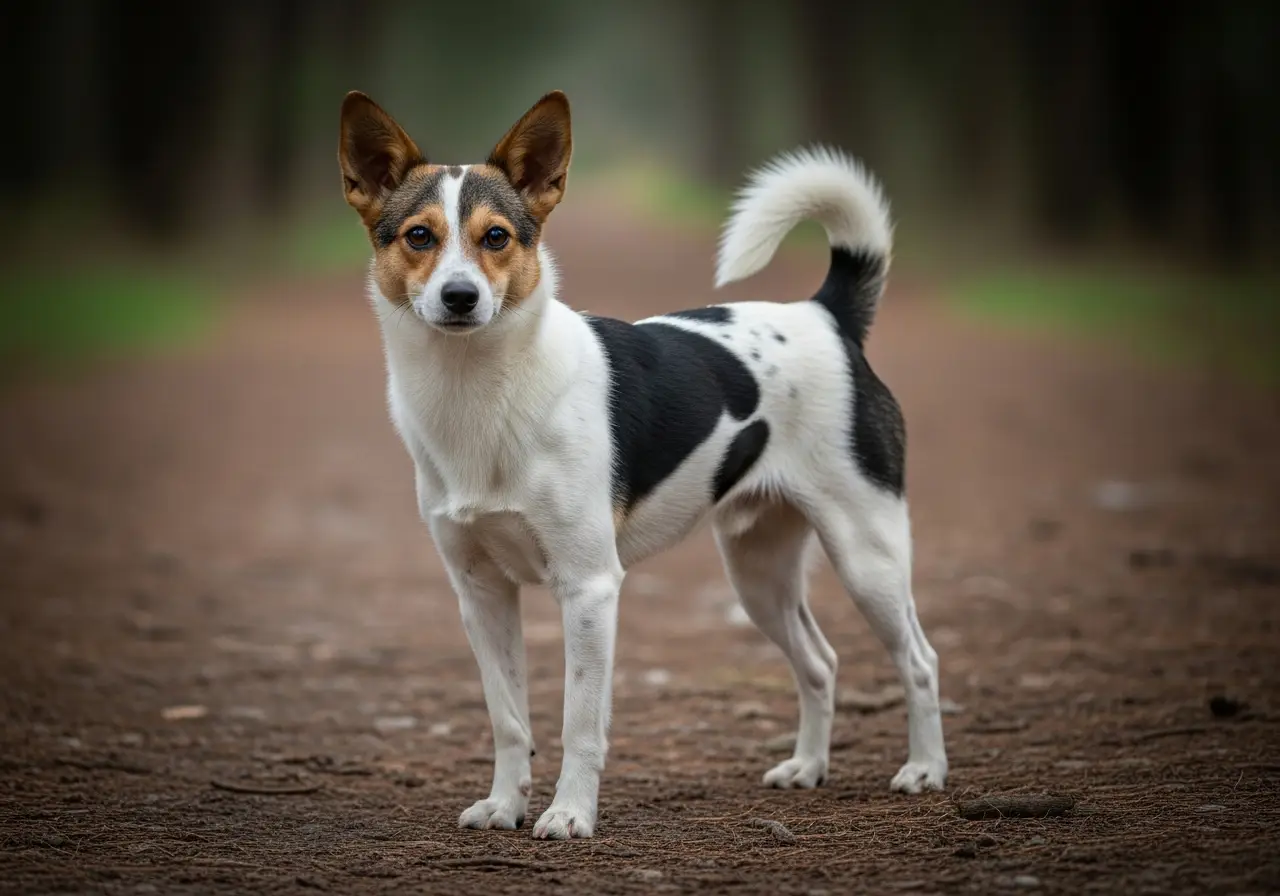
The Alopekis is an ancient small primitive dog from Greece, not FCI-recognised, endangered, withers height 20–30 cm.
03Profile
Key facts and suitability
- Origin
- Griechenland
- Original purpose
- Multi-purpose farm dog, pest control, guard dog
- height at the withers
- 20–30 cm
- Weight
- 3–7 kg
- Life expectancy
- 12–16 Years
- Coat type
- Short-haired
- Minimum exercise
- 45 min/day
- Puppy price
- 400–900 CHF
- Waiting period
- 12 months
- Sports
- Mini-Agility · Obedience
04Temperament
How the Alopekis shows up in everyday life
When coming home, the Alopekis reacts attentively and present; it registers changes in the flat immediately and reports anything unknown with targeted barking. This is not a mistake, but its original guarding behaviour. Whoever does not guide this will get a dog that decides for itself when an alarm is appropriate.
Internally, i.e. from its own genetics, the Alopekis shows a high need for social contact with its key people. It orients itself closely to the family, seeks closeness and observes the happenings in the household attentively. Being left alone must be trained step by step; four hours are a realistic maximum with good preparation.
Externally, i.e. in its reaction to strangers or new situations, it behaves reservedly at first. A stranger entering the flat is observed, not immediately greeted. This reserve is not a sign of aggression, but of selectivity. With clear leadership and positive socialisation, it opens up, but remains selective.
On a walk, its prey drive shows itself: small mammals, birds and rustling leaves activate its hunting instinct. A reliable recall is therefore not optional, but mandatory. In the dog park, it gets along with conspecifics if well socialised; conflicts arise more from a lack of early training than from breed predisposition.
Mental stimulation through nose work, search games or simple training units has a noticeable effect on its calm behaviour. A stimulated Alopekis is a calm Alopekis; an under-stimulated one shows this through restlessness and increased barking.
05Needs
What this breed needs daily
The Alopekis requires 60 to 90 minutes of active enrichment daily. Pure walks without structure are not enough. Units that combine exercise and mental work are sensible: nose work, search games, short training sequences with variable stimuli or controlled exploration tours in new environments.
Its need for exercise is in the medium range; it is not an endurance athlete that requires hours-long runs, but also not a dog that gets by with two short rounds daily. The quality of enrichment is decisive: A 20-minute nose work unit has a greater effect on its well-being than 60 minutes of passive accompanying.
The need for social contact is high. The Alopekis requires regular, active contact with its key people, not just physical presence. Passive coexistence is not enough for it. It wants to be included: in training, in exploring, in everyday life.
Being left alone can be trained, but is not automatic. A maximum of four hours is considered realistic with consistent building up. Whoever is regularly away from home for longer needs a reliable care solution.
Mental stimulation through mental work (searching, learning, problem-solving) takes priority over pure physical exhaustion in this breed. Its original use as an independently acting farm dog has shaped a dog that wants to make decisions. Whoever does not give it meaningful tasks risks that it will seek its own, with undesirable results.
Exercise
Medium
mental work
Medium
Social needs
High
training
Easy
07Quick Check
08Suitability
Who this breed is suitable for – and who it isn't
✓Matches
The Alopekis suits owners who can plan 60 to 90 minutes of structured enrichment daily and enjoy active training. A basic understanding of positive reinforcement and consistent training is a prerequisite, not a bonus.
Committed first-time owners are suitable if they are willing to use a dog training school from the start and understand training as an ongoing process. The Alopekis forgives inconsistency less readily than some other small breeds.
Households with a calm to moderately active daily routine, in which the dog is integrated into the daily structure, offer it good conditions. Keeping it in town or country is possible, provided environmental stimuli are introduced early and systematically.
Families with children from about eight years of age, who are guided in dealing with dogs, are suitable, provided the dog has opportunities to retreat and is not treated as a toy.
Those who understand the preservation of an endangered primitive breed as part of their decision to keep a dog and are willing to collaborate with Greek conservation breeders will find in the Alopekis a historically significant companion with genuine character.
×Doesn't match
The Alopekis is not suitable for owners looking for a dog that occupies itself and demands little attention. Its high need for social contact and guarding behaviour require daily presence and active involvement; neither can be delegated.
Those who are regularly away from home for more than four hours a day and cannot organise reliable care will not do justice to the Alopekis. Its need for bonding is real and not a trait that disappears through habituation.
Households with small animals such as rabbits, guinea pigs or birds are not a suitable environment without intensive, professionally guided socialisation; the prey drive is genetically anchored and cannot be trained out.
Those who regard the Alopekis’s alertness as “cute” and do not introduce clear rules for barking and alarm behaviour risk a behavioural pattern that becomes entrenched over time and is difficult to correct.
Those looking for a dog that reacts openly and warmly to strangers should assess the Alopekis’s external axis realistically: it remains selective and reserved towards unknown people; this is breed disposition, not a training error.
10Line reality
Show line, working line, breeder market
The Alopekis has no officially differentiated breeding lines in the sense of working lines, show lines, or field trial lines. The lack of FCI recognition means that no international standard exists to define or separate lines.
In practice, however, two informal origins can still be distinguished: dogs from Greek preservation breeding, which are bred by committed clubs with a focus on maintaining type and health, and dogs from uncontrolled breeding, offered under the label "Alopekis" or "Greek primitive dog" without documented origin.
This difference is relevant for interested parties: preservation breeders work with a limited, documented gene pool and place value on health examinations. Uncontrolled providers offer no transparency regarding parent animals, health status, or socialisation.
A differentiation of lines in the classical sense, for example between performance-oriented and show-oriented dogs, does not exist for the Alopekis. The focus is on preserving the original type as a whole.
11Health · Reality
What you need to plan for medically with your Alopekis
Systematic health data on the Alopekis, such as HD/ED rates from breeding association screenings, do not exist in the form available for recognised breeds due to the lack of FCI recognition and the small gene pool. This is a relevant difference compared to breeds with established studbooks.
Life expectancy is estimated at 12 to 15 years based on comparable primitive dogs of small body size. Reliable studies specifically on the Alopekis are lacking; this value is based on data for similar types such as the Greek Shepherd Dog (Hellenikos Poimenikos) and general longevity data for small dog breeds (cf. Kraus et al., 2013, PLOS ONE: body size correlates negatively with life expectancy in dogs).
Breed-typical diseases are not systematically documented. As a primitive breed without targeted selection for exterior extremes, brachycephaly, exaggerated skin folds or skeletal dysplasias are not considered breed-typical. The risk of breeding-related defects is lower than in highly bred modern breeds, but individual diseases are not excluded.
Recommended preventive examinations include: annual veterinary check-up, dental status (small dogs tend to have crowding), eye health and parasite prevention. Before taking over a puppy or adult dog from Greece, an initial veterinary examination including blood work is mandatory.
Overweight poses a real risk for small, moderately active dogs. The Alopekis requires calorically adjusted feeding; its weight should be monitored regularly, as overweight puts strain on joints and heart function.
12Structured data
Health by the numbers
Prone to diseases
No known breed-specific hereditary diseases, leishmaniasis risk (Mediterranean origin), dental problems in small dogs
Recommended health tests
Dental check-up, leishmaniasis screening when importing from Greece
13Myths ↔ Reality
What is often said incorrectly about this breed
Five myths, five realities, five sources.
"The Alopekis is a low-maintenance lap dog without significant training effort.
The Alopekis has a pronounced guarding and prey drive. Without consistent training and clear rules, uncontrolled barking quickly becomes established as a behavioural pattern. It requires structured training from the start, no less than larger working breeds.
"Small dogs hardly need any exercise; the Alopekis is content with a short walk.
The Alopekis requires 60 to 90 minutes of structured exercise daily, combined with mental stimulation. Its original use as an active farm dog and pest controller is reflected in a need for exercise and enrichment that goes beyond mere walks.
"As an ancient natural breed, the Alopekis is completely healthy and requires no veterinary preventive care.
Robustness does not mean invulnerability. As there is no international breeding standard and no systematic health screenings, the health status varies considerably depending on origin. A veterinary examination before taking ownership, as well as regular preventive check-ups, are essential.
"The Alopekis can be easily socialised with small animals such as rabbits or guinea pigs.
The genetically anchored prey drive of the Alopekis is originally directed at small mammals. Socialisation with rabbits, guinea pigs, or birds requires intensive, professionally supported socialisation and remains a risk factor that must not be underestimated.
"Because the Alopekis is not FCI-recognised, origin plays no role when buying.
Lack of FCI recognition increases the risk of unscrupulous providers who commercially exploit rare breeds. Especially for endangered primitive breeds, checking the origin is crucial: preservation breeders in Greece work with documented lines and health certificates.
14animal welfare
The animal welfare perspective
Breeder market, designer versions, animal shelter reality — what no one writes in the puppy ad.
The Alopekis is a breed threatened with extinction. This is not a dramatic addition but a sober assessment of the situation: the total population is small, the gene pool limited, and the lack of FCI recognition makes coordinated international conservation breeding difficult.
Backyard Breeder Market and Abuse of the Rarity Label
Rare breeds not recognised by the FCI attract commercial providers who use the rarity label as a sales argument. Dogs offered as "Alopekis" or "Greek primitive dog" on classifieds platforms often do not come from documented conservation breeding programmes. Missing papers, unknown parentage and inadequate socialisation are typical features of such offers. A low price is not a quality indicator; it is often a warning sign.
Breeding and Keeping-Related Problems
The Alopekis itself does not exhibit extreme breeding-related traits, no brachycephaly, no excessive skin folds, no skeletal dysplasias. This is an advantage over many modern breeds. The main risk lies not in the breed's constitution but in uncontrolled breeding: dogs from undocumented litters may have health deficits that only become visible after acquisition.
Adoption as an Equally Valid Option
Greek animal shelters and specialised animal welfare organisations regularly rehome dogs that correspond to or are close to the Alopekis type. These dogs have often already been examined by a vet, vaccinated and dewormed. Rehoming from Greece is more logistically demanding than buying locally, but it simultaneously supports animal welfare on site and relieves overcrowded shelters.
Choosing an Alopekis is a decision with far-reaching implications: for an individual dog and for the survival of a breed thousands of years old. Both aspects deserve careful consideration.
15Costs · Transparency
What this breed realistically costs
An Alopekis from a reputable Greek conservation breeding programme typically costs between 800 and 1,500 EUR. Transport costs apply when collecting the dog from Greece (flight or road transport with a certified animal transporter): 200 to 500 EUR depending on the provider and route. Offers significantly below 500 EUR without papers and health certificates are a clear warning sign.
Annual living costs for a small breed of this size are typically between 1,200 and 2,000 EUR. This includes: high-quality food (approx. 400–600 EUR/year), basic equipment and accessories, grooming needs and regular vet costs (vaccinations, parasite prevention, annual check-up: approx. 300–500 EUR).
Unplanned vet costs (e.g., for dental treatments, which are more common in small breeds) can amount to 300 to 1,000 EUR per procedure. Pet insurance or a saved-up vet budget of at least 1,500 EUR is recommended. Insurance premiums for small dogs range from 30 to 80 EUR/month depending on the provider and coverage (as of 2024, DACH market).
16Puppy search
What you need to consider when choosing a breeder
- A reputable conservation breeder for the Alopekis can be recognised by several characteristics: they document the parent dogs with health certificates, provide information on the socialisation process of the puppies and ask questions about the planned living environment.
- Anyone who does not ask questions is not a breeder with a sense of responsibility.
- As the Alopekis is not FCI-recognised, there is no central studbook.
- Points of contact are Greek breed clubs and animal welfare organisations dedicated to preserving the type.
- Enquiries via international animal welfare networks can also lead to reputable contacts.
- Adopting an adult dog from a Greek animal shelter is an equally valid option.
- Many of these dogs correspond to the Alopekis type, have received veterinary care and are looking for a permanent home.
- The advantage: character and health status are easier to assess in an adult dog than in a puppy.
- Stay away from offers without documentation of origin, without the possibility to view the mother bitch and without veterinary records.
- This applies particularly to rare breeds marketed as exotics.
FAQ
Frequently asked questions about the Alopekis
Is Alopekis suitable for beginners?
Alopekis is considered suitable for first-time dog owners.
Is Alopekis a family dog?
Alopekis is considered suitable for families with good socialisation and species-appropriate care.
How much exercise does Alopekis need?
At least around 45 minutes of exercise per day.
Does Alopekis suit an apartment?
With enough exercise and enrichment, Alopekis can also be kept in an apartment.
What is the size and weight of Alopekis?
Fully grown, Alopekis reaches about 20–30 cm at the withers and weighs around 3–7 kg.
What is the life expectancy of Alopekis?
The life expectancy of Alopekis is approximately 12–16 years.
Which diseases are common in Alopekis?
No known breed-specific hereditary diseases, leishmaniasis risk (Mediterranean origin), dental problems in small dogs
17Breed clubs
Official breed clubs in DACH
19Related
Similar breeds – and their differences
You might also be interested in
Participate
Do you have a good photo of your Alopekis?
We are looking for expressive images for our breed profiles. Submit yours; the editorial team reviews every submission before publication.
Does this breed suit you?
Adaptable, robust primitive type for town and country. Rare outside Greece – anyone looking for one should contact Greek protection associations.