
Guide: Anal glands in dogs – Everything you need to know
If your dog "scoots", the anal glands are usually blocked. Here you will find out when you can help yourself and when a vet is needed.
Content
Your dog slides its rear end along the floor – this “scooting” is familiar to most dog owners at some point. It is usually the first sign that something is wrong with the anal glands. The two small glands sit to the left and right of the anus and produce a secretion that – put politely – smells intense. Dogs use it for scent marking, whether we like it or not.
Normally, the glands empty themselves, precisely when the dog defecates. Firm stool exerts enough pressure, and the system works quietly in the background. It becomes problematic if this mechanism fails – for example with chronically soft stool, or if the dog’s anatomy simply does not allow it.
How do I recognise blocked anal glands in my dog?
Scooting is just one of several signs. Often the problem creeps up on you: The dog licks its anus more often, suddenly smells strongly fishy or sits down with unusual hesitation, as if something were uncomfortable.
I remember a client whose Labrador suddenly became restless at night – getting up repeatedly, turning around, lying down again. It was only when the smell became unmistakable that the connection became apparent. At the vet, it turned out that the glands were bulging with fluid, hardened and on the verge of causing problems.
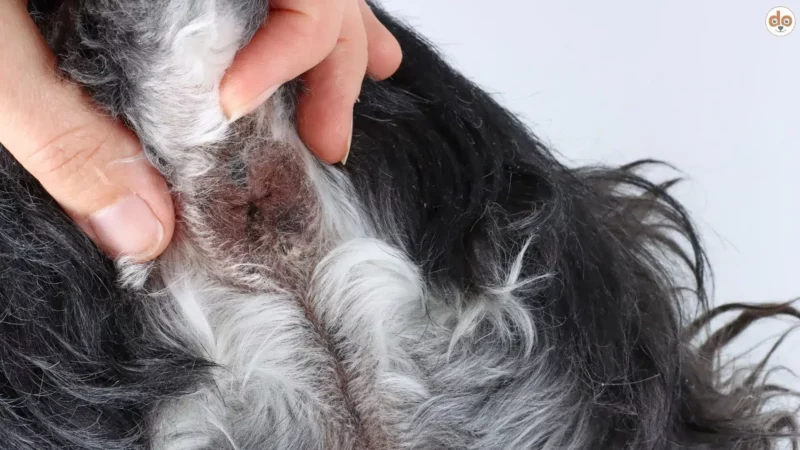
If you see visible swelling next to the anus, there is purulent discharge or your dog cries out when you touch the anal area – then inflammation has usually already set in. This is not something to leave until tomorrow.
Can I empty the anal glands myself?
Theoretically, yes. In practice, I advise against it the first time – not because the technique is so difficult, but because you really need to have seen it once. You feel for the glands at about 4 and 8 o’clock next to the anus, enclose them with your thumb and forefinger and press upwards and inwards. Sounds simple.
The problem: Too much pressure damages the sensitive gland walls. Too little achieves nothing. And then there is the so-called “surprise effect” – the secretion often sprays in a direction you did not expect, and the smell of rotting fish lingers stubbornly. I speak from experience.
The first time, let the vet or an experienced veterinary nurse do it and watch closely. Some dog groomers also offer this – but definitely ask about their experience with your breed, as that makes a difference.
How often do the anal glands need to be emptied?
There is no blanket answer here. Some dogs never need it in their lives, while others have problems returning after six to eight weeks. Small breeds – Chihuahuas, French Bulldogs – are affected more frequently than large dogs. Why exactly, more on that shortly.
Focus on your dog’s behaviour, not the calendar. Is it not scooting, not licking, not smelling noticeably? Then it is fine. And please do not overdo it: Emptying too frequently disrupts natural function, which is well documented.
With chronic problems, you develop a feel for it over time. A dachshund owner I have known for years comes every six weeks – otherwise his dog reliably gives him a hint, and it is never pleasant.
Which home remedies help with anal gland problems?
The most effective “home remedy” is simply fibre. It ensures firmer faeces, and firmer faeces exerts more pressure on the glands during defecation – exactly what the natural mechanism needs. Grated carrots mixed into the food or a teaspoon of pumpkin purée daily have proven effective.
Psyllium husks also work, but here caution is advised regarding dosage. Too much leads to constipation, which has the opposite effect. Start with a pinch for small dogs, half a teaspoon for large ones – and observe closely.
Warm compresses can help with mild swelling. A warm, damp cloth applied to the affected area for five to ten minutes relaxes the muscles and can slightly promote natural emptying. Not a miracle cure, but gentle and often helpful.
When should I go to the vet with anal gland problems?
Immediately if visible swelling is present, pus is leaking, or your dog shows obvious signs of pain. This combination indicates an inflammation that requires antibiotics – this cannot be treated at home.
Also, if the problems keep recurring despite changing food, a vet visit is worthwhile. Allergies or anatomical peculiarities may be behind it, requiring a different approach.
In very stubborn cases, flushing the glands may be necessary: The thickened secretions are flushed out with a solution, and the gland is disinfected. A routine procedure for the vet – but definitely not something to do at home.
Frequently asked questions about anal glands
Can anal glands burst?
Yes. In cases of severe blockage, they can become inflamed, form an abscess and burst. This is painful and requires immediate veterinary treatment – please do not wait.
Do all dogs smell so strong after emptying?
The odour is always intense, there is no way to sugarcoat that. Healthy secretions smell “only” very fishy. If the odour becomes sweetish or putrid, this indicates an infection – then go to the vet.
Why do small dogs have problems more often?
Their gland ducts are narrower and clog more quickly. In addition, small dogs often produce softer faeces, which exerts less pressure on the glands. Both together make for an unfavourable combination.
Can anal glands be surgically removed?
This is possible, but only an option for truly chronic problems. The procedure carries risks such as incontinence or impaired wound healing – this should be carefully weighed.
Do probiotics help with anal gland problems?
Indirectly, yes – if they stabilise digestion and contribute to firmer faeces. It is worth a try, especially for dogs that are stress-sensitive and therefore repeatedly have soft stools.