
Agility for Children and Young People: The Perfect Introduction to Dog Sports
Agility training for children from 8 years old promotes teamwork and coordination. With the right trainer and adapted obstacles, dog sports become a family experience.
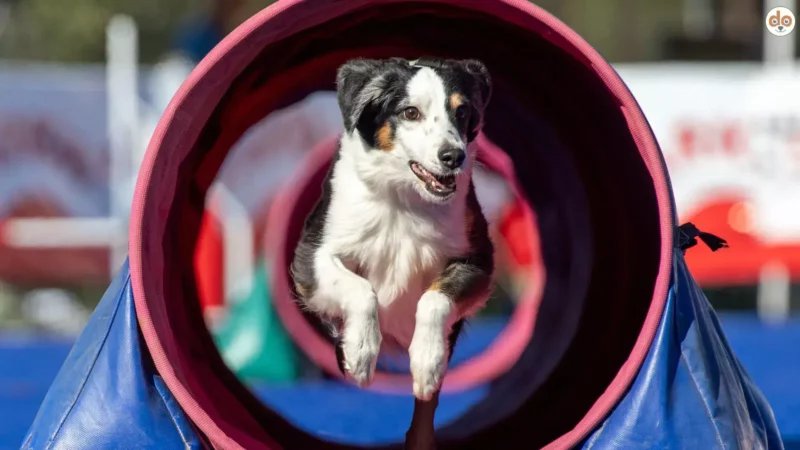
Content
Your child wants to do sports with the family dog? Agility sounds tempting – but from what age is this sensible, and what does a child-appropriate start look like? Most trainers recommend starting from 8–10 years of age, depending on the child’s developmental stage.
From what age can children start with agility?
Most agility clubs accept children from 8 years of age. At this age, most children can give clear commands and have sufficient body control for handling work. Some clubs already offer “Mini-Agility” from 6 years with strongly simplified obstacles.
The German Agility Club recommends a maximum obstacle height of 30 cm up to 12 years of age. From 13 years, young people may compete in the youth class with standard obstacles (up to 55 cm).
What physical prerequisites does my child need?
Your child should be able to walk safely and change direction quickly. Coordination problems are not an exclusion criterion – agility even significantly improves motor skills.
The dog is more decisive: It should be at least 12–15 months old so that the joints are matured. Breeds with joint problems (such as German Shepherds) often require veterinary clearance.
How much does agility training for children cost?
A trial session usually costs 10–15 CHF. Regular courses range between 60–90 CHF for 8 units. Many clubs have family memberships that are cheaper than individual memberships.
You do not need your own equipment at the beginning. Later, tunnels and hurdles for the garden cost about 150–200 CHF.
How do I find the right trainer for my child?
Make sure that the trainer has experience with children. Not every agility trainer gets along well with 8-year-olds. Ask specifically: “Do you have training as a children’s or youth trainer?”
Good children’s trainers explain in simple language, remain patient and incorporate playful elements. They never push for quick successes.
What safety rules apply during training?
Up to 12 years, an adult must always be present. Not just present – actively accompanying. Your child handles the dog, but you bear overall responsibility.
The obstacles are adapted to the size of the child. An 8-year-old child cannot direct a 40-kilo dog over a one-metre hurdle. Trainers then use obstacles of 20–30 cm.
What mistakes do parents make when starting?
The most common mistake: expectations that are too high, too early. “In three months Max should run through the course without errors.” This overwhelms both child and dog equally.
Second classic: letting the child do it while remaining completely passive yourself. Agility with children is a family sport – you learn along, support with motivation and help with problems.
Is my dog suitable for agility with children?
Yes, if it is basic obedient and shows no aggression. The breed plays a subordinate role – even Dachshunds or Pugs can do agility, just more slowly.
How often should we train?
Once a week is completely sufficient. More often quickly becomes a burden rather than fun for children.
When can we participate in competitions?
Most clubs have children’s and youth tournaments after one year of training experience. The focus is on fun, not performance.
What do I do if my child loses interest?
Take a break. Children go through phases of interest – after a few months, motivation often returns on its own.
What equipment does my child need?
Firm shoes with a good sole and clothes that can get dirty. Do not forget treats for the dog.