Dog-friendly campsites in D-A-CH: regulations and costs
Not all campsites allow dogs. Many German sites are dog-friendly, particularly around Lake Constance, in the Eifel region and at lakes such as Lake Plön, but with conditions: dogs must be kept on a lead in communal areas, dogs are not permitted in every tent, and an additional fee is often charged (2–10 euros per dog per night). Austrian campsites (e.g. Camp MondSeeLand in the Salzkammergut) are often more generous; some have special dog areas and organise dog training sessions. Swiss sites are more expensive but transparent: their websites clearly state whether dogs are allowed and under what conditions. Check before booking; portals such as PiNCAMP and camping.info filter for ‘dog-friendly’.
Legal requirements for international camping trips
Anyone travelling abroad with their dog needs an EU pet passport (issued by a vet, costing approx. 5–10 euros, valid for life), a microchip or tattoo for identification, and a valid rabies vaccination (at least 21 days before departure). The vaccination must be documented in the pet passport. For Switzerland, you additionally need a veterinary health certificate (not older than 10 days). Austria accepts the EU passport without further documentation. Violations result in fines and harm animal welfare efforts against rabies and imported diseases.
Sleeping in a tent with your dog: comfort and safety
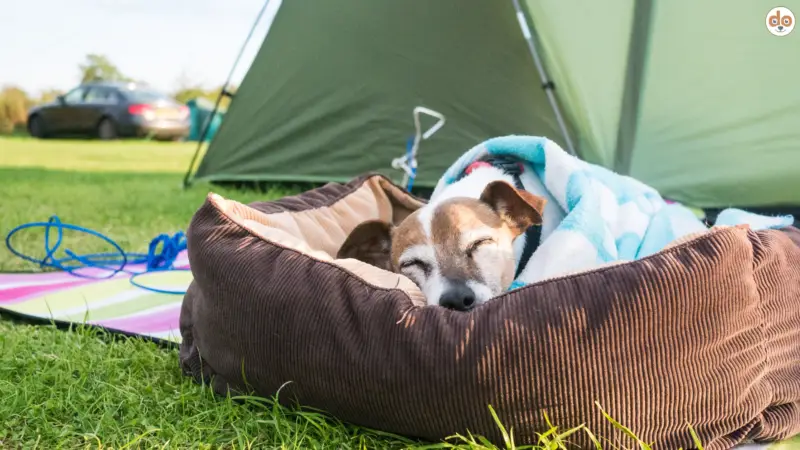
A tent is a confined space for a dog; some like it, others do not. Get them used to it beforehand, ideally by practising in the living room with the tent set up. The dog needs its own place in the tent: a non-slip mat or a dog bed, so that it does not lie on the cold tent floor. Ventilation is crucial. A closed tent with two bodies quickly accumulates moisture and heat; open small windows or use tent vents. In high summer, a tent can overheat; look for a campsite with tree shade or use additional sun protection. Plan an area for toilet breaks at night, including waste bags.
Rules of conduct at the campsite
Not all campers like dogs. If your dog barks and wakes other campers, this causes conflicts. Train beforehand: the dog must be able to stay alone in the tent calmly for several hours. At the site, it must always be kept on a lead, even if other dogs are running freely. An encounter between two leashed dogs can escalate; frustration caused by the lead is real, so keep distances. Campers with children sometimes react nervously; recognise the boundary and avoid them. Waste bags are mandatory. Some campsites evict dog owners whose animals leave waste behind.
Dangers when camping: ticks, snakes, campfires
Campsites are often located in natural areas with high tick infestation. Start tick prophylaxis before your holiday, applying it at least 3 days before departure. Check for and remove ticks after every outing. Snakes are rare in southern regions (southern Germany, Austria, Switzerland), but vipers do occur; do not let your dog sniff around in tall grass. When using a campfire: keep the dog at a distance; flying sparks can burn ears or fur. Free-roaming dogs belonging to other campers can trigger aggressive encounters; get to know your neighbours. Food scraps attract raccoons, deer and other wildlife; clean up immediately and store food securely.
Equipment for camping with a dog
Basic equipment includes a non-slip mat or a dog bed (for the tent and shade outdoors), sufficient fresh water (especially in summer), tick pliers and disinfectant, a small dog first-aid kit, waste bags, a sturdy lead (not flexible), food and ideally portable sun protection (a pop-up tent for the dog only or a parasol). Optional items include a dog swimming suit to protect against ticks and UV rays (for water-loving dogs), a dog brush (daily combing helps find ticks earlier) and a reflective collar for night-time toilet breaks. Camping with a dog requires more planning than without.
What do I need for camping with a dog?
Am I allowed to stay at every campsite with my dog?
No. Many sites in Germany allow dogs, but some ban them entirely. Check the campsite website or call before booking. In Austria and Switzerland, many sites are more dog-friendly, but exceptions exist here too. A dog ban applies completely: the dog is not allowed to sleep in the tent.
What do I need for camping with a dog?
Basic equipment includes sufficient water, food, a non-slip tent mat or a dog bed, tick pliers and disinfectant, waste bags, a sturdy lead and a small dog first-aid kit. Optional items include a transport box (if the dog might get lost), a portable shade tent for outdoors, a sun-protection dog coat (for short-haired breeds), a dog brush and a reflective collar. Before travelling: check tick prophylaxis, rabies vaccination (for trips abroad) and ensure you know a vet at your destination.
How do I prepare my tent for my dog?
Choose a tent with good ventilation and windows. Lay out a non-slip mat or a dog bed so that the dog does not lie on the cold floor. Get it used to the tent beforehand; practise indoors. Before departure, check that it can stay alone in the tent calmly for several hours. At night: open a vent or window for ventilation, otherwise it becomes damp and musty.
How do I protect my dog from ticks when camping?
Start tick prophylaxis at least 3 days before departure (spot-on treatments such as Seresto, Bravecto or NexGard). After every outing, systematically check the dog for ticks, especially around the ears, armpits, between the toes and on the belly. Use a tick remover and remove the tick by twisting or pulling it out, without squeezing it. Daily combing with a fine comb helps to find ticks earlier. A dog shampoo containing tick repellent after every walk in the woods offers additional protection.
What extra does camping with a dog cost?
The additional fee is usually 2–10 euros per dog per night (average 5 euros). Large sites have fixed prices on their website; small sites negotiate. A two-week camping holiday with a dog therefore costs approx. 70–140 euros extra in dog fees. Some sites offer monthly tickets, which become cheaper the longer you stay.