
Spot-On
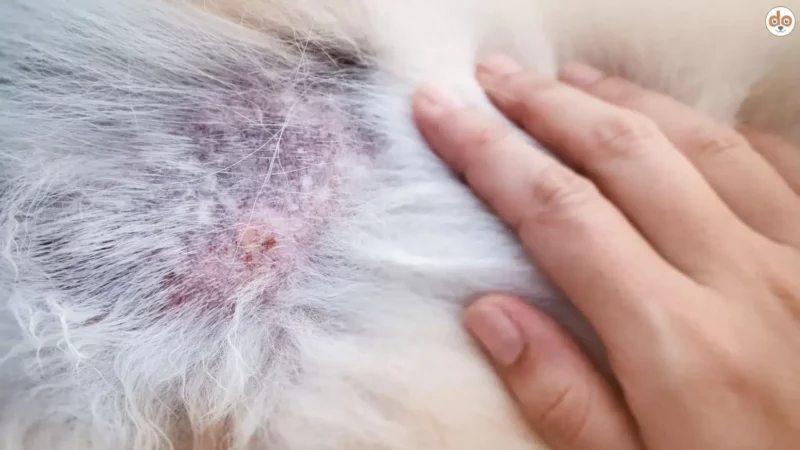
A spot-on is a topical solution used to combat parasites such as fleas, ticks, mites and other pests, which is applied directly to the dog's skin.
Content
A spot-on is a topical solution for combating parasites such as fleas, ticks, mites, and other pests. It is applied directly to the dog’s skin, usually on the neck or along the back. Spot-on products offer protection for several weeks and are easy to apply.
How does a Spot-On work?
The active ingredients in the spot-on are absorbed by the dog’s skin after application and distribute either through the fat layer of the skin or enter the bloodstream, depending on the product’s mechanism of action. There, they act as a repellent or insecticide against parasites. The active ingredients prevent fleas and ticks from establishing themselves, reproducing, or feeding, which ultimately leads to the death of the parasites.
Some spot-on products work systemically (i.e., they penetrate the bloodstream), while others act only locally on the skin. Both variants are applied regularly to maintain protection.
Duration of action and frequency of application
Most spot-on products offer protection for up to four weeks before reapplication is required. Many spot-on products begin to work within hours of application. Depending on the product, spot-ons protect not only against fleas and ticks but also against other parasites such as mites, lice, or mosquitoes that can transmit heartworm disease.
Once dry, most products are water-resistant, so your dog can bathe or swim again a few days after application.
Which parasites do spot-ons combat?
Spot-on products combat various types of parasites, depending on the active ingredient and composition of the product. Here are the most common parasites against which spot-ons protect:
- Fleas: Spot-ons kill fleas on the dog and prevent flea eggs from spreading in the environment.
- Ticks: They also act against ticks, preventing them from attaching and killing them before they can transmit diseases.
- Mites: Some spot-ons combat mites that can cause skin problems such as mange or ear mites.
- Lice: Spot-ons can kill lice and their eggs, which settle in the dog’s coat.
- Mosquitoes: Some products offer protection against mosquitoes that can transmit diseases such as heartworm disease.
Applying a spot-on to dogs
Applying a spot-on is straightforward. Follow these steps to ensure the product works effectively:
- Preparation: Read the instructions on the packaging carefully. Ensure that the product is suitable for your dog’s weight and age.
- Expose area of skin: Part your dog’s fur at a spot where the skin is easily accessible, usually in the neck area or along the back, where the dog cannot lick off the product.
- Apply spot-on: Apply the entire contents of the pipette directly to the skin, not onto the fur. Ensure that the product is distributed evenly if it is to be applied to multiple spots.
- Do not touch dog: Avoid petting your dog or wiping off the product immediately after application. It should dry completely, which usually takes a few hours.
- Repeated application: Observe the recommended interval between applications, usually once a month.
Important notes on application
- Do not apply to puppies that are too young: Ensure that the spot-on product is suitable for your dog’s age. Some products must not be used on puppies below a certain age.
- No contact with eyes or mucous membranes: Ensure that the product does not get into your dog’s eyes, nose or mouth.
- Wash hands: Wash your hands thoroughly after application to remove any product residue.
- Keep children and other pets away: Keep children and other pets away from the treated dog for a few hours after application until the product has been fully absorbed.
Side effects of spot-ons
In most cases, spot-ons are safe and well-tolerated, but as with any medication, side effects can occur. The following reactions are possible:
- Mild skin irritation: Some dogs are sensitive to the ingredients and develop redness, itching or hair loss at the treated site. These symptoms often subside quickly.
- Allergic reactions: In rare cases, allergic reactions such as severe itching, swelling or even breathing difficulties may occur. If such symptoms appear, you should consult a vet immediately.
- Vomiting or diarrhoea: If the dog accidentally licks off the spot-on, vomiting or gastrointestinal upset may occur. Ensure that the spot-on is applied to an area the dog cannot reach.
- Nervousness or lethargy: In rare cases, dogs may become unusually tired or restless after applying the spot-on. These symptoms should not last long, but if they persist, a vet visit is advisable.
When should you consult a vet?
- Severe side effects: If your dog shows severe skin reactions, excessive drooling, breathing difficulties or feels very unwell after applying a spot-on, you should consult a vet immediately.
- Uncertainties regarding application: If you are unsure which product is best suited for your dog or how to apply it correctly, ask your vet for advice.
More from the Wiki
All wiki entries →Plum
The plum is a stone fruit of the genus Prunus. Its stone contains cyanogenic glycosides; the …
Rhubarb
Rhubarb is a knotweed whose leaves are rich in soluble oxalic acid. For dogs, the leaves …
Why is dog faeces white?
White dog faeces occurs when normal digestion is disrupted or certain substances change the colour of …
Dog licks its anus, what to do?
Anal licking in dogs is a normal grooming behaviour that serves for cleaning and emptying the …