
Hepatitis
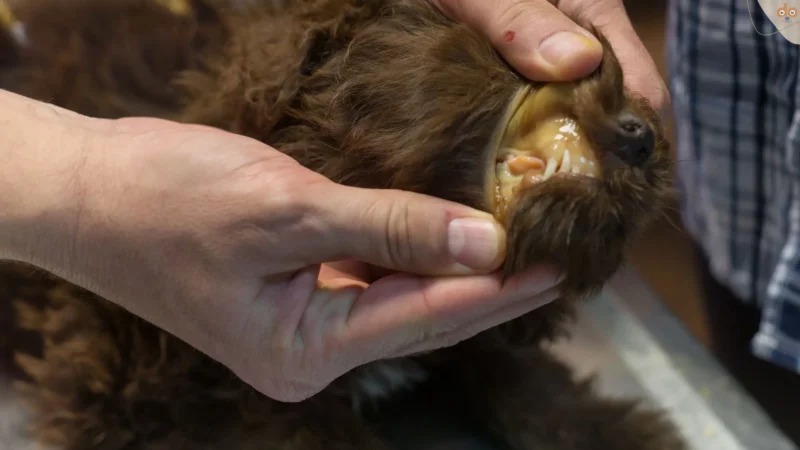
Hepatitis in dogs is a liver inflammation triggered by viruses, bacteria, toxins or autoimmune reactions and can lead to death if left untreated.
Content
Hepatitis in dogs means: the liver becomes inflamed – triggered by viruses, bacteria, toxins or the body’s own immune system going haywire. If left untreated, it can be fatal. That sounds harsh, but unfortunately it is so.
What forms of hepatitis exist in dogs?
Infectious canine hepatitis – caused by Adenovirus type 1, short CAV-1 – mainly affects unvaccinated puppies under one year of age. Since the standard vaccination has been widely used, it has fortunately become rare in Germany. Less than 5% of hepatitis cases are still attributed to viruses today.
The picture looks very different with chronic active hepatitis. Here, breeds play a decisive role: Doberman Pinschers are 15 times more likely to fall ill than other breeds, while Cocker Spaniels and Labradors carry an approximately eightfold increased risk. In Doberman Pinschers, this is often due to a genetic defect in copper metabolism – the metal accumulates in the liver and causes silent damage over years.
Toxic hepatitis arises from poisoning. Xylitol – the sweetener in sugar-free chewing gums – is already damaging to the liver at doses of 0.1 g per kilogram of body weight. Certain medications or poisonous plants such as the death cap mushroom can also bring the liver to its knees.
How do I recognise hepatitis in dogs?
Jaundice first shows up in the white part of the eyes and on the gums. This is easily overlooked with dark coats – that is why it is worth taking a quick look into the mouth if the dog is behaving oddly. At the same time, the urine turns dark brown and the faeces lighter than usual.
If your dog hardly eats anything for more than two days, that is a real warning sign in cases of liver problems. Vomiting, diarrhoea and noticeable lethargy may also occur. In puppies with infectious hepatitis, the fever can suddenly shoot up to over 40 °C.
Neurological signs such as disorientation or seizures are another matter altogether. They arise when the damaged liver can no longer break down ammonia – and this is a medical emergency. Go to the vet immediately.
What does diagnosis and treatment cost?
A basic blood test with the most important liver values – ALT, AST, ALP and bilirubin – usually costs between 80 and 120 euros. An ultrasound of the liver typically adds another 60 to 100 euros.
If specific pathogens are suspected, further tests are necessary: A leptospirosis test comes to around 45 euros, a CAV-1 antibody test at approximately 35 euros. A liver biopsy – including anaesthesia – costs between 400 and 800 euros.
Treatment costs vary considerably depending on the cause. Antibiotics for bacterial hepatitis cost around 30 to 60 euros per week. Immunosuppressive therapy for autoimmune hepatitis can cost between 150 and 300 euros per month. Emergency infusions come in at 200 to 400 euros per day – it adds up quickly.
How is hepatitis in dogs treated?
The therapy depends on the cause. In leptospirosis, antibiotics such as doxycycline usually take effect within 48 hours – provided you start early enough.
Autoimmune hepatitis is a different story: it usually requires lifelong medication with prednisolone or azathioprine. Liver values are checked every four to six weeks and the dose adjusted accordingly.
Nutrition plays an important role. A liver diet with reduced but high-quality protein relieves the organ considerably. The protein content should be between 14 and 18 % – instead of the usual 22 to 26 %. Hills l/d and Royal Canin Hepatic are proven options that vets frequently recommend.
In toxic hepatitis, every minute counts: a xylitol poisoning must be treated within two hours, otherwise irreversible liver damage is threatened.
What are the chances of recovery from hepatitis?
If bacterial hepatitis is detected in good time, the chances of recovery are between 85 and 90 % – that is a good outlook. With chronic hepatitis, the prognosis is more cautious: around 60 % of affected dogs live for at least two more years with consistent treatment.
Infectious hepatitis in puppies is fatal in 20 to 30 % of cases – even with treatment. Adult dogs survive it significantly more often.
Doberman Pinschers with copper-associated hepatitis can achieve a normal life expectancy with early diagnosis and consistent therapy. Without treatment, many of them die before their sixth year of life. This makes early checks in this breed so important.
Can I prevent hepatitis in dogs?
There is a reliable vaccination against CAV-1. Primary immunisation takes place at 8, 12 and 16 weeks, then every three years. Breakthrough infections are so rare that one can speak of very high protection.
Xylitol poisonings can be prevented by consistently keeping sugar-free chewing gums, sweets and diabetic products out of reach. Just a single piece of chewing gum can be fatal for small dogs – it sounds exaggerated, but it is not.
In at-risk breeds such as the Doberman Pinscher, an annual check of liver values is recommended from the third year of life onwards – even if the dog shows no symptoms whatsoever. Chronic processes creep in, and that is exactly what makes them so dangerous.
More from the Wiki
All wiki entries →Plum
The plum is a stone fruit of the genus Prunus. Its stone contains cyanogenic glycosides; the …
Rhubarb
Rhubarb is a knotweed whose leaves are rich in soluble oxalic acid. For dogs, the leaves …
Why is dog faeces white?
White dog faeces occurs when normal digestion is disrupted or certain substances change the colour of …
Dog licks its anus, what to do?
Anal licking in dogs is a normal grooming behaviour that serves for cleaning and emptying the …