Wiki · Health & Care
Enteritis
Enteritis is an inflammation of the small intestine that can lead to severe dehydration in dogs within hours.

2 sourcesReviewed on June 15, 2026Responsible editor: Roger KleinText: Miriam Schäfer
Content
When does enteritis become an emergency?
You need immediate veterinary help if your dog has watery diarrhoea with blood, vomits repeatedly, or appears apathetic. For puppies under four months old, this applies doubly; they dehydrate to a life-threatening extent within six hours.
What triggers small intestine inflammation?
Parasites such as giardia or roundworms are the most common cause in dogs of all ages. In puppies, parvovirus leads to severe enteritis, which is why basic immunisation is so crucial.
Bacteria such as Salmonella or E. coli inflame the intestine after eating raw meat or the faeces of other animals. Food intolerances to certain proteins develop gradually over weeks.
Swallowed foreign bodies – socks, toy parts, bones – mechanically irritate the intestinal wall.
In older dogs, an autoimmune reaction can attack their own intestine (IBD).
How do I recognise the symptoms early?
The first sign is usually softer faeces, which becomes watery within hours. Your dog passes small amounts every 30–60 minutes, often with mucus or streaks of blood.
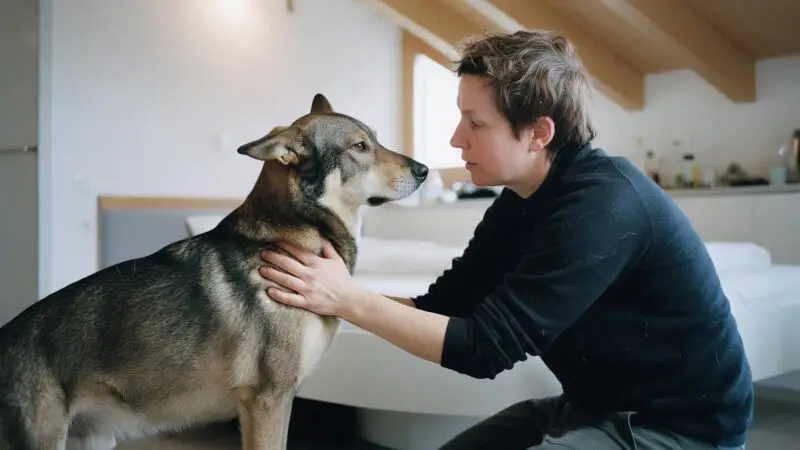
Abdominal cramps manifest as a hunched posture or whining when the abdomen is touched. The dog does not eat and either drinks excessively or not at all.
In severe cases, vomiting occurs, initially bringing up food, then yellowish foam or bile. The gums become pale, and the eyes sink slightly.
What can I do before visiting the vet?
Withhold food from your dog for 12–24 hours, but never withhold water. For puppies under four months, fast for no more than six hours.
Offer small amounts of water every two hours, one tablespoon per kilogram of body weight. Electrolyte solutions from the pharmacy (without sweeteners) help with severe diarrhoea.
Collect a fresh faecal sample in a sealable jar, no older than two hours. This significantly speeds up diagnosis.
How does the vet diagnose enteritis?
Microscopic examination of the faeces reveals parasites, bacteria or inflammatory cells within 15 minutes. Blood tests indicate the degree of inflammation and possible fluid loss.
If foreign bodies are suspected, X-rays follow. Chronic cases sometimes require endoscopy with tissue biopsy.
How is enteritis treated?
Fluid replacement always takes priority, via a venous catheter in severe cases. Antibiotics are used only when bacteria have been confirmed, never prophylactically.
Antiparasitics such as fenbendazole or metronidazole eliminate worms and protozoa. Probiotics stabilise the damaged gut flora after the acute phase.
Feeding starts with small portions of cooked chicken and rice in equal parts. Only switch back to normal food after three days without diarrhoea.
How do I prevent enteritis?
Deworm your dog every three months or following a faecal examination by the vet. Keep it away from other animals’ faeces and prevent drinking from puddles.
The parvovirus vaccination protects against the most severe viral enteritis. Change dog food only gradually, over seven days, and watch for reactions.