
Anaesthesia
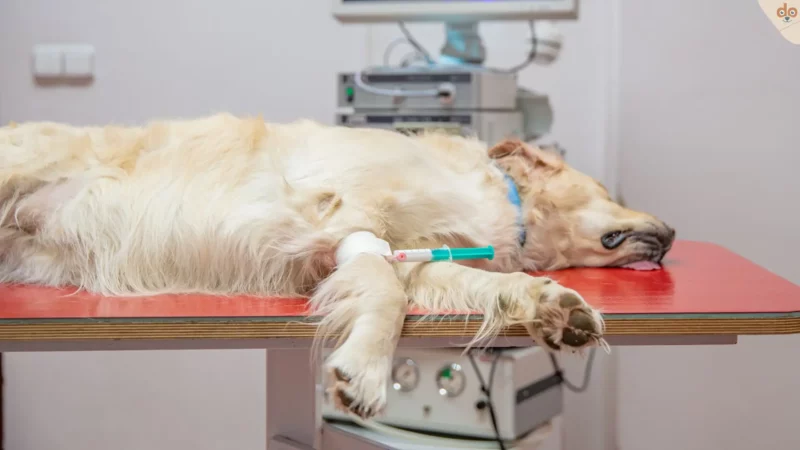
Anaesthesia (also general anaesthesia) refers to a medically induced state in which the dog becomes unconscious due to anaesthetics and perceives neither pain nor other sensory stimuli.
Content
Anaesthesia is – simply put – a state of controlled unconsciousness. For dogs, it is always necessary when operations, more complex examinations or painful procedures are scheduled. During anaesthesia, the dog feels no pain, the muscles are relaxed, reflexes largely switched off. This gives the vet the necessary calm to work precisely – but at the same time requires continuous monitoring, because it is not without risks either.
What is anaesthesia?
The term anaesthesia – experts also say general anaesthesia or general anaesthesia – describes a medically induced state in which the dog becomes unconscious through anaesthetics. It experiences neither pain nor any other sensory stimuli. This is made possible by a triad of pain suppression (analgesia), loss of consciousness (hypnosis) and muscle relaxation. Depending on the situation, anaesthesia can be initiated and maintained via injection, through inhaled anaesthetics (i.e. gas) or a combination of both.
Types of anaesthesia in dogs
Which form of anaesthesia is used depends on the planned procedure and the health status of the dog. Essentially, there are five variants:
- General anaesthesia (general anaesthesia): The dog becomes completely unconscious. This variant is chosen for larger operations, where absolute calm and complete pain relief are indispensable. It is maintained either via injections or as inhaled anaesthesia with gas.
- Inhaled anaesthesia: Here, the dog breathes in an anaesthetic gas – usually isoflurane or sevoflurane – via a mask or a tube inserted directly into the trachea. The gas concentration can be dosed very precisely, which is why this method is preferred especially for longer procedures.
- Injection anaesthesia: The anaesthetics are administered intravenously or intramuscularly. Classic for shorter procedures – but can certainly be combined with inhaled anaesthesia if needed.
- Local anaesthesia: Only a defined area of the body is numbed. The dog remains conscious but feels no pain in the affected region. Typically used for minor procedures.
- Sedation: The dog is put into a drowsy state without completely losing consciousness. Practical for minor procedures or diagnostic tests such as X-rays or ultrasound examinations.
The course of anaesthesia
Anaesthesia is not a switch you simply flip – it involves a clearly structured process with several steps:
- Preliminary examination: First, the dog is thoroughly checked. In addition to a physical examination and blood tests, older animals often also undergo a heart check (ECG). These values show whether the dog is fit enough for anaesthesia and help in dosing the anaesthetics.
- Premedication: Shortly before actually falling asleep, the dog receives a sedative injection (sedatives). This relaxes it and simultaneously reduces the amount of anaesthetic agent needed later. Additionally, painkillers and – depending on the procedure – also antibiotics are administered.
- Induction of anaesthesia: Via injection or through an inhalation device, the dog falls asleep within a few minutes. During this phase, the vets closely monitor heart and respiratory function.
- Maintenance: During the operation, anaesthesia continues continuously – either as anaesthetic gas in inhalation anaesthesia or via repeated injections. The team keeps the dog under observation at all times.
- Monitoring of vital functions: Heart rate, respiration, oxygen saturation and body temperature are continuously measured. If the depth of anaesthesia is not appropriate, it is adjusted immediately – the dog should neither wake up nor sleep too deeply.
- Recovery phase: As soon as the procedure is completed, the anaesthetics are discontinued. The dog wakes up slowly and spends this time in a quiet, monitored area until respiration and circulation are stable.
Risks of anaesthesia in dogs
Anaesthetics are significantly safer today than they were a few decades ago – nevertheless, certain risks remain, depending on the animal’s health status and the type of procedure:
- Circulatory and respiratory problems: Anaesthetics affect the central nervous system and can influence blood pressure, heart rate and respiration. Dogs with pre-existing heart or respiratory diseases carry an increased risk here.
- Allergic reactions: Rare, but possible: Some dogs react allergically to anaesthetic agents or accompanying medications – in the worst case, up to anaphylactic shock.
- Hypothermia: Relaxed muscles and a slowed metabolism cause body temperature to drop. The team counteracts this with warming blankets or heat pads.
- After-effects of anaesthesia: Drowsiness, nausea or disorientation after waking up are not unusual and subside in most dogs within 24 hours.
- Increased risk in older dogs: Seniors and animals with heart disease, kidney problems or liver disease require special caution. However, the risk can be significantly reduced with adjusted medication doses and more intensive preparation.
Measures to minimise risks
Good veterinary practices rely on several levels of protection before any anaesthetic agent is even used:
- Blood tests before the procedure: Liver and kidney values show whether the dog can process and excrete the anaesthetics at all. Without this step, you are operating in the dark.
- Individual anaesthesia planning: The dog’s weight, age, health status and medical history are taken into account when selecting anaesthetic agents and dosages – there is no standard solution for everyone.
- Continuous vital monitoring: Monitors for heart rate, oxygen saturation and blood pressure run throughout the entire anaesthesia, so that the team can act immediately in case of deviations.
- Post-operative observation: The dog remains under supervision until it is breathing independently, moving safely and is stable.
Care after anaesthesia
Some attention is still required at home after anaesthesia. A few important points:
- Observe behaviour: Stumbling, disorientation or a vacant look in the first hours after waking up are normal. If this lasts significantly longer than a few hours or worsens, it is worth calling the vet.
- Water and food: Only feed when the dog is truly awake and can drink water without immediately vomiting it up again. Start with a small portion of easily digestible food – no big feast immediately after waking up.
- Rest and recuperation: Long walks, playing or running around should wait until the vet gives the green light.
Conclusion
Anaesthesia is one of the great achievements of modern veterinary medicine – without it, many procedures that save dogs’ lives or significantly improve their quality of life would simply not be possible. Yes, it carries risks. But with thoughtful preparation, consistent monitoring and anaesthesia planning that puts the individual dog at the centre, these risks are well manageable. Anyone who seeks a conversation with the vet in advance, takes preliminary examinations seriously and keeps an eye on aftercare at home gives their dog the best possible prerequisites for a complication-free anaesthesia.
More from the Wiki
All wiki entries →Plum
The plum is a stone fruit of the genus Prunus. Its stone contains cyanogenic glycosides; the …
Rhubarb
Rhubarb is a knotweed whose leaves are rich in soluble oxalic acid. For dogs, the leaves …
Why is dog faeces white?
White dog faeces occurs when normal digestion is disrupted or certain substances change the colour of …
Dog licks its anus, what to do?
Anal licking in dogs is a normal grooming behaviour that serves for cleaning and emptying the …