
Vegetables for Dogs: Top Selection and Which Varieties Are Taboo
Carrots, pumpkin and cucumber are top for dogs – but only when prepared correctly. Onions and garlic are taboo, however.
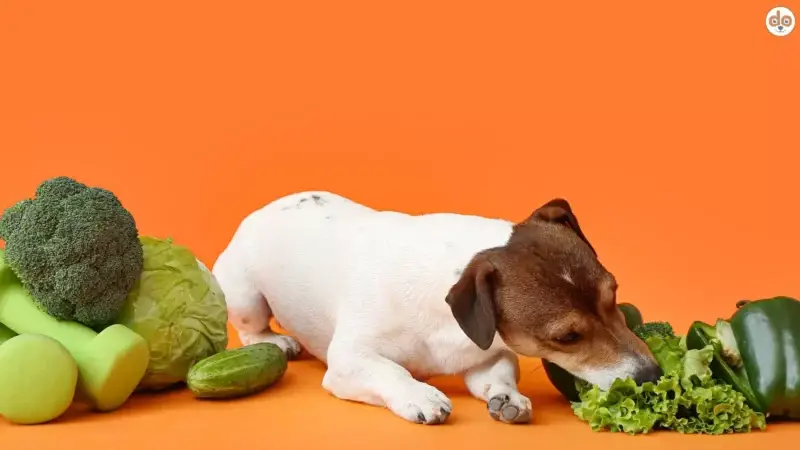
Content
Your dog looks at you as if you were about to open the treat of the year – meanwhile you are just cutting carrots. Can he join in? Yes, usually. Vegetables can meaningfully complement a dog’s diet, but not every vegetable, and by no means in every preparation.
Which vegetables are dogs allowed to eat?
Six varieties have proven themselves in practice – each with different strengths, each with its own pitfalls. Here is what you really need to know.
Carrots: The classic for better vision
A medium-sized carrot – approximately 60 grams – already fully covers the daily requirement of beta-carotene for a 20-kilogram dog. This provitamin A strengthens the retina and can slow down age-related vision loss. And the crunching effect when chewing? Reduces plaque entirely without a brush, purely mechanically.
Raw in finger-thick sticks or steamed into a puree – both have their purpose. Cooked, your dog absorbs the beta-carotene better; raw, he trains his chewing muscles. Important: no more than 10 % of the daily food amount.
Pumpkin: Fibre power for digestive problems
Pumpkin is something like the quiet problem-solver in the vegetable drawer. Its soluble fibres bind water – in case of diarrhoea, this has a firming effect; in case of constipation, a loosening one. A tablespoon of pumpkin puree per 10 kilograms of body weight regulates digestion surprisingly gently.
Peeled, deseeded, steamed for 15 minutes – then either mixed into the food as a puree or frozen in ice cube trays. As a summer treat, many dogs enthusiastically go for these frozen cubes.
Sweet potato: Energy boost for active dogs
The high proportion of complex carbohydrates makes the sweet potato an ideal snack before long walks or training sessions. Unlike regular potatoes, it contains no solanine – so it can even be nibbled raw, although the cooked version is easier to digest.
Cut into thin slices and dry in the oven at 120 °C – this results in natural chew strips that many dogs prefer over commercial snacks. Or boil diced and freeze in portions, so you always have something on hand.
Cucumber: Liquid supplier without calories
Only 16 calories per 100 grams – the cucumber is simply unbeatable if you want to indulge an overweight dog without worsening its weight. The high potassium content also supports kidney function.
Peeled (the skin can carry pesticide residues), deseeded, cut into bite-sized cubes. Ice-cold cucumber cubes are an absolute hit with many dogs on hot days – just try it out.
Broccoli: A vitamin C boost to be enjoyed with caution
100 grams of broccoli provide more vitamin C than an orange. Sounds great – and it is, as long as the quantity is right. The florets produce sulphur compounds that can burden the thyroid in large amounts. This is no reason to omit broccoli entirely, but a clear reason for moderation.
Use only the florets, omitting the stalk. Blanch for three minutes, then immediately shock in ice water to preserve the nutrients. Maximum twice a week, no more than one teaspoon per 5 kg of body weight.
Leaf spinach: An iron source with limitations
Spinat scores with folic acid and iron – but comes with a catch: oxalic acid. It binds calcium and can contribute to the formation of kidney stones with frequent feeding. For occasional small portions, this is no problem, but spinach as a daily routine? Better not.
Use only fresh leaves, wash thoroughly and blanch briefly. Once a week, a small amount – you really don’t need more than that.
Why is some vegetable poisonous for dogs?
Dogs simply cannot break down certain plant toxins. Humans have enzymes that neutralise substances such as solanine or thiosulphate – dogs lack precisely this protective mechanism.
Onions and garlic contain thiosulphate, which destroys red blood cells. Just 5 grams of onion per kg of body weight can trigger anaemia – and the symptoms often do not appear until days later, when you have long since stopped thinking about the onion.
Unripe tomatoes and raw potatoes contain solanine. This alkaloid causes vomiting and can trigger arrhythmias in higher doses. Green spots on potatoes are particularly problematic.
Avocado contains persin – harmless for humans, potentially fatal for dogs. Even small amounts can lead to breathing difficulties and heart failure. Here the rule is: take no risks.
Wild mushrooms are fundamentally unpredictable. Even varieties that are edible for humans can affect dogs very differently. The risk is not worth it – really not.
Rhubarb contains oxalic acid in particularly high concentrations. This crystallises in the kidneys and can cause acute kidney failure.
How much vegetable belongs in the dog bowl?
Vegetables should never make up more than 10 to 15 % of the total food amount. A 20-kg dog needs around 800 grams of food daily – of which 80 to 120 grams can be vegetables. That is more than many think, but also significantly less than some generous dog owners throw in.
Always introduce new vegetables gradually: start with a teaspoon, increasing to the desired amount over a week. Keep an eye on your dog’s faeces during this time – simply reduce the portion if there is diarrhoea or bloating.
In my experience, most dogs tolerate cooked vegetables better than raw ones. The cell walls are broken down, the nutrients are absorbed more efficiently – and the stomach thanks you for it.
Do I need to season vegetables for the dog?
No – on the contrary. Salt burdens the kidneys, onion powder is poisonous, and other spices can irritate the stomach lining. Less is truly more here.
Dogs perceive taste very differently from us. What seems bland to us is the natural inherent flavour of a food for them. If you want to make the vegetables slightly more attractive, add a small splash of unsalted meat broth – that is perfectly sufficient.
Can my puppy already eat vegetables?
From the 12th week of life, puppies can be carefully introduced to well-tolerated vegetables. Steamed carrots or pumpkin are suitable for the start – one teaspoon each, no more.
How do I recognise a vegetable intolerance?
Diarrhoea, vomiting or skin rash within 6 to 24 hours after feeding are clear indications of an intolerance. Omit the corresponding vegetable and test cautiously again after about 2 weeks.
Can too much vegetable be harmful?
Yes, certainly. Too many fibres noticeably overload the digestion. Too much beta-carotene can colour the skin yellowish. The 10% rule is not a bureaucratic guideline, but genuine protection against overdosing.
Which vegetables help with overweight?
Cucumber, zucchini and celery have hardly any calories but offer a lot of volume – they fill you up without fattening you. As a treat replacement during training, they are hard to beat, especially if your dog already jumps at every little thing.
Do I need to buy organic vegetables?
Organic is not mandatory, but there are several arguments in favour. Dogs lick their paws far more often than humans wash their hands – pesticide residues can accumulate over time. For celery and spinach, organic is particularly recommended because these varieties are conventionally often more heavily contaminated.