
Fat Content in Dog Food: Finding the Right Ratio
The optimal fat content in dog food is between 10 and 20 percent. Omega-3 fatty acids from fish are often in short supply.
Content
You are standing in front of the food shelf and wondering how much fat your dog needs? This question concerns many dog owners, rightly so. Because when it comes to fat content in dog food, it is about more than just energy.
Why does my dog need fat in their food at all?
Fat is the turbo for the dog’s organism. It provides twice as much energy as proteins or carbohydrates – 9 calories per gram instead of 4.
But fat does even more: it transports the fat-soluble vitamins A, D, E and K into the cells. Without sufficient fat, your dog cannot utilise these essential vitamins, no matter how high-quality the food otherwise is.
You can recognise a fat deficiency by a dull coat, flaky skin and less vitality. Some dogs also become pickier eaters because fat is missing as a flavour carrier.
What percentage of fat should be in dog food?
The optimal fat content lies between 10 and 20 percent, which applies equally to wet and dry food.
This range is based on the guidelines of the Association of American Feed Control Officials (AAFCO), which also serve as a reference in Germany. With less than 8 percent, the dog’s body increasingly relies on proteins for energy production. This unnecessarily burdens the kidneys and liver.
An example from practice: A 25-kilogram dog with a normal activity level needs about 1,200 calories daily. With a fat content of 15 percent, the fat covers around 40 percent of the energy requirement, a healthy ratio.
What is the difference between Omega-3 and Omega-6?
Omega-6 fatty acids are more common: they are found in poultry fat, vegetable oils and most types of meat. Your dog usually gets enough of these.
Omega-3 fatty acids are the problem candidates. They have anti-inflammatory effects and support the brain, eyes and joints. But they occur almost exclusively in fish and a few plants.
The ratio makes the difference: optimal is 5:1 to 10:1 (Omega-6 to Omega-3). Many dog foods, however, have a ratio of 20:1 or worse. This can promote inflammation rather than curb it.
Which fat sources are best for dogs?
Fish beats almost everything else. Salmon, herring and mackerel contain EPA and DHA, the two most active forms of Omega-3.
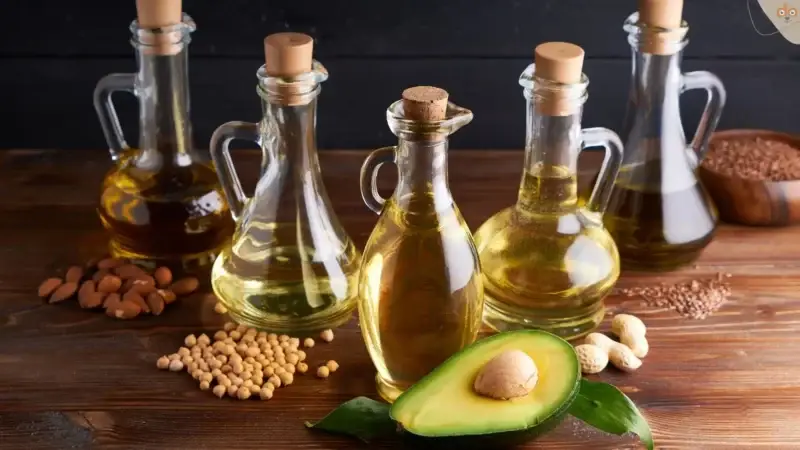
For oils to be mixed in, this rule of thumb applies: 1 teaspoon per 10 kilograms of body weight, at most every second day. Linseed oil provides plant-based Omega-3, while fish oil offers the more directly available EPA and DHA.
Cold-pressed salmon oil is suitable as a supplement if your dog does not already receive fish-rich food. Be careful with pumpkin seed oil: it contains a lot of Omega-6, which can worsen the ratio.
How do I recognise inferior fat in dog food?
Vague terms such as “animal fats” or “oils and fats” are warning signs. Good manufacturers name the exact sources: “chicken fat”, “salmon oil”, “linseed oil”.
Another check: if the fat is listed far back in the ingredients list, there is probably too little of it. In a food with 15 percent fat, the fat source should be among the first five ingredients.
By the way, you can often smell inferior fat as soon as you open the tin. A rancid, fishy odour indicates oxidised fats, which can do more harm than good.