
01Summary
In a paragraph
If you only have 30 seconds.
The Japan Chin is not a dog for owners looking for a low-maintenance small breed. It forms strong bonds, is sensitive to noise and hustle, and has brachycephalic anatomy that requires veterinary attention. Those who provide it with calm closeness, gentle guidance, and regular health checks will receive an independent, dignified companion with a pronounced personality.
02Introduction
What makes the Japanese Chin special
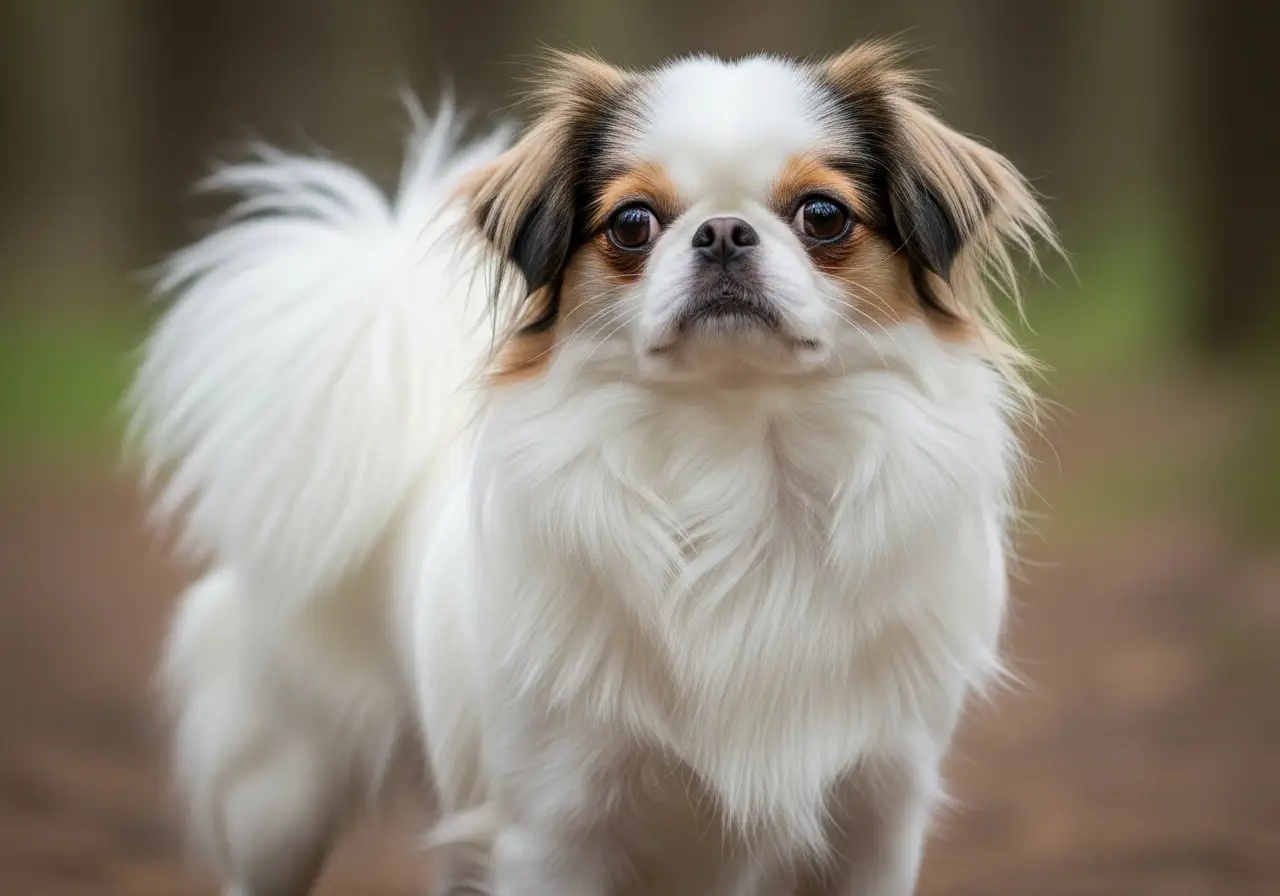
The Japanese Chin is a former imperial palace companion dog from Japan, FCI Group 9, calm and undemanding, with a withers height of 25–30 cm.
03Profile
Key facts and suitability
- Origin
- Japan
- Original purpose
- Companion dog at the Japanese imperial court
- FCI
- No. 206 · Group 9 · Sektion 8: Japanische Spaniel und Pekingesen
- height at the withers
- 25–30 cm
- Weight
- 2–4 kg
- Life expectancy
- 10–14 Years
- Coat type
- Long-haired
- Minimum exercise
- 15 min/day
- Puppy price
- 1'500–3'000 CHF
- Waiting period
- 12 months
- Sports
- Obedience · Tricks
04Temperament
How the Japanese Chin shows up in everyday life
When you return home, the Japanese Chin does not show an exuberant greeting like many other breeds; it first observes, then approaches in its own way and seeks calm physical closeness. This reserve is not a lack of interest, but an expression of its independent personality.
Internally, what the dog needs: The need for social contact of the Japanese Chin is high. It wants to be near its primary caregiver, follows them through the apartment and reacts with restlessness to exclusion or prolonged isolation. The need for mental stimulation is low; elaborate training sessions or complex enrichment tasks do not correspond to its profile. Short, calm interactions and shared periods of rest fulfil its daily needs.
Externally, how the dog reacts: Towards strangers, the Japanese Chin behaves in a waiting and reserved manner. It barks rarely but observes closely. In hectic environments (loud children's birthday parties, busy markets, unsettled households), it withdraws or appears stressed. With other dogs, it is generally amiable, provided they respect its calm baseline.
These two axes diverge significantly: A high need for social contact with one's own family does not mean that the dog acts sociably with strangers or in noisy groups. Anyone expecting a Japanese Chin to be a "sociable city companion for all situations" will be disappointed here. However, anyone looking for a quiet, attentive companion for a calm everyday life will find in it a dog with genuine presence.
05Needs
What this breed needs daily
The Japanese Chin needs 30 to 45 minutes of exercise daily, divided into two to three short walks. Intensive endurance exertion is contraindicated due to the brachycephalic anatomy; in heat and high humidity, walks must be moved to the cooler times of day.
Mental stimulation: The need for mental work is low. The Japanese Chin does not benefit from complex training sequences or sporting disciplines. Short learning units with positive reinforcement, calm interaction and shared periods of rest cover its mental needs. Overload due to too many stimuli or training that lasts too long leads to withdrawal and stress.
Social need: This point is decisive. The Japanese Chin requires constant closeness to its primary caregiver. Being left alone for more than three hours represents a limit of tolerance for many individuals and must be carefully built up over weeks. Households in which the dog regularly spends several hours alone, without gradual training having taken place, structurally overload it.
Care: The silky long coat requires brushing several times a week. The eyes (large, round and exposed) require daily checks for discharge or irritation. Teeth and skin folds on the face should be cleaned regularly. This care routine is not an optional extra, but part of basic care.
Exercise
Very low
mental work
Something
Social needs
High
training
Medium
06Sport & Mental and Physical Stimulation
What sports the Japanese Chin is suited for
Realistic in terms of physiology and genetics – not every breed suits every sport.
Structurally and physiologically suitable: not an endurance sport (brachycephaly / BOAS).
07Quick Check
08Suitability
Who this breed is suitable for – and who it isn't
✓Matches
The Japanese Chin suits owners who lead a calm everyday life and can offer the dog genuine closeness. Specifically: people who work from home for the most part or retirees who are available for the dog for several hours daily. A calm living environment (without constant noise, haste or frequent changes of visitors) is a basic prerequisite.
Suitable for single people or couples without small children, who enjoy quiet bonding and an independent dog personality. Also suitable for households with older children from about ten years of age, who show calmness and respect when dealing with the dog.
Anyone who already has experience with sensitive or brachycephalic breeds is clearly at an advantage. First-time owners are not excluded in principle, but must be prepared to engage intensively with the special characteristics of the breed, including respiratory health, care effort and the systematic building up of being left alone. A dog training school with experience in positive reinforcement is recommended.
×Doesn't match
The Japanese Chin does not suit owners who are away from home for eight or more hours daily and do not have a reliable dog care plan. The high need for social contact of the breed is incompatible with structural isolation, even in a comfortable apartment.
Not suitable for households with small children under six years of age: The combination of small body size, sensitive temperament and brachycephalic anatomy makes the Japanese Chin susceptible to unintentional injuries from uncoordinated children's movements.
Anyone looking for an active sports companion (for jogging, cycling or extended hikes) will find the wrong partner in the Japanese Chin. Its anatomy sets clear limits on endurance exertion and heat.
Anyone who equates reserve towards strangers with a lack of friendliness and tries to correct this behaviour through pressure or confrontation will overload the dog. Anyone who also expects that a small dog automatically means less care effort structurally underestimates the demands on the coat, eyes and respiratory health of this breed.
10Line reality
Show line, working line, breeder market
The Japanese Chin is bred exclusively as a companion dog today; a differentiation into working and show lines, as exists for retriever or herding breeds, is not established for this breed. All breeding animals are assessed according to FCI Standard No. 206, which places elegance, expression and temperament traits in the foreground.
However, within show dog breeding there are differences in head shape that are relevant for buyers: specimens with an extremely flat facial skull, bred for maximum brachycephaly for the show ring, carry a significantly higher risk of respiratory diseases than animals with a more moderate head shape. These differences are not marked by official line designations, but are recognisable by looking at the parent animals and their breathing function tests.
Regionally, there are breeding programmes in Japan itself that focus on historical types with a somewhat less extreme head shape. In Europe and North America, show breeding dominates. Buyers should specifically ask for the BOAS grading of the parent animals, regardless of whether an animal comes from a „show line" or a less well-known breeder.
11Health · Reality
What you need to plan for medically with your Japanese Chin
The Japan Chin belongs to the brachycephalic breeds and thus carries a structurally increased risk of Brachycephalic Obstructive Airway Syndrome (BOAS). Studies by the Vetsuisse Faculty of Bern (2023) show that in up to 50% of cases, severely brachycephalic dogs have clinically relevant airway changes, even without obvious symptoms in everyday life. A BOAS grading of the parent animals should be available before purchase.
According to breeder associations, the life expectancy of the Japan Chin is 10 to 14 years, with dogs having a moderate head shape tending to live longer and requiring fewer airway interventions.
Further breed-typical health risks:
- Patellar luxation: Common in small breeds; breeders should be able to provide evidence of patella examinations for the parent animals.
- Eye problems: The large, exposed eyes are susceptible to corneal irritation, keratoconjunctivitis sicca (dry eye), and injuries. Daily eye checks are mandatory.
- Dental problems: Due to the shortened jaw, teeth often stand close together; regular dental care and annual dental checks at the vet are recommended.
- Heat intolerance: Brachycephalic dogs dissipate body heat less efficiently. Walks in temperatures above 25 °C should be moved to morning and evening hours.
Recommended preventive examinations: BOAS grading, patella examination, eye examination (ECVO-certified), annual dental check.
12Structured data
Health by the numbers
Prone to diseases
Breathing problems (BOAS, mildly brachycephalic), eye problems, heart problems
Recommended health tests
BOAS screening, cardiac examination, eye examination
13Myths ↔ Reality
What is often said incorrectly about this breed
Five myths, five realities, five sources.
„The Japanese Chin is undemanding due to its small size and can easily cope with being left alone for long periods.
The need for social contact in the Japanese Chin is pronouncedly high. The breed bonds closely with its primary caregiver and reacts to prolonged isolation with stress, which may manifest as restlessness or vocalisations. Being left alone must be built up systematically and gently; there is no automatic assumption based on body size.
„The flat muzzle is merely an optical feature and causes no real health problems.
The Japanese Chin belongs to the brachycephalic breeds. Narrowing of the airways (BOAS, Brachycephalic Obstructive Airway Syndrome) can cause breathlessness, heat intolerance and sleep disturbances. Extreme head shapes significantly increase the risk. Before purchase, a breathing function test should be requested from the breeder.
„Japanese Chins are so gentle that they do not require consistent training.
Gentleness in temperament does not mean that a dog can manage without clear structures. The Japanese Chin is sensitive to pressure but still requires reliable rules and consistent guidance. Lack of structure often leads to insecurity and undesirable behaviour, even in small, calm breeds.
„As a companion dog from the imperial palace, the Japanese Chin is today a pure city dweller without special care requirements.
The silk-long coat of the Japanese Chin requires regular care to avoid matting. In addition, there is breed-specific eye and dental care as well as monitoring of the skin folds in the facial area. The care effort is moderate but not negligible.
„The Japanese Chin is open and friendly towards all people.
Towards strangers, the Japanese Chin usually behaves reservedly or cautiously. A high need for social contact with one's own primary caregiver does not automatically mean openness towards unknown people. These two axes, close family bond and reserve towards strangers, must not be confused.
14animal welfare
The animal welfare perspective
Breeder market, designer versions, animal shelter reality — what no one writes in the puppy ad.
The Japan Chin is a rare breed in Central Europe. Its low prevalence partly protects it from the excesses of the mass market, but not entirely.
Backyard breeder market: Because demand exceeds supply, there are also suppliers of Japan Chins who breed without club affiliation, without health examinations, and without a socialisation concept. Puppies from such sources carry an increased risk of behavioural issues and undetected health problems. Offers on classifieds portals without proof of parent animal health tests are a clear warning sign.
Brachycephaly as a breeding problem: The breed carries genetically determined airway risks. Breeders who focus on maximum flattening of the skull actively exacerbate these risks. The Veterinary Association for Animal Welfare (TVT) points out in its leaflet on brachycephaly (2022) that dogs with severe BOAS are permanently restricted in their quality of life. Buyers who insist on an airway function test for the parent animals send a powerful signal to breeders.
Designer versions: Crosses with other small breeds under names such as “Chin Mix” or “Japanese Palace Dog” occasionally appear in classifieds. These dogs are neither defined by breed knowledge nor standardised health-wise; buyers receive no reliable basis for health or temperament expectations.
Adoption as an option: Japan Chins rarely appear in animal shelters, but breed-specific animal welfare organisations and private rescue centres occasionally rehome dogs from dissolution situations, inheritances, or situations where the owner is overwhelmed. A rehomed dog often comes with a known history and deserves the same serious consideration as a puppy from a breeder.
15Costs · Transparency
What this breed realistically costs
A Japan Chin puppy from a reputable, club-affiliated breeder costs between 1,200 and 2,000 EUR in Germany and Austria, and between 1,500 and 2,500 CHF in Switzerland. Offers significantly below 1,000 EUR without health documentation for the parent animals are a warning sign.
Ongoing costs per year (guideline values for Germany/Austria):
- Food: 300–500 EUR (quality dry food or wet food, breed-appropriate portion sizes)
- Grooming: 200–400 EUR (professional grooming 4–6 times/year, supplemented by home care)
- Vet basic care: 200–400 EUR (vaccinations, parasite prevention, annual check-up)
- Vet specialist examinations: variable; a BOAS assessment costs 150–400 EUR depending on the clinic, an eye examination (ECVO) 80–150 EUR
Pet insurance: A dog health insurance policy with surgery cover costs 30–70 EUR/month for a Japan Chin depending on the provider and scope of benefits. Given the brachycephalic risk profile, where surgical airway correction can cost 1,500–3,500 EUR, surgery insurance is a serious option. Realistic total annual costs: 1,200–2,500 EUR, excluding unforeseen vet costs.
16Puppy search
What you need to consider when choosing a breeder
- Reputable breeders of the Japanese Chin can be recognised by specific criteria: They provide proof of health examinations of the parent animals, in particular a breathing function test (BOAS grading), an eye examination and a patella examination.
- Puppies are given away no earlier than at eight weeks of age, are chipped, vaccinated and dewormed.
- The breeder asks questions about the buyer's living situation and refuses a sale if the keeping conditions do not match.
- Warning signs: No proof of health examinations, puppies under eight weeks, sale without personal conversation, offers via animal exchanges or classifieds portals without club membership.
- The International Club for Japanese Chin, Pekingese and King Charles Spaniel (founded 1920 e.V.) as well as the Kleinhunde Club Schweiz KCS maintain breeder lists with club members.
- These lists are a first point of orientation, not a quality seal, but an indication of club affiliation and breeding regulations.
- Adoption as an equally valid option: Japan Chins rarely appear in animal shelters in Central Europe, but breed-specific animal welfare organisations and rescue centres occasionally rehome dogs from dissolution situations.
- This option deserves the same serious consideration as buying from a breeder.
FAQ
Frequently asked questions about the Japanese Chin
Is Japanese Chin suitable for beginners?
Japanese Chin is considered suitable for first-time dog owners.
How much exercise does Japanese Chin need?
At least around 15 minutes of exercise per day.
Does Japanese Chin suit an apartment?
With enough exercise and enrichment, Japanese Chin can also be kept in an apartment.
What is the size and weight of Japanese Chin?
Fully grown, Japanese Chin reaches about 25–30 cm at the withers and weighs around 2–4 kg.
What is the life expectancy of Japanese Chin?
The life expectancy of Japanese Chin is approximately 10–14 years.
Which diseases are common in Japanese Chin?
Breathing problems (BOAS, mildly brachycephalic), eye problems, heart problems
17Breed clubs
Official breed clubs in DACH
19Related
Similar breeds – and their differences
You might also be interested in

Participate
Do you have a good photo of your Japanese Chin?
We are looking for expressive images for our breed profiles. Submit yours; the editorial team reviews every submission before publication.
Does this breed suit you?
Cat-like, calm imperial palace dog. Heat intolerant. Requires hardly any exercise. Only for very quiet households.