
Furry Nose: A Term of Endearment That Not Everyone Likes
'Furry nose' polarises dog owners: some love the term, while others find it anatomically illogical. What lies behind this and why the dog's snout is still perfect for pet names.
Content
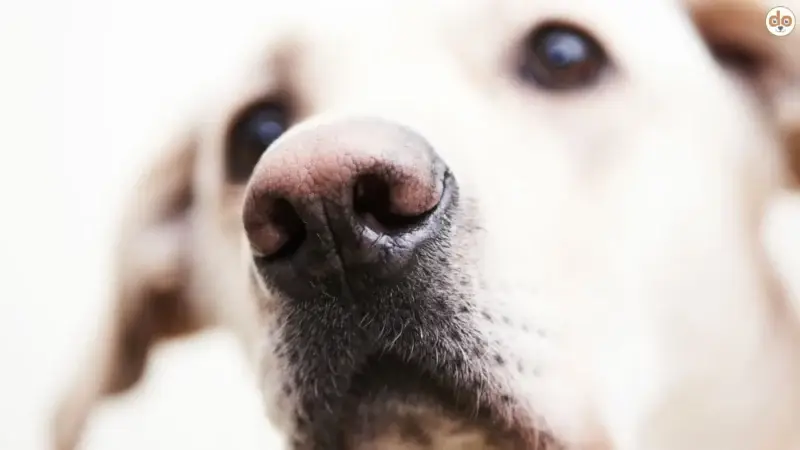
“Look at that cute furry nose!” – a sentence you constantly read in dog forums and on social media. But while some find the term adorable, others roll their eyes. The reason is simple: no fur grows on the dog’s snout.
Where does the term ‘furry nose’ come from?
‘Furry nose’ is a German neologism from the last 20 years. It was coined by animal lovers in online communities, particularly in dog forums and on Instagram from around 2010. There is no concrete source, as colloquial terms develop organically.
Social media massively boosted its spread. Animal welfare organisations adopted the word for their websites, bloggers use it in articles about pets. ‘Furry nose’ sounds emotional and sells well, which is why you find it everywhere today.
The term works on the principle of pars pro toto metaphor: a characteristic feature stands for the whole animal, like ‘robin’ for the bird or ‘white-tailed eagle’ for the sea eagle.
Why exactly ‘furry NOSE’, even though no fur grows there?
The dog’s snout is indeed the only body part without fur, which makes the term anatomically nonsensical. Nevertheless, it works perfectly on an emotional level.
Dog owners associate strong memories with their animal’s nose: the wet greeting in the morning, the intense sniffing in the park, the gentle nudge when the dog wants attention. These experiences stick.
‘Fur’ stands for cuddliness and warmth, ‘nose’ for the curious, exploratory nature of the dog. The combination creates an emotional image that overlooks anatomical correctness.
Linguistically, this is normal. ‘Buttercup’ contains no butter either, and ‘seahorses’ are not horses. Emotional terms follow different rules than scientific names.
What makes the dog’s snout so special?
A dog has about 220 million olfactory receptors, whereas you have only 5 million. This corresponds to a 44 times higher olfactory resolution. Your dog does not just smell ‘cake’, but distinguishes vanilla, cinnamon, butter and even the oven in which it was baked.
The wet nose enhances this effect. Odour molecules dissolve better in moisture, which is why dogs lick their noses to keep them wet. A dry dog nose smells worse.
Every dog’s snout is unique like a fingerprint. The ridges and elevations form individual patterns that can be used for identification. In the USA, some animal shelters use such nose prints for documentation.
Why do some dog owners reject ‘furry nose’?
“That is anatomically incorrect and drives me crazy,” writes a user in a dog forum. She represents a growing group of owners who reject the term.
Main point of criticism: The obvious illogicality bothers them. Those who value precision perceive ‘furry nose’ as careless or ignorant.
Others find the term too cutesy. “My dog is a living being, not a cuddly toy,” they argue. These owners prefer factual terms like ‘dog’, ‘four-legged friend’ or the breed name.
A third aspect concerns individuality. ‘Furry nose’ makes all dogs equal, yet every dog is an individual with its own character. Some owners do not want to hide this uniqueness under a collective term.
The discussion shows: language about pets is an emotional expression of the relationship. ‘Furry nose’ versus ‘dog’ reveals how someone sees their animal.