
Swab
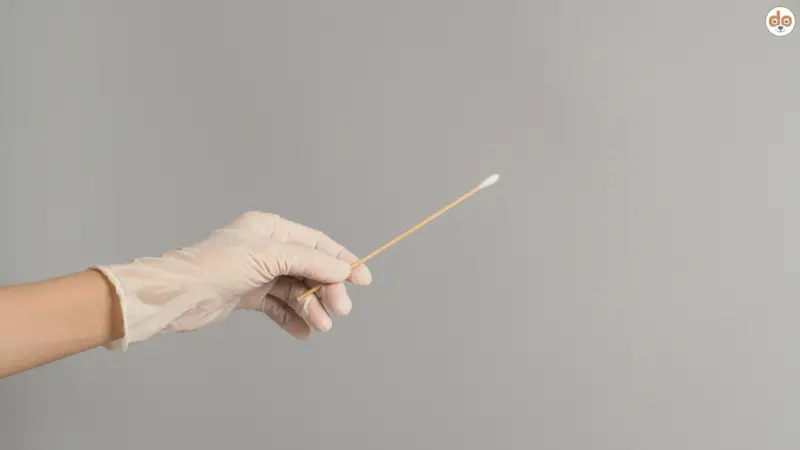
A swab is an examination in which the vet uses a sterile swab to take cells from your dog's mucous membranes to diagnose pathogens, inflammation or cellular changes.
Content
A swab is an examination in which the vet uses a sterile swab to take cells from your dog’s mucous membranes to diagnose pathogens, inflammation or cellular changes.
When does the vet take a swab from your dog?
A swab is necessary if your dog shows symptoms of a mucous membrane infection. In bitches, it is used, for example, in cases of unusual vaginal discharge, problems during mating, or to determine the stage of the cycle.
Eye swabs are indicated if your dog has red, watery, or purulent eyes and the vet suspects a bacterial infection. A throat swab can provide clarity in cases of persistent coughing or suspected kennel cough.
How is a swab taken in dogs?
The vet carefully passes a sterile swab over the affected mucous membrane. For vaginal swabs, a narrow speculum is used to open the vagina. The collected material is placed on a slide and examined under a microscope.
For eye swabs, the vet wipes the conjunctiva – usually without anaesthesia, as the procedure only lasts a few seconds. For throat swabs, the vet holds your dog still so that the swab can be placed safely.
The vet often evaluates the sample directly in the practice. If a bacterial culture with resistance testing is required, they send it to the laboratory.
How much does a swab cost in dogs?
A simple swab with microscopy costs around 20 to 40 euros. If the sample is sent to the laboratory for a bacterial culture with an antibiogram, an additional 50 to 80 euros applies. Costs increase accordingly for complex sampling or multiple swabs.
What risks does a swab pose for your dog?
Swabs are considered low-risk examinations. In theory, vaginal swabs can trigger ovulation, but this is significantly less common in bitches than in cats.
There is only a risk of infection if the procedure is not sterile – with proper practice, this is practically excluded. Your dog usually feels only brief discomfort during sampling.
More from the Wiki
All wiki entries →Plum
The plum is a stone fruit of the genus Prunus. Its stone contains cyanogenic glycosides; the …
Rhubarb
Rhubarb is a knotweed whose leaves are rich in soluble oxalic acid. For dogs, the leaves …
Why is dog faeces white?
White dog faeces occurs when normal digestion is disrupted or certain substances change the colour of …
Dog licks its anus, what to do?
Anal licking in dogs is a normal grooming behaviour that serves for cleaning and emptying the …