
Haemorrhoids
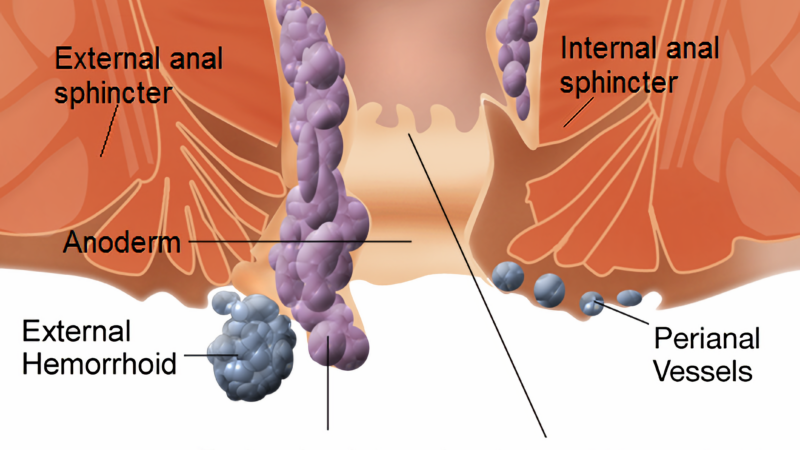 Image: Wikimedia Commons – Internal and external hemorrhoids.png by WikipedianProlific and Mikael Häggström · CC BY-SA 3.0
 Haemorrhoids are swollen blood vessels at the anus, which occur significantly less frequently in dogs than in humans.
Content
Haemorrhoids are swollen blood vessels at the anus, which occur significantly less frequently in dogs than in humans.
What many owners mistake for haemorrhoids usually turns out to be anal gland inflammation or anal fistula. True haemorrhoids develop in dogs primarily due to persistently elevated pressure in the vascular system, for example with chronic constipation or overweight.
What causes lead to haemorrhoids in dogs?
Chronic constipation is the main trigger. Dogs that have to strain regularly when defecating develop increased pressure in the anal veins. In overweight dogs, this problem is exacerbated because the additional weight impairs blood flow in the pelvic area.
Lack of exercise slows down intestinal activity and promotes constipation. Older dogs additionally have weaker connective tissue, making the vessel walls less stable.
How do I recognise haemorrhoids in my dog?
Blood on the faeces after defecation is the most common sign. Unlike with anal gland problems, haemorrhoids typically bleed after and not during defecation.
Affected dogs often show discomfort when sitting or lick the anus more frequently. On examination, small, tautly filled nodules are palpable at the edge of the anus (these feel different from the firm swellings of anal gland inflammation).
Some dogs avoid defecation completely, which worsens the original constipation.
What is the difference to anal gland problems?
Anal gland inflammation is about ten times more common in dogs than haemorrhoids. With anal gland problems, the secretion smells typically fishy, the dog scoots its bottom along the floor and the swelling sits to the side of the anus.
Haemorrhoids, on the other hand, cause no odour, are located directly at the edge of the anus and the dog does not scoot. This distinction is important as the treatment proceeds completely differently.
How are haemorrhoids in dogs treated?
A high-fibre nutrition usually normalises faecal consistency and reduces straining. Pumpkin, psyllium husks or special diet food can help here.
The vet prescribes anti-inflammatory medication or local ointments if necessary. Surgical removal is only necessary in severe, chronic cases; most haemorrhoids heal with consistent therapy of the underlying cause.
Weight reduction and regular exercise are just as important in the long term as acute treatment.
Can I prevent haemorrhoids in my dog?
Normal weight is the best protection. Overweight dogs not only develop haemorrhoids more frequently, but also more severe courses.
Daily exercise keeps digestion going. In older or mobility-impaired dogs, probiotics or high-fibre supplements can support intestinal health.
More from the Wiki
All wiki entries →Plum
The plum is a stone fruit of the genus Prunus. Its stone contains cyanogenic glycosides; the …
Rhubarb
Rhubarb is a knotweed whose leaves are rich in soluble oxalic acid. For dogs, the leaves …
Why is dog faeces white?
White dog faeces occurs when normal digestion is disrupted or certain substances change the colour of …
Dog licks its anus, what to do?
Anal licking in dogs is a normal grooming behaviour that serves for cleaning and emptying the …