
Colitis
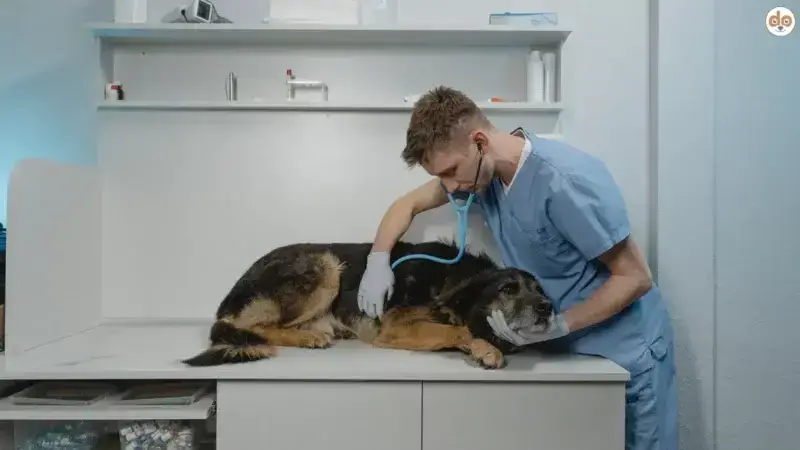
Colitis refers to an inflammation of the large intestine, occurring in around 15% of all dogs with digestive problems.
Content
Colitis is an inflammation of the large intestine and affects an estimated 15% of all dogs that come to the vet due to digestive problems. What exactly happens? The irritated large intestine simply loses the ability to absorb water properly. The result is slimy diarrhoea, accompanied by this typical painful straining where hardly anything comes out – experts call this tenesmus.
What distinguishes colitis from normal diarrhoea?
The difference is actually easy to recognise once you know what to look for. With colitis, the dog passes small, gelatinous portions – often with visible traces of blood on them. Quite different from small intestine problems, where large amounts of watery diarrhoea occur. The mucus itself is not a malfunction, but a protective reaction: the large intestine produces it because it burns.
Another sign that initially confuses many owners: the dog sits down repeatedly, strains – and brings out almost nothing. This tenesmus behaviour arises because the irritated large intestine falsely signals to the brain that it is full. The dog follows the signal. Nothing comes out anyway.
Which causes trigger colitis in dogs?
Stress colitis tops the statistics. Moving house, a vet visit, owners going away – that’s sometimes enough. The sympathetic nervous system releases inflammatory mediators in the large intestine. This is particularly evident in dogs recently rehomed from animal welfare organisations: flare-ups of colitis are not uncommon in the first few weeks.
Parasites such as giardia or whipworms irritate the intestinal lining mechanically. Clostridial overgrowth, on the other hand, often develops after antibiotic treatment when the gut flora becomes unbalanced. And changes in diet? Can trigger inflammatory reactions in sensitive dogs within 24 to 48 hours – even if the new variety is actually “better”.
In dogs over seven years old, chronic colitis can develop, sometimes as part of an inflammatory bowel disease. Tumours in the large intestine are fortunately rare – but with complaints lasting longer than four weeks, they should be ruled out.
How do I recognise colitis in my dog?
Typical colitis faeces are jelly-like and slimy, passed in finger-thick portions. Fresh blood deposits colour it reddish – this is important to distinguish from black, tarry stool, which indicates stomach bleeding. When passing faeces, a tense facial expression is often visible, sometimes trembling.
Many affected dogs lick their anus more frequently because the inflammation itches. What surprises many: appetite usually remains completely normal with acute colitis – unlike with a classic stomach and intestinal infection. Stomach pain tends to show up subtly: more cautious walking, less desire to play. Chronic cases can lead to gradual weight loss, even though the amount of food remains the same.
How does the vet diagnose colitis?
Always first: the faecal examination. Bring a fresh sample – preferably no older than two hours. The vet looks for parasites, clostridial toxins and inflammatory cells. An elevated calprotectin level in the faeces is considered a reliable marker of inflammation.
Thickened large intestine walls become visible on ultrasound from about 4 mm wall thickness onwards. In chronic cases, a rectoscopy may be necessary: a thin endoscope is inserted into the last approx. 20 cm of the large intestine. Biopsies then help to distinguish between IBD, food allergy and other causes – a step that should not be skipped if symptoms persist.
Which treatment helps with colitis?
Acute stress colitis often subsides within three to five days with bland diet. Boiled chicken with rice in a ratio of 1:2 has proven effective – the carbohydrates bind water and give the large intestine a rest. Probiotics with at least ten billion CFU per portion support the rebuilding of the gut flora.
If a bacterial overgrowth is behind it, the vet uses metronidazole or tylosin. Parasites require specific active ingredients: fenbendazole for giardia, febantel for whipworms. Anti-inflammatory agents such as prednisolone are used for chronic inflammatory bowel diseases.
Chronic cases often require lifelong dietary feeding – with hydrolysed protein or as part of an elimination diet. One thing first: the intestinal lining needs six to eight weeks to regenerate completely. Knowing this, you don’t stop after two weeks.
How can I prevent colitis in my dog?
The most effective protection is stress reduction – sounds simple, but sometimes requires real planning. Introduce new food varieties over seven to ten days. Test holiday care beforehand, don’t just let go. In stress-prone dogs, Adaptil pheromones or L-tryptophan preparations can provide preventive support.
Faecal examinations every six months detect parasitic infestation early, before it causes damage. For dogs with a history of colitis, raw feeding is not a good idea – the bacterial risk is simply too high. And high-quality feed without unnecessary fillers and preservatives significantly reduces the allergy potential.
More from the Wiki
All wiki entries →Plum
The plum is a stone fruit of the genus Prunus. Its stone contains cyanogenic glycosides; the …
Rhubarb
Rhubarb is a knotweed whose leaves are rich in soluble oxalic acid. For dogs, the leaves …
Why is dog faeces white?
White dog faeces occurs when normal digestion is disrupted or certain substances change the colour of …
Dog licks its anus, what to do?
Anal licking in dogs is a normal grooming behaviour that serves for cleaning and emptying the …