
01Summary
In a paragraph
If you only have 30 seconds.
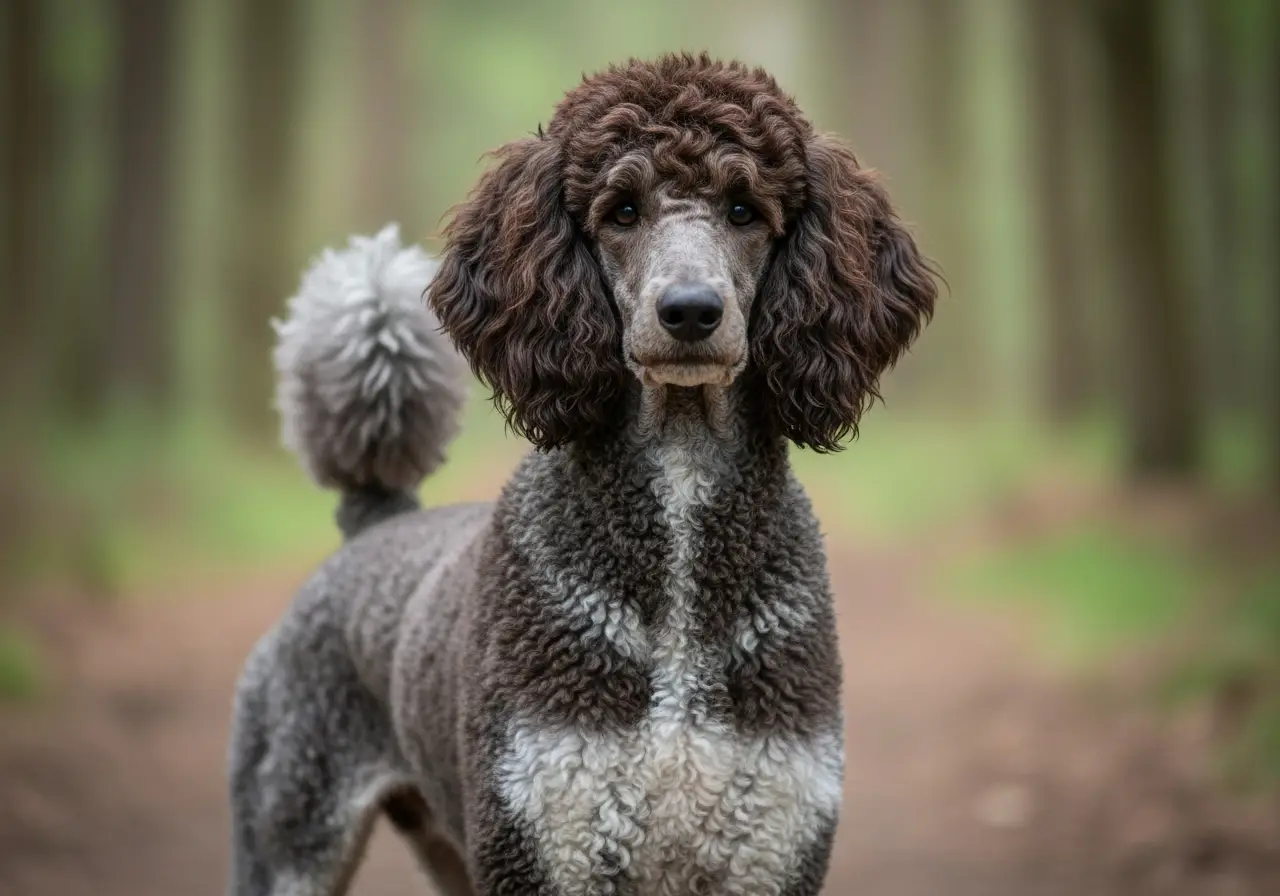
The Standard Poodle is the largest of the four Poodle varieties and ranks among the most intelligent dog breeds overall. Its hunting heritage is noticeable in everyday life: it requires 60 to 90 minutes of exercise daily plus structured mental work. The coat grows continuously and demands professional grooming every six to eight weeks. Those who meet these conditions get a highly trainable, people-oriented dog with a long life expectancy.
02Introduction
What makes the Standard Poodle (King Poodle) special
The Standard Poodle is the largest of the four poodle sizes, FCI Group 9, hypoallergenic and highly intelligent, withers height 45–60 cm.
03Profile
Key facts and suitability
- Origin
- Deutschland/Frankreich
- Original purpose
- Waterfowl hunting
- FCI
- No. 172 · Group 9 · Sektion 2: Pudel
- height at the withers
- 45–60 cm
- Weight
- 18–32 kg
- Life expectancy
- 12–15 Years
- Coat type
- Gelockt
- Minimum exercise
- 90 min/day
- Puppy price
- 1'500–3'000 CHF
- Waiting period
- 9 months
- Sports
- Agility · Swimming · Retrieving · Obedience · Therapy dog
04Temperament
How the Standard Poodle (King Poodle) shows up in everyday life
During the morning walk, what sets the Standard Poodle apart from many other breeds becomes apparent: It retrieves not just because it is told to, but actively seeks the next task. If you do not throw a dummy, it invents a variation. This initiative is not a mistake, but a genetic legacy from waterfowl hunting.
Internally, meaning what the dog needs on its own, the need for social contact is high. The Standard Poodle is strongly oriented towards its primary caregiver and seeks active involvement in daily life. Being left alone for more than four hours is stressful for most individuals without prior systematic preparation. The need for mental work is equally pronounced: Pure walks without task structure are not sufficient.
Externally, that is to say how the dog reacts to its environment, the Standard Poodle shows a noticeably open attitude towards strangers. It generally greets unknown people without shyness, without being intrusive. This openness is typical of the breed and distinguishes it from herding dogs or protection dogs with a similarly high need for social contact. Both axes go in the same direction here, high need for social contact and high friendliness towards strangers, which makes everyday life in busy environments easier.
In the evening on the sofa, a well-stimulated Standard Poodle reliably switches off. An under-challenged dog, however, remains restless, seeks contact, barks or starts working on objects. The boundary between a quiet evening and an exhausting one almost always lies in the quality of enrichment during the day, not in the quantity of walks.
05Needs
What this breed needs daily
The Standard Poodle needs 60 to 90 minutes of active exercise daily. It is not just the distance that counts, but the quality: fetching work, nose work, dummy training or structured freedom training challenge it significantly more than an even walk without a task.
In addition to physical stimulation, it needs 20 to 30 minutes of targeted mental work daily. Suitable forms are trick training, search games, mantrailing units or preparation for the companion dog test. A Standard Poodle that is intellectually under-challenged develops its own initiatives, and these rarely correspond to the owner's ideas.
The need for social contact is high. The dog needs several hours daily in the company of its primary caregiver or family. Being left alone must be built up systematically and early; four hours are considered a realistic upper limit for a well-conditioned adult.
The coat requires weekly brushing and professional clipping every six to eight weeks. Whoever leaves the coat long increases the care effort considerably. Ears and paws require regular checks for matting and inflammation.
Training requires consistency and structure, not harshness. The Standard Poodle reacts sensitively to inconsistency, changing rules quickly lead to insecurity or to deliberately testing boundaries. An accompanying dog training school in the first months of life is recommended, not optional.
Exercise
High
mental work
A lot
Social needs
High
training
Easy
06Sport & Mental and Physical Stimulation
What sports the Standard Poodle (King Poodle) is suited for
Realistic in terms of physiology and genetics – not every breed suits every sport.
Structurally and physiologically suitable: CaniCross / bikejoring possible.
07Quick Check
08Suitability
Who this breed is suitable for – and who it isn't
✓Matches
The Standard Poodle suits people or families who can plan 90 minutes for exercise and enrichment daily, divided into exercise units and structured mental work. A garden is helpful, but no substitute for active enrichment.
Owners with an interest in dog sports, nose work, fetch training or companion dog tests are suitable. The dog thrives in structures that offer it new tasks regularly. Families with children from about six years of age who involve the dog in activities provide a suitable environment, provided clear rules apply to all family members.
Since the Standard Poodle reacts openly towards strangers, it is suitable for households with frequent visitors or a busy everyday life. People who want to use their dog in social contexts such as therapy visits or public events also find a suitable partner in this breed.
First-time owners are possible if they are willing to use an accompanying dog training school and familiarise themselves with the basics of positive reinforcement. The decisive factor is not previous experience, but the willingness for consistent, daily work.
×Doesn't match
The Standard Poodle does not suit people who are regularly away from home for eight or more hours and cannot organise reliable care. The high need for social contact is not a characteristic that dissolves through habituation, it is genetically anchored.
The breed is not suitable for owners who consider physical stimulation through a garden or occasional walks to be sufficient. Whoever sees the dog's intelligence as an advantage because it then needs less training underestimates the profile: High intelligence demands more guidance, not less.
Whoever equates low shedding with low care effort will be surprised by the actual coat care costs and time commitment. The Standard Poodle's coat mats within a few weeks without regular care.
Households looking for a quiet, independent dog that occupies itself even without much interaction will not find a suitable dog in the Standard Poodle. Equally unsuitable is the breed for people who want to do without consistency in everyday life; a Standard Poodle systematically tests inconsistency and reliably finds loopholes.
10Line reality
Show line, working line, breeder market
For the Standard Poodle, there is a relevant differentiation between show and working lines that has noticeable effects in everyday life.
Show lines are selected for exterior and coat structure. Dogs from these lines are often somewhat calmer in drive, less sensitive to stimuli, and well-suited for families looking for a balanced companion dog. The need for exercise remains high, but the prey drive is often more moderate.
Working lines, known in North America as Hunting Poodles or Field Poodles, are selected for retrieving and nosework performance. These dogs show higher drive, greater responsiveness to stimuli, and stronger self-motivation in work. They require more structured enrichment and are more demanding for owners without dog sport experience.
In Germany, the separation of lines is less formalised than in North America, but breeders here also selectively breed for working suitability. Anyone looking for a Standard Poodle for nosework, dummy, or companion dog sports should explicitly ask the breeder about the line affiliation of the parent dogs. Those seeking a calmer family companion are generally better advised with a show line.
11Health · Reality
What you need to plan for medically with your Standard Poodle (King Poodle)
According to a study by the University of Georgia (2010, n = 74,556 dogs), the life expectancy of the Standard Poodle is on average 11.5 to 12 years; other sources and breeder associations quote ranges of 12 to 15 years for healthily bred individuals. The variance depends heavily on breeding quality, husbandry and weight management.
Hip dysplasia (HD) is documented in the Standard Poodle. The Orthopedic Foundation for Animals (OFA) reports an HD prevalence of around 12% of the dogs examined for the Standard Poodle (OFA database, status 2023). Reputable breeders provide HD X-ray results for both parent animals.
Sebaceous Adenitis (SA), an inflammatory disease of the sebaceous glands, occurs in Poodles as a breed-typical condition and can lead to hair loss and skin changes. The Poodle Club recommends SA examinations for breeding animals. Eye diseases such as progressive retinal atrophy (PRA) and cataracts are also known; CAER examinations (formerly CERF) of the parent animals are standard in reputable breeding.
Overweight is a real risk for the Standard Poodle, especially in dogs with reduced activity levels in old age. Overweight demonstrably increases the risk of joint problems and shortens life expectancy.
Preventive measures recommended include annual veterinary check-ups, semi-annual dental checks, regular ear inspections (the dense fur in the ear canal promotes inflammation) as well as eye and gait checks from the sixth year of life.
12Structured data
Health by the numbers
Prone to diseases
Hip dysplasia, progressive retinal atrophy, Addison's disease, epilepsy
Recommended health tests
Hip X-ray, eye examination, DNA test for PRA
13Myths ↔ Reality
What is often said incorrectly about this breed
Five myths, five realities, five sources.
The Standard Poodle is a lapdog with no significant need for exercise.
The Standard Poodle originates from waterfowl hunting and has a pronounced work and exercise profile. The FCI standard describes it as an athletic, enduring dog. Without 60 to 90 minutes of active exercise plus mental work daily, many individuals develop behavioural issues such as excessive barking or destructive behaviour.
The curly coat of the Standard Poodle is maintenance-free because it hardly sheds.
The coat of the Standard Poodle grows continuously and mats without regular care. Professional clipping every six to eight weeks is required, along with daily or weekly brushing depending on the clip style. Annual care costs can range from 600 to over 1,000 euros. Low shedding does not mean low maintenance effort.
The Standard Poodle is suitable as a dog for people who want to spend little time on training because it learns on its own.
High intelligence accelerates learning, in both directions. A Standard Poodle without clear structure and consistent guidance will independently develop solutions that do not please the owner. Studies on measuring dog intelligence (Coren 1994) place the poodle at rank 2 in obedience-based intelligence, which means high learning speed but also high demands on leadership.
Standard Poodles are hypoallergenic and cause no reactions in allergy sufferers.
No dog is completely allergen-free. The allergen Can f 1 is found in saliva and skin flakes, not just in the coat. Standard Poodles produce fewer loose hairs, which reduces the distribution of allergens in the room, but there is no guarantee for allergy sufferers. Before getting a dog, an allergological test and trial contact are recommended.
The Standard Poodle is a pure show breed without any residual hunting instincts.
Working line Standard Poodles are actively used in waterfowl hunting in several countries, particularly in North America. In Germany too, there are breeding lines with pronounced retrieving and nosework drive. The differences between show and working lines are real for the Standard Poodle and significantly influence drive, endurance, and responsiveness to stimuli.
14animal welfare
The animal welfare perspective
Breeder market, designer versions, animal shelter reality — what no one writes in the puppy ad.
The Standard Poodle ends up in animal welfare more often than its image suggests. The German Poodle Club operates its own placement service for dogs being given up, an indication that the need is real. The most common reason for surrender according to breeder and animal welfare reports: underestimated enrichment needs. Owners who expect a low-maintenance companion dog encounter a dog that demands tasks daily.
The backyard breeder market for Poodles is active. Standard Poodle puppies without VDH breeding proof are offered on classifieds platforms at prices between 500 and 900 euros, partly from abroad, partly without the possibility of viewing the litter. Health examinations of the parent animals are regularly missing in these offers. The risk for HD, SA and eye diseases increases if no selection for health traits takes place.
Designer variants such as the Labradoodle or Goldendoodle have made the Poodle popular as a crossbreeding partner, with the consequence that Poodle mixes are marketed under hypoallergenic promises that are not scientifically tenable. This demand fuels backyard breeder structures that do not select for health or character traits.
Husbandry-related problems with the Standard Poodle almost always arise from under-stimulation: A dog with a mental work requirement of 4 out of 5, which is exclusively taken for walks, develops behavioural abnormalities that are misinterpreted as character flaws and lead to surrender.
Adopting an adult Standard Poodle from animal welfare or a breed rescue is a fully valid alternative to acquiring a puppy. Adult dogs already show their character, which makes assessing the fit easier. Those open to this option will regularly find dogs in need of placement via the German Poodle Club or general animal welfare organisations.
15Costs · Transparency
What this breed realistically costs
A puppy from reputable VDH breeding costs between 1,500 and 2,500 euros. Offers significantly below this often come from backyard breeding without health examinations of the parent animals; the financial risk due to follow-up costs regularly exceeds the savings.
Annual living costs range from 2,500 to 4,500 euros depending on the form of husbandry. The largest single item is grooming: Professional clipping every six to eight weeks costs between 60 and 150 euros per session depending on the region and clip variant, resulting in 480 to 1,200 euros annually for basic care alone.
Food for an adult Standard Poodle (25 to 30 kg) costs between 600 and 1,000 euros annually with quality dry food, and correspondingly more with fresh food or BARF.
Veterinary costs in case of illness are difficult to generalise. Annual preventive examinations, vaccinations and parasite prevention cost between 300 and 500 euros. Pet insurance for a Standard Poodle costs between 60 and 150 euros monthly depending on the provider and scope of benefits, significantly reducing the financial risk in cases of diseases such as SA or joint problems.
Dog training school and sports are not optional extras for the Standard Poodle: Group training costs between 150 and 400 euros per course. Those who forego structured enrichment often pay more for behavioural therapy.
16Puppy search
What you need to consider when choosing a breeder
- A reputable breeder is a member of the German Poodle Club e.V.
- or an affiliated regional association and breeds under VDH/FCI conditions.
- Puppies are handed over at the earliest at eight weeks of age, are chipped, vaccinated and dewormed.
- The breeder provides health certificates for the parent animals, particularly hip dysplasia (HD), eye examinations (CAER) and, depending on the line, sebaceous adenitis findings for the Standard Poodle.
- Warning signs are: no visit to the litter possible, puppies without the mother animal, offers via animal mediation portals without breeding association proof, noticeably low prices under 1,000 euros or delivery by freight forwarder.
- The adoption of an adult Standard Poodle from animal welfare or a breed rescue is an equally valid option.
- Adult dogs already show their character clearly, which makes assessing the fit easier.
- The German Poodle Club operates a placement service for poodles being rehomed.
- Before buying, a personal conversation with the breeder about line differences is recommended; show and working lines differ noticeably in drive level.
- Whoever is looking for a calmer dog should address this explicitly.
FAQ
Frequently asked questions about the Standard Poodle (King Poodle)
Is Standard Poodle (King Poodle) suitable for beginners?
Standard Poodle (King Poodle) is considered suitable for first-time dog owners.
Is Standard Poodle (King Poodle) a family dog?
Standard Poodle (King Poodle) is considered suitable for families with good socialisation and species-appropriate care.
How much exercise does Standard Poodle (King Poodle) need?
At least around 90 minutes of exercise per day. As an active breed, more so — plus mental stimulation.
Does Standard Poodle (King Poodle) suit an apartment?
With enough exercise and enrichment, Standard Poodle (King Poodle) can also be kept in an apartment.
What is the size and weight of Standard Poodle (King Poodle)?
Fully grown, Standard Poodle (King Poodle) reaches about 45–60 cm at the withers and weighs around 18–32 kg.
What is the life expectancy of Standard Poodle (King Poodle)?
The life expectancy of Standard Poodle (King Poodle) is approximately 12–15 years.
Is Standard Poodle (King Poodle) suitable for allergy sufferers?
Standard Poodle (King Poodle) is considered relatively hypoallergenic. There’s never a guarantee — test direct contact beforehand.
Which diseases are common in Standard Poodle (King Poodle)?
Hip dysplasia, progressive retinal atrophy, Addison's disease, epilepsy
17Breed clubs
Official breed clubs in DACH
19Related
Similar breeds – and their differences
You might also be interested in
Participate
Do you have a good photo of your Standard Poodle (King Poodle)?
We are looking for expressive images for our breed profiles. Submit yours; the editorial team reviews every submission before publication.
Does this breed suit you?
Most intelligent and largest poodle size. Hypoallergenic, athletic, versatile. Needs intensive enrichment.