
01Summary
In a paragraph
If you only have 30 seconds.
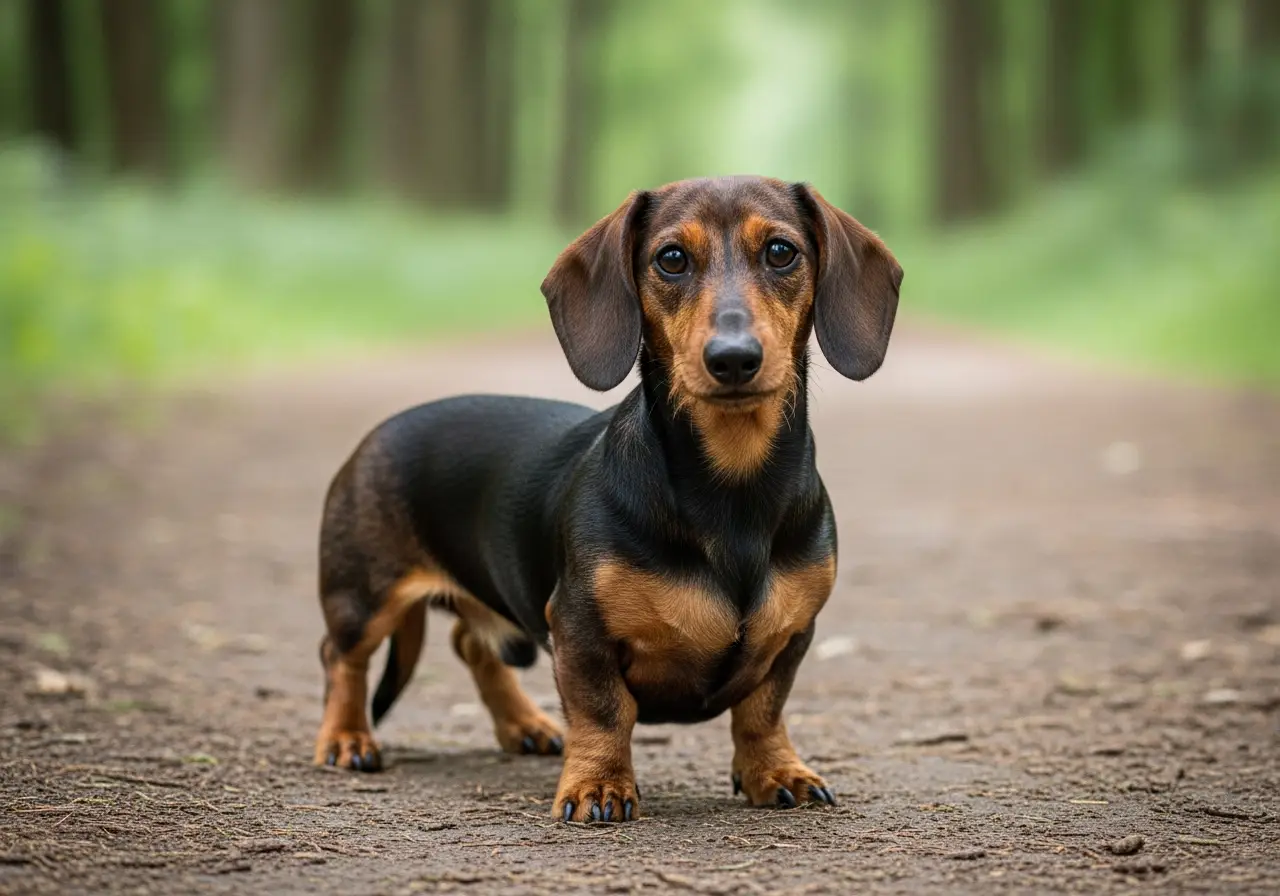
The Miniature Dachshund is the smallest variant of the Dachshund, a true hunting dog in compact format. Anyone who considers it uncomplicated because of its size fundamentally underestimates it. It demands consistent handling, daily nose work and an owner who takes its pronounced prey drive seriously. In addition, there is an increased risk to the spine, which affects keeping, training and the vet budget.
02Introduction
What makes the Miniature Dachshund special
Miniature Dachshund: smallest dachshund variety, brave and stubborn, and particularly prone to back issues due to its body shape
03Profile
Key facts and suitability
- Origin
- Deutschland
- Original purpose
- Underground hunting of badgers and foxes
- FCI
- No. 148 · Group 4
- height at the withers
- 13–15 cm
- Weight
- 3–4 kg
- Life expectancy
- 12–16 Years
- Coat type
- Short-haired
- Minimum exercise
- 45 min/day
- Puppy price
- 1'200–2'000 CHF
- Waiting period
- 4 months
- Sports
- Earth work Nose work
04Temperament
How the Miniature Dachshund shows up in everyday life
The morning walk reveals what makes the miniature dachshund unique: The nose goes straight to the ground, the body follows the scent, and the owner exists at that moment only at the other end of the lead. This is not defiance, this is genetics. The miniature dachshund was selected over centuries for independent work without feedback from humans.
Internally (i.e., in terms of what the dog needs from within itself), it shows a high need for social contact with its primary caregiver. It forms close bonds, seeks closeness and reacts to prolonged separations with restlessness. At the same time, it requires daily mental stimulation: search games, nose work or structured tracking. Anyone who does not provide this will end up with a dog that finds its own enrichment, usually at the expense of furniture or garden beds.
Externally, i.e., in its reaction to strangers and unfamiliar situations, it behaves reservedly to watchfully. It shows moderate openness towards strangers: it observes first before allowing contact. This reserve is not a sign of fear, but breed-typical self-confidence. With other dogs, it is compatible if socialised early, but acts confidently, even towards significantly larger conspecifics.
In everyday family life, the Miniature Dachshund works well if children have learned to respect its need for withdrawal. It tolerates no forced interaction and signals discomfort clearly; anyone who reads these signals has a reliable companion.
05Needs
What this breed needs daily
The Miniature Dachshund requires 60 to 90 minutes of active exercise daily, divided into several sessions, not as one single long walk. Short, intense sessions with nose work are more effective than hours of running on asphalt.
Nose work is not an optional extra, but a basic requirement. Mantrailing, tracking, structured search games or simply hiding food in the terrain all cater to the prey drive that is deeply rooted in its genetics. Without this stimulation, it develops behaviours such as excessive barking, digging or destruction.
The need for social contact is high: the Miniature Dachshund requires regular interaction with its primary caregiver. Being left alone is possible, but should be built up gradually and not permanently exceed four hours daily. Anyone who regularly has long working days needs a reliable care solution.
Mental work complements physical stimulation: intelligence toys, learning tasks or trick training keep it mentally challenged. The rule here is: the Miniature Dachshund cooperates if it assesses the task as meaningful; it is not a dog that functions out of pure obedience.
Due to its housing conditions, stairs and jumping should be reduced. Ramps for the sofa and car, non-slip floors and avoiding jumps from heights over 40 cm are part of daily spine protection, not as an occasional measure, but as a fixed component of the care routine.
Exercise
Medium
mental work
A lot
Social needs
High
training
Demanding
06Sport & Mental and Physical Stimulation
What sports the Miniature Dachshund is suited for
Realistic in terms of physiology and genetics – not every breed suits every sport.
Structurally and physiologically suitable: no jumping sports (risk of slipped disc) · Suitable for mantrailing, dummy work and tracking.
07Quick Check
08Suitability
Who this breed is suitable for – and who it isn't
✓Matches
The Miniature Dachshund suits owners who are active outdoors in nature and enjoy nose work or tracking. Specifically: at least 60–90 minutes of exercise daily, a significant portion of which should be off-road, not on paved paths.
Suitable are owners with experience in dog training who can lead consistently and patiently, without harshness but with a clear line. Anyone who has already handled an independent dog will find a reliable companion in the Miniature Dachshund.
Families with children from about eight years of age, who have learned to respect dog boundaries, get along well with it. Crucial is that children accept its need for withdrawal and no forced interaction takes place.
People who spend a lot of time at home or work from home benefit from its close bond. Active retirees who can offer regular walks and enrichment also fit the profile well.
Anyone willing to make home adaptations (ramps, non-slip floors, no free access to stairs) and budget for possible veterinary treatments for spine issues is well prepared.
×Doesn't match
The Miniature Dachshund does not suit owners who equate its small size with low effort. Anyone who can or wants to devote less than 60 minutes daily to exercise and nose work will be confronted with an unbalanced dog.
It is not suitable for households keeping a dog for the first time and not planning guidance by an experienced dog training school. Its independent thinking and pronounced prey drive require clear structures from the start; leniency during the training phase will have long-term consequences.
Anyone who expects the Miniature Dachshund to be “cuddly and open to everyone” misunderstands its external axis: it is reserved towards strangers and needs time before allowing contact. Households with frequently changing visitors or very social environments should factor this in.
Families with toddlers under six years of age, who cannot yet reliably respect dog boundaries, are a risk factor, not due to aggression, but because the Miniature Dachshund sends clear signals that small children often do not read.
Anyone who is not willing or able to financially cover possible spine surgeries or take out pet insurance should carefully weigh the decision for this breed.
10Line reality
Show line, working line, breeder market
Two distinct lines exist within the miniature dachshund population, differing in drive intensity and body structure.
The working line, accompanied by hunting suitability tests in DTK breeding operations, produces dogs with a more pronounced chase drive, higher endurance and stronger desire for independence. These dogs are particularly suitable for active nose work, tracking or hunting companionship, but also demand more handling competence and stimulation.
The companion or show dog line places greater emphasis on exterior and tractability. The prey drive is present, but generally less dominant. These dogs are somewhat more accessible in everyday life, but still require structured enrichment.
A problem in practice: Many buyers do not know which line their puppy comes from. Reputable breeders provide information about the working tests of the parent animals and can assess what level of drive the offspring brings with them. Anyone keeping a dog from a working line in a pure companion dog lifestyle systematically underestimates its needs.
Additionally, there are three coat variants (smooth-haired, long-haired, wire-haired) that have no direct influence on drive or health, but entail different grooming requirements.
11Health · Reality
What you need to plan for medically with your Miniature Dachshund
The central health issue with the Miniature Dachshund is disc disease (chondrodystrophy-associated discopathy). Studies show that up to 19–25 % of all Dachshunds develop a clinically relevant disc disease during their lives, one of the highest rates among all dog breeds (Priester, 1976; Bergknut et al., 2013). The cause lies in the genetically determined chondrodystrophy, which defines the entire body structure of the breed.
Surgery costs for a slipped disc typically lie between €3,000 and €8,000 in Germany and Switzerland, depending on severity and clinic. Permanent paralysis is possible if treatment occurs too late.
Life expectancy is 12 to 16 years, one of the higher ranges among dog breeds, but this must not obscure the risk to the spine.
Further relevant health points: Patellar luxation occurs more frequently in Miniature Dachshunds than in standard-sized Dachshunds. Eye diseases such as Progressive Retinal Atrophy (PRA) are known in the breed and should be taken into account during breeding selection.
Preventive examinations that should be requested from the breeder before purchase: X-ray of the parent animals’ spine, patella examination, eye examination (CAER). Regular vet check-ups from the fifth year of life are recommended to detect early signs of disc disease.
Overweight poses a significant additional risk for the Miniature Dachshund: Every excess kilogramme measurably increases the load on the spine. Weight control is not an aesthetic question, but a medical necessity.
12Structured data
Health by the numbers
Prone to diseases
Disc herniations Eye problems
Recommended health tests
X-ray of the spine Eye examination
13Myths ↔ Reality
What is often said incorrectly about this breed
Five myths, five realities, five sources.
"The miniature dachshund is a low-maintenance lap dog for small apartments.
The miniature dachshund descends from hunting dog breeding and has a pronounced prey and chase drive. It needs 60–90 minutes of exercise daily plus structured nose work. Keeping it in an apartment is possible, but requires active stimulation; a quiet life on the sofa is not enough for it.
"Small dogs do not have serious health problems.
The miniature dachshund belongs to the breeds with the highest risk of disc herniations (due to chondrodystrophy). Studies show that up to 25% of all dachshunds develop a disc disease during their lifetime. Surgery costs are often between €3,000 and €8,000, and permanent paralysis is possible.
"The miniature dachshund is easy to train because it is so small.
Body size has no influence on trainability. The miniature dachshund was selected for independent work without human instruction; it makes its own decisions, even in everyday life. Recall training requires particularly consistent building up, as the prey drive can become dominant outdoors.
"Stairs and jumps are no problem for the miniature dachshund as long as it is young.
Young miniature dachshunds are particularly at risk due to their spine not being fully matured yet. Veterinary recommendations advise ramp access, avoiding jumps from the sofa and controlled passage of stairs, regardless of the dog's age.
"Miniature dachshunds are aggressive by nature.
Undesirable behaviour such as snapping or growling in the miniature dachshund often arises from a lack of consistency in training or from being overwhelmed. Well-socialised and consistently handled specimens show this behaviour significantly less often. The breed is considered watchful and self-confident, not fundamentally aggressive.
14animal welfare
The animal welfare perspective
Breeder market, designer versions, animal shelter reality — what no one writes in the puppy ad.
The Miniature Dachshund belongs to the most commonly kept dog breeds in the German-speaking region, and precisely this popularity creates problems that prospective owners should be aware of.
Backyard breeder market: The high demand for Miniature Dachshunds has given rise to an active backyard breeder market. Puppies from dubious sources are often offered without health checks of the parent animals, without socialisation and without pedigree registration, at prices that appear attractive at first glance. The risk: increased likelihood of disc diseases, behavioural problems and missing documentation of origin.
Designer versions: Miniature Dachshunds, Teacup Dachshunds or extremely short-legged variants are circulated on social media. These animals are not recognised breeding forms, but the result of selection for extreme traits that further increase the already elevated risk to the spine. A dog that is even shorter and stockier than provided for by the FCI standard carries a higher disease risk, not a lower one.
In addition: Overweight is a widespread and underestimated problem in Miniature Dachshunds. Many owners underestimate the calorie content of treats and table scraps. At the same time, the body shape means that overweight is not immediately visible; nevertheless, the spine bears the load.
Furthermore: Miniature Dachshunds are frequently surrendered due to underestimated prey drive, stubbornness or disc problems. Animal welfare organisations and Dachshund rescue groups report a consistently high number of surrendered animals of this breed.
Rehoming as an equal option: An adult Miniature Dachshund from a rehoming organisation often brings the advantage that character and health status are already known. Breed-specific rescue stations such as the DTK rehoming service or general animal welfare organisations regularly rehome Dachshunds of all age groups. This is not a stopgap solution, it is an informed decision.
15Costs · Transparency
What this breed realistically costs
The acquisition costs for a Miniature Dachshund from reputable breeding lie between €900 and €1,600 in Germany, and between CHF 1,200 and CHF 2,000 in Switzerland. Significantly cheaper offers often originate from backyard breeding without health checks.
The annual living costs consist of: food (€150–300/year depending on quality), basic grooming (smooth coat: minimal; long/wire coat: €200–400/year at the groomer), basic equipment in the first year (lead, harness, ramps, sleeping area: €300–600), routine vet costs (vaccinations, parasite protection, annual check-up: €200–400/year).
The greatest cost risk is disc disease: Surgery costs between €3,000 and €8,000 in specialised vet clinics. Conservative treatment (medication, physiotherapy, hydrotherapy) amounts to €500–2,000 per episode of illness.
Pet insurance with surgery cover costs between €40 and €90 monthly for a Miniature Dachshund, depending on provider and scope of benefits. Given the statistically increased risk to the spine, this consideration is not a precautionary measure, but realistic budget planning.
16Puppy search
What you need to consider when choosing a breeder
- A reputable Miniature Dachshund breeder is a member of the German Teckelklub 1888 e.V.
- (DTK) or an affiliated regional association.
- Membership alone is not a quality feature, but it obliges compliance with the breeding regulations, including health examinations of the parent animals.
- Concrete criteria for reputable breeding: X-ray reports of the parent animals regarding the spine and patella are available.
- The puppies grow up in the household and are accustomed to everyday noises.
- The breeder asks questions about the living situation and refuses a sale if the profile does not fit.
- The handover date is not before the eighth week of life.
- Warning signs: no entry in the stud book, multiple litters available simultaneously, sale without personal acquaintance, prices significantly below 800 euros without a comprehensible justification.
- Rehoming as an equal option: The DTK operates its own rehoming service for surrendered Dachshunds.
- Animal welfare organisations and Dachshund rescue groups regularly rehome dogs of all age groups, including young animals.
- An adult dog from a rehoming organisation has the advantage that character and health status are already assessable.
FAQ
Frequently asked questions about the Miniature Dachshund
Is Miniature Dachshund suitable for beginners?
Miniature Dachshund is considered suitable for first-time dog owners.
Is Miniature Dachshund a family dog?
Miniature Dachshund is considered suitable for families with good socialisation and species-appropriate care.
How much exercise does Miniature Dachshund need?
At least around 45 minutes of exercise per day.
Does Miniature Dachshund suit an apartment?
With enough exercise and enrichment, Miniature Dachshund can also be kept in an apartment.
What is the size and weight of Miniature Dachshund?
Fully grown, Miniature Dachshund reaches about 13–15 cm at the withers and weighs around 3–4 kg.
What is the life expectancy of Miniature Dachshund?
The life expectancy of Miniature Dachshund is approximately 12–16 years.
Which diseases are common in Miniature Dachshund?
Disc herniations Eye problems
17Breed clubs
Official breed clubs in DACH
19Related
Similar breeds – and their differences
You might also be interested in

Participate
Do you have a good photo of your Miniature Dachshund?
We are looking for expressive images for our breed profiles. Submit yours; the editorial team reviews every submission before publication.
Does this breed suit you?
Extremely at risk of disc herniations – avoid stairs, jumping from furniture and overweight