
01Summary
In a paragraph
If you only have 30 seconds.
The Lurcher is not a breed standard, but a selectively bred sighthound mix of British-Irish origin. It combines sprint speed with a genetically anchored sight-hunting drive and a close bond with its primary caregiver. Anyone keeping this dog plans at least 90 minutes of exercise daily, part of which on secure land. The life expectancy is 12 to 15 years.
02Introduction
What makes the Lurcher special
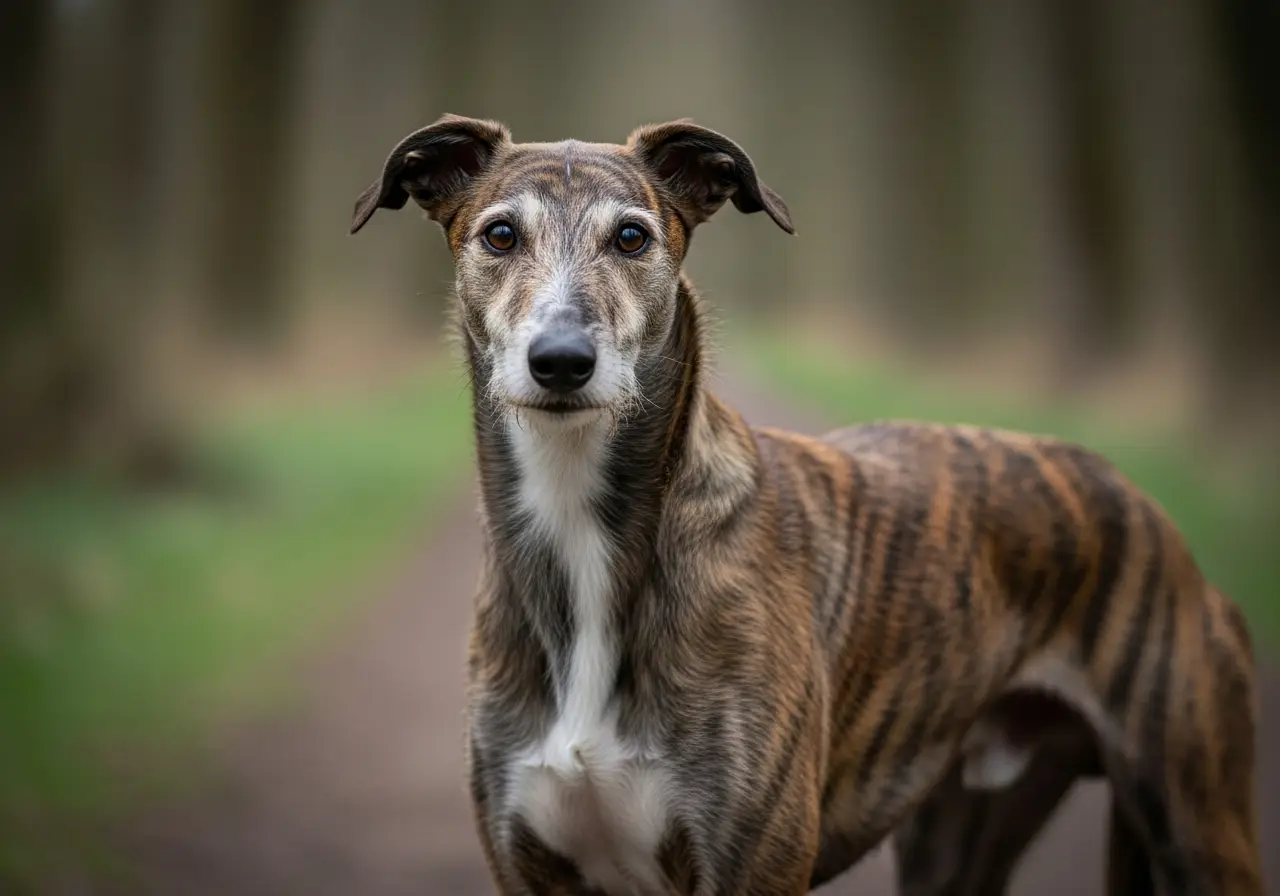
The Lurcher is a British-Irish hunting crossbreed, not FCI-recognised, sighthound-typical but more robust, withers height 55–75 cm.
03Profile
Key facts and suitability
- Origin
- Grossbritannien/Irland
- Original purpose
- Coursing hares and rabbits (sighthound cross)
- height at the withers
- 55–75 cm
- Weight
- 14–32 kg
- Life expectancy
- 12–15 Years
- Coat type
- Short-haired
- Minimum exercise
- 60 min/day
- Puppy price
- 500–1'200 CHF
- Waiting period
- 3 months
- Sports
- Lure Coursing · Agility
04Temperament
How the Lurcher shows up in everyday life
When returning home, a Lurcher often shows a calm, almost reserved greeting, no frantic jumping, but rather calmly leaning against you or following you through the apartment. This calmness in the house is a trait of many sighthound lines and easily conceals what happens outside.
As soon as a hare, a bicycle, or a running child moves within sight during a walk, the Lurcher switches in fractions of a second. The visual prey drive is not learned behaviour but a genetically anchored reflex. This is the internal axis: this dog needs daily opportunity to move and to reduce its drive in a controlled manner, for at least 90 minutes, part of which should include sprinting on secured terrain.
The external axis looks different: towards strangers, the Lurcher often behaves reservedly to neutrally. It does not seek contact with unknown people but generally tolerates them without aggression. This means: a high need for social contact with the primary caregiver stands in contrast to a rather reserved reaction to strangers. Those who confuse these two poles and equate "affectionate" with "sociable with everyone" will experience surprises.
Contact with other dogs usually proceeds without complications, provided no prey trigger is involved. Small dogs or cats in the household can be problematic if the Lurcher has not grown up with them from puppyhood. In daily life with children, keeping a Lurcher works if children act calmly and respectfully; hectic movements can activate the prey instinct.
05Needs
What this breed needs daily
The Lurcher needs at least 90 minutes of exercise daily. Part of this should take place on secured, fenced terrain so that the dog has the opportunity to relieve itself through controlled sprints. A garden with a stable fence (min. 1.80 m) is not a luxury but a basic requirement.
Mental stimulation in this breed is less complex than in herding dogs, but not to be neglected. Nose work, search games, and structured training sessions help keep the mind occupied. The Lurcher learns attentively and cooperatively; short, varied sessions are more effective than long repetition blocks.
Being left alone works for a well-stimulated Lurcher for up to four hours without major problems. The prerequisite is a stable bond and a regulated daily routine. Those who regularly leave the dog alone for longer periods need a reliable care solution.
The prey drive requires a realistic assessment: recall training is demanding and never reaches the reliability possible with breeds with weaker drives. Those who take the Lurcher into unsecured terrain bear responsibility for potential incidents. A long lead is the safest option in many situations.
Socially, the Lurcher needs a close primary caregiver with calm, consistent communication. It reacts sensitively to stress and loud confrontations. A structured, predictable daily routine gives it security.
Exercise
High
mental work
Medium
Social needs
Medium
training
Demanding
06Sport & Mental and Physical Stimulation
What sports the Lurcher is suited for
Realistic in terms of physiology and genetics – not every breed suits every sport.
Structurally and physiologically suitable: Suitable for mantrailing, dummy work and tracking · CaniCross / bikejoring possible.
07Quick Check
08Suitability
Who this breed is suitable for – and who it isn't
✓Matches
The Lurcher suits owners who can plan at least 90 minutes of active exercise daily, part of which on secured terrain. A property with a stable fence or regular access to fenced dog meadows is a prerequisite.
Experience with prey-motivated dogs is a clear advantage. Those who have already kept a sighthound or a dog with pronounced drive know the demands on recall training and terrain security.
Sportily active individuals or couples who integrate the dog into their daily life (running, cycling, hiking) benefit from the Lurcher's endurance and speed. Families with children from about eight years old, who handle animals calmly and respectfully, are also suitable if the exercise requirements are met.
Those willing to invest time in solid recall training and structured socialisation receive a dog with a close bond, calm house manners, and high resilience in the field. Owners who enjoy dog sports such as coursing or lure coursing find a motivated partner in the Lurcher.
×Doesn't match
The Lurcher does not suit owners who wish to keep a dog without secured exercise terrain. Those who have no access to fenced terrain and rely on uncontrolled off-leash walking significantly underestimate the risk of the visual prey drive.
People who expect a sociable dog that approaches every stranger will be disappointed by the Lurcher's reserved outward appearance. The close bond with the primary caregiver does not mean the dog is socially open to everyone; these two axes must not be confused.
Households with small animals such as rabbits, guinea pigs, or cats that have not grown up with the dog from the start carry an increased risk. The visual prey drive makes no exception for pets.
Those who bring little time for exercise, are regularly away from home for more than four hours due to work, and have no care solution should not choose this breed. Owners who rely on a reliable off-leash recall without intensive training are better advised with a breed with weaker drives.
10Line reality
Show line, working line, breeder market
The Lurcher has no uniform breed standard and therefore no officially defined breeding lines. In practice, however, breeders and experts clearly distinguish between different types resulting from the parent breeds used.
The greyhound-like Lurcher is lightly built, extremely fast and shows pronounced sight-hunting behaviour. It needs plenty of space for sprints, is calm indoors and reacts sensitively to stress. The whippet-influenced type is more compact, somewhat more versatile in training and often somewhat more accessible in dealing with strangers.
Lurchers with a strong Collie lineage show more willingness to work, respond better to recall training, and are more mentally demanding. They require more mental work than pure sighthound types. Lurchers with Terrier ancestry additionally bring stubbornness and an instinct for digging, a combination that requires experienced owners.
In the UK and Ireland, informal breeding communities exist that select for performance and health. In Germany, prevalence is low; those looking for a Lurcher usually encounter rehoming from British or Irish shelters or individual private breeders without kennel club affiliation. Knowledge of parental lines is more important in Lurchers than in standardised breeds because type and temperament vary more significantly.
11Health · Reality
What you need to plan for medically with your Lurcher
The life expectancy of the Lurcher is between 12 and 15 years depending on the parent lines. This places it among the longer-lived dogs in its size class, an advantage of functional selection without an extreme breed standard.
As a crossbreed, the Lurcher often benefits from a broader genetic base. However, this does not automatically protect against hereditary diseases. Lurchers with a high Greyhound content may have a predisposition to heart disease (dilated cardiomyopathy), which is described in Greyhounds with a prevalence of approximately 5–7% (Source: University of Bern, Vetsuisse, status 2022). Lurchers with Collie content may carry the MDR1 mutation, which affects the tolerance of certain medications; a genetic test before the first treatment is recommended.
Sighthound-typical characteristics also apply to the Lurcher: sensitive skin with an increased risk of injury during sprints, lower body fat reserves and an altered reaction to anaesthetics. Veterinarians without sighthound experience should be informed about these particularities.
Overweight is rare in well-exercised Lurchers but can develop quickly with a lack of exercise. Regular weight checks and an adjusted food quantity are advisable. Preventive examinations include annual heart auscultation, dental checks and the MDR1 genetic test for Collie lines.
12Structured data
Health by the numbers
Prone to diseases
Skin sensitivity, heart problems (depending on parent breeds)
Recommended health tests
Heart examination (parent-dependent)
13Myths ↔ Reality
What is often said incorrectly about this breed
Five myths, five realities, five sources.
"The Lurcher is like a Greyhound, calm, loves the couch and has no significant drive.
The comparison is too simplistic. Many Lurchers do show a calm side indoors, but outdoors they react lightning-fast to movement stimuli. The sight-hunting drive is genetically anchored and occurs situationally with high intensity. Anyone planning the dog as a pure couch companion greatly underestimates its need for exercise and hunting.
"Lurchers are suitable for beginners because they are cooperative and eager to learn.
Lurchers learn attentively and respond well to calm, consistent communication. Recall training is challenging, however, because the sight-hunting drive acts stronger than any conditioning in an emergency. Without experience with hunting-motivated dogs and without secure exercise land, frustration quickly arises on both sides.
"A Lurcher can run freely without problems, it always comes back.
The sight-hunting drive kicks in within seconds upon a movement stimulus. Lurchers reach speeds of over 60 km/h and are then hardly reachable for call signals. Free running is only acceptable on securely fenced land. This risk applies regardless of how well the dog obeys in everyday life.
"Lurchers are not real dogs, they have no standard and are therefore unpredictable.
The absence of an FCI standard does not mean unpredictability, but greater individual variance. Anyone who knows the parent lines can assess the puppy's temperament well. Reputable breeders document the lines used and select for character and health, independent of a stud book.
"As a mixed-breed dog, the Lurcher is automatically healthier than purebred dogs.
The so-called heterosis effect does not occur automatically. Health depends on the selection of the parent animals. Lurchers from lines with known hereditary diseases (e.g. heart problems in Greyhounds, MDR1 mutation in Collies) can pass on these dispositions. A health examination of the parent animals remains relevant even for crossbreeds.
14animal welfare
The animal welfare perspective
Breeder market, designer versions, animal shelter reality — what no one writes in the puppy ad.
The Lurcher ends up in animal shelters disproportionately often in Great Britain and Ireland. The reasons are known: the sight-hunting drive is underestimated before getting a dog, recall training fails, and owners without secure land quickly reach their limits. Irish and British rescue organisations place several thousand Lurchers annually, a structural problem linked to the absence of a breeding standard and easy reproducibility.
In Germany, the Lurcher is rare but not unknown. Occasionally, dogs enter the country via sighthound rescue organisations or private placements from Great Britain and Ireland. Anyone looking for a Lurcher often finds well-characterised, already socialised dogs through these channels, often with a known history and prior veterinary examination.
A placed Lurcher is not a stopgap solution. Many of these dogs come from working contexts or households that gave them up for logistical reasons, not due to behavioural problems. The assessment by the placement agency replaces the line documentation of a breeder and provides indications regarding drive strength, social behaviour and being left alone.
Anyone deciding on a puppy should know and have documented the parent lines. Lurchers from unknown crosses without health checks of the parent animals are a risk, not because of their mixed-breed status, but due to a lack of selection control. Breeding operations offering Lurcher puppies without line details and without insight into the parent animals do not provide a reliable basis for an informed decision.
15Costs · Transparency
What this breed realistically costs
A Lurcher puppy from a reputable British or Irish breeder costs between 600 and 1,200 EUR, depending on the parent lines and transport effort. Placed Lurchers from rescue organisations are available for a care fee of 200 to 400 EUR, plus transport costs from Great Britain or Ireland (approx. 150–300 EUR).
The annual living costs for a Lurcher of this size class are between 1,800 and 2,800 EUR. Food for a 30-kg dog costs 600 to 1,000 EUR per year depending on quality. Grooming is minimal for smooth-haired types; for rough-haired variants, costs arise for occasional trimming (approx. 100–200 EUR/year).
Basic veterinary costs (vaccinations, parasite prevention, annual check-up) are 300 to 500 EUR annually. An MDR1 genetic test for Collie lines costs approx. 60–80 EUR as a one-off. Pet insurance is advisable for this breed and costs 40 to 90 EUR per month depending on the provider and coverage scope. Injury-related injuries from sprints are not uncommon among Lurcher owners; insurance cover that covers operation costs pays off quickly.
16Puppy search
What you need to consider when choosing a breeder
- A reputable Lurcher breeder documents the parent lines of both parent animals and presents health checks.
- Anyone who does not provide insight into the parent animals or offers puppies without line details does not provide a sufficient basis for an informed decision.
- Inspections at the breeder’s premises are mandatory.
- The puppy should have grown up with its mother for at least eight weeks and completed initial socialisation steps.
- A vaccination passport, deworming certificate and veterinary health certificate are part of the handover.
- Placement via British or Irish rescue organisations is an equally valid option.
- Many of these dogs are already characterised, socialised and examined by a vet.
- Reputable placement agencies conduct a preliminary discussion on housing conditions and reject enquiries without secure land; this is a quality feature, not an obstacle.
- Offers on general classifieds platforms without line details, without insight into the parent animals and with very low prices should be viewed critically.
- The Lurcher is rare in Germany; anyone who finds one quickly and cheaply should carefully check its origin.
FAQ
Frequently asked questions about the Lurcher
Is Lurcher suitable for beginners?
Lurcher is considered suitable for first-time dog owners.
Is Lurcher a family dog?
Lurcher is considered suitable for families with good socialisation and species-appropriate care.
How much exercise does Lurcher need?
At least around 60 minutes of exercise per day. As an active breed, more so — plus mental stimulation.
Does Lurcher suit an apartment?
With enough exercise and enrichment, Lurcher can also be kept in an apartment.
What is the size and weight of Lurcher?
Fully grown, Lurcher reaches about 55–75 cm at the withers and weighs around 14–32 kg.
What is the life expectancy of Lurcher?
The life expectancy of Lurcher is approximately 12–15 years.
Which diseases are common in Lurcher?
Skin sensitivity, heart problems (depending on parent breeds)
17Breed clubs
Official breed clubs in DACH
19Related
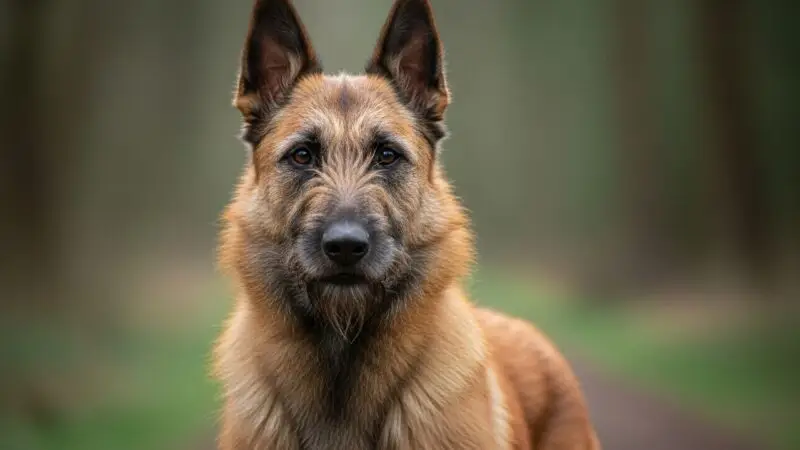
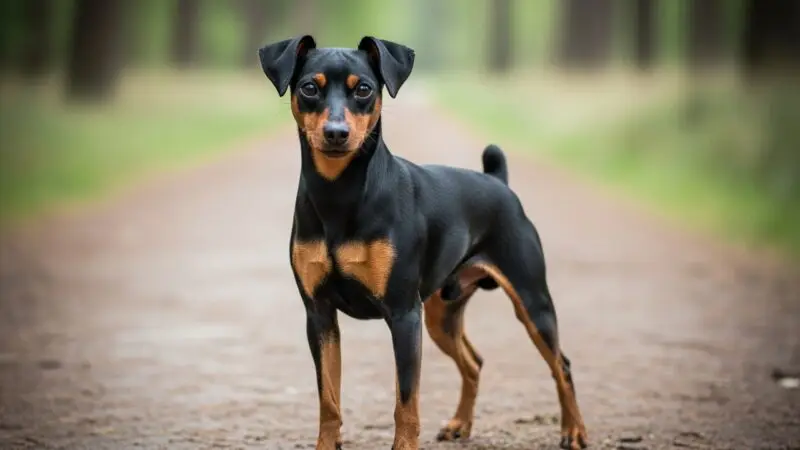
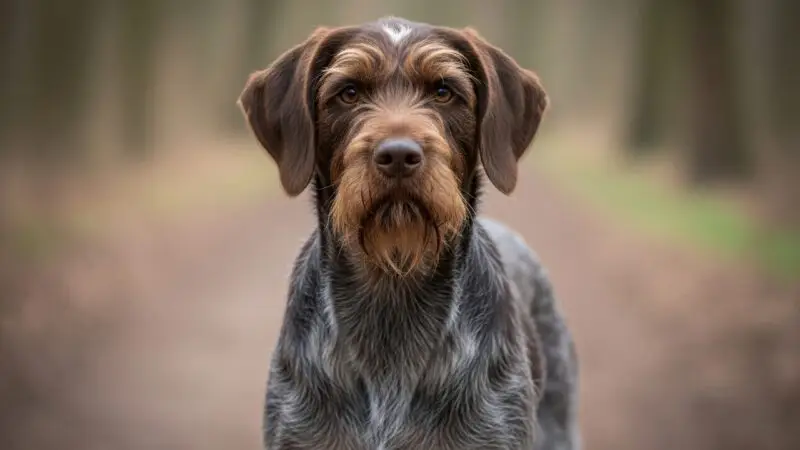
Similar breeds – and their differences
You might also be interested in
Participate
Do you have a good photo of your Lurcher?
We are looking for expressive images for our breed profiles. Submit yours; the editorial team reviews every submission before publication.
Does this breed suit you?
Traditional British-Irish hunting crossbreed. Not FCI-recognised. Calm indoors, fast outdoors. Ideal first dog.