
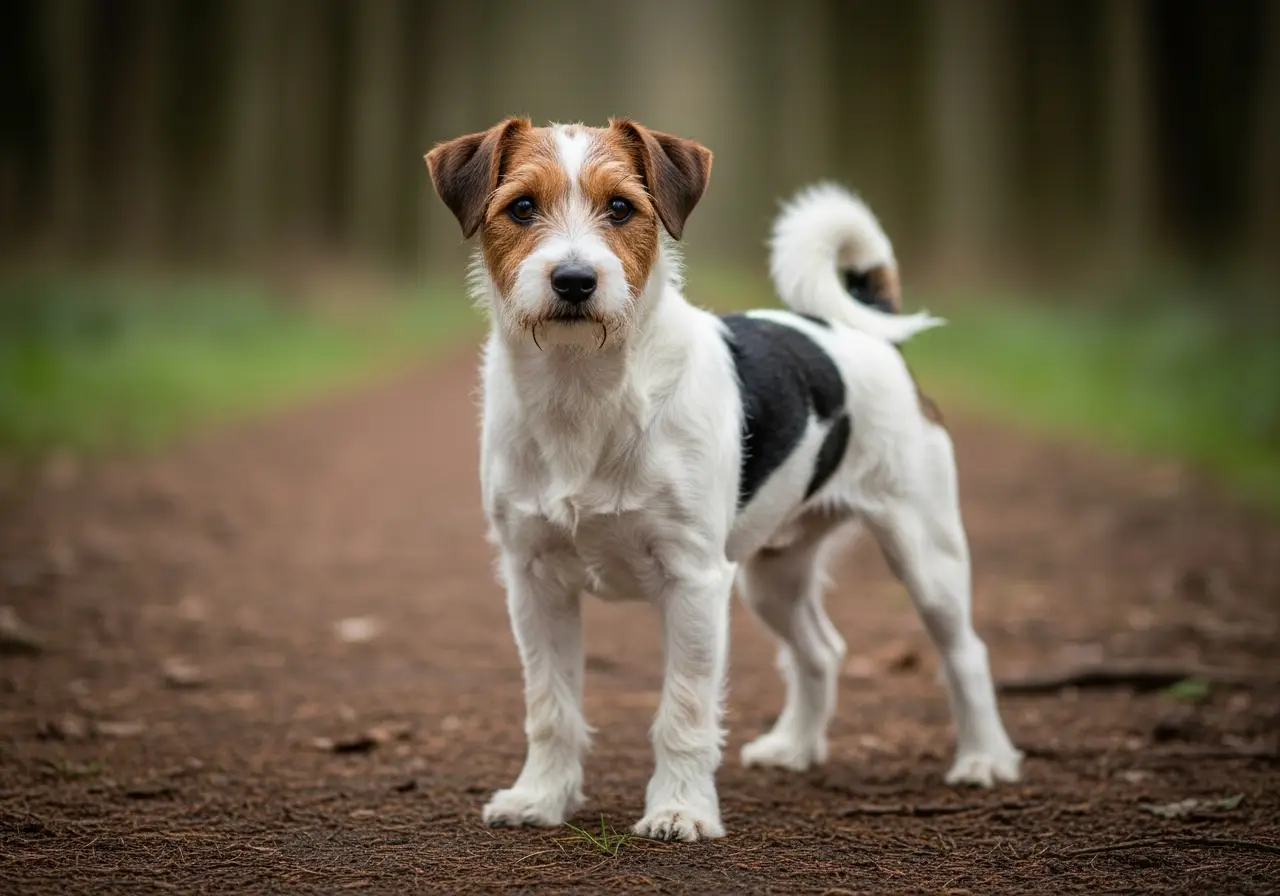
01Summary
In a paragraph
If you only have 30 seconds.
The Jack-a-Poo combines two genetically very different working types: the highly hunting-motivated Jack Russell Terrier and the quick-learning, sensitive Poodle. The result is not a clearly defined character, but a dog with considerable variation in temperament, coat structure, and health risks. Anyone keeping one needs at least 90 minutes of active exercise daily, consistent leadership, and mental stimulation, without compromise.
02Introduction
What makes the Jack-a-Poo special
The Jack-a-Poo is a non-FCI-recognised cross between Jack Russell Terrier and Toy Poodle, lively and hypoallergenic-friendly, withers height 25–38 cm.
03Profile
Key facts and suitability
- Origin
- USA
- Original purpose
- Companion dog (Jack Russell × Toy Poodle)
- height at the withers
- 25–38 cm
- Weight
- 3–8 kg
- Life expectancy
- 12–15 Years
- Coat type
- Gelockt
- Minimum exercise
- 45 min/day
- Puppy price
- 800–1'800 CHF
- Waiting period
- 6 months
- Sports
- Agility · Obedience · Tricks
04Temperament
How the Jack-a-Poo shows up in everyday life
The morning walk reveals what the Jack-a-Poo brings genetically: the nose goes straight to the ground, the body tenses towards the bushes, the prey drive of the Terrier part is present, even if the dog is still young. This is not a training error, but genetics.
Internally, that is to say what the dog requires from within itself, the need for social contact is high. The Jack-a-Poo actively seeks contact with its primary caregiver, wants to be included and reacts to isolation with restlessness or destructiveness. At the same time, the demand for mental work is pronounced: a walk without a mental task is not enough. Nose work, trick training or structured fetching fulfil this need.
Externally, that is to say how the dog reacts to stimuli, it often shows an open to curious attitude towards strangers. This distinguishes it from the reserved herding dog type. Strangers are generally not perceived as a threat. With other dogs, the picture is more mixed: temperamental encounters are possible, especially if the terrier component dominates.
At home, the Jack-a-Poo is attentive and present. It registers changes in the flat, announces visitors and seeks closeness, without necessarily being a lap dog. Whoever sits on the sofa in the evening probably has it with them. Whoever leaves it alone all day, however, may find a rearranged flat upon returning.
The combination of high need for social contact and pronounced prey drive requires a primary caregiver who knows and attends to both axes, not just one of them.
05Needs
What this breed needs daily
The Jack-a-Poo requires at least 90 minutes of active exercise daily, divided into several sessions, not as a single block. Pure off-leash time in an enclosed area only counts to a limited extent if it takes place without a task.
Mental stimulation is equivalent to physical exercise. Concrete forms: nose work (mantrailing, snuffle mats), trick training in short sessions of 10–15 minutes, fetching exercises with variation, simple agility elements. The poodle component makes it eager to learn; the terrier component makes it stubborn. Both must be taken into account in training.
Being left alone is possible, but must be built up systematically. Four hours are considered a realistic upper limit for a well-conditioned adult, provided that it has been gradually accustomed to being alone. Puppies and young dogs require significantly shorter intervals.
The prey drive requires particular attention when off-leash. Unfenced areas are not a safe exercise area without a reliable recall. Recall is one of the central training topics and requires continuous refreshing, not just one-off practice during the puppy phase.
Social interaction with the primary caregiver is not a bonus, but a basic need. The Jack-a-Poo is not a dog that occupies itself and is thereby satisfied. It requires active involvement in daily life, joint activities, training sessions, contact. Whoever cannot provide this significantly underestimates its actual effort.
Exercise
High
mental work
A lot
Social needs
High
training
Medium
06Sport & Mental and Physical Stimulation
What sports the Jack-a-Poo is suited for
Realistic in terms of physiology and genetics – not every breed suits every sport.
Structurally and physiologically suitable: Suitable for mantrailing, dummy work and tracking.
07Quick Check
08Suitability
Who this breed is suitable for – and who it isn't
✓Matches
The Jack-a-Poo suits owners who can plan at least 90 minutes of active exercise daily, divided into several sessions, even in bad weather. Experience with independent or high-drive dogs is a clear advantage.
Suitable for individuals or couples with an active lifestyle who enjoy structured training and are prepared to train impulse control and recall on an ongoing basis. Also suitable for families with children from about eight years of age, if adults take on the leadership role consistently and the dog is not left to the child.
Whoever plans dog sports as a leisure activity (agility, obedience, mantrailing) will find a willing partner in the Jack-a-Poo, provided that the training remains varied and clearly structured.
Owners who have already gained experience with terrier or poodle types know the characteristics of both sides and can realistically assess what to expect. Whoever knows that a high need for social contact does not mean the same thing as sociability with strangers in every situation, adopts the more appropriate expectation.
A household with a garden is advantageous, but not mandatory; the decisive factor is the active stimulation programme, not the type of housing. Keeping a dog in a flat works if exercise and structure are guaranteed daily.
×Doesn't match
The Jack-a-Poo does not suit owners who are regularly away from home for eight or more hours and cannot organise reliable dog care. Its high need for social contact and its exercise needs do not tolerate permanent gaps in the daily routine.
Not suitable for people looking for a calm companion dog without significant training effort. Whoever expects intelligence to translate into independence and contentment will be disappointed; with the Jack-a-Poo, intelligence primarily means: quickly learning things that you did not want to teach it.
Whoever underestimates the prey drive or hopes it will "grow out of it" should not choose this breed. The drive is genetically anchored and requires ongoing recall training as well as safe exercise areas.
Households with small animals such as rabbits, guinea pigs or birds carry an increased risk; the prey drive makes no exception for housemates.
Whoever equates the high need for social contact with friendliness towards strangers and therefore dispenses with socialisation work, underestimates the external behavioural axis. Openness towards strangers is often present in the Jack-a-Poo, but not guaranteed, and is no substitute for structured socialisation during the puppy and young dog phase.
For first-time owners without guidance from an experienced dog training school, the Jack-a-Poo is a demanding choice that quickly leads to being overwhelmed on both sides without professional support.
10Line reality
Show line, working line, breeder market
The Jack-a-Poo has no cynologically recognised lines in the sense of working or show lines. Since neither the FCI nor the VDH list the cross as a breed, there are no breeding goals, no breeding suitability tests and no line differentiation at association level.
In practice, however, factual differences arise through the choice of parent animals. A Jack-a-Poo from a Jack Russell Terrier with working line papers and a Miniature Poodle from active dog sport breeding shows a distinctly different temperament than an animal from two parents without proof of performance. These differences are real, but hardly transparent for potential buyers, as backyard breeders rarely provide complete information about the parent animals.
The poodle line is also relevant: Toy Poodles, Miniature Poodles and Small Poodles differ considerably in size and energy level. A Jack-a-Poo with Toy Poodle content remains smaller and may show a slightly calmer baseline tempo; with Small Poodle content, body weight increases and often so does stamina. This variance makes general statements about "the" Jack-a-Poo difficult.
Anyone looking for a Jack-a-Poo should therefore not rely solely on designations such as "F1" or "F1b", but get to know the parent animals personally and check their health documents; this is the only reliable indication of the expected temperament and health risks.
11Health · Reality
What you need to plan for medically with your Jack-a-Poo
The Jack-a-Poo can accumulate hereditary diseases from both parent breeds. An automatic hybrid advantage does not exist; this is also confirmed by the VDH in its statement on hybrid dogs (vdh.de, status 2023).
In the Jack Russell Terrier, patellar luxation and Legg-Calvé-Perthes disease (femoral head necrosis) are among the most common hereditary problems. In Poodles, progressive retinal atrophy (PRA), hip dysplasia (HD), and von Willebrand disease (blood clotting disorder) are documented. A Jack-a-Poo can carry predispositions for all these diseases if the parent dogs have not been tested accordingly.
Life expectancy is 12 to 15 years, depending on the size, weight, and health status of the parent dogs. Smaller specimens with Toy Poodle lineage tend towards the upper end of this range.
Recommended preventive examinations: Eye examination (PRA test via DNA, annual ophthalmological check-up), patella assessment by the vet from the first year of life, weight control every six months. Overweight is a real risk in this breed, especially if exercise needs are underestimated and food quantity is not adjusted.
Since no breeding association prescribes health protocols, responsibility lies entirely with the breeder. Prospective buyers should review DNA test results and veterinary certificates for both parent dogs before purchase, not afterwards.
12Structured data
Health by the numbers
Prone to diseases
Patellar luxation, eye problems
Recommended health tests
Patella screening, eye examination
13Myths ↔ Reality
What is often said incorrectly about this breed
Five myths, five realities, five sources.
"The Jack-a-Poo is hypoallergenic and suitable for allergy sufferers thanks to its Poodle content."
No dog is completely allergen-free. Allergic reactions are primarily caused by the protein Can f 1 in saliva and skin, not solely by hair loss. Poodles also produce this allergen. Whether a Jack-a-Poo shows less shedding depends on the individual coat structure, which varies greatly in F1 crosses. There is no guarantee.
"As a hybrid dog, the Jack-a-Poo is automatically healthier than purebreds."
The so-called hybrid advantage (heterosis) does not occur automatically. A Jack-a-Poo can accumulate hereditary diseases from both parent breeds, including patellar luxation (Jack Russell), progressive retinal atrophy (Poodle) and von Willebrand disease. Without health testing of the parent animals, the risk is not calculable.
"The Jack-a-Poo is a calm lap dog for the apartment."
Both parent breeds were bred for physically and mentally demanding work. The Jack-a-Poo requires at least 90 minutes of active exercise daily, as well as structured mental work. Keeping it in an apartment is possible, but requires a consistent utilisation programme; a garden does not replace this.
“Small dogs have no significant prey drive.
The Jack Russell Terrier was explicitly selected for independent hunting underground. This drive is deeply rooted genetically and transfers to many Jack-a-Poos. A pronounced prey drive means concretely: poor recall, high potential for distraction by wildlife, loose-leash walking as a permanent training topic.
"Because the Jack-a-Poo is so intelligent, it trains itself almost automatically."
High intelligence means fast learning, in both directions. A Jack-a-Poo that does not receive clear structure develops independent solutions for its needs: barking, digging, destroying. Consistent, varied training from the first day is not an option, but a basic requirement.
14animal welfare
The animal welfare perspective
Breeder market, designer versions, animal shelter reality — what no one writes in the puppy ad.
The Jack-a-Poo belongs to the designer hybrids that have been increasingly marketed via classified ad portals and social media in the German-speaking region since the 2000s. The market environment is largely unregulated: Neither breeding goals nor health protocols are mandatorily prescribed. This creates room for backyard breeders who produce puppies without any health testing of the parent dogs and offer them at prices between 800 and 2,000 euros.
A typical warning sign: Offers that advertise the Jack-a-Poo as "allergy-friendly", "easy to care for", or "suitable for families with children" without providing concrete details on parent dogs, rearing conditions, or health tests. These formulations are marketing language, not a statement on breeding quality.
Keeping-related problems often arise because the actual need for exercise and mental work is underestimated. Animal shelters in the DACH region report a rising proportion of hybrid dogs being surrendered due to behavioural issues, issues that in many cases are attributable to under-stimulation and lack of structure, not to the dog itself.
Adoption from an animal shelter or through reputable rescue stations is an equally valid option compared to buying from a breeder. Adult Jack-a-Poos from adoption have the advantage that character and energy level can already be assessed, eliminating the surprise variance of the F1 cross. Organisations such as Tierschutz Deutschland e.V. or the Swiss SPCA (STS) regularly place mixed-breed dogs with terrier or poodle lineage.
Anyone deciding on a Jack-a-Poo makes an informed decision if they know the health documents of the parent dogs, have seen the rearing conditions themselves, and realistically assess the actual effort involved.
15Costs · Transparency
What this breed realistically costs
The acquisition price for a Jack-a-Poo from serious breeders with health tests of the parent dogs is between 1,200 and 2,000 euros. Offers under 800 euros on classified ad portals often come from backyard breeding without health protocols; the risk of subsequent vet costs increases accordingly.
Annual keeping costs consist of: Food (high-quality dry food or BARF) approx. 600–1,000 euros/year depending on size, care needs (grooming for the poodle lineage every 6–8 weeks at a groomer) approx. 400–700 euros/year, basic equipment in the first year (lead, harness, transport box, toys) approx. 300–500 euros one-off.
Average vet costs: Basic vaccination and initial examination in the first year approx. 300–500 euros, annual booster and prevention approx. 150–250 euros. In case of patellar luxation (a real risk with this cross), surgical interventions can cost 1,500–3,500 euros per joint.
Dog health insurance costs approx. 40–90 euros/month depending on provider and coverage (approx. 480–1,080 euros/year). For a cross without a breed standard, it is advisable to compare insurance terms, as some providers classify hybrid dogs differently. Total costs in the first year: realistically 3,000–5,000 euros including acquisition.
16Puppy search
What you need to consider when choosing a breeder
- Since the Jack-a-Poo is not an FCI-recognised breed, there is no breeding association that lists breeders or prescribes minimum standards.
- The search therefore requires more independent research than with recognised breeds.
- Serious indicators: The breeder allows visits before purchase and shows both parent dogs.
- Health tests of the parents (patella assessment, PRA DNA test, eye examination) are available in writing.
- The puppies grow up in a household environment, not in kennels or garages.
- The breeder asks questions about the planned keeping conditions and declines a sale if the conditions do not suit.
- Warning signs: No personal visit possible, puppies offered via shipping, no information on parent dogs, price significantly below 800 euros, multiple litters available simultaneously.
- Adoption through animal shelters and rescue stations is an equally valid alternative.
- Adult dogs with terrier or poodle lineage are regularly available there, with the advantage that character and energy level can already be assessed.
- Organisations such as Tierschutz Deutschland e.V.
- or the Swiss SPCA (STS) offer adoption support.
- No individual breeders are named or recommended on this platform.
FAQ
Frequently asked questions about the Jack-a-Poo
Is Jack-a-Poo suitable for beginners?
Jack-a-Poo is considered suitable for first-time dog owners.
Is Jack-a-Poo a family dog?
Jack-a-Poo is considered suitable for families with good socialisation and species-appropriate care.
How much exercise does Jack-a-Poo need?
At least around 45 minutes of exercise per day.
Does Jack-a-Poo suit an apartment?
With enough exercise and enrichment, Jack-a-Poo can also be kept in an apartment.
What is the size and weight of Jack-a-Poo?
Fully grown, Jack-a-Poo reaches about 25–38 cm at the withers and weighs around 3–8 kg.
What is the life expectancy of Jack-a-Poo?
The life expectancy of Jack-a-Poo is approximately 12–15 years.
Is Jack-a-Poo suitable for allergy sufferers?
Jack-a-Poo is considered relatively hypoallergenic. There’s never a guarantee — test direct contact beforehand.
Which diseases are common in Jack-a-Poo?
Patellar luxation, eye problems
17Breed clubs
Official breed clubs in DACH
19Related
Similar breeds – and their differences
You might also be interested in


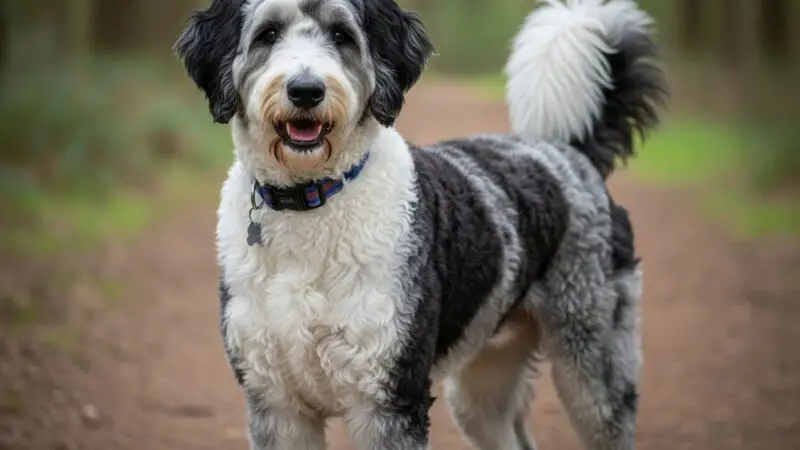
Participate
Do you have a good photo of your Jack-a-Poo?
We are looking for expressive images for our breed profiles. Submit yours; the editorial team reviews every submission before publication.
Does this breed suit you?
Cheerful, hypoallergenic-friendly small dog. Note the energy from the Jack Russell line.