
01Summary
In a paragraph
If you only have 30 seconds.
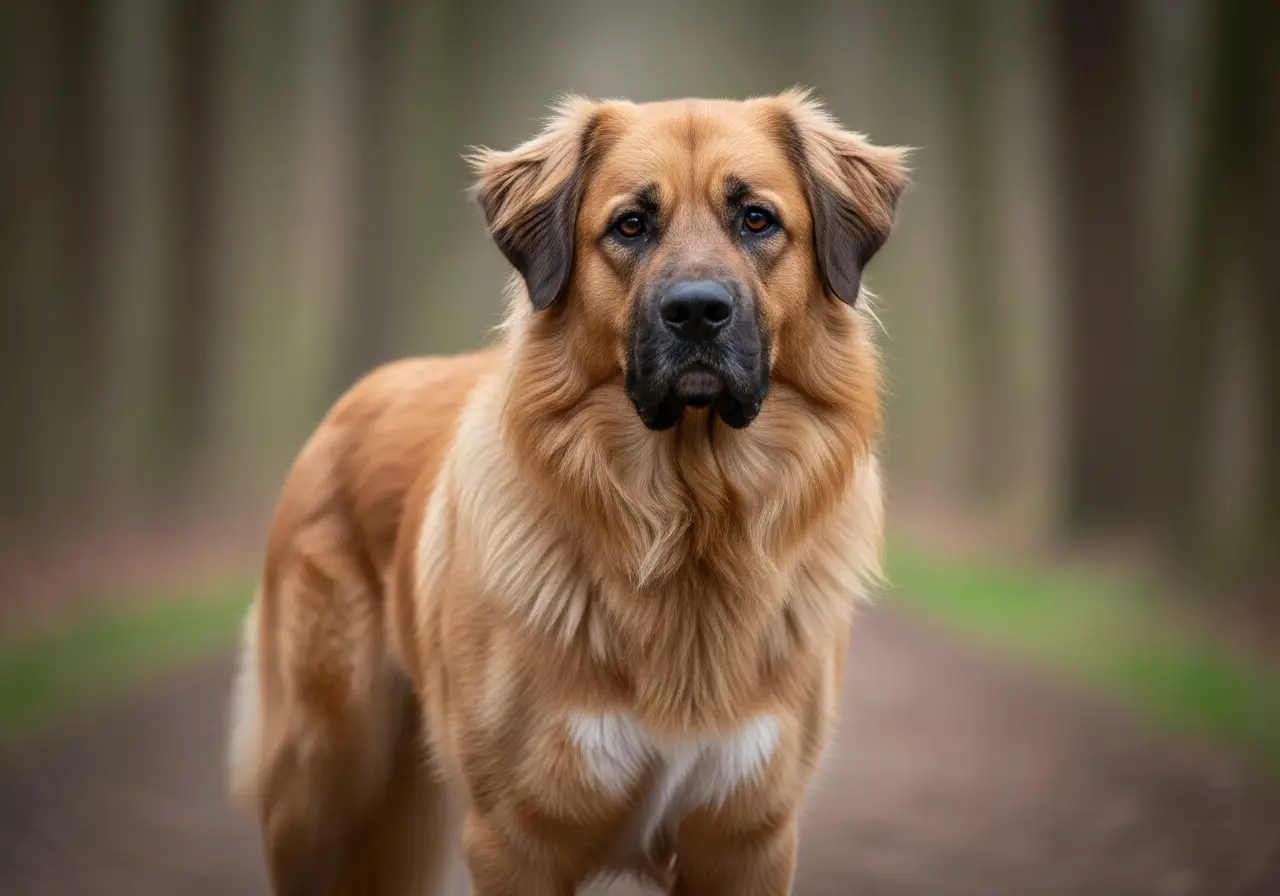
The German Bärenhund is not a recognised breed standard, but a molossoid dog type from Germany, without FCI norm and without a uniform breeding programme. Temperament, body size and health status vary considerably depending on the breeding line. Anyone keeping this dog needs experience with large, powerful dogs, a clear leadership structure and sufficient space. A blanket assessment is not possible for this breed.
02Introduction
What makes the German Bear Dog special
The German Bear Dog is a non-FCI-recognised German breeding project, very large and rare, for experienced Molosser owners, shoulder height 72–82 cm.
03Profile
Key facts and suitability
- Origin
- Deutschland (Zuchtprojekt)
- Original purpose
- Guard dog, companion dog
- height at the withers
- 72–82 cm
- Weight
- 50–80 kg
- Life expectancy
- 10–14 Years
- Coat type
- Long-haired
- Minimum exercise
- 60 min/day
- Puppy price
- 1'500–3'000 CHF
- Waiting period
- 12 months
- Sports
- Schutzhund
04Temperament
How the German Bear Dog shows up in everyday life
When returning home, the German Bear Dog shows a calm but attentive greeting, depending on the line. It registers changes in the household precisely and reacts to the unknown with increased vigilance, rather than with exuberant curiosity.
Internally, the dog requires a close family bond (need for social contact: high). It is strongly oriented towards its primary caregiver and seeks physical proximity. At the same time, it is not a dog that demands constant occupation through play stimuli; it observes, waits and accompanies.
Externally, it behaves reservedly to dismissively towards strangers (friendliness towards strangers: low). These two axes must not be confused: a close family bond does not mean that the dog is open to visitors or unknown people in public spaces. Anyone who misunderstands this underestimates the safety risk.
On a walk, it keeps its distance from strangers and reacts to approaches with physical tension. An owner who does not read reliably when the dog goes into alert mode loses control of a dog with considerable body mass.
Compatibility with conspecifics is strongly dependent on the line. Some dogs show pronounced dominance gestures towards dogs of the same sex. The guarding instinct is present in many lines and manifests itself in everyday life as territorial behaviour around the house, car and family.
The German Bear Dog requires mental work to a moderate extent; structured obedience exercises, nose work and clear daily routines are sufficient. Overload due to too many stimuli leads more to restlessness than to exhaustion.
05Needs
What this breed needs daily
The German Bear Dog requires 60 to 120 minutes of exercise daily, divided into several sessions. Pure endurance load is not the focus here; structured walks with clear rules are more effective than hours of free running without guidance.
A spacious living environment is not a recommendation, but a prerequisite. A dog of this size in a small city apartment without a garden or regular access to open spaces suffers from spatial confinement and develops compensatory behaviour.
It requires moderate mental stimulation (mental work requirement: 3 out of 5). Nose work, structured obedience exercises and clear daily routines cover this need. Agility or highly intensive sports variants are not suitable for this body type.
The need for social contact is high. The German Bear Dog requires constant integration into family life. Being left alone for long periods, more than four hours daily, it tolerates poorly and shows this through restlessness or destructive behaviour. Anyone who regularly has long absences must organise a reliable care solution.
Early socialisation is not an option, but mandatory. Puppies of this type must be systematically accustomed to different people, environments, noises and situations before guarding and territorial instincts become entrenched. Omissions in this phase are hardly fully correctable later.
An accompanying dog training school with experience in dealing with large, guarding-instinct-prone dogs is recommended from the first week onwards. Loose-leash walking and impulse control must be built up consistently and early on.
Exercise
Medium
mental work
Medium
Social needs
High
training
Demanding
07Quick Check
08Suitability
Who this breed is suitable for – and who it isn't
✓Matches
The German Bear Dog suits owners with proven experience in dealing with large, powerful dogs, ideally with a Molosser or Schutzhund background. Anyone who has already confidently handled a dog of at least 40 kg and knows how to assess body language and drive structure brings the basic prerequisites.
A household with its own garden or direct access to open spaces is sensible. At least two hours of active companionship daily (divided into walks, training sessions and structured rest phases) should be realistically planned.
Families with older children from 12 years upwards are suitable if the adults clearly take on the leadership role and children do not interact with the dog unsupervised. Toddlers in the household considerably increase the risk of uncontrolled situations.
Anyone who rarely receives visitors or offers a calm, structured everyday environment caters to the external axis of the dog: the low friendliness towards strangers does not require a sociable environment, but a predictable one.
Owners who are willing to use an accompanying dog training school with experience in guarding-instinct-prone breeds and demand health checks of the parent dogs before purchase are suitable for this type of dog.
×Doesn't match
The German Bear Dog does not suit owners keeping a dog for the first time. Body mass, guarding instincts and the lack of standardisation in breeding require experience, not enthusiasm.
Anyone who is away from home for more than four hours daily and cannot organise reliable care underestimates the high need for social contact of this dog. Being left alone beyond this period leads to stress behaviour.
Households in cramped city apartments without a garden or regular access to open spaces do not provide this type of dog with the basic spatial conditions it requires.
Anyone who equates the dog’s close family bond with general friendliness towards people is making a consequential mistake. The dog is not open to strangers simply because it is affectionate towards its family. This confusion of the internal and external axes leads to underestimated situations in everyday life.
People who forgo health certificates for the parent animals or buy puppies without visiting the breeding facility take on a considerable risk; for a dog type without standardised breeding health controls, breeder screening is the only quality assurance.
Families with small children under 6 years of age should realistically assess the combination of body size, guarding instinct and line-dependent temperament before deciding on this dog type.
10Line reality
Show line, working line, breeder market
As the German Bear Dog is not an FCI-recognised breed, there is no official line differentiation for work, show or field trial. In practice, however, different breeding orientations can still be observed.
Some breeders base their work on a family-oriented companion dog with a calm temperament and reduced guarding instinct. These animals are often larger and more heavily built, show less pronounced territorial instincts and are specifically selected for use as a family dog.
Other lines place the emphasis on vigilance and guarding instinct. These dogs show more pronounced reactions to strangers, stronger territorial behaviour and greater physical tension in unfamiliar situations. They are less suitable for inexperienced owners.
A third group of breeders combines molossoid breeds with shepherd dog components or other working breeds, resulting in a more athletic, higher-drive type. These dogs require more intensive stimulation and a clearer leadership structure.
Anyone buying a German Bear Dog must actively enquire about the breeding line and assess the parent dogs personally. A puppy from a family-oriented line and a puppy from a guarding-instinct-focused line can be sold under the same breed name, with considerable differences in later everyday life.
11Health · Reality
What you need to plan for medically with your German Bear Dog
There are no breed-specific, centrally recorded health statistics for the German Bärenhund, as no recognised breeding association systematically collects data. Reference values can be derived from comparable Molosser breeds.
In large Molosser breeds, the prevalence of HD (hip dysplasia) is between 20 and over 40 percent of the animals examined, depending on the breed, according to an evaluation by OFA (Orthopedic Foundation for Animals, status 2023). Without mandatory X-ray examination of the parent animals, the risk for offspring cannot be assessed.
The life expectancy for dogs of this size class (over 50 kg) is typically between 8 and 11 years. Larger individuals tend to have a shorter life expectancy, a correlation that is well documented in veterinary medical literature (Kraus et al., 2013, The American Naturalist).
Heart diseases, particularly dilated cardiomyopathy (DCM), occur more frequently in large breeds than in the breed average. A basic cardiological examination of the parent animals is recommended.
Overweight poses a considerable risk for this dog type. The combination of large body mass, reduced drive for movement in old age and calorie-rich feeding puts additional strain on joints and the cardiovascular system. Regular weight checks at the vet, at least twice a year, are advisable.
Preventive examinations should include HD/ED X-rays (from 12 months), heart auscultation and eye examination. Anyone buying a puppy should request these reports for both parent animals.
12Structured data
Health by the numbers
Prone to diseases
Hip dysplasia, heart problems, generally as with large Molossers
Recommended health tests
Hip X-ray, cardiac examination
13Myths ↔ Reality
What is often said incorrectly about this breed
Five myths, five realities, five sources.
'The German Bear Dog is an ancient German breed with a long breeding history.'
The German Bear Dog is a modern dog type that was bred in Germany in the second half of the 20th century. A documented breeding history extending back more than a few decades does not exist. The FCI does not list the breed in its breed register.
'A large, calm dog requires little training effort.'
Body size and temperament do not correlate with low training needs. Depending on the line, the German Bear Dog shows pronounced guarding and territorial instincts. A dog weighing 70–90 kg that does not reliably master impulse control and loose-leash walking poses a significant safety risk in everyday life. Early, consistent training by experienced owners is essential.
'Without FCI recognition, the dog is healthier because no inbreeding is practised.'
The absence of a recognised breeding standard does not automatically mean healthier dogs. On the contrary: without binding health checks (such as HD/ED X-rays, cardiac examination or temperament test), the structural control exercised by breeding associations in FCI-recognised breeds is missing. The quality of selection depends entirely on the individual breeder.
'The German Bear Dog is automatically a restricted breed due to its size.'
Restricted breed status in Germany depends on the federal state and there on breed names or breed characteristics, not solely on body size. The German Bear Dog is not listed on breed lists in all federal states. Owners must check the applicable state dog ordinance, as regulations can change.
'Anyone who buys a German Bear Dog always receives the same dog type.'
As no binding standard exists, physique, weight, temperament and health requirements vary considerably depending on the breeding line. Two dogs sold under the same name can differ significantly in size, temperament and instinct structure. A personal inspection of the parent animals and the breeding facility is essential.
14animal welfare
The animal welfare perspective
Breeder market, designer versions, animal shelter reality — what no one writes in the puppy ad.
The German Bärenhund is a dog type without an FCI standard, which makes it particularly susceptible to dubious breeding. Anyone selling puppies under a catchy name without a stud book, health certificates or affiliation with a breeding association is engaged in commercial breeding. The risk of buying a puppy from such circumstances is structurally higher for this breed than for recognised breeds with association control.
German Bärenhunds regularly appear on classifieds platforms at prices far below what reputable health selection costs. Anyone who factors in HD X-rays, temperament tests, vet costs and socialisation effort will find breeding costs that must be reflected in a reputable selling price. A suspiciously low price is not a bargain; it is a warning signal.
Designer versions of the German Bärenhund also exist: dogs marketed under historically sounding names without verifiable breeding documentation being available. The name alone says nothing about temperament, health or suitability.
Keeping-related problems often arise from underestimating physical strength and guarding instinct. German Bärenhunds end up in animal welfare not because they are “evil”, but because owners have underestimated the requirements for leadership, space and socialisation. Animal welfare organisations with experience in placing large dogs with guarding instincts can assess these animals and place them selectively.
Placement from animal welfare is a fully valid option. An adult dog with a known temperament is often the more reliable choice for experienced owners than a puppy from unclear breeding. Anyone open to this option can find dogs that deserve a second chance through specialised Molosser animal welfare associations.
15Costs · Transparency
What this breed realistically costs
The acquisition price for a German Bear Dog varies considerably. Reputable breeders with health certificates for the parent animals, puppy socialisation, and veterinary support typically charge between 1,500 and 3,000 EUR. Offers significantly below this indicate a lack of health selection.
The annual living costs for a dog of this size class are typically between 3,000 and 5,000 EUR. Food for a dog weighing over 60 kg costs 100 to 200 EUR per month, depending on quality and feeding method. Grooming costs (claws, ears, occasional coat care) are moderate for this type.
Veterinary costs occur disproportionately in large breeds: anaesthetic agents, medication dosages and surgery costs depend on body weight. Neutering or sterilisation costs 600 to 1,200 EUR at this weight. Annual preventive examinations including vaccinations should be budgeted at 200 to 400 EUR.
Dog liability insurance is mandatory for this dog type, particularly if it has restricted breed status in certain federal states, and costs 100 to 300 EUR annually depending on the provider and coverage amount. Health insurance for dogs of this size ranges from 600 to 1,200 EUR per year.
16Puppy search
What you need to consider when choosing a breeder
- As the German Bärenhund is not an FCI-recognised breed, there is no structural control by a superior breeding association.
- Quality assessment lies entirely with the buyer.
- Reputable breeders provide health certificates for the parent animals, at least HD and ED X-ray reports, ideally heart examination and temperament test.
- Anyone who does not provide these documents or evades questions is ruled out as a source.
- A personal visit to the breeding facility is not optional.
- The puppy should have been raised by its mother, kept clean and had contact with various everyday stimuli.
- Puppies that grow up without a socialisation basis more frequently show behavioural abnormalities later on.
- Caution is advised for offers without the possibility of inspection, very low prices and breeders who offer several litters simultaneously.
- These characteristics indicate commercial breeding.
- Placement via animal welfare organisations is an equally valid option.
- German Bärenhunds occasionally end up in animal welfare, often due to underestimated size, strength or territorial behaviour.
- An animal welfare organisation with experience in placing large dogs can assess the dog and provide a well-founded recommendation.
- No named breeder recommendations are made here; platform entries for breeding facilities are available separately.
FAQ
Frequently asked questions about the German Bear Dog
How much exercise does German Bear Dog need?
At least around 60 minutes of exercise per day.
What is the size and weight of German Bear Dog?
Fully grown, German Bear Dog reaches about 72–82 cm at the withers and weighs around 50–80 kg.
What is the life expectancy of German Bear Dog?
The life expectancy of German Bear Dog is approximately 10–14 years.
Which diseases are common in German Bear Dog?
Hip dysplasia, heart problems, generally as with large Molossers
17Breed clubs
Official breed clubs in DACH
19Related
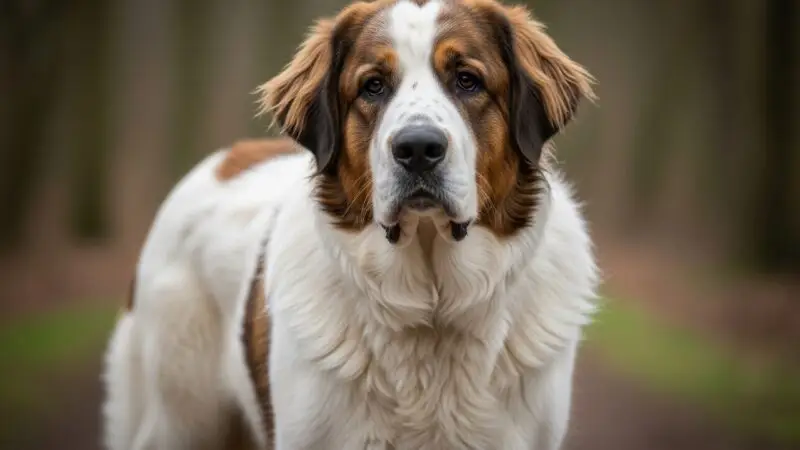
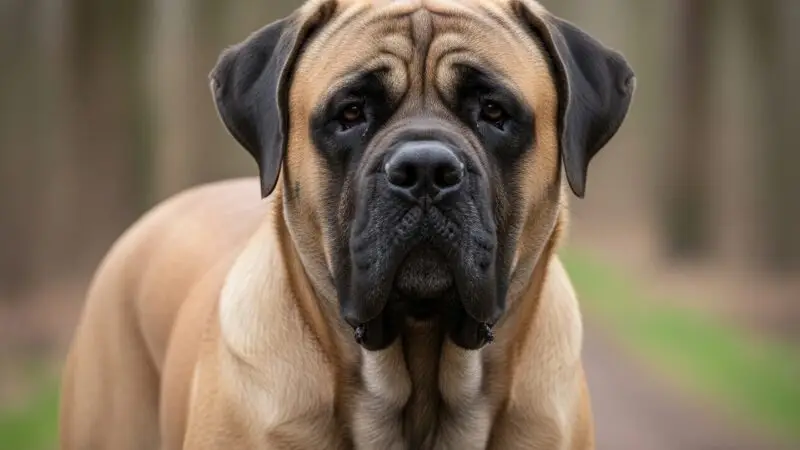
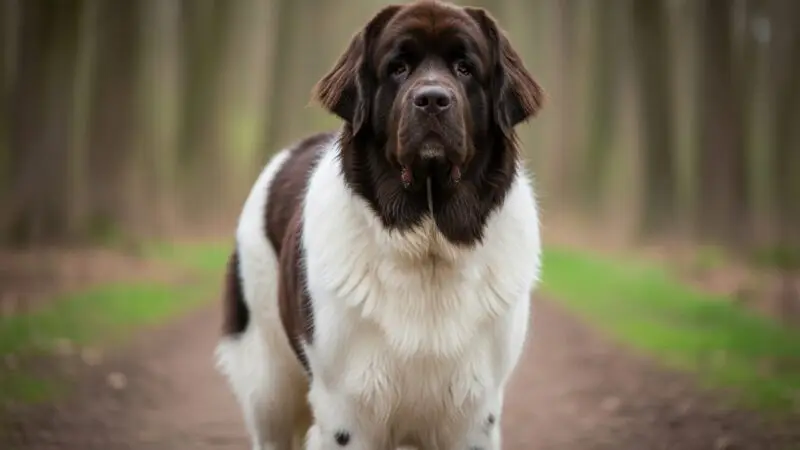
Similar breeds – and their differences
You might also be interested in
Participate
Do you have a good photo of your German Bear Dog?
We are looking for expressive images for our breed profiles. Submit yours; the editorial team reviews every submission before publication.
Does this breed suit you?
Non-FCI-recognised German breeding project. Very large and rare. Only for absolute Molosser specialists.