
01Summary
In a paragraph
If you only have 30 seconds.
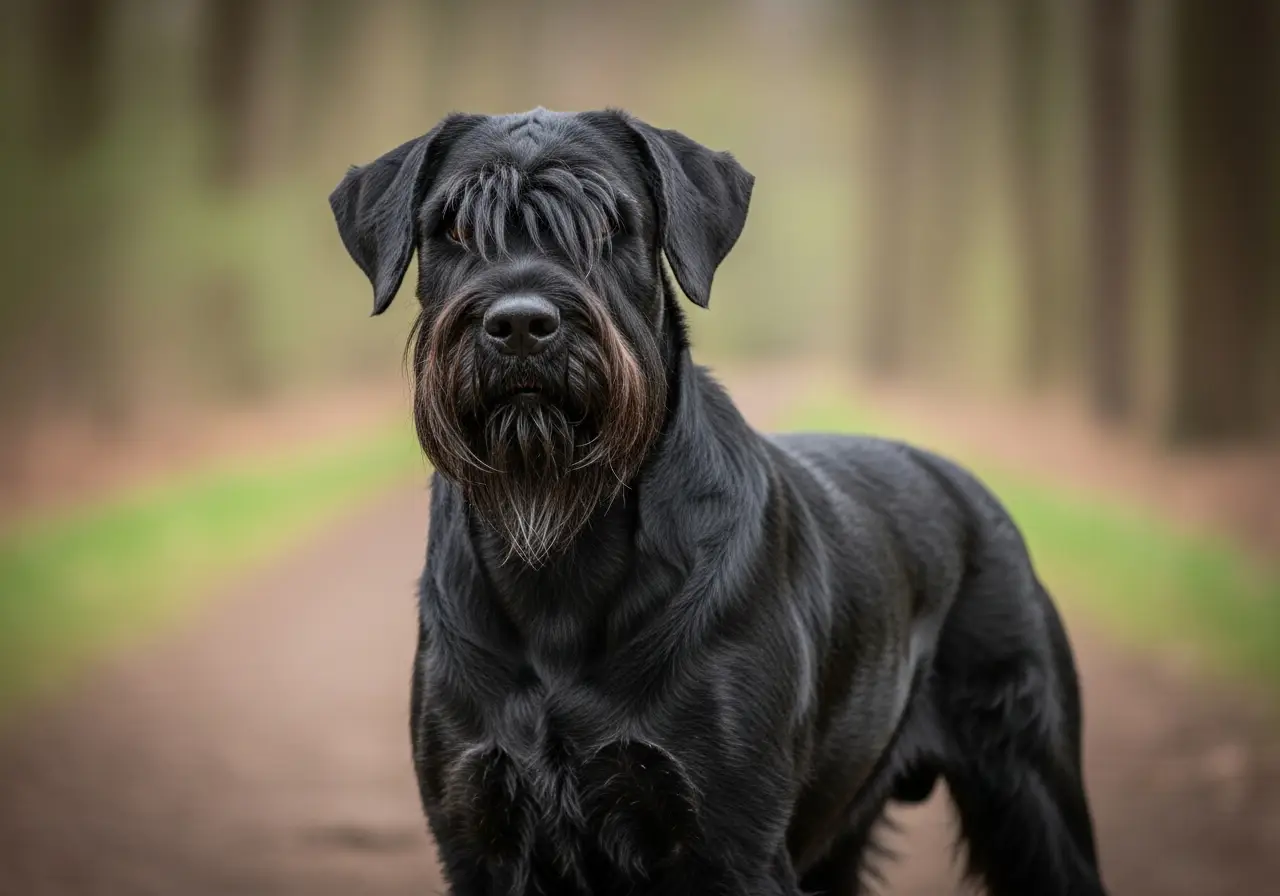
The Giant Schnauzer is the most powerful of the three Schnauzer varieties: a working dog with a pronounced guarding instinct, high intelligence, and a close bond to its primary caregiver. Whoever keeps one takes responsibility for a dog that wants to be challenged daily, both physically and mentally. Without handling experience, clear structure, and consistent training, it develops willfulness that can quickly overwhelm everyday life.
02Introduction
What makes the Giant Schnauzer special
Giant Schnauzer: largest Schnauzer variant, powerfully dominant and for experienced dog owners with structure
03Profile
Key facts and suitability
- Origin
- Deutschland
- Original purpose
- Driving and protection dog
- FCI
- No. 181 · Group 2 · Sektion 1: Pinscher und Schnauzer
- height at the withers
- 60–70 cm
- Weight
- 35–47 kg
- Life expectancy
- 12–15 Years
- Coat type
- Wire-haired
- Minimum exercise
- 90 min/day
- Puppy price
- 2'000–3'500 CHF
- Waiting period
- 6 months
- Sports
- Protection work Obedience Agility
04Temperament
How the Giant Schnauzer shows up in everyday life
When a stranger enters the apartment, the Giant Schnauzer positions itself between the visitor and the primary caregiver, calm, attentive but clearly present. It does not bark immediately but observes closely. Only when the primary caregiver signals that the situation is safe does it relax. This behaviour is not a mistake but an expression of its breed-typical guarding instinct.
Internally (i.e. in terms of what the dog itself needs), a high need for social contact with its own family is evident, combined with a pronounced requirement for mental work. A Giant Schnauzer that receives a scent trail to follow or completes a nosework session in the morning is noticeably calmer in the afternoon than a dog that has merely gone for a walk. Movement alone is not enough.
Externally, i.e. in its reaction to environmental stimuli, it shows reserve up to vigilance towards strangers. This means concretely: on the walk, it registers every jogger, every cyclist, every unknown person. It does not react impulsively, but it lets nothing go unnoticed. These two axes (high family need internally, reserve externally) must not be confused. A Giant Schnauzer that is affectionate towards its family will therefore not automatically be open to every visitor.
With conspecifics, it can appear dominant, depending on sex and socialisation. Keeping dogs of the same sex requires careful planning. In a structured environment with clear leadership, it is a reliable, attentive companion, one that observes its owner closely and reacts to body language before a word is spoken.
05Needs
What this breed needs daily
The Giant Schnauzer requires at least 90 minutes of active exercise daily, and this is a minimum threshold, not a recommendation. Walks at a walking pace do not meet this need. Running sessions, bikejoring, terrain work or structured play in the dog park are suitable formats.
In addition to physical stimulation, it requires daily mental enrichment. Nosework, tracking, obedience training or Schutzhund training (IGP) are formats that correspond to its intelligence and willingness to work. A Giant Schnauzer without mental work develops stubbornness; it then seeks out its own tasks, which is rarely in the owner's interest.
The need for social contact with the primary caregiver is high. It requires a close, reliable bond and reacts sensitively to inconsistency in leadership. Being left alone is possible with targeted preparation, but should not permanently exceed four hours daily.
A securely fenced area significantly facilitates daily management. Off-lead exercise in open, uncontrolled areas is only justifiable with very solid recall training due to the pronounced guarding and territorial behaviour.
Training requires continuity over years, not just during the puppy phase. Regular training sessions, a supporting dog training school with experience in working breeds, and clear, body-language-secure leadership are not options, but prerequisites.
Exercise
Very high
mental work
A lot
Social needs
High
training
Demanding
06Sport & Mental and Physical Stimulation
What sports the Giant Schnauzer is suited for
Realistic in terms of physiology and genetics – not every breed suits every sport.
Structurally and physiologically suitable: CaniCross / bikejoring possible.
07Quick Check
08Suitability
Who this breed is suitable for – and who it isn't
✓Matches
The Giant Schnauzer suits owners with proven experience in handling working dogs or at least dominant, drive-strong breeds. Anyone who has already handled a dog with guarding instinct potential and knows what consistent training means in everyday life brings an important foundation.
Suitable are active individuals or couples who can plan at least 90 minutes for structured exercise daily, not occasionally, but reliably. Anyone who practises dog sports (IGP, tracking, obedience) or is willing to start will find a high-performance partner in the Giant Schnauzer.
Families with children from about ten years old are conceivable if both parents bring leadership experience and the dog is clearly socialised from the start. Toddlers and a Giant Schnauzer handled by inexperienced owners are not a safe combination.
A house with a secure garden significantly facilitates everyday life. Anyone who is willing to invest in professional guidance from a dog training school specialising in working dogs, and who enjoys an intensive, demanding human-dog relationship, will find an exceptionally reliable companion in this breed.
×Doesn't match
The Giant Schnauzer does not suit owners keeping a dog for the first time. Even those who have previously handled only small or socially uncomplicated breeds often underestimate the leadership demands of this breed.
Anyone who is away from home for more than four hours daily and has no reliable care solution should not choose this breed. The high need for social contact and the necessary stimulation cannot be postponed to weekends.
Anyone who perceives reserve towards strangers as a problem or is looking for a dog that warmly greets every visitor will be in permanent conflict with the breed-typical guarding behaviour. Anyone who misinterprets this behaviour as "aggression" and does not lead consistently risks uncontrolled guarding behaviour.
Households with very young children under six years old are not a suitable environment without extensive experience with working dogs. Anyone who has no access to a specialised dog training school or understands training as a one-off phase rather than a permanent component of ownership should consider another breed.
10Line reality
Show line, working line, breeder market
Breeding of the Giant Schnauzer differentiates into two recognisable directions, even though the boundaries are fluid.
Working lines select for drive strength, endurance and trainability. Dogs from these lines show more pronounced guarding instinct traits, higher responsiveness to stimuli and a stronger willingness to work. They are often used in IGP sports, police service or search and rescue dog work. For owners without experience with working dogs, dogs from pure working lines are generally not suitable; the demands on handling are correspondingly high.
Show lines weight the exterior more heavily: body structure, coat texture and head shape according to FCI standard take precedence. This does not necessarily mean that these dogs have less drive, but selection for working performance is less consistent. For active owners with an interest in dog sports but without a professional working dog background, dogs from reputable show lines can be a more realistic starting point.
When buying a puppy it is crucial to know the line affiliation of the parent animals and to check the working test results of the breeding line. A breeder who cannot or will not answer this question does not provide a sufficient basis for an informed decision.
11Health · Reality
What you need to plan for medically with your Giant Schnauzer
The Giant Schnauzer is considered a robust breed but, as a large dog, is susceptible to certain orthopaedic conditions. Hip dysplasia (HD) and elbow dysplasia (ED) are the most relevant hereditary diseases. Reputable breeders provide HD/ED X-ray results of the parent dogs; without this documentation, an important basis for health assessment is missing.
According to specialist literature, life expectancy is between 10 and 12 years, with well-handled, normal-weight dogs more frequently reaching the upper range. Overweight is a relevant risk factor: just two to three kilograms above ideal weight measurably increase the load on joints and spine and statistically shorten life expectancy.
Hypothyroidism occurs more frequently in Giant Schnauzers than in the breed average; symptoms such as weight gain, coat changes, and decreased performance should be investigated by a vet. Gastric dilatation-volvulus (bloat) is also a serious risk for large, deep-chested breeds: several small meals instead of one large portion daily, along with rest periods after eating, demonstrably reduce the risk.
Preventive examinations include annual weight checks, joint assessments from the second year of life, and blood tests from the seventh year of life. The wiry coat requires regular inspection for skin changes that are easily overlooked under the dense topcoat.
12Structured data
Health by the numbers
Prone to diseases
Hip dysplasia Autoimmune diseases
Recommended health tests
Hip X-ray Blood count
13Myths ↔ Reality
What is often said incorrectly about this breed
Five myths, five realities, five sources.
„The Giant Schnauzer is a family dog that is also suitable for less experienced owners.
The FCI standard describes it as a utility and companion dog with a pronounced guarding instinct and high self-confidence. These characteristics require experienced, consistent handling. Without clear structure and early socialisation, Giant Schnauzers develop dominant behaviour that is difficult to manage in everyday life. Specialist associations and breeding clubs expressly recommend the breed only for experienced dog owners.
„Giant Schnauzers are hypoallergenic and do not cause allergies.
The wiry coat of the Giant Schnauzer sheds less hair than many other breeds, which makes it appear more tolerable for some allergy sufferers. True hypoallergenicity does not exist in any dog breed: allergens are found not only in the coat but also in saliva, urine and skin flakes. Allergy sufferers should carry out an allergy test before getting a dog and spend time with the specific dog.
„A large garden replaces sufficient exercise and stimulation.
A garden gives Giant Schnauzers space for free movement, but does not replace guided stimulation. The Giant Schnauzer needs at least 90 minutes of active, structured enrichment per day, dog sports, tracking work or Schutzhund training. A dog left to its own devices in the garden develops boredom behaviour such as barking, digging or destructive chewing.
„The Giant Schnauzer is aggressive and dangerous.
The FCI standard describes a gentle, balanced character with unwavering loyalty. Guarding instinct and vigilance are typical of the breed but do not mean uncontrolled aggression. Problematic behaviour usually arises from inadequate socialisation, lack of stimulation or inconsistent handling, not from the breed itself. Well-handled Giant Schnauzers are controlled and predictable.
„The coat of the Giant Schnauzer is easy to care for and requires little effort.
The wiry topcoat of the Giant Schnauzer requires regular hand-stripping, not simple clipping, as this permanently alters the coat structure. Professional stripping takes place two to three times a year, in addition to weekly brushing and care for the beard and eyebrows. The care effort is significantly higher than with many other breeds and incurs ongoing costs at the dog groomer.
14animal welfare
The animal welfare perspective
Breeder market, designer versions, animal shelter reality — what no one writes in the puppy ad.
Giant Schnauzers end up in animal shelters or with breed protection organisations disproportionately often, not due to character problems of the dogs, but because of underestimated keeping requirements. The most common reasons for surrender: too little time for stimulation, lack of handling experience, and being overwhelmed by the pronounced guarding behaviour. This is not an isolated phenomenon, but a structural pattern in working dog breeds with high drive potential.
The backyard breeder market for Giant Schnauzers is smaller than for fashion dog breeds, but it exists. Offers without breeding club membership, without health certificates, and at very low prices (under 800 euros) should be critically examined. Dogs from such sources often come with unknown health histories and insufficient socialisation; both significantly increase the risk of behavioural problems.
Designer variants of the Giant Schnauzer, such as crosses with other breeds under marketing-oriented names, exist on the fringes of the market. They offer no advantages over seriously bred dogs but are harder to assess in terms of health and temperament.
Rehoming an adult Giant Schnauzer through animal welfare organisations or the Swiss Giant Schnauzer Club (SRSC) is a fully valid alternative to buying a puppy. Adult dogs are assessable in their temperament, a genuine advantage for a breed where temperament and drive strength are so decisive for suitability of keeping. Rehoming centres with breed knowledge can realistically assess the match between dog and household and professionally accompany the handover.
15Costs · Transparency
What this breed realistically costs
A puppy from reputable breeding with breeding club membership and health certificates costs between 1,500 and 2,500 euros in the DACH region. Offers significantly below this signal missing health examinations or breeding without association affiliation; both increase financial risk through later vet costs.
The annual living costs for a Giant Schnauzer realistically lie between 3,000 and 5,000 euros. Food for a large, active dog amounts to 600 to 1,200 euros per year, depending on food quality and body weight. Professional trimming costs 80 to 180 euros per session depending on region and effort; with two to three sessions annually, this adds up to 160 to 540 euros.
Vet costs for routine care (vaccinations, parasite prevention, annual examination) amount to 300 to 600 euros annually. For orthopaedic problems such as HD or ED, diagnosis and treatment can quickly reach 1,500 to 4,000 euros. Dog liability insurance is strongly recommended for this breed and costs 80 to 200 euros annually depending on provider and coverage sum. Pet health insurance is optional but can be sensible for a breed with known health risks.
16Puppy search
What you need to consider when choosing a breeder
- A reputable breeder of Giant Schnauzers is a member of a recognised breed club, in Switzerland for example the Swiss Giant Schnauzer Club (SRSC), in Germany a VDH-affiliated club.
- They present health certificates of the parent dogs: HD and ED examinations are minimum standards.
- Anyone who does not show or cannot show these documents is disqualified as a reputable breeder.
- The breeder asks questions about experience, everyday life, living situation and dog sports plans.
- Anyone who serves every interested party without follow-up questions does not select for suitable owners.
- Puppies should be given away no earlier than eight weeks of age.
- Inspections at the breeder, where the mother is visible and accessible, are standard.
- Photos via WhatsApp do not replace a personal visit.
- Rehoming an adult Giant Schnauzer through animal welfare organisations or breed protection clubs is an equally valid option.
- Adult dogs come with an assessable temperament, which can be a genuine advantage for a breed with a pronounced guarding instinct.
- Breed-specific rehoming centres know the dogs and can realistically assess their suitability for the respective household.
FAQ
Frequently asked questions about the Giant Schnauzer
Is Giant Schnauzer a family dog?
Giant Schnauzer is considered suitable for families with good socialisation and species-appropriate care.
How much exercise does Giant Schnauzer need?
At least around 90 minutes of exercise per day. As an active breed, more so — plus mental stimulation.
What is the size and weight of Giant Schnauzer?
Fully grown, Giant Schnauzer reaches about 60–70 cm at the withers and weighs around 35–47 kg.
What is the life expectancy of Giant Schnauzer?
The life expectancy of Giant Schnauzer is approximately 12–15 years.
Which diseases are common in Giant Schnauzer?
Hip dysplasia Autoimmune diseases
17Breed clubs
Official breed clubs in DACH
19Related
Similar breeds – and their differences
You might also be interested in
Participate
Do you have a good photo of your Giant Schnauzer?
We are looking for expressive images for our breed profiles. Submit yours; the editorial team reviews every submission before publication.
Does this breed suit you?
Self-confident working dog – needs consistent leadership and stimulation