
01Summary
In a paragraph
If you only have 30 seconds.
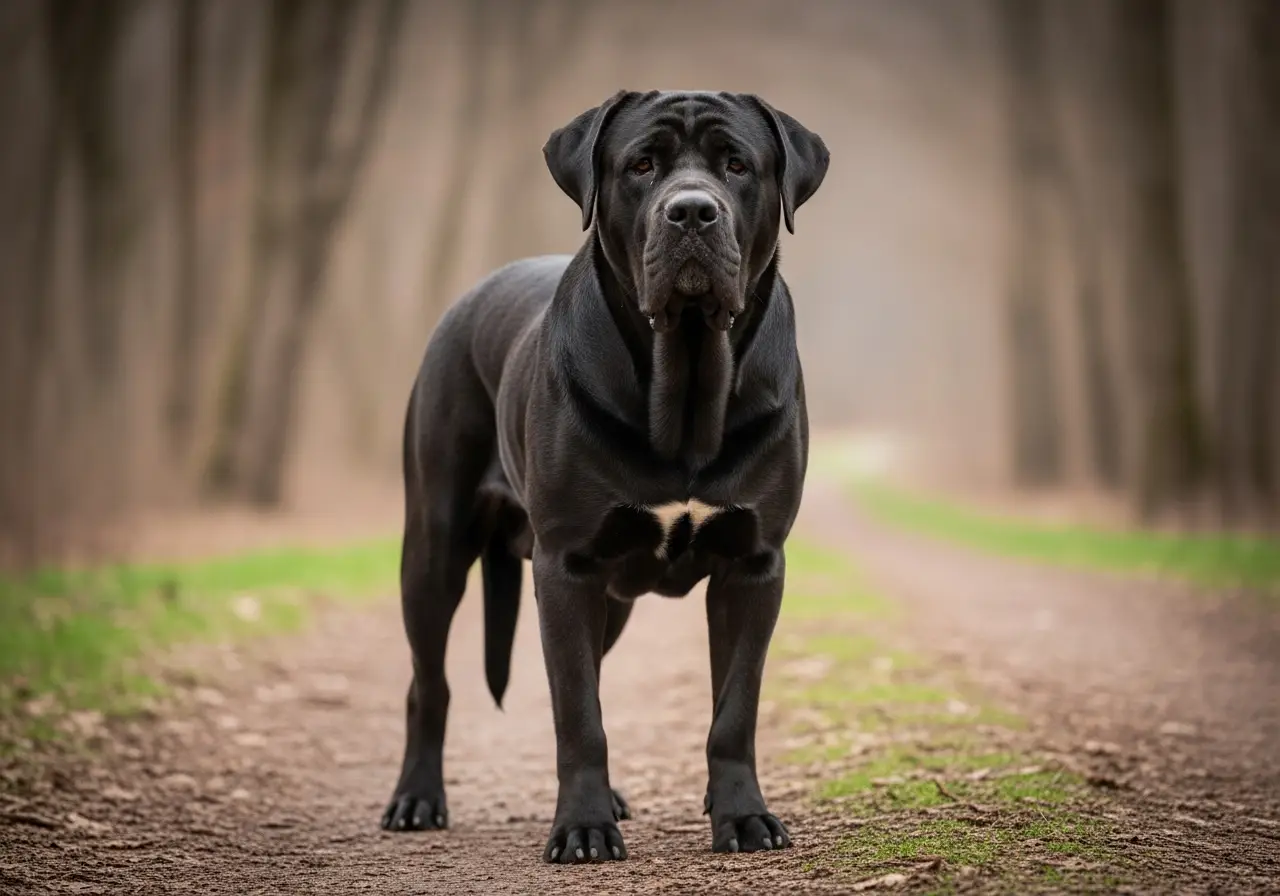
The Molossos Epirou is a massive, independently working livestock guardian dog from north-western Greece. Its strength lies in calm presence and pronounced territorial behaviour, not in cooperation or adaptability. Anyone keeping this dog needs experience with Molosser breeds, a secure property and a consistent daily structure. For the average household in Central Europe, it is simply not designed.
02Introduction
What makes the Molossos Epirou (Greek Mastiff) special
Molossos Epirou (Greek Mastiff): ancient Greek livestock guardian dog, massively territorial and hardly found in Central Europe
03Profile
Key facts and suitability
- Origin
- Griechenland
- Original purpose
- Livestock guarding
- height at the withers
- 65–75 cm
- Weight
- 40–60 kg
- Life expectancy
- 10–12 Years
- Coat type
- Doppel
- Minimum exercise
- 90 min/day
- Puppy price
- 1'000–1'800 CHF
- Waiting period
- 5 months
- Sports
- Hiking
04Temperament
How the Molossos Epirou (Greek Mastiff) shows up in everyday life
The Molossos Epirou observes its surroundings before acting. When an unknown person enters the property, it does not react by barking and jumping but by calmly positioning itself between the stranger and the territory. This reaction is not a sign of calmness; it is protective behaviour in its most concentrated form.
In family life, it shows loyalty towards the people it defines as its pack. However, this does not mean that it actively seeks closeness or depends on affection. The need for social contact is in the medium range: it requires bonding and guidance, not permanent interaction. Anyone who expects it to cuddle on the sofa in the evening misunderstands its nature.
It remains reserved to distrustful towards strangers, regardless of how often it encounters them. This external reaction is genetically anchored and can be regulated through socialisation, not eliminated. A visitor entering the property will be registered, assessed, and observed by the Molossos Epirou, even after several encounters.
The internal axis — what the dog itself needs — and the external axis — how it reacts to its surroundings — diverge significantly in this breed. A medium need for social contact does not mean that it is open to strangers. Anyone who does not understand this difference considerably underestimates the potential risk.
In everyday life, it requires a structured daily routine, a clearly defined territory, and a primary caregiver who leads consistently and calmly. Hectic behaviour, inconsistency, or changing caregivers destabilise it.
05Needs
What this breed needs daily
The Molossos Epirou requires at least 60 minutes of guided exercise daily, structured walks with the owner, not free movement on the property as a substitute. The form of exercise should be calm and controlled; intensive endurance sports such as jogging or accompanying cyclists are not suitable for this molosser breed and put strain on the skeleton.
Mental stimulation in the classic sense (nose work, search games, obedience training with high task density) is less central for this breed than for herding or retrieving dogs. The need for mental work is in the lower to medium range. What it needs instead is a clear daily structure: fixed times, fixed rules, and a reliable primary caregiver.
The territory must be securely fenced, not as a comfort but as a safety prerequisite. A fence that does not withstand a 70-kilogram dog with protective motivation is no fence at all. The minimum height should be 180 cm, and the fence should be secured against digging.
It tolerates being left alone for up to about six hours if it is guarding a defined territory. Longer absences without structure lead to restlessness and can intensify territorial behaviour.
Socialisation during the puppy phase is not optional but mandatory: encounters with people, vehicles, noises, and other dogs must take place early and systematically. Anyone who neglects this phase raises a dog that cannot be safely handled in Central European everyday situations.
Exercise
Medium
mental work
Something
Social needs
Low
training
Experts
07Quick Check
08Suitability
Who this breed is suitable for – and who it isn't
✓Matches
The Molossos Epirou suits owners with proven experience in handling livestock guardian or molosser breeds. Anyone who has responsibly kept a Kangal, Caucasian Ovcharka, or Pyrenean Mountain Dog brings the necessary foundation.
A house with a secured property is not a recommendation but a prerequisite. Minimum size of the outdoor area: sufficient for a dog of this body mass, with a digging-proof fence at least 180 cm high.
Suitable owners are those who can dedicate at least 60 to 90 minutes daily to guided exercise and daily structure, even in bad weather and on weekdays. Physical strength is relevant: a dog weighing 60 to 70 kilograms with protective motivation must be physically controllable.
Those who live in a rural or quiet peripheral location, with little public traffic on the property, create the framework conditions under which the dog's territorial behaviour remains manageable. Families with children from about twelve years of age, who are socialised in dealing with large dogs, may be suitable, provided all adults in the household consistently take on the leadership role. Owners should financially factor in the costs for large dog veterinary care, liability insurance and, where applicable, restricted breed regulations.
×Doesn't match
The Molossos Epirou is not suitable for owners keeping a dog for the first time, regardless of how much research they have conducted. Theoretical knowledge does not replace practical experience with independent guardian breeds.
Keeping in an apartment is out of the question. Even a large city apartment with daily park visits does not meet the basic requirements of this breed. Territorial behaviour requires a clearly defined territory; a public park is the opposite of that.
Those who regularly receive visitors, have children under ten years of age in the household or live in a densely populated environment underestimate the potential for conflict. The reserve towards strangers is not a trait that dissolves through the friendly demeanour of visitors.
Those who equate the dog's calm basic disposition with approachability commit one of the most common mistakes with this breed. Calm and socially compatible are two different concepts; the dual-axis model makes this difference clear: a moderate need for social contact does not mean that the dog reacts openly to strangers.
Owners with little time, without the possibility of early socialisation or without access to a dog training school specialising in guardian dogs should not consider this breed. A Molossos Epirou that has not been sufficiently socialised during the puppy phase is hardly safe to handle under Central European conditions.
10Line reality
Show line, working line, breeder market
The Molossos Epirou has no internationally recognised line differentiation in the sense of show, working, or field trial lines. As the FCI does not recognise the breed, there is no uniform breed standard that could serve as a basis for breeding lines.
In practice, two informal types can be distinguished: dogs from active herding husbandry in Greece that are still used for livestock guarding, and dogs from hobby breeding primarily focused on physical build and historical type preservation. This distinction is relevant for prospective owners because working dogs from the herding environment generally exhibit greater independence and more pronounced protective reflexes, whereas dogs from hobby breeding may be selected more strongly for human closeness, although this is not systematically documented.
Anyone importing a Molossos Epirou from Greece should carefully check the origin of the parent animals and, if possible, obtain information about their working use and socialisation. Without this basis, it is hardly possible to assess the expected temperament.
In Central Europe, reliable breeding lines are practically non-existent. The low prevalence makes serious line differentiation unlikely for the foreseeable future.
11Health · Reality
What you need to plan for medically with your Molossos Epirou (Greek Mastiff)
Systematic health data on the Molossos Epirou are largely lacking due to its low prevalence and lack of FCI recognition. Data from related Molosser breeds, which are comparable in body build and purpose, serve as a guide.
In large Molosser breeds, the prevalence of HD (hip dysplasia) is between 20 and 40 percent depending on the breed and breeding population (Source: OFA, Orthopedic Foundation for Animals, data as of 2023, ofa.org). Elbow dysplasia occurs in heavy Molosser breeds with similar frequency. Both conditions manifest as lameness, reluctance to move and pain; therefore, a veterinary X-ray examination of the parent animals before purchase is strongly recommended.
The risk of gastric torsion (Gastric Dilatation-Volvulus, GDV) is increased in large, deep-chested dogs. GDV is a life-threatening emergency that can lead to death within hours. Owners should know the symptoms: distended abdomen, unproductive retching, restlessness, weakness. Immediate veterinary intervention is required.
Life expectancy is around 9 to 12 years, which is within the range for dogs of this body size. The high body weight places a permanent strain on joints and the cardiovascular system; overweight demonstrably shortens life expectancy and worsens joint health.
Recommended preventive examinations: annual veterinary check-up, X-ray of hip and elbow joints in young adulthood (12–18 months), regular weight monitoring, heart auscultation from the fifth year of life. Tartar and ear problems are also to be observed in this breed.
12Structured data
Health by the numbers
Prone to diseases
Hip dysplasia Elbow problems
Recommended health tests
Hip X-ray Elbow X-ray
13Myths ↔ Reality
What is often said incorrectly about this breed
Five myths, five realities, five sources.
Due to its calm nature, the Molossos Epirou is also suitable for first-time owners who have experience with large dogs.
The calm basic disposition of the Molossos Epirou conceals its complexity. A dog with pronounced guarding and territorial behaviour as well as high independence presents a demanding task even for experienced owners. Without sound knowledge in handling livestock guardian dogs, situations arise that are unsafe for both the dog and its surroundings. First-time owners are structurally overwhelmed by this breed.
Because the Molossos Epirou worked alone historically, it requires little human attention and socialisation.
Independence in working deployment does not mean that the dog can do without targeted socialisation. Precisely because it reacts reservedly to distrustfully towards strangers, early, structured habituation to people, noises and different environments is crucial. Without this foundation, distrust intensifies into uncontrollable guarding behaviour. Livestock guardian dogs require socialisation; they just process it differently than companion dogs.
A large plot of land replaces sufficient exercise and enrichment for this breed.
An enclosed plot of land allows the Molossos Epirou to exercise its territorial behaviour, but does not replace guided exercise and structured interaction with the owner. Dogs kept exclusively on the property without regular controlled walks often develop exaggerated territorial reactions towards anything approaching the property. Exercise and guidance by the owner are two different needs.
Due to its ancient origins, the Molossos Epirou is a particularly healthy and robust breed without significant hereditary diseases.
Landrace status and the historical age of a breed do not automatically protect against breed-typical health problems. As a large Molossian, the Molossos Epirou carries an increased risk of hip dysplasia, elbow dysplasia and gastric torsion (bloat). The high body weight places lasting strain on joints and the cardiovascular system. Systematic health data are largely lacking due to low prevalence, which represents not a clearance but an information deficit.
Because the Molossos Epirou is kept as a working dog in Greece, it is undemanding in terms of nutrition and care.
Working dogs kept under farming conditions are often maintained with the bare minimum; this is not a quality feature but a context. A Molossos Epirou in Central Europe requires nutrition appropriate to its needs, taking into account its body weight and joint risk. Overweight is a serious health risk for this breed. Regular veterinary preventive care, dental hygiene, and grooming are not optional but part of the standard of care.
14animal welfare
The animal welfare perspective
Breeder market, designer versions, animal shelter reality — what no one writes in the puppy ad.
The Molossos Epirou practically does not appear in German and Swiss animal welfare; the breed is too rare to be regularly represented on placement portals. This does not mean, however, that animal welfare aspects are irrelevant. With this breed, they shift to two levels: the import market and the reality of keeping.
On the import market from Greece, there are offers that advertise with the historical fascination for ancient Molosser breeds. Anyone who buys a Molossos Epirou without checking the origin of the parent dogs, the living conditions of the puppies, and their health status may be funding breeding operations that do not select for health or temperament. The lack of FCI recognition makes it more difficult to distinguish between reputable and disreputable suppliers; there is no breed standard to refer to.
Problems related to keeping often arise from a misjudgement of temperament. A dog that was not sufficiently socialised during the puppy phase or grows up in a household without experience and structure develops behaviours that make rehoming extremely difficult. A 65-kilogram dog with pronounced protective behaviour and mistrust towards strangers will hardly find a suitable place in a rescue organisation in Central Europe; most animal shelters are not equipped for these requirements.
Anyone who is seriously interested in this breed should consider the rehoming of an adult dog from Greece via reputable animal welfare organisations as an equally valid option. Adult dogs have the advantage that their temperament can be assessed, a relevant factor for a breed where puppy temperament predictions are uncertain. Contact with Greek animal welfare associations that work with livestock guardian dogs can be a sensible starting point here.
15Costs · Transparency
What this breed realistically costs
The purchase price for a Molossos Epirou from reputable hobby breeding or import ranges between 800 and 2,000 euros depending on the origin. Offers significantly below this range, particularly from online classifieds without proof of breeding, indicate breeding operations without health selection.
The annual living costs for a dog of this size class are considerable. Feed costs alone amount to between 1,200 and 2,000 euros per year with high-quality nutrition. In addition, there are care costs (nail trimming, grooming, dental care) estimated at 200 to 400 euros annually.
Basic veterinary costs (vaccinations, parasite prevention, annual check-up) amount to 300 to 600 euros per year. In the event of an illness such as hip dysplasia or gastric torsion (bloat), individual treatments can cost 2,000 to 8,000 euros or more. Pet insurance for a dog of this size and risk profile costs between 80 and 180 euros monthly in Germany (as of 2024, depending on provider and tariff).
Liability insurance is mandatory for dogs of this size in most federal states and costs between 60 and 150 euros annually. In federal states or cantons with restricted breed regulations, additional requirements (temperament test, proof of expertise, higher insurance sums) can incur further costs. Checking the local legal situation before purchase is essential.
16Puppy search
What you need to consider when choosing a breeder
- As the Molossos Epirou is not an FCI-recognised breed, there is no official breeding association in Germany, Austria or Switzerland that serves as a quality filter.
- This significantly increases the duty of care when searching for a puppy.
- Reputable providers allow a visit to the litter, with the mother and preferably also the father on site.
- They provide health certificates for the parent animals (X-ray findings for HD/ED, vaccination passports) and show interest in where the puppies are placed.
- A reputable provider asks more questions than the interested party.
- Warning signs: puppies without mother, handover under eight weeks, offers via classifieds portals without proof of breeder, imported puppies with unclear origin and missing health documents, prices well below market average.
- The placement of an adult dog from Greece via reputable animal welfare organisations is an equally valid option, and with this breed it even has the advantage that the dog's character can already be assessed.
- Greek animal welfare associations working with livestock guardian dogs can be points of contact.
- A dog training school with experience in guardian and livestock guardian dogs should be involved from the start.
FAQ
Frequently asked questions about the Molossos Epirou (Greek Mastiff)
Is Molossos Epirou (Greek Mastiff) a family dog?
Molossos Epirou (Greek Mastiff) is considered suitable for families with good socialisation and species-appropriate care.
How much exercise does Molossos Epirou (Greek Mastiff) need?
At least around 90 minutes of exercise per day.
What is the size and weight of Molossos Epirou (Greek Mastiff)?
Fully grown, Molossos Epirou (Greek Mastiff) reaches about 65–75 cm at the withers and weighs around 40–60 kg.
What is the life expectancy of Molossos Epirou (Greek Mastiff)?
The life expectancy of Molossos Epirou (Greek Mastiff) is approximately 10–12 years.
Which diseases are common in Molossos Epirou (Greek Mastiff)?
Hip dysplasia Elbow problems
17Breed clubs
Official breed clubs in DACH
19Related
Similar breeds – and their differences
You might also be interested in
Participate
Do you have a good photo of your Molossos Epirou (Greek Mastiff)?
We are looking for expressive images for our breed profiles. Submit yours; the editorial team reviews every submission before publication.
Does this breed suit you?
No FCI status – very rare outside Greece