
01Summary
In a paragraph
If you only have 30 seconds.
The Podenco Andaluz is a South Spanish sight and scent hound with a slender build, enormous reaction speed, and a prey drive that remains omnipresent in everyday life. The breed requires experienced owners, secure terrain, and consistent, patient handling. Those who meet these conditions gain an enduring, sensitive companion who is surprisingly calm in the household.
02Introduction
What makes the Podenco Andaluz special
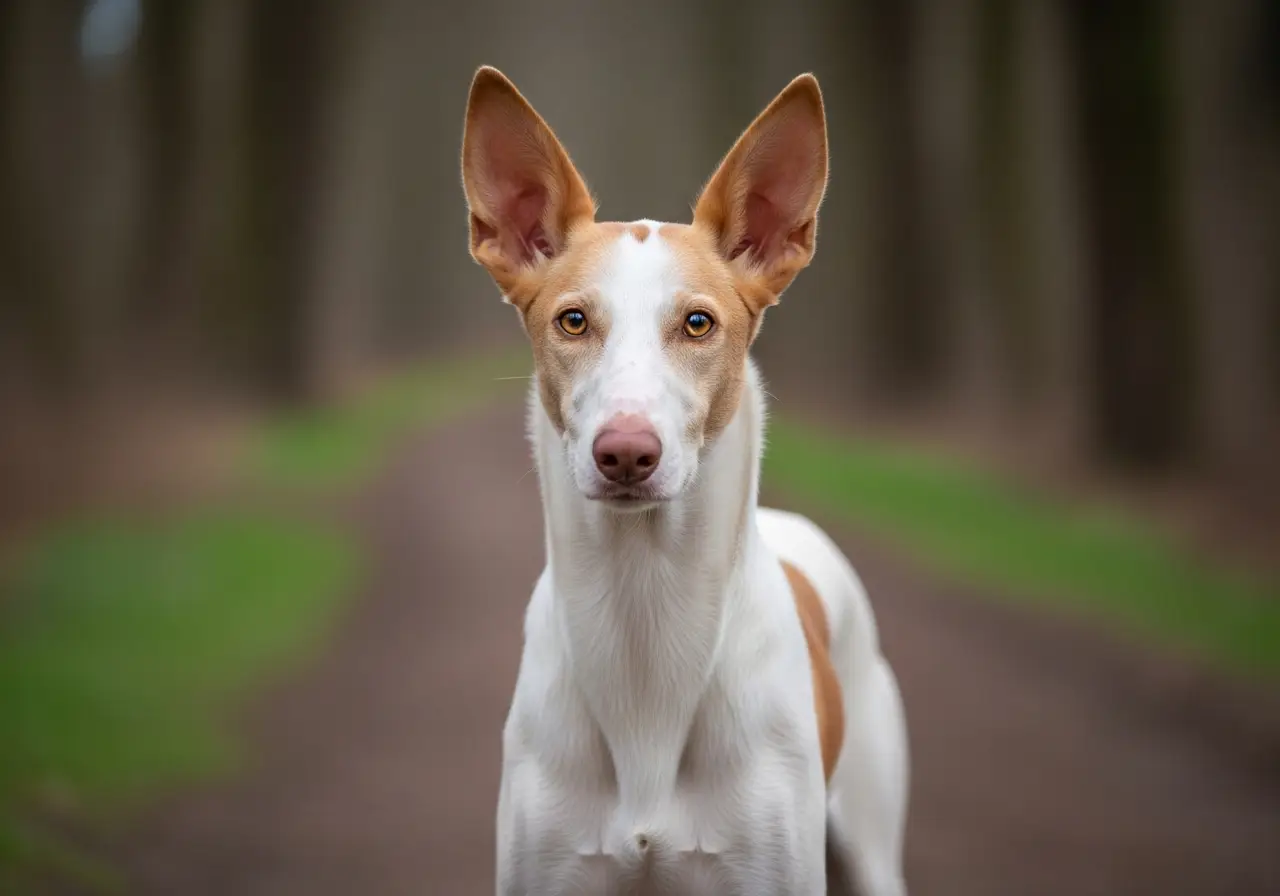
Podenco Andaluz: south Spanish sight hound with sighthound type, slender, sensitive and often rehomed as an animal welfare dog
03Profile
Key facts and suitability
- Origin
- Spanien
- Original purpose
- Rabbit hunting
- height at the withers
- 53–64 cm
- Weight
- 20–30 kg
- Life expectancy
- 12–15 Years
- Coat type
- Short-haired
- Minimum exercise
- 90 min/day
- Puppy price
- 400–1'200 CHF
- Waiting period
- 2 months
- Sports
- Lure Coursing Agility
04Temperament
How the Podenco Andaluz shows up in everyday life
During morning exercise, the Podenco Andaluz shows what its genetics mean: as soon as something moves in the bushes, it switches to hunting mode in fractions of a second. Eye contact with the owner breaks off, the body tenses, and without secured terrain, it is gone. This is not a failure of training, but the result of centuries of selection for independent hunting decisions.
Internally, what the dog needs: The need for social contact is high. The Podenco Andaluz develops a close bond with its primary caregiver and actively seeks contact. Mental work and nose work are not an addition, but a necessity: a mentally under-stimulated Podenco invents its own enrichment, which is rarely in the owner's interest. Being left alone must be built up gradually; many dogs react to abrupt isolation with restlessness or vocalisation.
Externally, how the dog reacts to stimuli: towards strangers, the Podenco Andaluz behaves reservedly to expectantly. It does not greet unknown people enthusiastically; this is not a lack of socialisation, but a breed-typical trait. This reserve must not be confused with timidity. With sufficient time and positive experiences, it opens up, but remains selective in its affection.
In daily household life, the breed surprises with remarkable calmness: on the sofa, the Podenco Andaluz dozes for hours if its quota of movement and mental work is met. This duality (highly active outside, relaxed inside) tempts one to underestimate the need for exercise. If you skip a day, you will notice it in the evening.
05Needs
What this breed needs daily
The Podenco Andaluz requires 90 to 120 minutes of intensive exercise daily. It is not just the duration that counts, but the quality: sniffing courses, search games and nose work appeal to its hunting motivation and tire it more effectively than pure running distances. Off-leash walking is only advisable in securely fenced areas on a permanent basis; a commercially available fence with a height of less than 1.80 metres is not sufficient for many individuals.
Mental work is equal in importance to physical exercise. Food hiding games, basic mantrailing or structured search tasks in the garden cover the cognitive need. A Podenco that is only physically exhausted remains mentally under-stimulated.
The need for social contact is high. The breed requires reliable caregivers and a stable daily structure. Abrupt changes in the daily routine or frequent changes of caregiver cause stress. Being left alone is possible, but must be trained systematically, ideally starting in the first weeks after moving in, in short units with positive association.
For owners living in the city: keeping the dog in an apartment works if there is sufficient daily exercise and opportunities to retreat outdoors. A garden is an advantage, not a substitute for active exercise sessions. The Podenco Andaluz is sensitive to cold; at temperatures below five degrees Celsius, it needs a well-fitting dog coat for longer stays outside.
Exercise
High
mental work
A lot
Social needs
High
training
Demanding
06Sport & Mental and Physical Stimulation
What sports the Podenco Andaluz is suited for
Realistic in terms of physiology and genetics – not every breed suits every sport.
Structurally and physiologically suitable: Suitable for mantrailing, dummy work and tracking · CaniCross / bikejoring possible.
07Quick Check
08Suitability
Who this breed is suitable for – and who it isn't
✓Matches
The Podenco Andaluz suits owners with proven experience in dealing with dogs with strong drives or hunting motivation. Specifically: those who have already handled a dog with pronounced prey drive, have a realistic picture of recall training and know that "almost safe" is not enough for off-leash walking.
Active individuals or couples who can plan 90 to 120 minutes of structured exercise daily, not just at weekends, and have access to fenced terrain or are willing to actively organise this.
Families with children from about eight years old, in which at least one person brings dog experience and the daily structure is stable. The Podenco Andaluz tolerates children well if it receives sufficient opportunities to retreat.
Owners who plan nose work, mantrailing or similar canine sports activities as a fixed part of everyday life, not as occasional variety. Multi-dog households are possible if the introduction is carried out carefully. The breed generally shows good social compatibility with conspecifics.
×Doesn't match
The Podenco Andaluz does not suit owners who are keeping a dog for the first time and do not plan accompanying professional support. The combination of high exercise needs, pronounced prey drive and independence structurally overwhelms first-time owners without prior experience, regardless of motivation or commitment.
Not suitable for households where the person is away from home for more than four hours daily and no reliable care solution exists. The breed's high need for social contact is incompatible with long, regular periods of being left alone.
Those who consider off-leash walking without fencing as a basic requirement, for example in the countryside with free access to fields and forests, permanently underestimate the prey drive. This cannot be eliminated by training, only managed.
Owners who interpret the Podenco's calmness in the house as a sign of low exercise needs will be surprised by its outdoor activity. Those looking for a "relaxed everyday dog without much effort" will not find it in this breed. Households with small animals such as rabbits, guinea pigs or free-roaming cats should also be viewed critically; the prey drive does not stop at pets.
10Line reality
Show line, working line, breeder market
The Podenco Andaluz is not internationally recognised by the FCI, which means that a formalised line differentiation between show and working lines, as exists for example with the Labrador Retriever, does not exist. In Spain, the Real Sociedad Canina de España maintains its own studbook, which is primarily oriented towards working traits.
In practice, however, two origins can still be distinguished that create noticeable differences in everyday life: dogs from active hunting households in Spain generally bring stronger hunting imprinting and higher independence. They were rarely selected for human orientation or obedience, but rather for endurance, quick reaction times and independent decision-making in the terrain.
Animal welfare dogs, which often come from kill shelters or kennel housing, frequently show a different starting situation: lack of socialisation, insecurity towards everyday stimuli and an unknown previous life. This does not mean they are more difficult, but the settling-in phase requires more patience and a structured approach.
Owners who take in a Podenco Andaluz from animal welfare should have realistic expectations regarding the settling-in time: three to six months until the dog perceives its new environment as safe is not unusual. A supporting dog training school with experience in working with animal welfare dogs is recommended.
11Health · Reality
What you need to plan for medically with your Podenco Andaluz
The Podenco Andaluz is considered a robust, long-lived breed. Based on available experience, life expectancy is between 12 and 15 years, a value that lies in the upper range compared to many other medium-sized breeds.
Breed-typical hereditary diseases are comparatively rarely documented. Reliable population studies on HD or ED frequencies do not exist for the Podenco Andaluz to the extent found for recognised breeds, due to the lack of FCI recognition and the associated limited studbook data. This does not mean that the breed is free from orthopaedic problems; it means that the data situation is thin.
Known sensitivities concern the slender build: The Podenco Andaluz has little subcutaneous fat and reacts sensitively to cold as well as to barbiturate-based anaesthetics, a circumstance that must be discussed with the treating vet before any surgical procedure. This aspect is relevant for all slender primitive and sighthound types and is well documented (cf. Greyhound anaesthesia protocols, Veterinary Anaesthesia and Analgesia).
Preventive examinations: Annual dental check-ups are recommended, as the breed tends to form tartar. Regular weight checks are important; underweight due to insufficient feeding is a real risk for active individuals. Parasite prevention (Leishmaniosis prophylaxis) is relevant for dogs that regularly travel to Southern Europe or have been imported from Spain.
12Structured data
Health by the numbers
Prone to diseases
Hip problems Eye problems
Recommended health tests
Eye examination
13Myths ↔ Reality
What is often said incorrectly about this breed
Five myths, five realities, five sources.
„Podencos are sighthounds and only need short sprints.
Taxonomically, the Podenco Andaluz does not belong to the FCI group of sighthounds, but to the Primitive Dogs (Group 5). It is not a pure sprint specialist, but an enduring sight and scent hunter that works in the terrain for hours during hunting. The daily exercise requirement is 90 to 120 minutes of intense activity; short walks are not sufficient.
„Rescue Podencos are traumatised and never truly tameable.
Many Podencos rehomed from Spain show initial insecurity, which is due to a lack of socialisation rather than irreversible trauma. With structured settling-in, clear routines and patient guidance, most dogs develop a stable bond. Blanket statements about their adoptability are not scientifically tenable and hinder serious adoption decisions.
„The prey drive can be completely trained out through training.
The prey drive of the Podenco Andaluz is deeply rooted genetically and has been intensified by selection over centuries. Training can improve impulse control and make the dog safer in everyday life, but it does not eliminate the drive itself. Off-leash exercise without secured terrain remains a permanent risk, regardless of training level.
„Podencos are loners and get along poorly with other dogs.
The Podenco Andaluz was traditionally kept in packs and generally shows high social compatibility with conspecifics. Conflicts arise more frequently from a lack of socialisation or insufficient stimulation than from breed-typical aggression. A careful introduction into a multi-dog household is nevertheless recommended.
„Podencos are beginner dogs because they are so calm in the house.
The calmness in the house masks the demands outside. The Podenco Andaluz requires experienced owners who can realistically assess its prey drive, build recall training consistently and organise secured terrain. The combination of high exercise needs, independence and hunting motivation regularly overwhelms owners without prior experience with high-drive dogs.
14animal welfare
The animal welfare perspective
Breeder market, designer versions, animal shelter reality — what no one writes in the puppy ad.
The Podenco Andaluz belongs to the animal welfare dogs most frequently rehomed from Spain into the German-speaking region. Background: In Spain, hunting dogs (Podencos, Galgos and related breeds) are traditionally kept as working animals. After the end of the hunting season, usually in January, many animals are abandoned, handed over to kill stations or simply left behind. Spanish animal welfare organisations and Northern European partner organisations have been systematically rehoming these dogs abroad since the 1990s.
This is not a marginal phenomenon: According to estimates by Spanish animal welfare associations, several tens of thousands of hunting dogs are abandoned or killed in Spain annually. The number of unreported cases is high, as many animals never appear in official statistics.
Backyard breeders and dubious rehoming: The growing popularity of the Podenco in the German-speaking region has also created a market for dubious providers. Dogs are rehomed under the label "animal welfare" without any serious prior assessment, veterinary examination or aftercare taking place. Characteristics of dubious rehoming: no preliminary discussion, no return guarantee, pressure to make a quick decision, missing health documentation.
Housing-related problems after rehoming: The most common reason for surrender in the new home is underestimating prey drive and exercise needs. Owners who expect a calm house dog are overwhelmed by outdoor activity. This leads to returns, which represent a further burden for the animals.
Adopting a Podenco from serious animal welfare rehoming is an equivalent option to breeding; however, it requires realistic expectations, patience during the settling-in phase and willingness to work together with the rehoming organisation. Those who bring these prerequisites actively support relieving overcrowded Spanish kill stations.
15Costs · Transparency
What this breed realistically costs
Acquisition costs vary greatly depending on origin. A puppy from serious breeding via Spanish breeding associations usually costs between 800 and 1,500 euros, plus transport costs for imports from Spain. The rehoming fee with serious animal welfare organisations is typically between 300 and 600 euros and covers neutering, basic vaccinations, microchip and entry documents.
Running costs per year (guideline values for Germany/Austria/Switzerland): Food for a medium-sized Podenco Andaluz is between 600 and 1,200 euros annually, depending on quality. Basic vaccinations and annual preventive care at the vet cost an average of 150 to 300 euros. In addition, parasite prevention (ticks, fleas, heartworm for travelling dogs) amounts to approx. 100 to 200 euros annually.
Animal welfare insurance: Liability insurance is mandatory in most federal states in Germany and Austria and costs approx. 50 to 100 euros annually. Pet health insurance is optional given the robust health of the breed, but sensible; annual premiums start at approx. 300 euros for basic cover.
One-off acquisition costs (equipment, lead, collar, transport box, dog coat for cold): approx. 200 to 400 euros. Dog training school for the initial settling-in phase: 200 to 500 euros for a basic course.
16Puppy search
What you need to consider when choosing a breeder
- As the Podenco Andaluz is not FCI-recognised internationally, there is no VDH-led studbook in Germany.
- Reputable breeders can be found via the Spanish breeding association RSCE or specialised Iberian breed clubs.
- A reputable breeder allows a visit to the litter, shows both parent animals and provides health documents as well as information on socialisation.
- Purchase prices significantly below 800 euros for puppies from Spain are a warning signal.
- The equivalent, and in the German-speaking area significantly more common, option is adoption via reputable animal welfare organisations.
- Numerous Podencos arrive annually from Spanish killing stations to Germany, Austria and Switzerland.
- Reputable placement organisations conduct a preliminary interview, provide information on the animal's previous life, as far as known, and accompany the settling-in phase.
- Warning signals in animal welfare placements: no preliminary interview, no information on health status, pressure to make a quick decision.
- A reputable organisation takes the dog back if the placement fails.
- Before taking in an animal welfare dog, it is advisable to have a meeting in a neutral environment and a veterinary examination immediately upon arrival.
FAQ
Frequently asked questions about the Podenco Andaluz
Is Podenco Andaluz a family dog?
Podenco Andaluz is considered suitable for families with good socialisation and species-appropriate care.
How much exercise does Podenco Andaluz need?
At least around 90 minutes of exercise per day. As an active breed, more so — plus mental stimulation.
Does Podenco Andaluz suit an apartment?
With enough exercise and enrichment, Podenco Andaluz can also be kept in an apartment.
What is the size and weight of Podenco Andaluz?
Fully grown, Podenco Andaluz reaches about 53–64 cm at the withers and weighs around 20–30 kg.
What is the life expectancy of Podenco Andaluz?
The life expectancy of Podenco Andaluz is approximately 12–15 years.
Which diseases are common in Podenco Andaluz?
Hip problems Eye problems
17Breed clubs
Official breed clubs in DACH
19Related
Similar breeds – and their differences
You might also be interested in

Participate
Do you have a good photo of your Podenco Andaluz?
We are looking for expressive images for our breed profiles. Submit yours; the editorial team reviews every submission before publication.
Does this breed suit you?
Animal welfare relevant: frequently abandoned in Spain – animals rescued from killing are available in Switzerland