
01Summary
In a paragraph
If you only have 30 seconds.
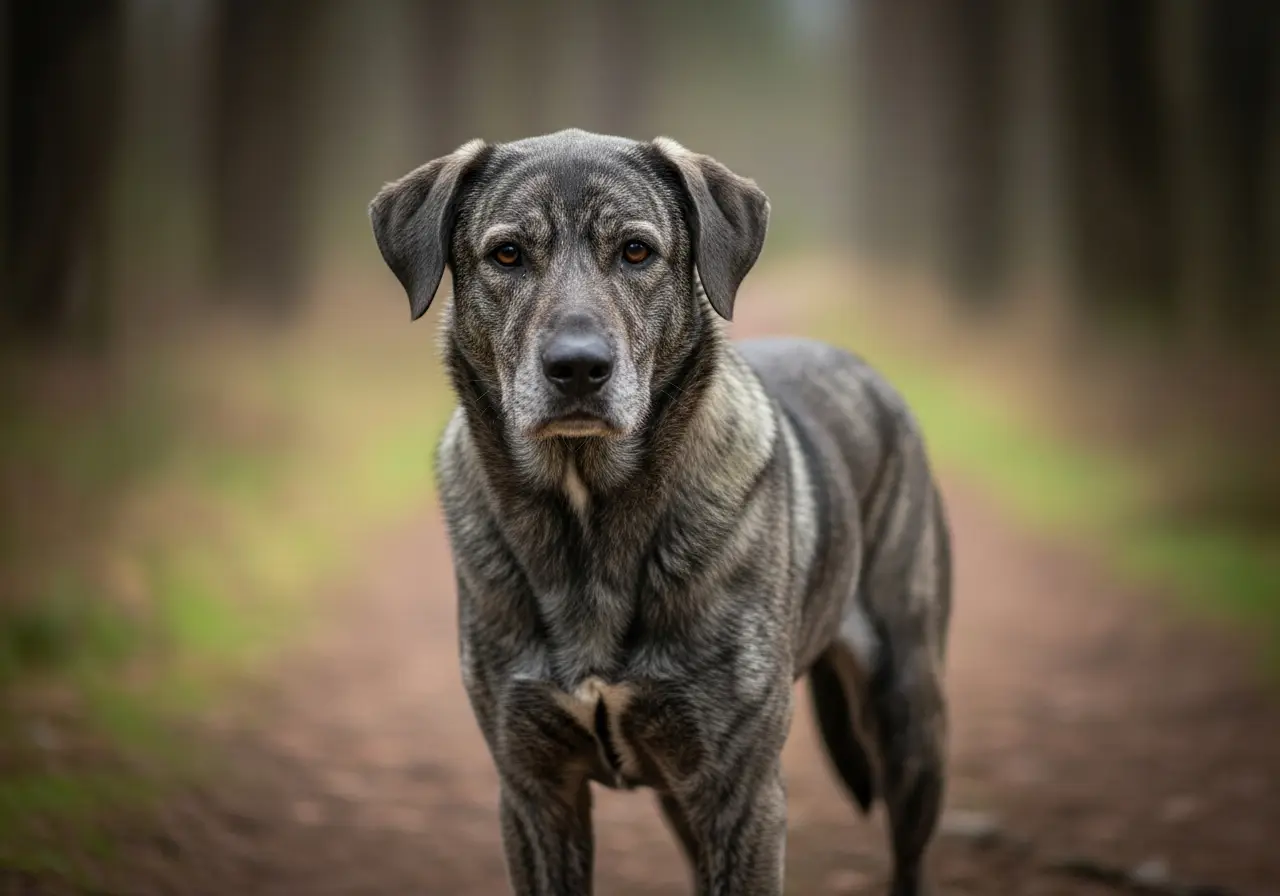
The Cão de Castro Laboreiro is not a companion dog with livestock guardian aesthetics; it is a functionally shaped watchdog whose territorial and protective behaviour is deeply anchored genetically. Anyone who keeps one assumes responsibility for a dog that decides independently when protection is required. This demands experience, a clearly structured environment and consistent leadership throughout the entire lifespan.
02Introduction
What makes the Cão de Castro Laboreiro special
The Cão de Castro Laboreiro is a northern Portuguese livestock guardian dog, FCI Group 2, robust and alert, withers height 55–64 cm.
03Profile
Key facts and suitability
- Origin
- Portugal
- Original purpose
- Livestock protection against wolves in northern Portugal
- FCI
- No. 170 · Group 2 · Section 2.2
- height at the withers
- 55–64 cm
- Weight
- 25–40 kg
- Life expectancy
- 11–14 Years
- Coat type
- Short-haired
- Minimum exercise
- 60 min/day
- Puppy price
- 800–1'500 CHF
- Waiting period
- 12 months
- Sports
- Schutzhund
04Temperament
How the Cão de Castro Laboreiro shows up in everyday life
Those who leave the house in the morning and return in the evening will not experience a stormy welcome from the Cão de Castro Laboreiro. The dog registers the return, processes it, and returns to its observation position. This calmness is not disinterest, but an expression of a dog that knows its job.
Internally, the Cão de Castro Laboreiro requires a clearly defined territory that it can experience as its own. A secured property is not a comfort solution, but a functional prerequisite. Without spatial structure, it seeks its own boundaries, which can lead to conflicts. The need for social contact with its reference group is present, but not intrusive: the dog seeks closeness to its people without demanding constant confirmation.
Externally, it reacts to strangers with clear reserve. An unknown visitor on the property triggers immediate attention. The dog positions itself, observes, and decides independently. This reaction is not a training error; it is the result of centuries of functional selection. Anyone receiving visitors must actively manage the dog: leash, clear introduction, calm guidance by the primary caregiver.
With other dogs, particularly those of the same sex, it shows tendencies towards dominance. Multi-dog households work if the hierarchy is clear from the start and no competitive situations arise.
In everyday life, it is not a dog that demands enrichment or expresses boredom through destructiveness. It observes, waits, secures. Anyone who misinterprets this as passivity and does not offer clear leadership underestimates how much this dog processes at every moment.
05Needs
What this breed needs daily
The Cão de Castro Laboreiro requires 60 to 90 minutes of controlled exercise daily. Distance is not the focus here, but rather the quality of leadership: the owner defines pace, route, and reaction to environmental stimuli. Free running without territorial clarity is problematic from a safety perspective and reinforces territorial behaviour outside one's own property.
A securely fenced outdoor area is almost essential. The fence must be stable, high enough, and gap-free, not because the dog flees, but because it defends its territory and actively repels intruders. The territorial structure gives the dog orientation and reduces uncontrolled guarding behaviour.
Mental stimulation for this breed does not arise from classic play forms or fetching exercises. The dog needs meaningful tasks within the framework of its guarding function: clear territorial leadership, orderly encounters with strangers, consistent training sessions with a calm, stable primary caregiver. Promoting the guarding instinct through sport or games is contraindicated; the instinct is already present and requires no reinforcement.
Being left alone is possible if the dog experiences its territory as clearly defined. Up to six hours are realistic, provided the territorial structure is correct. Unstructured being left alone in an unknown or changing environment is stressful, however.
Socialisation must take place early, broadly, and consistently, not to eliminate the guarding instinct, but to enable the dog to categorise everyday situations without immediately switching to guarding behaviour.
Exercise
Medium
mental work
Medium
Social needs
Medium
training
Experts
06Sport & Mental and Physical Stimulation
What sports the Cão de Castro Laboreiro is suited for
Realistic in terms of physiology and genetics – not every breed suits every sport.
Structurally and physiologically suitable: CaniCross / bikejoring possible.
07Quick Check
08Suitability
Who this breed is suitable for – and who it isn't
✓Matches
The Cão de Castro Laboreiro suits owners with proven experience in working with livestock guardian dogs or comparably independently acting breeds. Anyone who has already kept a Kangal, Pyrenean Mountain Dog, or Maremmano-Abruzzese and knows the dynamics of territorially working dogs brings an important foundation.
A rural or at least suburban environment with a secured property is a prerequisite. The owner needs time for daily, structured exercise sessions and the willingness to actively manage visitor situations; this means: leash, introduction, control, not delegation to the dog.
The breed is suitable for individuals or couples without frequently changing visitor traffic who lead a calm, manageable everyday life. Families with older children from about twelve years of age, who are trained in handling large dogs, are an option, provided all household members understand the leadership role and implement it consistently.
Those who are prepared to invest in the long term in training and guidance through a dog training school specialising in livestock guardian dogs create a more stable foundation. The breed does not demand daily high performance, but rather lasting clarity and reliability in leadership.
×Doesn't match
The Cão de Castro Laboreiro is not suitable for first-time owners or people whose previous dog experience is limited to social, human-friendly breeds. Anyone who expects a well-socialised dog to automatically be open and approachable towards strangers fundamentally misunderstands the nature of this breed.
Urban living situations with close contact to neighbours, frequent visitor traffic or public encounters in confined spaces are difficult to reconcile with this dog. Anyone living in a rented flat or without a secure property should not consider this breed.
Households with small children or with a high proportion of unknown people in everyday life (foster children, changing housemates, regular parties) are unsuitable. Those who are heavily involved professionally and leave the dog alone for more than six hours a day without a structured territory exceed the strain limit of this breed.
Anyone who views the guarding instinct as a bonus and wishes to promote it through protection sports or stimulating situations is acting irresponsibly; the instinct is genetically present and requires limitation, not reinforcement. Anyone who does not understand this distinction should choose another breed.
10Line reality
Show line, working line, breeder market
The Cão de Castro Laboreiro does not exhibit pronounced line differentiation in the sense of working lines versus show lines, as can be observed in other breeds with a broad breeding base. The total population outside Portugal is too small to establish distinct breeding directions.
In Portugal itself, there are efforts to preserve the breed in its original function as a livestock guardian dog. Some breeders work closely with shepherds and farmers and select for working traits such as territorial behaviour, robustness, and weather resistance. These dogs differ in temperament from animals bred primarily for show purposes; they tend to be quicker to react and more territorially pronounced.
In the German-speaking region, most available dogs come from a very narrow circle of breeders. Interested parties should actively ask whether the breeder selects for working traits or for exterior, and what socialisation measures were implemented in the first weeks of life. The latter has a significant influence on later manageability in everyday life for livestock guardian dogs.
11Health · Reality
What you need to plan for medically with your Cão de Castro Laboreiro
The life expectancy of the Cão de Castro Laboreiro is 10 to 12 years, a typical value for large dogs of this weight class. As a functionally bred breed with a small, little commercialised breeding base, it is considered comparatively robust. Systematic health data from large population studies do not exist for this breed, as the total number of registered animals outside Portugal is too low.
Hip dysplasia (HD) is a relevant risk in large dogs with corresponding body structure. In comparable livestock guardian dogs such as the Kangal or the Maremmano-Abruzzese, X-ray evaluations show HD prevalences of 15 to 25 per cent (Source: OFA database, status 2023). No independent statistics are available for the Cão de Castro Laboreiro; breeders should nevertheless be able to provide evidence of hip dysplasia (HD) X-ray examinations for both parent dogs.
Elbow dysplasia (ED) is less documented in this breed, but should be clarified by a vet if gait abnormalities are noticeable. Joint-sparing rearing, no excessive exercise before the 18th month of life and controlled weight development are medically required for puppies of this size class.
Overweight poses a serious risk: a dog that is too heavy strains joints and demonstrably shortens life expectancy. Regular weight checks at the vet, at least twice a year, are recommended. Behavioural changes such as reluctance to move or altered protective behaviour can indicate pain and should be clarified promptly.
12Structured data
Health by the numbers
Prone to diseases
Hip dysplasia, generally robust
Recommended health tests
Hip X-ray
13Myths ↔ Reality
What is often said incorrectly about this breed
Five myths, five realities, five sources.
The Cão de Castro Laboreiro is a calm dog that is also suitable for calm owners without much dog experience.
The outward calmness of this breed conceals its inner alertness. The dog continuously observes its territory and makes independent protective decisions. Without experienced leadership, this behaviour can escalate uncontrollably. Livestock guardian dogs of this depth of imprinting demand owners with proven experience in working with territorially acting breeds.
Whoever socialises the dog early obtains a friendly and open dog towards strangers.
Socialisation reduces overreactions but does not change the genetically anchored reserve towards unknown persons. The FCI standard describes distrust of strangers as a breed-typical characteristic. Even well-socialised specimens retain pronounced territorial and protective behaviour, which requires active management in visitor situations.
As a large dog, the Cão de Castro Laboreiro primarily needs lots of exercise and long walks.
The exercise requirement of this breed is moderate and oriented towards territory work, not endurance sports. The decisive factor is not the distance covered, but clearly structured territory leadership. Uncontrolled off-leash activity without territorial clarity can intensify territorial behaviour outside one’s own property and is problematic from a safety perspective.
Livestock guardian dogs like this are naturally child-friendly because they protect their family.
Protective behaviour towards one’s own group does not automatically include safe interaction with children. The dog distinguishes between known family members and unknown persons; school friends or visitors may also count as such. Interactions with children unfamiliar to the dog require consistent supervision and clear management.
This breed is particularly healthy as an original mountain breed and requires little veterinary preventive care.
The functional breeding history has kept the breed robust, but it does not rule out breed-specific health risks. In large dogs with a corresponding body structure, there is an increased risk of hip dysplasia and joint problems. Regular preventive examinations, weight control, and joint-friendly rearing are also medically necessary for this breed.
14animal welfare
The animal welfare perspective
Breeder market, designer versions, animal shelter reality — what no one writes in the puppy ad.
The Cão de Castro Laboreiro belongs to the rarest dog breeds in the German-speaking region. This rarity protects it on the one hand from the pressure of commercial mass breeding, but on the other hand makes interested parties vulnerable to unreliable offers that exploit the demand for exotic breeds.
Backyard breeders who offer puppies without health records of the parent dogs, without a socialisation concept and without willingness for aftercare are also active with this breed. Offers via general classifieds portals without club membership or without verifiable connection to a recognised breeding association should be scrutinised critically. The price alone is not a quality feature; an inexpensive puppy without proof of origin can become significantly more expensive in the long term than a documented breeding dog.
Designer versions or crossbreed forms of this breed hardly exist on the market; the low awareness protects here. Nevertheless, offers occasionally circulate that market mixed-breed dogs with livestock guardian dog content as purebred animals. An FCI pedigree certificate is the minimum criterion.
Haltungsbedingte Probleme entstehen bei dieser Rasse fast ausschließlich durch Fehleinschätzung des Charakters: Halter, die den Schutztrieb unterschätzen oder das Tier in einer ungeeigneten Umgebung halten, überfordern sich und den Hund. Das führt in Einzelfällen zu Abgaben, und da die Rasse im Tierschutz praktisch nicht vorkommt, landen diese Hunde selten in regulären Tierheimen, sondern in spezialisierten Pflegestellen oder Auslandsrettungen.
Wer ernsthaft an dieser Rasse interessiert ist, sollte Kontakt zu spezialisierten Vereinen aufnehmen — etwa dem Klub für süd- und osteuropäische Hirtenhunde (KSOH) — und prüfen, ob eine Vermittlung aus Bestandshaltungen oder Pflegestellen möglich ist. Das ist keine Notlösung, sondern eine gleichwertige Option, die zudem oft bessere Informationen über den tatsächlichen Charakter des Tieres liefert.
15Costs · Transparency
What this breed realistically costs
Ein Welpe vom seriösen Züchter mit FCI-Ahnentafel, Gesundheitsnachweisen beider Elterntiere und Sozialisierungskonzept kostet im deutschsprachigen Raum zwischen 1.500 und 2.500 EUR. Angebote deutlich darunter ohne entsprechende Nachweise sind ein Warnsignal. Die geringe Züchterzahl bedeutet auch, dass Wartezeiten von einem Jahr und mehr realistisch sind.
Die jährlichen Lebenshaltungskosten für einen ausgewachsenen Hund dieser Größenklasse liegen bei 2.000 bis 3.500 EUR. Darin enthalten sind hochwertiges Futter (600–1.000 EUR/Jahr), Grundausstattung und Pflege (200–400 EUR), sowie reguläre Tierarztkosten für Vorsorgeuntersuchungen, Impfungen und Parasitenbehandlung (400–700 EUR/Jahr).
Eine Tierkrankenversicherung ist bei großen Hunden mit potenziellen Gelenkproblemen empfehlenswert. Die monatlichen Prämien liegen je nach Anbieter und Leistungsumfang zwischen 60 und 120 EUR. Im Schadensfall, etwa eine HD-Operation, können Kosten von 3.000 bis 6.000 EUR entstehen.
Hinzu kommen Kosten für eine spezialisierte Hundeschule mit Erfahrung in Herdenschutzhunden: Einzelstunden kosten 80 bis 150 EUR, Kurse 300 bis 600 EUR pro Einheit. Diese Investition ist bei dieser Rasse keine Option, sondern eine sicherheitsrelevante Notwendigkeit.
16Puppy search
What you need to consider when choosing a breeder
- Reputable breeders of the Cão de Castro Laboreiro are exceptionally rare in the German-speaking region.
- The first point of contact is the Club for South and East European Shepherd Dogs (KSOH), which lists breeders with association membership.
- Breeders without verifiable club membership or without a willingness to present health certificates for both parent dogs should not be considered.
- Concrete criteria of reliability: hip dysplasia (HD) X-ray results for both parent dogs, documented socialisation concept for the puppies, willingness to take back the dog in an emergency, personal acquaintance before purchase and references from previous buyers.
- Reputable breeders ask questions of the interested party themselves; those who do not ask questions do not select.
- Placement from foster homes or specialised livestock guardian dog organisations is an equally valid alternative.
- Dogs from surrenders or foreign rescues with a livestock guardian dog background occasionally come through specialised clubs; there, one often receives more detailed information about the actual character of the animal than with a puppy.
- Waiting times of a year and more are normal for this breed and not a sign of lacking reliability.
FAQ
Frequently asked questions about the Cão de Castro Laboreiro
Is Cão de Castro Laboreiro a family dog?
Cão de Castro Laboreiro is considered suitable for families with good socialisation and species-appropriate care.
How much exercise does Cão de Castro Laboreiro need?
At least around 60 minutes of exercise per day.
What is the size and weight of Cão de Castro Laboreiro?
Fully grown, Cão de Castro Laboreiro reaches about 55–64 cm at the withers and weighs around 25–40 kg.
What is the life expectancy of Cão de Castro Laboreiro?
The life expectancy of Cão de Castro Laboreiro is approximately 11–14 years.
Which diseases are common in Cão de Castro Laboreiro?
Hip dysplasia, generally robust
17Breed clubs
Official breed clubs in DACH
19Related
Similar breeds – and their differences
You might also be interested in



Participate
Do you have a good photo of your Cão de Castro Laboreiro?
We are looking for expressive images for our breed profiles. Submit yours; the editorial team reviews every submission before publication.
Does this breed suit you?
Rare northern Portuguese livestock guardian dog. Independent and alert. Kept almost exclusively in Portugal.