
01Summary
In a paragraph
If you only have 30 seconds.
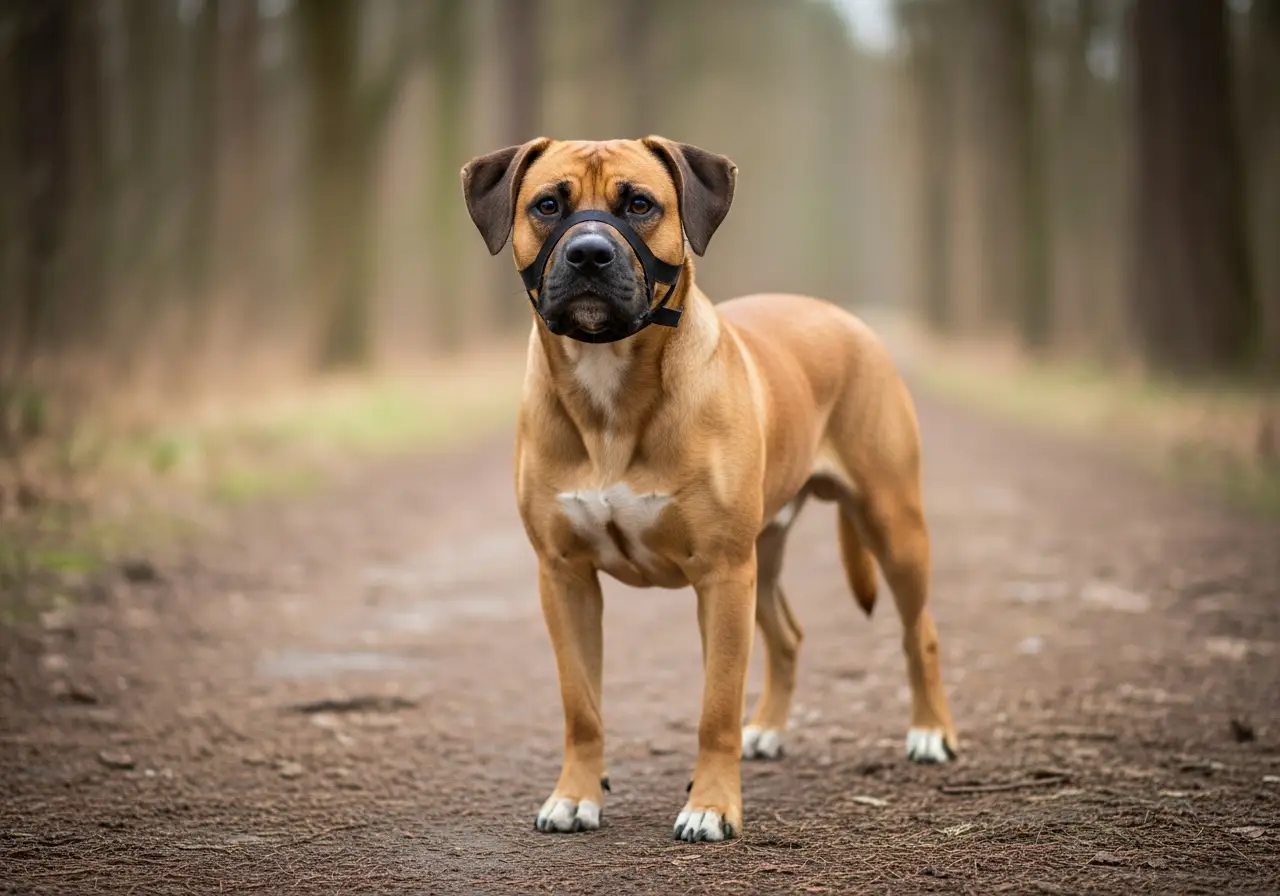
The Black Mouth Cur is a robust US-American hunting and farm dog that was not bred for passive companion dog life. Owning this dog means taking responsibility for an animal with pronounced prey and guarding instincts, high exercise needs, and close family bonding. Without clear leadership, daily tasks, and experience with hard-working dogs, stable coexistence will not arise.
02Introduction
What makes the Black Mouth Cur special
The Black Mouth Cur is a robust US-American hunting and farm dog, not FCI-recognised, rare in Europe, withers height 46–64 cm.
03Profile
Key facts and suitability
- Origin
- USA
- Original purpose
- Hunting wild boar and black bear, farm dog
- height at the withers
- 46–64 cm
- Weight
- 16–45 kg
- Life expectancy
- 12–16 Years
- Coat type
- Short-haired
- Minimum exercise
- 120 min/day
- Puppy price
- 600–1'500 CHF
- Waiting period
- 6 months
- Sports
- Hunting · Tracking · Mantrailing
04Temperament
How the Black Mouth Cur shows up in everyday life
The morning run reveals what makes the Black Mouth Cur unique: it does not simply move forward, it scans the surroundings, registers every movement in the bushes, and decides in fractions of a second whether something deserves attention. The prey drive is not situational, it is permanently active.
At home, the dog behaves calmly if it has been sufficiently stimulated. It seeks the proximity of its primary caregiver without being intrusive. Visitors entering the house are initially observed and assessed; a greeting with a wagging tail is not standard behaviour. Here, the separation between internal and external axes becomes clear: The need for social contact towards one's own family is high (value 4 out of 5), whereas openness towards strangers is significantly lower (value 3 out of 5). Anyone who does not know this difference interprets the behaviour incorrectly.
In everyday life with children from one's own household, the Black Mouth Cur shows patience and attachment. Unknown children who move loudly and unpredictably trigger watchfulness instead. This requires active management, not hope for habituation.
The need for mental work (score 4 out of 5) becomes apparent when no task is assigned: the dog begins to occupy itself by digging, barking, or patrolling along the fence. This is not misbehaviour, but a signal. Scent work, nose work, or accompanying on hunts channel this drive constructively. Those who plan 90 to 120 minutes of intensive exercise plus mental stimulation daily will experience a focused, cooperative dog.
05Needs
What this breed needs daily
The Black Mouth Cur requires at least 90 to 120 minutes of intensive physical activity daily, not just a walk, but proper workload. Suitable forms include scent work, accompanying on hunts, bikejöring, extensive cross-country runs, or demanding dog sports such as mantrailing or protection sports. Pure loose-leash walking on city pavements does not meet this need.
Mental stimulation is equally important as physical exercise. The need for mental work is rated at 4 out of 5. Nose work, search tasks, and structured training with clear instructions belong in the daily routine. A dog that is physically tired but mentally under-stimulated will develop behavioural problems.
The Black Mouth Cur tolerates being left alone for up to about four hours, provided it has been sufficiently stimulated beforehand. Longer absences without prior activity lead to restlessness, destructive behaviour, or excessive barking.
A securely fenced yard is sensible but does not replace guided activity. The fence must withstand the prey drive: minimum height 180 cm, no climbing opportunities, no risk of digging underneath.
The bond with the primary caregiver is close. The dog requires regular, active contact, not just physical presence. Passive coexistence is insufficient. Those who are heavily committed professionally and cannot structure a daily routine with the dog significantly underestimate the time commitment required by this breed.
Exercise
Very high
mental work
A lot
Social needs
High
training
Demanding
06Sport & Mental and Physical Stimulation
What sports the Black Mouth Cur is suited for
Realistic in terms of physiology and genetics – not every breed suits every sport.
Structurally and physiologically suitable: Suitable for mantrailing, dummy work and tracking · CaniCross / bikejoring possible.
07Quick Check
08Suitability
Who this breed is suitable for – and who it isn't
✓Matches
The Black Mouth Cur suits owners with proven experience in handling high-drive working dogs. Those who have already handled a hunting dog, herding dog, or protection dog and are familiar with the dynamics of an independently thinking dog bring the right starting position.
A rural or suburban environment with access to forest, fields, and secure exercise areas is advantageous. At least two hours of active enrichment daily must be structurally embedded in everyday life, not as an exception, but as the rule.
Households with children from about ten years old, who are socialised in dealing with dogs and adhere to clear rules, may be suitable, provided that adult owners take full responsibility for leadership.
Hunters looking for a versatile companion dog for driven hunts, wild boar work, or scent work will find a high-performance partner in the Black Mouth Cur. Owners who actively participate in dog sports and are willing to plan structured training daily also fit the profile of this breed.
The external reaction to strangers (score 3 out of 5) requires that the owner actively manages visitor situations and consistently socialises the dog; an open house with frequently changing guests demands a corresponding level of experience.
×Doesn't match
The Black Mouth Cur does not suit first-time dog owners. The combination of prey drive, guarding instinct, and high willingness to work requires experience with high-drive dogs; enthusiasm alone is not enough.
Those who are away from home for more than four hours daily and cannot organise reliable care underestimate the need for social contact and the consequences of insufficient stimulation.
Households in densely populated urban areas without access to forest or extensive terrain do not provide an appropriate basis for keeping the dog. Those who wish to reduce the exercise need to city walks are choosing the wrong breed.
Those who confuse the dog’s close family bond with general sociability will be surprised by its reserved reaction towards strangers. The Black Mouth Cur is not a dog that joyfully greets every visitor; those expecting this need a different breed profile.
Families with toddlers under six years old and without prior experience with protection dogs should not choose this breed. The guarding and territorial behaviour requires permanent, competent management, which is often not realistically implementable during this life phase.
10Line reality
Show line, working line, breeder market
The Black Mouth Cur does not exist as a uniform breed with a single standard, but as a group of regional working lines that differ in size, build, and working orientation.
The best-known line is the Southern Black Mouth Cur from Mississippi, which has been bred by the Howard family for generations. This line is considered the most original form and is designed for versatility: hunting, herding livestock, and guarding. The Florida Black Mouth Cur is built more lightly and specialises in hunting in swampy terrain. The Alabama Black Mouth Cur shows a sturdier build and is more frequently used for wild boar work.
In Europe, line differences are hardly documented, as the breed is extremely rare here. Anyone acquiring a Black Mouth Cur in Europe generally receives a dog without traceable line assignment. This considerably complicates the assessment of the working profile.
Show lines in the European sense do not exist. The UKC recognition since 1998 has established a breed standard, which is however primarily oriented towards suitability for work. Anyone specifically looking for a certain working line must research directly with US-American breeders and request the line documentation.
11Health · Reality
What you need to plan for medically with your Black Mouth Cur
The Black Mouth Cur is considered a robust, functionally bred breed with a life expectancy of 12 to 16 years. As there is no uniform studbook record-keeping in Europe and FCI recognition is lacking, no systematic health data from European breeding associations are available.
Hip dysplasia (HD) occurs sporadically. Reliable breed statistics are lacking for Europe; US data from the Orthopedic Foundation for Animals (OFA, as of 2023) show HD rates of under 10% for related Cur types, which is moderate compared to large working dog breeds. An HD X-ray examination of the parent dogs before breeding is nevertheless recommended.
Skin problems, particularly allergies and demodicosis, are occasionally reported in the breed. Regular checks of ears and skin are advisable, especially for dogs that work extensively in forests and fields.
Eye examinations are part of preventive care, as hereditary diseases such as Progressive Retinal Atrophy (PRA) have been documented in related hunting dog breeds. No specific prevalence studies exist for the Black Mouth Cur (as of 2024).
The risk of overweight is low in dogs that are sufficiently exercised and stimulated. The risk increases with a lack of exercise, such as after injuries or in old age. Calorie-adjusted feeding during rest phases is necessary. Annual veterinary preventive examinations including weight control and joint assessment are standard.
12Structured data
Health by the numbers
Prone to diseases
Hip dysplasia, eye problems, generally robust working breed
Recommended health tests
Hip X-ray, eye examination
13Myths ↔ Reality
What is often said incorrectly about this breed
Five myths, five realities, five sources.
"The Black Mouth Cur is a robust beginner's dog because it is so healthy and uncomplicated.
Robustness refers to physical resilience, not to keeping requirements. The Black Mouth Cur has pronounced prey drive and guarding instinct as well as a high willingness to work, which requires consistent guidance and experience with high-drive dogs. Without this foundation, control problems arise during off-leash walks and aggressiveness towards strangers.
"A large plot of land replaces daily active stimulation.
Free access to a garden or farmstead does not significantly reduce the need for movement. The Black Mouth Cur requires guided, structured activity, tracking work, hunting companionship, or intensive dog sports. Independent wandering around on a plot of land fulfils neither the mental nor the cooperative workload of this breed.
"The dog is family-friendly because it is loyal and fond of children.
Loyalty towards one's own family does not automatically mean tolerance towards unknown children or unpredictable situations. The Black Mouth Cur shows a reserved to watchful reaction towards strangers. In households with children, consistent socialisation and permanent management are necessary; general child-friendliness cannot be derived from the breed profile.
"Since the breed is not FCI-recognised, there are no breeding standards and all dogs are the same.
The Black Mouth Cur has been maintained by the United Kennel Club (UKC) since 1998 with an official breed standard. In addition, several regional lines exist (Mississippi, Florida, Alabama), which differ in size, build, and working orientation. The lack of FCI recognition merely means that there is no international studbook recognition in Europe.
"The Black Mouth Cur can be easily socialised with other dogs.
The Black Mouth Cur can live with other dogs under clear guidance and early socialisation. However, it tends towards dominant behaviour towards conspecifics, particularly towards dogs of the same sex. Unaccompanied socialisation without assessment of the individual dogs is not advisable.
14animal welfare
The animal welfare perspective
Breeder market, designer versions, animal shelter reality — what no one writes in the puppy ad.
The Black Mouth Cur practically does not appear in European animal shelters; the breed is too rare here to create a systematic rehoming problem. The situation looks different in the USA: Cur dogs regularly end up in shelters because their need for work and exercise was underestimated. Anyone bringing a Black Mouth Cur from US rehoming to Europe should carefully check the background story of the animal.
The backyard breeder market for this breed in Europe is manageable, but not non-existent. As there is no FCI studbook record-keeping, external control mechanisms are lacking. Offers without UKC papers, without health examinations of the parent dogs and without traceable lineage documentation should be viewed with caution. A low price is not a quality feature; it is often a warning signal.
Designer versions or trend breeding are not yet a relevant phenomenon for the Black Mouth Cur in Europe. This may change if the breed gains popularity through media or social media. The dog is not suitable as a lifestyle companion; anyone choosing it for aesthetic reasons without knowing its working profile creates living conditions that do not do justice to the animal.
Problems related to keeping almost exclusively arise from under-stimulation: A Black Mouth Cur that receives too little exercise and mental stimulation daily develops behavioural problems, which subsequently lead to rehoming. This is not a character flaw of the dog, but a failure in its care.
Rehoming an adult Black Mouth Cur from a reputable source is an equivalent option to raising puppies. Adult dogs already show their character clearly, which facilitates assessing whether the dog and owner are a good match. Organisations such as the National Cur Breeders Association (USA) or specialised hunting dog rehoming services can make contacts.
15Costs · Transparency
What this breed realistically costs
The acquisition costs for a Black Mouth Cur in Europe range from 800 to 1,500 EUR with reputable breeders, depending on lineage and health documentation. Offers significantly below this often originate from uncontrolled breeding. An import from the USA incurs additional costs for transport, veterinary certificates and import formalities of 500 to 1,200 EUR.
Annual living costs include food (high-quality, for active dogs): 600 to 1,000 EUR/year depending on body size and activity level. Care is low-maintenance for the short-haired Black Mouth Cur; basic equipment and occasional care products: approx. 100 to 200 EUR/year.
Basic veterinary care (vaccinations, parasite prevention, annual check-up): 300 to 500 EUR/year. In case of illness or injury, particularly for an active hunting dog, individual costs can quickly reach 1,000 to 3,000 EUR. Pet insurance (surgery insurance) costs 30 to 80 EUR/month depending on provider and coverage scope and is recommended for this active breed.
Dog sports, training and course fees: 300 to 600 EUR/year, depending on intensity. Total costs in the first year including acquisition: realistically 3,000 to 5,000 EUR. From the second year: 1,500 to 2,500 EUR/year.
16Puppy search
What you need to consider when choosing a breeder
- As the Black Mouth Cur is rare in Europe, finding a puppy is more involved than with FCI-recognised breeds.
- Reputable breeders align with the UKC standard and place value on health examinations of the parent dogs; at minimum, HD X-rays and eye examinations should be documented.
- A reputable breeder allows visits to the litter, shows both parent dogs or explains convincingly why one parent is not on site, and asks questions about the living situation.
- Those who do not ask questions are selling; they are not breeding responsibly.
- Offers without papers, without health certificates, and at very low prices are a warning signal.
- Buying via classifieds portals without proof of the breeder carries the risk of acquiring a dog of unknown origin and unverified health.
- Adopting an adult dog from the USA through specialised rescue organisations is an equally valid alternative.
- Import formalities (EU pet passport, rabies vaccination, microchip) must be observed.
- Consultation by an experienced vet before import is recommended.
- rundum.dog does not list named breeder recommendations; finding a breeder is done via the UKC or specialised hunting dog associations.
FAQ
Frequently asked questions about the Black Mouth Cur
Is Black Mouth Cur a family dog?
Black Mouth Cur is considered suitable for families with good socialisation and species-appropriate care.
How much exercise does Black Mouth Cur need?
At least around 120 minutes of exercise per day. As an active breed, more so — plus mental stimulation.
What is the size and weight of Black Mouth Cur?
Fully grown, Black Mouth Cur reaches about 46–64 cm at the withers and weighs around 16–45 kg.
What is the life expectancy of Black Mouth Cur?
The life expectancy of Black Mouth Cur is approximately 12–16 years.
Which diseases are common in Black Mouth Cur?
Hip dysplasia, eye problems, generally robust working breed
17Breed clubs
Official breed clubs in DACH
19Related
Similar breeds – and their differences
You might also be interested in

Participate
Do you have a good photo of your Black Mouth Cur?
We are looking for expressive images for our breed profiles. Submit yours; the editorial team reviews every submission before publication.
Does this breed suit you?
Robust US hunting dog, very rare in Europe. Needs intensive daily enrichment. Only for owners with a hunting or sporting framework.