
01Summary
In a paragraph
If you only have 30 seconds.
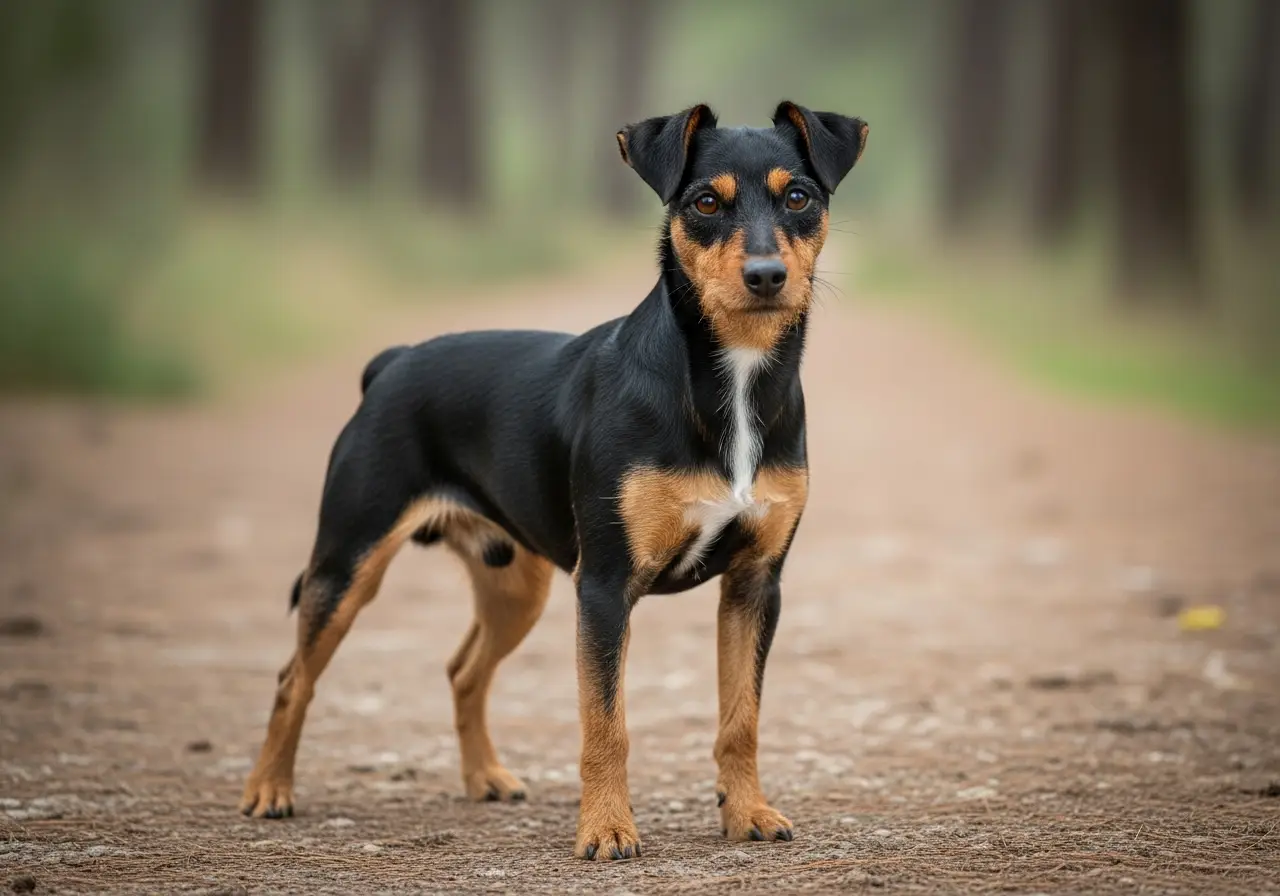
The Ratonero Mallorquín is a sturdy, quick-reacting rat terrier from the Balearic Islands. Its prey drive for small animals is genetically deeply ingrained and cannot be trained away, only channelled. The breed hardly exists outside Spain, which means waiting times and import effort. Anyone looking for clear leadership, daily mental and physical stimulation, and an alert companion will find here a robust, long-lived dog with a genuine working background.
02Introduction
What makes the Ratonero Mallorquin (Rateros) special
Ratonero Mallorquin: small Mallorcan rat dog from the Balearic Islands, agile and exceptionally rare
03Profile
Key facts and suitability
- Origin
- Spanien
- Original purpose
- Rat hunting
- height at the withers
- 25–40 cm
- Weight
- 4–10 kg
- Life expectancy
- 12–14 Years
- Coat type
- Short-haired
- Minimum exercise
- 45 min/day
- Puppy price
- 600–1'200 CHF
- Waiting period
- 2 months
- Sports
- Agility Scent work
04Temperament
How the Ratonero Mallorquin (Rateros) shows up in everyday life
The morning run in the park shows what makes the Ratonero Mallorquín unique: A rustling in the bushes, and the dog is focused, tense, hardly reachable on command in fractions of a second. The prey drive does not switch on gradually, it is there immediately.
At home, the picture looks different. The Ratonero forms a close bond with its primary caregiver, follows their movements around the room and reacts sensitively to changes in mood. This high need for social contact means that being left alone for long periods without preparation leads to restlessness and stress-related behaviour. Four hours are a realistic upper limit if being left alone has been built up systematically.
The breed shows a distinctly different reaction towards strangers than within the family unit. Cautious observation, occasional barking and a clear distance zone are typical; this is not a sign of aggression but an expression of the vigilant working dog temperament. This external reaction to unknown people stands in direct contrast to the high internal need for social contact with familiar individuals. Anyone who does not know this difference will misinterpret the behaviour.
With other dogs, terrier-typical assertiveness is shown. Well-socialised Ratoneros are tolerant but set boundaries, even towards larger dogs. In everyday life with children, the breed works well provided there is respectful handling and clear structure. Toddlers who treat the dog as a toy quickly overwhelm it.
Mental work is not a bonus but a basic requirement. A Ratonero without sufficient mental stimulation will find its own occupation, and this rarely turns out in the owner’s favour.
05Needs
What this breed needs daily
The Ratonero Mallorquín requires 60 to 90 minutes of active exercise daily. It is not just the duration that counts, but the quality: sniffing walks, search tasks and structured training sessions are more effective than simply running. The breed was bred for quick reactions and initiative; a dog that only runs alongside a bicycle is physically exercised but mentally under-stimulated.
The Ratonero needs mental work daily and in significant amounts. Nose work, search games, fetch tasks or structured obedience training meet this need. The requirement for mental work is 4 on a scale of 1–5, which corresponds to the level of medium-intensity herding dogs.
The prey drive requires particular attention in open areas. A securely fenced area is not a luxury but a safety-relevant basic requirement. On the leash, the dog needs consistent impulse control training that starts early and is maintained continuously.
Being left alone must be built up systematically. The breed tolerates being alone for up to about four hours if the habituation has taken place gradually. Abrupt, long periods of being left alone without preparation lead to stress reactions.
Social interaction with the primary caregiver is a daily basic need, not as a cuddle session, but as a joint activity. The Ratonero needs a present, structure-providing primary caregiver who communicates clear body language and consistent rules. It actively exploits inconsistency.
Exercise
Medium
mental work
A lot
Social needs
High
training
Medium
06Sport & Mental and Physical Stimulation
What sports the Ratonero Mallorquin (Rateros) is suited for
Realistic in terms of physiology and genetics – not every breed suits every sport.
Structurally and physiologically suitable: Suitable for mantrailing, dummy work and tracking.
07Quick Check
08Suitability
Who this breed is suitable for – and who it isn't
✓Matches
The Ratonero Mallorquín suits active individuals or couples who devote at least 90 minutes daily to exercise and training. Anyone who enjoys nose work, search games or structured obedience training will find an attentive, willing-to-learn partner in this breed.
Families with children from about eight years old, who are familiar with handling dogs and show respectful behaviour, are also suitable, provided the adults take on consistent leadership.
Owners with experience in working with high-drive or terrier-typical dogs are clearly at an advantage. The breed does not forgive inconsistency. Anyone who has already handled a dog with a pronounced prey drive knows the demands on impulse control and loose-leash walking.
A household with a secure outdoor area or regular access to fenced areas significantly eases keeping the dog. People who are prepared to accept their dog’s reserved behaviour towards strangers and do not insist that the dog greet every visitor enthusiastically fit well with the external behavioural axis of this breed.
×Doesn't match
The Ratonero Mallorquín does not suit owners who expect a calm, uncomplicated companion dog. Anyone who can devote less than 60 minutes daily to active exercise or considers mental work an occasional supplement will be permanently overwhelmed by this breed.
Households with small animals (rabbits, guinea pigs, hamsters, cats) should be viewed critically. The prey drive towards small, fast-moving animals is genetically anchored and poses a permanent safety risk.
Anyone who confuses the Ratonero’s high need for social contact with general friendliness towards strangers will be surprised by the dog’s reserved reaction to unknown people. This confusion of the internal and external behavioural axes is a common misjudgement.
First-time owners without guidance from an experienced dog training school should not choose this breed as a starter dog. Also, people who are regularly away from home for more than four hours daily and have no reliable care solution do not provide the dog with suitable living conditions. Families with toddlers under five years old, in whom a quiet retreat area for the dog cannot be guaranteed, are also unsuitable.
10Line reality
Show line, working line, breeder market
The Ratonero Mallorquín does not have an established line differentiation in the sense of working and show lines, as exists with internationally recognised breeds with a long FCI history. Breeding activity is concentrated on a few breeders on the Balearic Islands and the Spanish mainland, who are primarily focused on preserving the breed type and working characteristics.
As the breed does not have FCI recognition, the international show circuit as a driving force for a show line is missing. Selection takes place predominantly according to type, temperament and health, less according to performance tests in the modern sense.
Interested parties should specifically ask Spanish breeders about their breeding focus: Some breeders place greater emphasis on character traits and working suitability, others on external breed characteristics. These differences are not documented by official line designations, but can be worked out in direct conversation with the breeder. A visit on site, or at least a video call with insight into the rearing conditions, is particularly recommended for such a rare breed involving import effort.
11Health · Reality
What you need to plan for medically with your Ratonero Mallorquin (Rateros)
The Ratonero Mallorquín is considered a robust breed with a life expectancy of 13 to 15 years. This figure is based on information from Spanish breeder associations and corresponds to the average for small to medium-sized dog breeds.
Systematic health studies specifically for this breed hardly exist due to its rarity. Known health risks are based on the typical problems of small dog breeds: patellar luxation (kneecap dislocation) occurs statistically more frequently in small dogs than in large breeds. A study by the University of Bern (Vetsuisse, 2019) estimates the prevalence of patellar luxation in small dog breeds at up to 7% of the animals examined. Dental problems, particularly tartar formation and periodontitis, are also above-average common in small dogs with narrow jaw space.
Preventive examinations recommended for the Ratonero Mallorquín include: annual dental check-up at the vet, assessment of the patella in case of signs of lameness, and weight control, as overweight increases the risk of patellar issues. The risk of being overweight is moderate in this breed; the active basic character counteracts this, provided that the need for exercise is met.
Due to the small breeding base and the lack of an international breeding database, genetic diversity is a factor that interested parties should address. Reputable breeders provide health certificates for the parent animals and can give information about known hereditary diseases in their stock. Status of recommendations: 2024.
12Structured data
Health by the numbers
Prone to diseases
Dental problems Eye diseases
Recommended health tests
Dental check-up Eye examination
13Myths ↔ Reality
What is often said incorrectly about this breed
Five myths, five realities, five sources.
The Ratonero Mallorquín is a calm island companion dog without significant drive.
The breed has been selected over generations for active pest hunting. The prey drive for small animals is genetically hard-wired and shows itself spontaneously and intensely in everyday life. A calm temperament without stimulation should not be expected with this breed.
Small dogs do not need consistent training, this also applies to the Ratonero.
The body size of a dog has no influence on its training needs. The Ratonero Mallorquín actively questions inconsistent leadership and exploits gaps in structure. Lack of impulse control leads to problems in everyday life with this breed, particularly when dealing with small animals and on the lead.
The Ratonero Mallorquín is easily sociable with cats and small animals.
The pronounced prey drive of this breed is primarily directed at small, fast-moving animals. Socialisation with cats, rabbits or rodents is only possible under very consistent socialisation from an early age and with permanent supervision, and remains a risk factor that can never be completely ruled out.
As the breed does not have FCI recognition, there are no breeding standards.
The Ratonero Mallorquín has a national breed standard recognised by the Spanish breeding association RSCE. This defines size, type and character traits bindingly. The lack of FCI recognition merely means that the breed is not admitted to international FCI shows, not that breeding is unregulated.
The Ratonero Mallorquín is particularly healthy and free from hereditary diseases due to its rarity.
Rarity does not automatically protect against breed-specific health problems. In small breeds with a limited breeding base, there is a risk of inbreeding and associated hereditary diseases. Patellar luxation and dental problems are generally widespread in small dogs and are also documented in the Ratonero Mallorquín.
14animal welfare
The animal welfare perspective
Breeder market, designer versions, animal shelter reality — what no one writes in the puppy ad.
The Ratonero Mallorquín is a pronounced rarity in the DACH region. The breed practically does not appear in organised animal welfare, neither in German and Austrian shelters nor on Swiss adoption platforms. Anyone specifically looking for a Ratonero Mallorquín will realistically have to go through a Spanish breeder.
This is precisely where a risk lies: The rarity of the breed makes it susceptible to irresponsible breeding. Anyone who comes across offers on the internet with immediate availability, low prices, and missing health certificates should be sceptical. Reputable breeders in Spain work with the national breeding association RSCE, provide health certificates for both parent animals, and ask questions about the buyer's living environment. Waiting times of several months are the rule, not the exception, with reputable breeders.
Importing from Spain to the DACH region is legally possible, but requires an EU pet passport, microchip, rabies vaccination, and compliance with the minimum waiting period after vaccination. Puppies may enter at the earliest age of 15 weeks. These requirements protect against puppy trading across borders; anyone who wants to circumvent them is not acting in the interest of the animal.
Adoption via animal welfare organisations in Spain should be considered an equally valid option. Spanish animal welfare associations occasionally place dogs of unknown origin that resemble the Ratonero type. These animals often require patient settling-in time, but offer a sensible alternative to new breeding. Platforms such as Tierschutz-Spanien or local Protectoras are starting points for this search.
15Costs · Transparency
What this breed realistically costs
A puppy from a reputable breeder in Spain costs between 800 and 1,500 EUR. In addition, there are import costs: vet visit in Spain, EU pet passport, transport, and possibly quarantine vet costs in the destination country, realistically an additional 200 to 400 EUR. Offers significantly below 800 EUR without health certificates are a warning signal.
The annual living costs for a dog of this size are approximately 1,200 to 2,000 CHF/EUR. This includes: high-quality food (approx. 400–600 EUR/year), basic equipment and care (approx. 150–300 EUR/year), as well as routine vet consultations including vaccinations (approx. 200–400 EUR/year).
For unforeseen vet costs (patella examination, dental treatment, acute illnesses), pet insurance is recommended. In the DACH region, premiums for small dogs are between 30 and 70 CHF/EUR per month, depending on the scope of benefits and provider. An surgery-only insurance without a medical component is cheaper but does not cover preventive care.
Dog training school and training are not optional expenses for this breed. At least one structured basic course (approx. 150–300 EUR) as well as ongoing training sessions should be planned for.
16Puppy search
What you need to consider when choosing a breeder
- Reputable breeders of the Ratonero Mallorquín can be found exclusively in Spain, predominantly on the Balearic Islands and the mainland.
- Collaboration with the Spanish breeding association RSCE is a first quality indicator.
- Breeders who present health certificates for both parent animals, ask questions about the living environment and communicate waiting times are acting in the interest of the breed.
- The following points must be clarified before purchase: Have the parent animals been examined for patellar luxation?
- How old is the puppy at handover, earliest at eight weeks, minimum 15 weeks for import?
- Is an EU pet passport with microchip and rabies vaccination available?
- Offers on general classifieds portals without proof of breeding and with immediate availability should be viewed critically.
- Importing via puppy trading platforms without direct contact with the breeder poses significant risks to the health and socialisation of the animal.
- Adoption via Spanish animal welfare organisations (Protectoras) is an equally valid alternative.
- Rescue dogs often require more time to settle in, but they are a sensible option for experienced owners.
- rundum.dog does not list named breeder recommendations; for finding a breeder, direct contact with the RSCE is recommended.
FAQ
Frequently asked questions about the Ratonero Mallorquin (Rateros)
Is Ratonero Mallorquin (Rateros) suitable for beginners?
Ratonero Mallorquin (Rateros) is considered suitable for first-time dog owners.
Is Ratonero Mallorquin (Rateros) a family dog?
Ratonero Mallorquin (Rateros) is considered suitable for families with good socialisation and species-appropriate care.
How much exercise does Ratonero Mallorquin (Rateros) need?
At least around 45 minutes of exercise per day.
Does Ratonero Mallorquin (Rateros) suit an apartment?
With enough exercise and enrichment, Ratonero Mallorquin (Rateros) can also be kept in an apartment.
What is the size and weight of Ratonero Mallorquin (Rateros)?
Fully grown, Ratonero Mallorquin (Rateros) reaches about 25–40 cm at the withers and weighs around 4–10 kg.
What is the life expectancy of Ratonero Mallorquin (Rateros)?
The life expectancy of Ratonero Mallorquin (Rateros) is approximately 12–14 years.
Which diseases are common in Ratonero Mallorquin (Rateros)?
Dental problems Eye diseases
17Breed clubs
Official breed clubs in DACH
19Related
Similar breeds – and their differences
You might also be interested in


Participate
Do you have a good photo of your Ratonero Mallorquin (Rateros)?
We are looking for expressive images for our breed profiles. Submit yours; the editorial team reviews every submission before publication.
Does this breed suit you?
Rare island breed – little breeding data available