
01Summary
In a paragraph
If you only have 30 seconds.
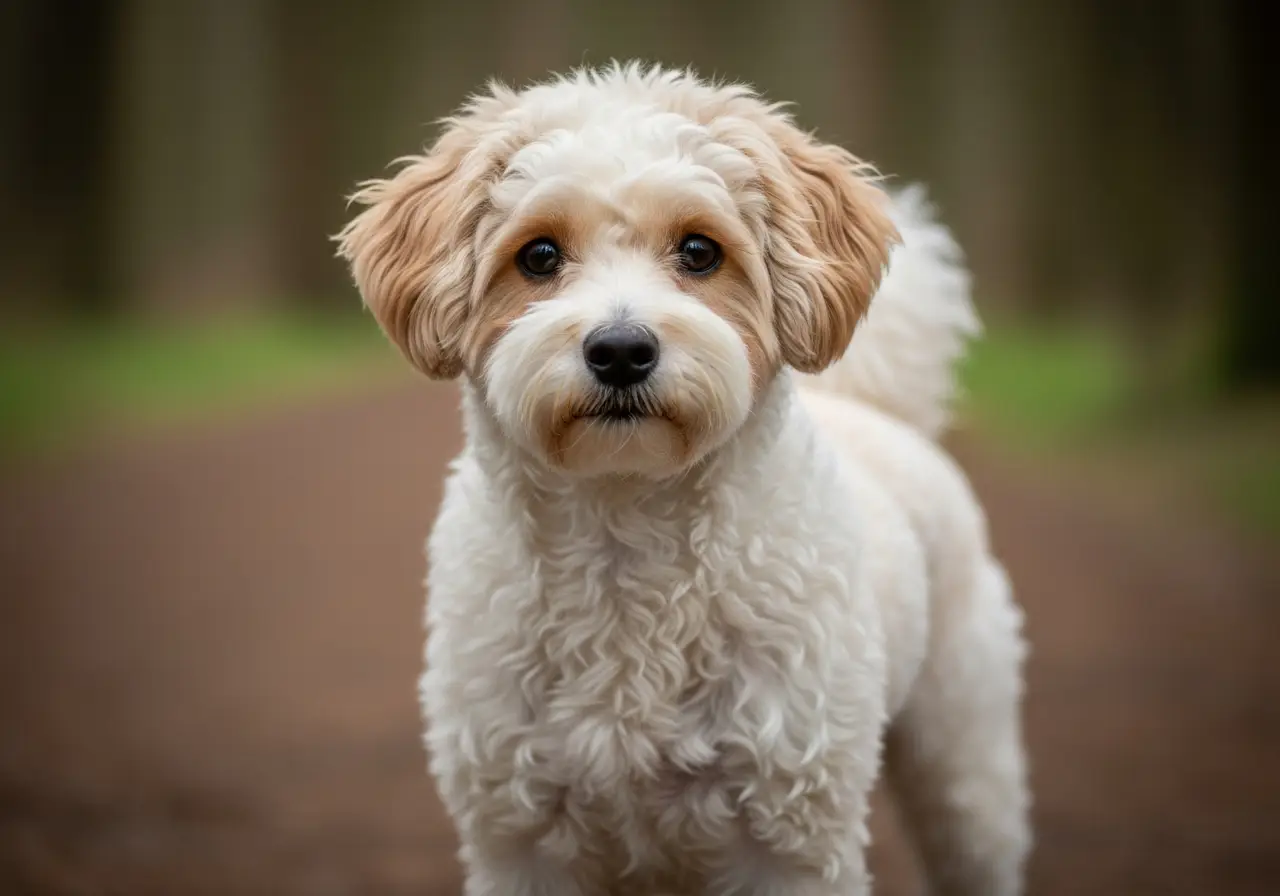
The Poochon is a designer cross between Bichon Frisé and Toy or Teacup Poodle, without FCI recognition, but with a clearly recognisable profile. It is people-oriented, eager to learn and reacts sensitively to its environment. The coat sheds little, however it grows continuously and demands regular care. Anyone who brings structure, presence and patience receives an attentive companion with a real brain.
02Introduction
What makes the Poochon special
Poochon (Bichpoo): cross between Bichon Frisé and Poodle, friendly, low-shedding and very suitable for families
03Profile
Key facts and suitability
- Origin
- Australien/USA
- Original purpose
- Companion dog
- height at the withers
- 23–38 cm
- Weight
- 5–9 kg
- Life expectancy
- 12–15 Years
- Coat type
- Gelockt
- Minimum exercise
- 30 min/day
- Puppy price
- 700–1'500 CHF
- Waiting period
- 2 months
- Sports
- Tricks Agility
04Temperament
How the Poochon shows up in everyday life
When you come home, the Poochon immediately shows how high its need for social contact actually is: it actively seeks eye contact, follows its primary caregiver around the apartment and registers changes in mood with remarkable accuracy. This is not a whim; it is genetically anchored human orientation from two companion breeds.
Internally, the Poochon requires approximately 60 minutes of exercise daily as well as mental work in the form of trick training, nose work or structured play sessions. Without this stimulation, it becomes restless, prone to barking or develops substitute activities that are rarely desirable. The need for mental work is at a medium level; it is not a Border Collie that collapses without a task, but nor is it a dog that is satisfied with just a walk.
Externally, the Poochon generally behaves openly and curiously towards strangers. Friendliness towards unknown people is pronounced; it is not a guard dog. With other dogs, it shows compatibility given good socialisation, although individual differences can vary considerably depending on the parent animals and imprinting.
Important: A high need for social contact does not automatically mean openness towards everyone. A Poochon that has been insufficiently socialised can react insecurely or overstimulated in new situations despite basic friendliness towards humans. These two axes, what it needs internally and how it reacts externally, should not be confused. Anyone expecting a very social dog that regulates itself underestimates the care effort.
05Needs
What this breed needs daily
The Poochon requires at least 60 minutes of active exercise daily, divided into two to three sessions. Pure walks are not sufficient in the medium term; the dog benefits from variable routes, sniffing opportunities and occasional off-leash areas where it can explore independently.
Mental stimulation is not an optional extra but a basic need. Trick training, nose work, search games or simple obedience exercises in short sessions of ten to fifteen minutes daily cover this need. The Poochon learns quickly and loses interest with monotonous repetitions; variety in training is sensible.
The need for social contact is high. The dog requires several hours of active interaction with its primary caregiver daily. Being left alone should be built up gradually; three hours are considered a realistic maximum for a well-conditioned adult. Puppies and older dogs generally tolerate being left alone even less.
Grooming represents a distinct time commitment: the coat grows continuously, mats quickly if neglected, and requires professional clipping or intensive home trimming every six to eight weeks. Daily brushing reduces matting and accustoms the dog to care processes at an early stage.
Social integration into daily life (taking the dog along on errands, visiting friends, contact with other dogs) promotes the dog's stability and reduces the risk of separation anxiety or excessive barking.
Exercise
Low
mental work
Medium
Social needs
High
training
Easy
07Quick Check
08Suitability
Who this breed is suitable for – and who it isn't
✓Matches
The Poochon suits people or households who have several hours a day available for their dog, not just for walks, but for active interaction and training. Households where at least one person works from home most of the time or has flexible working hours offer good prerequisites.
Families with children from about eight years of age, who are instructed in handling small dogs, are also suitable, provided that the dog has opportunities to retreat and is not permanently overstimulated.
People who enjoy active training and are willing to invest time in trick training or nose work experience the Poochon as a grateful learning partner. Those who already have experience with sensitive or people-oriented breeds get along well with its temperament.
Keeping the dog in an apartment is possible if sufficient daily exercise and social contact are ensured. A garden is not a must, but regular access to off-leash areas is recommended. For first-time owners, the Poochon is fundamentally suitable with clear structure and willingness to groom, however only if the time commitment is assessed realistically.
×Doesn't match
The Poochon does not suit people who are away from home for eight or more hours a day and cannot organise reliable care. Its high need for social contact is incompatible with long periods alone; separation anxiety and behavioural problems are likely in such constellations, not an exception.
Anyone looking for a dog that occupies itself and demands little attention makes the wrong choice with the Poochon. The combination of intelligence and bond to people means that the dog actively demands enrichment, and organises this itself if not provided.
Households with very young children who cannot yet be instructed in handling dogs should critically consider the Poochon: its sensitivity makes it susceptible to overstimulation and unpredictable reactions in chaotic environments.
Anyone acquiring a Poochon primarily because of the supposedly hypoallergenic coat, without planning for the care effort, underestimates the ongoing costs and the time required for regular clipping and daily brushing. People who have little interest in active training will also not be happy with this eager-to-learn but demanding dog in the long run.
10Line reality
Show line, working line, breeder market
The Poochon has no recognised breeding lines in the sense of FCI-registered working or show lines. As an unrecognised designer cross, there is no overarching breeding goal that would define or control line differentiation.
In practice, factual differences still arise depending on the crossbreeding generation and parent animals. F1 crosses (first generation, one parent of each breed) show the greatest variance in coat, size and temperament. F1b crosses (backcross with a poodle) tend towards a more curly coat with even less shedding, but also align more closely with the poodle temperament, with potentially higher exercise and workload requirements.
Breeders who use toy poodles as a parent produce generally smaller dogs weighing under five kilograms. Miniature poodle crosses result in medium-sized specimens of up to approximately nine kilograms. These size differences are relevant for keeping, but are often not communicated transparently in marketing.
Anyone getting a Poochon should know the parent animals and review their health certificates, as the actual profile of the dog depends more on the parents than with recognised breeds with a stable standard.
11Health · Reality
What you need to plan for medically with your Poochon
The Poochon does not benefit from any binding health screening programme, as it is not subject to any breeding association as an unrecognised cross. This means: health data are not systematically recorded, and statements about frequencies are based on the known diseases of the parent breeds.
In Poodles, patellar luxation (Grade I–IV) and progressive retinal atrophy (PRA) are among the most common hereditary diseases. The OFA (Orthopedic Foundation for Animals) reports a patellar luxation rate of around 5–10 % in tested populations for Toy Poodles (OFA statistics, as of 2023). In Bichon Frisé, skin diseases, eye problems (cataracts) and dental problems due to the small jaw volume are widespread.
The life expectancy of the Poochon is given in specialist literature as 12 to 15 years, a range that depends heavily on housing conditions, nutrition and genetic starting point.
Recommended preventive examinations include: annual eye examination (check CAER certification of parent animals before purchase), patella assessment in the puppy and young dog stage, regular dental checks from the first year of life, as well as weight control, since small dogs with a high need for social contact tend to become overweight if treats are used uncontrolledly as training aids.
The coat does not require any special medical treatment, however, matting can lead to skin irritation. The ears should be checked regularly for inflammation, as curly fur can cover the ear canal.
12Structured data
Health by the numbers
Prone to diseases
Eye problems kneecap problems eye problems
Recommended health tests
Eye examination kneecap check
13Myths ↔ Reality
What is often said incorrectly about this breed
Five myths, five realities, five sources.
"The Poochon is hypoallergenic and does not trigger reactions.
No dog is completely allergen-free. Allergies to dogs are primarily triggered by the protein Can f 1 found in saliva, urine and skin flakes, not by fur alone. Low shedding reduces the distribution of allergens in the room but does not eliminate them. A reaction depends on the individual sensitivity of the affected person. Before getting a dog, an allergy test and repeated contact with the specific dog are recommended.
„As a crossbreed, the Poochon is automatically healthier than purebred dogs.
The so-called heterosis effect (hybrid vigour) does not occur automatically. In crosses without health tests of the parent animals, breed-typical diseases of both source breeds (in poodles, for example, patellar luxation and progressive retinal atrophy; in Bichon Frisé, skin diseases and eye problems) can be passed on to the offspring. Without OFA or equivalent certification of the parent animals, no statement about the health status of the puppies is possible.
„The Poochon is a low-maintenance sofa dog for busy people.
Both source breeds, the poodle and the Bichon Frisé, were bred as close human companions with a high need for social contact. A Poochon generally tolerates being left alone poorly and requires daily mental and physical stimulation as well as active interaction. The coat grows continuously and requires professional care or clipping every six to eight weeks. The time commitment is often significantly underestimated before purchase.
„Small dogs like the Poochon require hardly any training.
Body size and training needs are not directly related. The Poochon possesses pronounced intelligence and learns quickly, in both directions. Without clear rules and consistent guidance, undesirable behaviours such as excessive barking, resource guarding or separation anxiety develop. An accompanying dog training school is particularly recommended during the first months of life.
14animal welfare
The animal welfare perspective
Breeder market, designer versions, animal shelter reality — what no one writes in the puppy ad.
The Poochon is a prime example of a development that poses concrete challenges for animal welfare: the demand for small, supposedly hypoallergenic designer dogs has created a market that operates largely without breeding control.
Puppy mills (operations that produce puppies without health tests on the parent animals and without appropriate socialisation) benefit disproportionately from the popularity of the Poochon. Puppies from such sources are often given away too early (under eight weeks), insufficiently socialised, and sold without proof of vaccination or deworming. The result is dogs with an increased risk of behavioural problems and hereditary diseases.
A specific problem with the Poochon is its marketing using the term hypoallergenic. This term is not scientifically tenable (no dog is completely allergen-free), yet it generates purchasing decisions based on false expectations. If these expectations are not met or if the care effort was underestimated, Poochons end up in animal shelters or rehoming platforms disproportionately often, often already in their first year of life.
Designer versions like the Poochon are not subject to a studbook requirement. This makes it more difficult for buyers to distinguish between reputable and disreputable sources. A parent animal check (health certificates, living conditions, socialisation protocol) is therefore essential.
Rehoming a Poochon from an animal shelter or through reputable rehoming organisations is an equally valid option. Adult dogs have the advantage that their character and health status can already be assessed. Anyone open to this option will regularly find suitable dogs via platforms such as Tasso or the German Animal Welfare Association.
15Costs · Transparency
What this breed realistically costs
The acquisition costs for a Poochon puppy from a reputable source in the DACH region are between 1,200 and 2,200 EUR. Prices under 800 EUR are a warning sign for missing health tests or insufficient socialisation. Adoption fees of 200 to 400 EUR are common from animal shelters or rehoming organisations.
Annual living costs include: food (quality dry food or fresh food for small dogs) between 400 and 700 EUR, professional grooming every six to eight weeks between 60 and 120 EUR per session, resulting in 400 to 800 EUR annually for care alone. Basic equipment, toys and accessories are additional costs.
Basic veterinary costs (annual vaccination, parasite prevention, routine examination) amount to 200 to 400 EUR annually. For dental cleaning under anaesthesia, which is often necessary for the Poochon due to its small jaw, one-off costs of 300 to 600 EUR arise.
A dog liability insurance policy costs from approximately 40 EUR annually for small dogs. A health insurance policy ranges between 600 and 1,200 EUR annually depending on the tariff and provider and can be sensible in the event of hereditary diseases in the parent animals.
16Puppy search
What you need to consider when choosing a breeder
- A reputable breeder, even for non-FCI recognised crosses, provides health certificates for both parent animals: patella assessment, eye examination (CAER) and, if necessary, DNA tests for progressive retinal atrophy.
- Anyone who does not show these documents or evades requests is not a reliable source.
- On-site inspections are mandatory.
- The puppy should be shown together with the mother and ideally the father or his certificates.
- Housing conditions, socialisation environment and the health status of the mother can be assessed directly.
- Puppies given away before their eighth week of life are a clear warning sign.
- Reputable providers ask questions about living situation, working hours, experience with dogs.
- Anyone who accepts every buyer without follow-up questions prioritises sales over animal welfare.
- Adopting an adult Poochon from an animal shelter or through specialised rehoming organisations is an equally valid alternative.
- Adult dogs already show their actual temperament, and the care effort can be assessed directly.
- Platforms such as Tasso.net or the German Animal Protection Federation regularly list dogs of this cross for rehoming.
FAQ
Frequently asked questions about the Poochon
Is Poochon suitable for beginners?
Poochon is considered suitable for first-time dog owners.
Is Poochon a family dog?
Poochon is considered suitable for families with good socialisation and species-appropriate care.
How much exercise does Poochon need?
At least around 30 minutes of exercise per day.
Does Poochon suit an apartment?
With enough exercise and enrichment, Poochon can also be kept in an apartment.
What is the size and weight of Poochon?
Fully grown, Poochon reaches about 23–38 cm at the withers and weighs around 5–9 kg.
What is the life expectancy of Poochon?
The life expectancy of Poochon is approximately 12–15 years.
Is Poochon suitable for allergy sufferers?
Poochon is considered relatively hypoallergenic. There’s never a guarantee — test direct contact beforehand.
Which diseases are common in Poochon?
Eye problems kneecap problems eye problems
17Breed clubs
Official breed clubs in DACH
19Related
Similar breeds – and their differences
You might also be interested in
Participate
Do you have a good photo of your Poochon?
We are looking for expressive images for our breed profiles. Submit yours; the editorial team reviews every submission before publication.
Does this breed suit you?
Cross between Bichon Frisé and Miniature Poodle – gentle, playful and often better tolerated by allergy sufferers