
01Summary
In a paragraph
If you only have 30 seconds.
The Miniature Schnauzer is a compact, confident dog with a pronounced guarding instinct and a high need for social contact. It learns quickly and tests boundaries just as quickly. Anyone who brings structured daily routine, consistent training, and daily mental work will receive an alert, loyal companion. Anyone who underestimates this will get a dog that sets its own house rules.
02Introduction
What makes the Miniature Schnauzer special
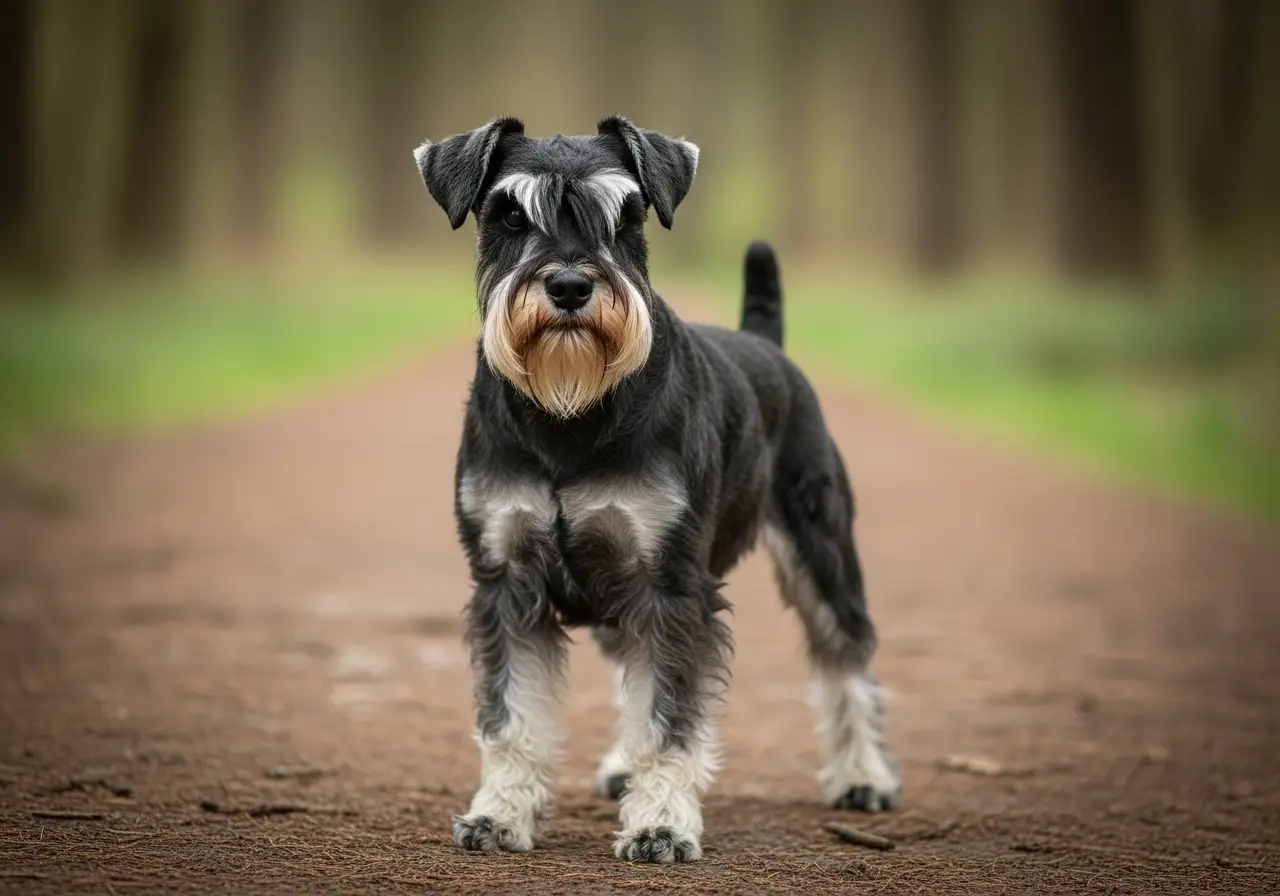
Miniature Schnauzer: most popular Schnauzer in Switzerland, robust, eager to learn, and with distinctive beard and eyebrows
03Profile
Key facts and suitability
- Origin
- Deutschland
- Original purpose
- Rat catcher
- FCI
- No. 183 · Group 2 · Section 1
- height at the withers
- 30–35 cm
- Weight
- 4–8 kg
- Life expectancy
- 12–15 Years
- Coat type
- Wire-haired
- Minimum exercise
- 45 min/day
- Puppy price
- 1'200–2'000 CHF
- Waiting period
- 4 months
- Sports
- Agility Tricks Obedience
04Temperament
How the Miniature Schnauzer shows up in everyday life
When returning home, the Miniature Schnauzer registers every change: a new package at the door, an unfamiliar smell on the shoe, a visitor in the hallway. It alerts, loudly and clearly. This is not a mistake, but by design. Anyone who experiences this daily understands why early barking training is not optional, but mandatory.
In everyday life, the distinction between internal need for social contact and external behaviour towards strangers becomes clear. Internally: The Miniature Schnauzer bonds closely with its primary caregiver and actively seeks contact, enrichment and joint activity. It does not just want to be there; it wants to participate. Externally: Towards strangers, it behaves reservedly to watchfully. A visitor it does not know is initially observed and assessed. This is not a sign of aggression, but an expression of its watchdog genetics. It is important to distinguish between these two poles: A high need for social contact does not mean that it warmly greets everyone.
On a walk, it shows endurance and curiosity. It likes to explore, reacts to noises and movements in the environment and maintains control over its pace. Loose-leash walking requires consistent training; its sense of independence is pronounced.
At home, it seeks closeness but tolerates no unpredictability. It accepts children well if they treat it respectfully and respect its boundaries. Restless or intrusive situations are met with distancing or clear body language.
Its learning ability is high, and it also uses it to shift routines in its favour. Anyone who gives in once will notice.
05Needs
What this breed needs daily
The Miniature Schnauzer requires 60 to 90 minutes of active exercise daily. Pure walks are not sufficient; it benefits from activities that challenge it physically and mentally: fetch games, nose work, search tasks or structured obedience training.
Mental work is not an addition, but a basic need. A mental workload of 4 out of 5 means concretely: At least one mental unit per day is necessary to avoid frustration and avoidance behaviour. Suitable options include snuffle mats, food search games, trick training or dog sports such as Obedience and Rally-Obedience.
The need for social contact is also high. The Miniature Schnauzer does not tolerate permanently isolated keeping. Being left alone is possible, but should be built up gradually and not regularly exceed four hours daily. Anyone planning longer absences requires a reliable care solution.
The alerting behaviour requires active training. Without targeted impulse control exercises and a clear abort signal for barking, the behaviour develops into a burden for the owner and the neighbourhood. This point is often underestimated when getting a dog.
The coat requires professional stripping every 8 to 12 weeks. Anyone wishing to learn this themselves invests time in courses at the breed club or a specialist business. Clipping is not an equivalent alternative, as it permanently alters the coat structure.
Regular dental care, ear checks and paw care belong to the weekly routine. The Miniature Schnauzer tolerates care routines better if they are introduced early and positively.
Exercise
Medium
mental work
A lot
Social needs
High
training
Medium
07Quick Check
08Suitability
Who this breed is suitable for – and who it isn't
✓Matches
The Miniature Schnauzer suits owners who can plan 60 to 90 minutes of active exercise plus at least one mental enrichment unit daily. People who enjoy dog sports, nose work or structured training will find an attentive partner in it.
Suitable for households with children from about 8 years old, provided that respectful handling of the dog is actively taught. Also suitable for first-time owners, on the condition that a supporting dog training school is used from the start and clear rules are implemented consistently.
Keeping in an apartment is possible if daily activity is ensured. A garden is not a substitute for active enrichment, but is a plus. Owners who work from home or have flexible working hours benefit from the dog's high need for social contact; it appreciates presence and interaction.
People who value an alert companion dog and are prepared to actively train and guide its alerting behaviour will experience the Miniature Schnauzer as a reliable everyday partner. Active seniors with experience in handling confident dogs are also suitable, provided that the required amount of exercise and willingness to train are met.
×Doesn't match
The Miniature Schnauzer is not suitable for owners who have little time for daily training and consistent training. Anyone who expects a small dog to regulate itself will not be happy with this temperament.
Not suitable for households where the dog is regularly left alone for more than four hours and no alternative care exists. Its high need for social contact is not a character flaw; it is genetically anchored and cannot be trained away.
Anyone who regards alerting behaviour as trivial or lives in a housing situation where barking leads to conflicts, without being prepared to actively train this behaviour, should consider another breed.
People looking for an uncomplicated, friendly dog for frequent visitors or busy environments will be surprised by its reserve towards strangers. Anyone who equates a high need for social contact with general openness is confusing the internal with the external axis, a common misunderstanding with this breed.
Households with very young children under 5 years of age, where no quiet retreat for the dog can be guaranteed, are also less suitable.
10Line reality
Show line, working line, breeder market
The Miniature Schnauzer is bred in four FCI-recognised colour varieties: black, black-and-silver, pepper-and-salt, and pure white. In some countries and clubs, these colour varieties are kept in separate stud books, which can lead to slight differences in type and temperament.
A classic working line in the sense of herding or hunting dog breeding does not exist for the Miniature Schnauzer; the FCI standard classifies it without a working test. Today, the differentiation is primarily between show breeding and companion dog breeding.
Show lines are selected for exterior conformity: square build, correct coat, typical head with beard and eyebrows. Companion dog lines place greater emphasis on temperament qualities such as resilience, sociability and trainability.
For prospective owners, it is relevant that a puppy from a pure show breeding does not necessarily possess the temperament qualities desired for an active companion dog lifestyle. A conversation with the breeder about selection for temperament is therefore advisable before purchase. Reputable breeders can provide information on temperament tests of the parent dogs.
11Health · Reality
What you need to plan for medically with your Miniature Schnauzer
According to breed club data, the life expectancy of the Miniature Schnauzer is 12 to 15 years, a typical range for small dogs that is frequently achieved with good keeping and regular veterinary preventive care.
Breed-specific health risks include urinary stones (urolithiasis), particularly calcium oxalate and struvite stones. Studies in veterinary medicine show that Schnauzer breeds are disproportionately affected. Adapted nutrition and sufficient water intake are considered preventive measures. Regular urine checks by the vet, at least once a year, are recommended.
Eye diseases, including cataracts and progressive retinal atrophy (PRA), occur in the breed. Reputable breeders have parent dogs tested for hereditary eye diseases. Proof of this examination should be provided when purchasing a puppy.
Hyperlipidaemia (elevated blood fat levels) is documented more frequently in Miniature Schnauzers than in other breeds and can lead to pancreatitis. High-fat nutrition and overweight increase the risk. Weight should be monitored regularly; overweight is a serious risk factor for this breed.
Recommended preventive examinations: annual urine analysis, eye examination by a specialist vet every 1 to 2 years, blood count with lipid values from the 5th year of life. HD/ED screening is not standardly prescribed for this breed but may be indicated in cases of lameness.
12Structured data
Health by the numbers
Prone to diseases
Kneecap problems Heart problems Eye problems
Recommended health tests
Kneecap check Heart examination Eye examination
13Myths ↔ Reality
What is often said incorrectly about this breed
Five myths, five realities, five sources.
"The Miniature Schnauzer is a low-maintenance lap dog for seniors without much effort.
The FCI standard describes it as intelligent, fearless, enduring, and alert, traits that require active leadership. Its need for mental work is at a level that requires daily enrichment. Without structured stimulation, it develops strategies for self-entertainment that are rarely in the owner's interest.
"Miniature Schnauzers hardly bark, they are small and quiet.
The alerting behaviour is breed-typical and genetically anchored. The Miniature Schnauzer was selectively bred for alertness. Without early, consistent training, barking becomes a permanent occupation. Animal shelter reports from the DACH region cite uncontrolled barking behaviour as a frequent reason for surrender.
"As a small dog, it easily manages without dog sports or training.
The FCI standard explicitly states that intelligence and endurance are part of the core character. A mental work requirement of 4 out of 5 means: search games, nose work, obedience training, or dog sports are not extras, but basic care. Breeds with high mental work requirements develop behavioural issues when under-stimulated.
"The Miniature Schnauzer automatically gets along with all dogs because it is small itself.
Its temperament is pronounced and its self-confidence high. Without careful socialisation in puppyhood, it can appear dominant or reactive towards conspecifics, regardless of its own body size. Early, positive encounters with various dogs are crucial.
"The wiry coat of the Miniature Schnauzer takes care of itself.
The rough coat of the Miniature Schnauzer requires regular stripping, typically every 8 to 12 weeks. Clipping permanently alters the coat structure and can destroy the breed-typical hardness of the guard hairs. Professional stripping by a specialist is mandatory for show dogs and recommended for companion dogs.
14animal welfare
The animal welfare perspective
Breeder market, designer versions, animal shelter reality — what no one writes in the puppy ad.
The Miniature Schnauzer is one of the breeds that regularly end up in animal shelters and with adoption organisations, not due to health problems, but because of underestimated character traits. Uncontrolled barking, lack of training, and a temperament that demands consistency overwhelm owners who expected an uncomplicated small dog. This is not a failure of the breed, but an information problem at the time of purchase.
On the puppy market, there is a significant proportion of backyard breeding. Miniature Schnauzer puppies from disreputable sources are often sold without health tests of the parent dogs, without socialisation, and without affiliation to a breed club. Identifying features: no proof of eye and metabolic examinations of the parents, puppies under 8 weeks, handover without vaccination passport and microchip, sale via classifieds portals without personal contact with the breeder.
Designer variants such as "Toy Schnauzer" or miniaturised Miniature Schnauzers below the FCI standard (under 30 cm height at the withers) are not an accepted standard. Extreme reduction in size is often associated with health risks: dental misalignments, bone problems, increased susceptibility to hypoglycaemia. Anyone who buys such animals is funding breeding practices outside any breed standard control.
Fostering an adult Miniature Schnauzer from an animal shelter or via breed club placement services is an equally valid option. Adult dogs already show their character, temperament, barking behaviour and socialisation level can be assessed. The Swiss Club for Schnauzers and Pinschers (SCSP) maintains a placement list for dogs looking for a new home. This option deserves the same attention as searching for a puppy.
15Costs · Transparency
What this breed realistically costs
A Miniature Schnauzer puppy from a reputable breeder affiliated with the breed club costs between 1,200 and 2,000 EUR or CHF in the DACH region. Prices significantly below this, particularly under 800 EUR, indicate missing health tests, inadequate socialisation or backyard breeding. Prices significantly above this without a comprehensible justification (show successes, rare colour variant) should be critically questioned.
Ongoing costs per year: Food for a dog of this size is approx. 400 to 700 EUR, depending on food quality. Professional trimming every 8 to 12 weeks costs between 60 and 120 EUR per session depending on the region and business, resulting in annual costs of 300 to 700 EUR for grooming alone.
Average vet costs: Routine examinations, vaccinations and parasite prevention add up to approx. 300 to 500 EUR annually. In addition, there are possible costs for urinary stone diagnostics and treatment, which can range between 500 and 2,500 EUR depending on severity.
Dog liability insurance is mandatory in many cantons and federal states and costs approx. 50 to 150 EUR/CHF annually. Health insurance for the dog ranges from 400 to 900 EUR/CHF per year depending on the provider and scope of benefits and can be useful for breed-typical illnesses.
16Puppy search
What you need to consider when choosing a breeder
- Reputable breeders are registered with the Swiss Schnauzer and Pinscher Club (SCSP) or the Association for German Dog Breeding (VDH).
- They have parent dogs tested for hereditary eye diseases and metabolic values and provide corresponding proof.
- A personal visit to the breeder before purchase is standard; anyone who refuses this is not a reputable contact.
- Specific criteria for finding a puppy: Puppies stay with their mother for at least 8 weeks, are handed over microchipped and vaccinated, and have grown up in a domestic environment with social contacts.
- The breeder asks questions about the planned keeping; this is a good sign, not an obstacle.
- Adoption as an equally valid option: The SCSP maintains an adoption list for Miniature Schnauzers looking for a new home.
- Adult dogs from adoption have the advantage that their character and behaviour are already assessable.
- Animal shelters in the DACH region regularly have Schnauzer mixes and purebred animals in their care.
- Be cautious with offers on general classifieds portals without affiliation to a breed club, without the possibility of a visit, and with handover at a neutral location.
- These features are typical of backyard breeding.
FAQ
Frequently asked questions about the Miniature Schnauzer
Is Miniature Schnauzer suitable for beginners?
Miniature Schnauzer is considered suitable for first-time dog owners.
Is Miniature Schnauzer a family dog?
Miniature Schnauzer is considered suitable for families with good socialisation and species-appropriate care.
How much exercise does Miniature Schnauzer need?
At least around 45 minutes of exercise per day.
Does Miniature Schnauzer suit an apartment?
With enough exercise and enrichment, Miniature Schnauzer can also be kept in an apartment.
What is the size and weight of Miniature Schnauzer?
Fully grown, Miniature Schnauzer reaches about 30–35 cm at the withers and weighs around 4–8 kg.
What is the life expectancy of Miniature Schnauzer?
The life expectancy of Miniature Schnauzer is approximately 12–15 years.
Is Miniature Schnauzer suitable for allergy sufferers?
Miniature Schnauzer is considered relatively hypoallergenic. There’s never a guarantee — test direct contact beforehand.
Which diseases are common in Miniature Schnauzer?
Kneecap problems Heart problems Eye problems
17Breed clubs
Official breed clubs in DACH
19Related
Similar breeds – and their differences
You might also be interested in


Participate
Do you have a good photo of your Miniature Schnauzer?
We are looking for expressive images for our breed profiles. Submit yours; the editorial team reviews every submission before publication.
Does this breed suit you?
Most lively Schnauzer variant – have coat trimmed or clipped regularly