
01Summary
In a paragraph
If you only have 30 seconds.
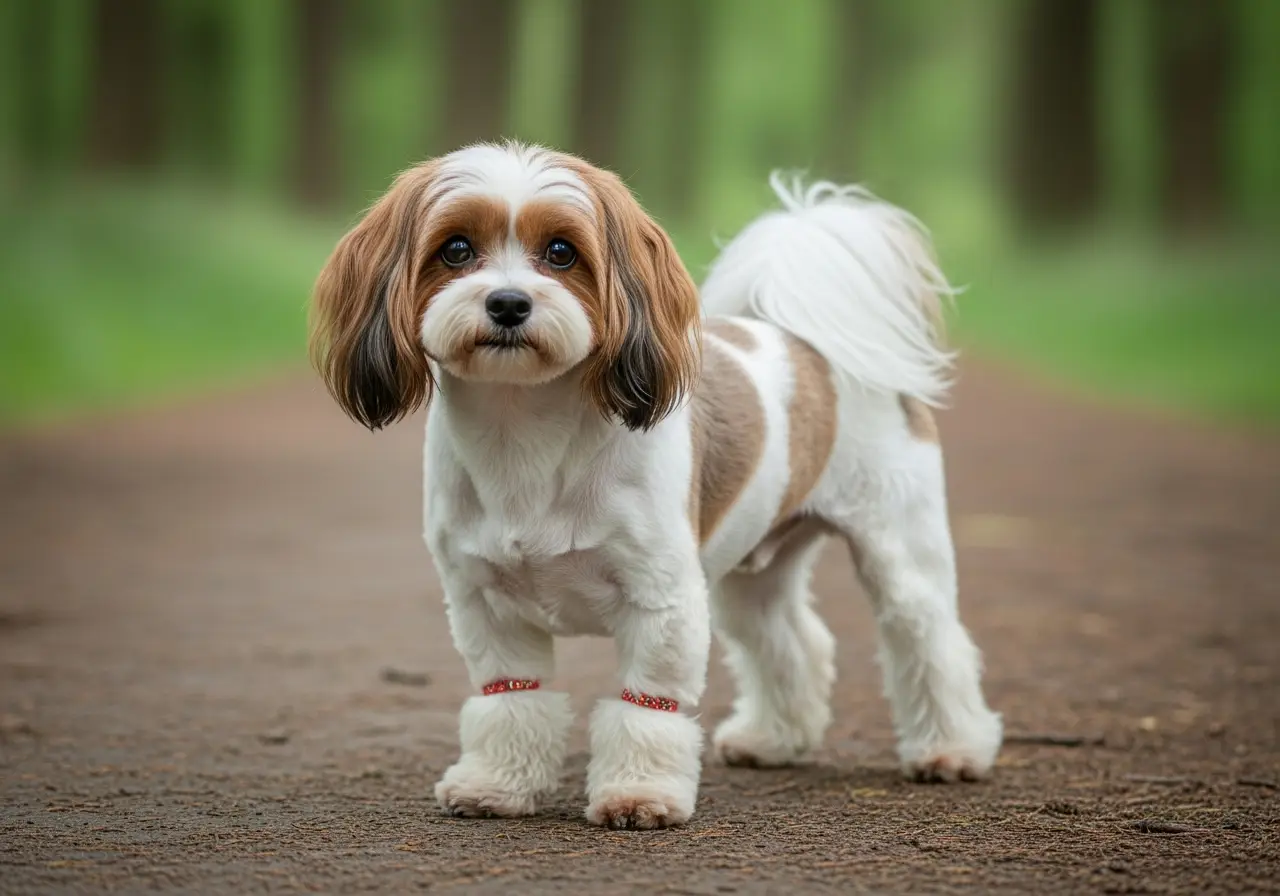
The Löwchen belongs to the rarest dog breeds worldwide. Anyone looking for a small, alert companion dog with a strong bond to its primary caregiver will find a breed with a long courtly history and surprising robustness. The lion cut is not mere decoration; it is the breed standard. Anyone who does not wish or is unable to maintain it should honestly factor this in before purchasing.
02Introduction
What makes the Löwchen special
The Löwchen is one of the rarest dog breeds in the world, FCI Group 9, with typical lion clip, withers height 26–32 cm.
03Profile
Key facts and suitability
- Origin
- Frankreich/Deutschland
- Original purpose
- Companion dog of European noble courts
- FCI
- No. 233 · Group 9 · Section 1.3
- height at the withers
- 26–32 cm
- Weight
- 4–8 kg
- Life expectancy
- 13–15 Years
- Coat type
- Long-haired
- Minimum exercise
- 30 min/day
- Puppy price
- 1'500–2'500 CHF
- Waiting period
- 12 months
- Sports
- Agility · Obedience · Tricks
04Temperament
How the Löwchen shows up in everyday life
During morning exercise, the Löwchen runs attentively beside its owner, registers every change in the environment and reacts with alert interest, not nervousness. This difference is essential: the Löwchen is lively, but not hyperactive.
Internally, the Löwchen requires pronounced social integration. It orients itself strongly towards its primary caregiver, follows their movements through the apartment and actively seeks contact. Anyone who is away from home for several hours a day without organising a care solution underestimates this need for social contact. Being left alone for up to four hours is possible with gradual training; beyond that, the Löwchen needs a companion or day care.
Externally, the Löwchen shows a comparatively open attitude towards strangers. It barks briefly, observes and then usually approaches curiously. This openness is not automatic; it presupposes that the dog was broadly socialised as a puppy. A Löwchen that grows up exclusively in a quiet two-person apartment may react more reservedly to visitors.
It is important to keep these two axes separate: a high need for social contact with the primary caregiver does not automatically mean that the dog is immediately familiar with every stranger. Anyone planning the Löwchen as a "sociable party dog" should deliberately shape socialisation from the start.
In everyday life, the Löwchen shows a good willingness to learn and remains playful even in adulthood. Trick training, nose work or small search games mentally engage it. Without this enrichment, it seeks its own solutions, which is rarely in the owner's interest.
05Needs
What this breed needs daily
The Löwchen requires 45 to 60 minutes of active exercise daily. Two to three walks with off-leash opportunities or sniffing possibilities cover the basic physical needs. Keeping it in an apartment is possible, provided the exercise sessions take place reliably.
The need for mental work is at a medium level. The Löwchen benefits from short training sessions with trick training, nose work or fetching tasks. Two to three such sessions per week of ten to fifteen minutes each are sufficient to mentally exhaust the animal. Anyone who relies exclusively on physical exercise underestimates this need.
The need for social contact is high. The Löwchen requires reliable human presence and cannot tolerate long periods alone without training. Anyone who is regularly away from home for more than four hours should plan a care solution, whether through a dog sitter, day care or a second dog as a social partner.
Grooming represents an independent time commitment: the coat grows continuously and requires brushing several times a week as well as professional care or clipping every six to eight weeks. Anyone who wants to maintain the lion cut according to FCI standards needs either experience in trimming or a dog groomer with breed knowledge.
Training and guidance are not one-off tasks. The Löwchen reacts sensitively to inconsistency; clear, calm communication and reliable daily rules are necessary permanently, not only during the puppy phase. Attending a dog training school from puppyhood is recommended.
Exercise
Low
mental work
Medium
Social needs
High
training
Easy
07Quick Check
08Suitability
Who this breed is suitable for – and who it isn't
✓Matches
The Löwchen suits owners who actively integrate their dog into everyday life and are present for several hours daily. Specifically: people working from home, retirees with an active lifestyle or families in which at least one person is predominantly at home.
Families with children from about eight years of age are suitable if the children are trained in handling small dogs and the Löwchen has a retreat that is inaccessible to children.
Owners who enjoy grooming or are willing to regularly visit a dog groomer are clearly at an advantage. Anyone who factors in the coat as care effort will experience no surprises.
The Löwchen is also suitable for first-time owners who are willing to attend a dog training school and engage with the basics of dog training. The breed forgives beginner mistakes less than more robust working dog breeds; it reacts to inconsistency with behavioural issues, not indifference.
City living is easily possible if daily exercise sessions and occasional off-leash time are guaranteed. Apartments without a garden also present no obstacle as long as the exercise routine is correct.
×Doesn't match
The Löwchen does not suit owners who are regularly away from home for more than four hours daily without having organised a care solution. The high need for social contact is not a character trait that can be trained away; it is genetically anchored.
Anyone who perceives grooming as a tedious chore or is not willing to invest time and money in professional clipping every six to eight weeks will be permanently dissatisfied with the Löwchen.
Anyone looking for a dog that occupies itself and demands little attention makes the wrong choice with the Löwchen. The breed demands active integration, not occasional attention.
Households with very young children under six years of age, in which the dog cannot be consistently protected from overstimulation, pose a risk, less for the children than for the dog, which suffers from permanent stress.
Anyone who views the Löwchen as a status symbol due to its rarity and brings little interest in training and socialisation underestimates the demands of this breed. Rarity is no substitute for keeping competence. Anyone who also expects openness towards strangers to be automatically present without providing active socialisation will be surprised by a reserved or bouncy dog.
10Line reality
Show line, working line, breeder market
The Poodle does not have a pronounced line differentiation in the sense of working and show lines, as is known with the Labrador or Golden Retriever. The breed was bred exclusively as a companion dog and has not developed a working line.
Within breeding, there are still differences that are relevant for interested parties. Breeders focused on show success place particular emphasis on the correct lion cut, coat structure, and sighthound-like silhouette according to the FCI standard. Dogs from this direction are often kept with more elaborate grooming and are socialised to the show environment.
Breeders focusing on companion dog traits prioritise temperament, health, and suitability for everyday life. Since the population worldwide is very small, the differences between lines are less pronounced than with more common breeds. The small population size makes close cooperation between breeders necessary to secure genetic diversity.
Regional strongholds are in France, Belgium, Germany and Switzerland. Breeders outside these core regions are rare. Anyone looking for a Löwchen should contact the national breed clubs directly to identify reputable breeders and plan waiting times realistically.
11Health · Reality
What you need to plan for medically with your Löwchen
Compared to many other small dog breeds, the Löwchen is considered relatively robust. According to the Verband Deutscher Kleinhundezüchter, life expectancy is 13 to 15 years, with well-kept animals occasionally reaching their 16th year.
Breed-specific health risks include patellar luxation and eye problems. Patellar luxation, a displacement of the kneecap, occurs disproportionately frequently in small dog breeds. According to a study by the University of Bern (2017), up to 25% of the examined small dog breeds are affected by patellar luxation; no breed-specific prevalence figures exist for the Löwchen, as the population is too small for representative studies.
Eye diseases such as progressive retinal atrophy (PRA) are known in the breed. Reputable breeders carry out eye examinations before breeding. Interested parties should request proof of these examinations.
HD and ED problems are less common in the Löwchen due to its size and body structure than in medium or large breeds. Nevertheless, an X-ray examination of the knee joints is recommended before breeding use.
Overweight is a real risk: The Löwchen tends to gain weight on a calorie-rich diet and insufficient exercise, which puts additional strain on the joints. Regular weight checks with the vet, at least once a year, are advisable.
Preventive examinations: annual eye check, patella assessment in puppyhood and young adulthood, dental check every six months (small dogs tend to develop tartar).
12Structured data
Health by the numbers
Prone to diseases
Patellar luxation, progressive retinal atrophy, heart problems
Recommended health tests
Patella screening, eye examination, heart examination
13Myths ↔ Reality
What is often said incorrectly about this breed
Five myths, five realities, five sources.
"The Löwchen is a typical lap dog; keeping it on the sofa is enough.
The FCI standard explicitly describes the Löwchen as intelligent, full of vigour and very alert. A Löwchen that sits exclusively on the sofa often develops behavioural problems such as excessive barking or separation anxiety. It needs daily mental enrichment and moderate exercise.
"The lion cut is optional; you can just let the coat grow long.
For shows, the FCI standard mandates the lion cut. Even outside the show ring, the Poodle's coat grows continuously and requires regular brushing as well as professional trimming. An unkempt coat mats and causes skin problems.
"The Löwchen is so rare that you can hardly buy one anymore.
The Löwchen is indeed one of the rarest dog breeds worldwide, but reputable breeders exist in Germany, France, Belgium and Switzerland. Waiting times of a year or more are realistic. Those who do not have time to wait end up with breeders who speculate on the low availability.
“Small dogs do not need consistent training.
The Poodle reacts sensitively to inconsistent guidance and quickly develops undesirable behaviours, such as excessive barking or resource guarding, if daily rules are missing. Size and training needs are not related. The Association of German Small Dog Breeders recommends accompanying dog training school from puppyhood.
"The Löwchen gets along with all dogs because it is so small and peaceful.
With good socialisation, the Poodle shows high compatibility with conspecifics. However, without early and broad socialisation, it can develop insecure or defensively aggressive behaviour towards larger dogs. Socialisation is an active task for the owner, not an automatic trait of the breed.
14animal welfare
The animal welfare perspective
Breeder market, designer versions, animal shelter reality — what no one writes in the puppy ad.
The Löwchen is one of the rarest dog breeds worldwide. This rarity protects the breed from mass production on the one hand, but makes it a target for backyard breeders speculating on low availability and high demand on the other.
Backyard breeder market: Anyone offering a Löwchen with a short waiting period and without a breeding book entry is generally not acting in the interest of the breed. Reputable breeders are organised in national breed clubs, carry out health examinations, and do not hand over puppies before eight weeks of age. Offers on general classifieds portals without the breeder’s club membership should be treated with caution.
Designer versions: The Löwchen has so far been barely affected by designer crossbreeding trends; its rarity prevents this. Nevertheless, crosses marketed as “Löwchen mixes” occasionally appear, without either parent breed actually being a purebred Löwchen. Anyone looking for a purebred animal needs an FCI-recognised pedigree.
Breeding and keeping-related problems: The Löwchen does not exhibit any breed-specific cruel breeding traits. However, the small population size carries the risk of inbreeding and reduced genetic diversity. Reputable breeders work together internationally and use breeding programmes that preserve the genetic base. Interested parties may ask for the inbreeding coefficient of the parent animals.
Rehoming as an equally valid option: As the Löwchen is so rare, it practically never appears in animal shelters. Anyone who nevertheless wishes to take in a dog from rehoming can contact breed rescue organisations or the national breed clubs; these occasionally rehome adult animals from dissolved keeping situations. An adult Löwchen from rehoming offers the advantage that temperament and health status are already known.
15Costs · Transparency
What this breed realistically costs
A Löwchen puppy from a reputable, club-affiliated breeder costs between 1,800 and 3,000 EUR or CHF in Germany and Switzerland. Prices significantly below this indicate missing health checks or unrecognised breeding, which can lead to higher vet costs in the long term.
Annual living costs break down as follows: High-quality food for a dog of this size costs 400 to 700 EUR per year. Grooming (brushing, clipping every six to eight weeks by a dog groomer) costs between 600 and 1,200 EUR annually, depending on region and effort. Anyone who learns to trim the coat themselves reduces this item considerably but needs tools and time.
Vet costs for routine check-ups, vaccinations and parasite prevention are between 300 and 500 EUR per year. In addition, there are costs for eye examinations and patellar checks, which occur every one to two years with proper preventive care.
Dog health insurance for a small dog of this category costs between 30 and 80 EUR per month, depending on the provider and scope of benefits. Given potential surgery costs in the event of patellar luxation (1,500 to 3,500 EUR per joint), surgical insurance is a sensible consideration.
Total costs in the first year including getting a dog, basic equipment and vet: realistically 4,000 to 6,000 EUR.
16Puppy search
What you need to consider when choosing a breeder
- As the Löwchen is one of the rarest dog breeds worldwide, finding a puppy is more demanding than for more common breeds.
- Waiting periods of a year or more are standard with reputable breeders; anyone who finds a Löwchen without a waiting period should regard this as a warning sign.
- Reputable breeders are members of a recognised breed club, in Germany the Verband Deutscher Kleinhundezüchter e.V., and in Switzerland the Kleinhunde Club Schweiz KCS.
- These clubs maintain breeder lists and can provide information on current litters.
- No individual breeders are named here.
- When first contacting a breeder, the following points should be clarified: Are eye examination certificates available for both parent animals?
- Have the parent animals been tested for patellar luxation?
- Are the puppies handed over with FCI papers?
- Can the litter be visited before collection?
- A reputable breeder answers these questions openly and asks questions about the planned keeping conditions.
- Rehoming adult Löwchens via breed clubs or animal welfare organisations is an equally valid option.
- Adult dogs from a secure background offer the advantage of a known temperament and documented health history.
- Anyone open to this option should contact the national breed clubs directly.
FAQ
Frequently asked questions about the Löwchen
Is Löwchen suitable for beginners?
Löwchen is considered suitable for first-time dog owners.
Is Löwchen a family dog?
Löwchen is considered suitable for families with good socialisation and species-appropriate care.
How much exercise does Löwchen need?
At least around 30 minutes of exercise per day.
Does Löwchen suit an apartment?
With enough exercise and enrichment, Löwchen can also be kept in an apartment.
What is the size and weight of Löwchen?
Fully grown, Löwchen reaches about 26–32 cm at the withers and weighs around 4–8 kg.
What is the life expectancy of Löwchen?
The life expectancy of Löwchen is approximately 13–15 years.
Which diseases are common in Löwchen?
Patellar luxation, progressive retinal atrophy, heart problems
17Breed clubs
Official breed clubs in DACH
19Related
Similar breeds – and their differences
You might also be interested in
Participate
Do you have a good photo of your Löwchen?
We are looking for expressive images for our breed profiles. Submit yours; the editorial team reviews every submission before publication.
Does this breed suit you?
Rarest dog breed in the world (approx. 300 puppies/year worldwide). Lively and robust despite small stature.