
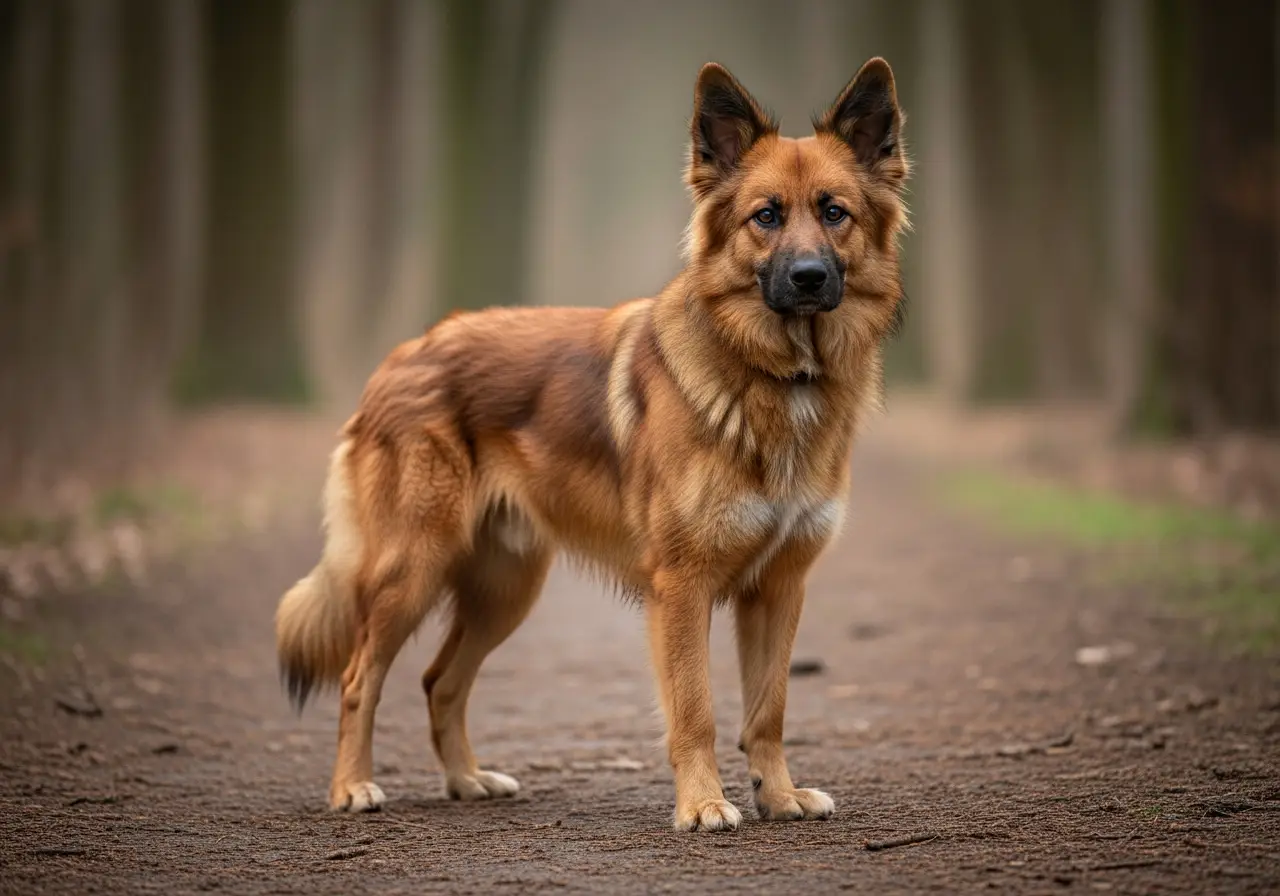
01Introduction
What makes the Harzer Fuchs special
The Harzer Fuchs is a non-FCI-recognised German landrace dog type from the Harz, robust and long-lived, withers height 36–44 cm.
03Profile
Key facts and suitability
- Origin
- Deutschland (Harz)
- Original purpose
- All-round household dog and rat catcher
- height at the withers
- 36–44 cm
- Weight
- 8–14 kg
- Life expectancy
- 13–16 Years
- Coat type
- Doppel
- Minimum exercise
- 45 min/day
- Puppy price
- 300–800 CHF
- Waiting period
- 3 months
- Sports
- Agility · Obedience · Scent work
05Needs
What this breed needs daily
Exercise
Medium
07Quick Check
09Character
Character and editorial background
The Harzer Fuchs is not a distinct FCI breed, but rather a red-coloured variety of the Old German Shepherd Dog. It was selected over generations as a working dog for sheep herds in the Harz mountains. Visually, it resembles a slender, agile Spitz-type with fox-red fur; functionally, it is a highly active, independently working herding dog. If you are interested in a Harzer Fuchs, you must classify it as a utility dog with a clear predisposition for work.
Origin and History
The Harzer Fuchs originates from the Harz region and was traditionally led by itinerant shepherds. It belongs to the group of Old German Shepherd Dogs, which were bred for performance rather than according to a uniform standard of beauty.
Its task was to independently lead, drive, and secure large herds. There is no FCI recognition as an independent breed.
The breeding goal was exclusively work-related: agility, endurance, independence, and bond with the handler.
Nature and Character
The Harzer Fuchs is intelligent, alert, and extremely eager to work. It reacts quickly to stimuli and takes responsibility in the movement patterns of herds.
It can appear reserved towards strangers. With conspecifics, it is usually tolerant provided there is clear structure.
Its herding instinct is strongly pronounced and genetically firmly anchored. Mental suitability exists for very active, experienced people who enjoy demanding stimulation.
Keeping and Daily Life
The daily exercise requirement lies significantly above 120 minutes of active movement. Additionally, it needs challenging mental stimulation, ideally in herding or comparable areas of activity.
A rural environment is advantageous. Keeping it solely in an apartment without structured enrichment leads to overwhelm and undesirable behaviour.
As a family dog, it is only suitable if its working predispositions are taken seriously. It is unsuitable for beginners. Being left alone is difficult for many representatives, as they are strongly work- and bond-oriented.
Training and Education
The Harzer Fuchs learns quickly and independently. Training must be clear, structured, and consistent.
Typical errors arise from under-stimulation or inconsistent rules. Its openness to stimuli requires early impulse control.
It needs a confident primary caregiver with experience in handling highly motivated herding dogs.
Health and Breed-Specific Characteristics
Life expectancy is usually between 12 and 15 years.
As a performance-oriented working type, it is considered robust. Concrete health risks depend heavily on the respective breeding line.
In cases of lameness, decline in performance, or behavioural changes, veterinary assessment is required.
Who is this breed suitable for?
The Harzer Fuchs suits very active, experienced people with access to meaningful work or intense physical stimulation. A structured, movement-rich daily routine is absolutely necessary.
It is not suitable for urban living situations or people with a limited time budget. Its working predispositions demand consistent leadership and clear tasks.
5 Common Questions about the Harzer Fuchs
Is the Harzer Fuchs a recognised breed?
No. It is considered a variety of the Old German Shepherd Dog and is not FCI-recognised.
Is it suitable for beginners?
No. Experience with work-intensive herding dogs is necessary.
How much exercise does it need daily?
More than 120 minutes of active movement plus challenging mental stimulation.
Is it suitable for families?
Only with a very active lifestyle and clear structure.
Does it have a strong herding instinct?
Yes. Its herding instinct is distinct and genetically firmly anchored.
12Structured data
Health by the numbers
Prone to diseases
No known breed-specific hereditary diseases (landrace type)
Recommended health tests
No specific mandatory examinations
FAQ
Frequently asked questions about the Harzer Fuchs
Is Harzer Fuchs suitable for beginners?
Harzer Fuchs is considered suitable for first-time dog owners.
Is Harzer Fuchs a family dog?
Harzer Fuchs is considered suitable for families with good socialisation and species-appropriate care.
How much exercise does Harzer Fuchs need?
At least around 45 minutes of exercise per day.
Does Harzer Fuchs suit an apartment?
With enough exercise and enrichment, Harzer Fuchs can also be kept in an apartment.
What is the size and weight of Harzer Fuchs?
Fully grown, Harzer Fuchs reaches about 36–44 cm at the withers and weighs around 8–14 kg.
What is the life expectancy of Harzer Fuchs?
The life expectancy of Harzer Fuchs is approximately 13–16 years.
Which diseases are common in Harzer Fuchs?
No known breed-specific hereditary diseases (landrace type)
17Breed clubs
Official breed clubs in DACH
19Related
Similar breeds – and their differences
You might also be interested in

Participate
Do you have a good photo of your Harzer Fuchs?
We are looking for expressive images for our breed profiles. Submit yours; the editorial team reviews every submission before publication.
Does this breed suit you?
Non-FCI-recognised household dog type from the Harz. Healthy and robust due to lack of inbreeding. Very rare as conscious breeding.