

01Summary
In a paragraph
If you only have 30 seconds.
The Dutch Smoushond is one of the rarest FCI-recognised breeds at all, a compact rough-coated companion dog from the Netherlands that nearly went extinct after the Second World War and was only reconstructed in the 1970s. Owning one means taking shared responsibility for a fragile breeding base. This is not a disadvantage, but a profile.
02Introduction
What makes the Dutch Smoushond special
The Dutch Smoushund is a rare Dutch rough-coated companion dog of FCI Group 2, recognisable by its straw-coloured beard and compact build, with a withers height of 35–42 cm.
03Profile
Key facts and suitability
- Origin
- Niederlande
- Original purpose
- Stable dog and ratter in Amsterdam horse stables
- FCI
- No. 308 · Group 2 · Section 1
- height at the withers
- 35–42 cm
- Weight
- 9–10 kg
- Life expectancy
- 12–15 Years
- Coat type
- Rauhaar
- Minimum exercise
- 60 min/day
- Puppy price
- 1'400–2'000 CHF
- Waiting period
- 18 months
- Sports
- Agility · Trickdogging · Mantrailing · Obedience
04Temperament
How the Dutch Smoushond shows up in everyday life
Anyone who gets up in the morning will quickly notice: the Smoushond registers every movement in the household. It does not follow intrusively, but positions itself so that it keeps an overview. On your return, it shows joy in a controlled manner, without falling into hysteria. This is not disinterest, but temperament.
Internally, the Smoushond requires a high degree of social closeness to its key people. It is not a dog that can easily wait alone for hours on end. Four hours are considered a realistic upper limit; anyone who is regularly absent for longer should plan for a care solution. It does not demand large amounts of mental work; moderate enrichment is sufficient to provide it with adequate stimulation.
Externally, it behaves reservedly towards strangers, but without fearfulness. It observes first before making contact. This is not mistrust in the problematic sense, but a typical reaction of a dog that is closely bonded to its family. With other dogs, it generally proves compatible; aggression towards conspecifics is rare.
Its former use as a rat catcher leaves a certain reactivity towards small animals. On the walk, this means that movement in the undergrowth or small animals in the field of vision can suddenly focus its attention. The tendency to bark is present, but controllable in everyday life. A Smoushond that receives sufficient social integration is calm and balanced in the household.
05Needs
What this breed needs daily
The Smoushond requires around 60 minutes of moderate exercise daily. Two shorter walks plus one freer session usually cover this need. Endurance sports such as jogging or cycling are not part of its profile; it is a companion dog, not an endurance athlete.
More important than the sheer amount of exercise is social integration. The Smoushond needs people in its vicinity. Anyone who isolates it permanently or keeps it in a household where it spends most of its time alone significantly underestimates its need for social contact. Four hours of being alone are a realistic upper limit; beyond that, stress signals arise.
It requires moderate mental stimulation. Simple search games, nose work or short training sessions are sufficient to occupy it mentally. It is willing to learn and cooperative, but reacts sensitively to harsh corrections. Friendly, clear guidance achieves better results than pressure.
The wiry coat requires professional trimming several times a year; clipping permanently alters the coat structure and is not breed-compliant. Between appointments, weekly brushing is sufficient. The beard and paw areas require regular checks for dirt, especially after walks in wet terrain.
A garden is not strictly necessary. The Smoushond is suitable for apartment living, provided that the daily walks take place reliably and the dog is not left alone permanently.
Exercise
Low
mental work
Something
Social needs
High
training
Easy
07Quick Check
08Suitability
Who this breed is suitable for – and who it isn't
✓Matches
The Smoushond suits owners who work from home predominantly or can integrate their dog into everyday life, whether in a home office, in a business or through flexible working hours. Anyone who provides the dog with company for several hours daily meets its need for social contact.
Quiet to moderately active individuals or couples who can plan 60 minutes of exercise daily will find a balanced companion in the Smoushond. Families with children from around eight years of age are also suitable, provided that retreat options for the dog are respected and interaction with animals is accompanied in an age-appropriate manner.
Anyone who brings experience with dogs has advantages, but this is not strictly necessary. Owners without prior experience who are willing to attend a supportive dog training school and engage intensively with the breed can also become good owners. What is important is the willingness to accept long waiting times and a small breeding network.
Anyone who combines an interest in a rare breed with active breed preservation and is willing to work closely with the breed club will find a sensible choice in the Smoushond. The breed is suitable for apartment living in the city as well as for rural environments.
×Doesn't match
The Smoushond does not suit owners who are regularly away from home for more than four hours daily without having a reliable care solution. Its high need for social contact is incompatible with permanent isolation; anyone who underestimates this risks behavioural problems.
Anyone looking for a dog that is open and uncomplicated towards strangers and approaches all people should know the external axis of the Smoushond: it is reserved towards unknown people. Anyone who mistakes this reserve for lack of socialisation and tries to overcome it through pressure misunderstands the nature of the breed.
If you are looking for a dog with immediate availability, the Smoushond is not the right choice. The waiting time for a puppy from reputable breeding often ranges from one to several years. If you are not prepared to plan for this period or engage with the small breeding network, you will find better availability in rough-coated alternative breeds such as the Cairn Terrier or the Wire-haired Schnauzer.
For very active owners who are looking for an endurance partner for sports or intensive dog sports disciplines, the Smoushond is also not the right profile. Its exercise requirement is moderate; if you plan several hours of intense activity daily, you should choose a breed with the corresponding drive.
09Character
Character and editorial background
The Dutch Smoushond is a small, rough-coated companion dog from the Netherlands with a schnauzer-like appearance. It belongs to the rarest FCI-recognised breeds and is hardly found outside the Netherlands. Waiting times for a puppy are long, and the breeding network is very small.
Origin and History
In the 19th century, the Smoushond was widespread in Amsterdam as a gentleman’s stable dog and fought rats in stables and on farms. It was considered an affordable alternative to the Schnauzer and was traded among horse dealers. After the Second World War, the breed was considered extinct. In the 1970s, Dutch breeders Riek Barkman-van Weel and Mia van Woerden began reconstruction from schnauzer-like rough-coated dogs. The back-breeding initiative started in 1973, the Hollandse Smoushonden Club was founded in 1978, and final FCI recognition followed in 1981 under number 308 in Group 2, Section 1. The breeding base remains narrow to this day. The annual puppy population is in the low double digits, almost exclusively in the Netherlands.
Appearance
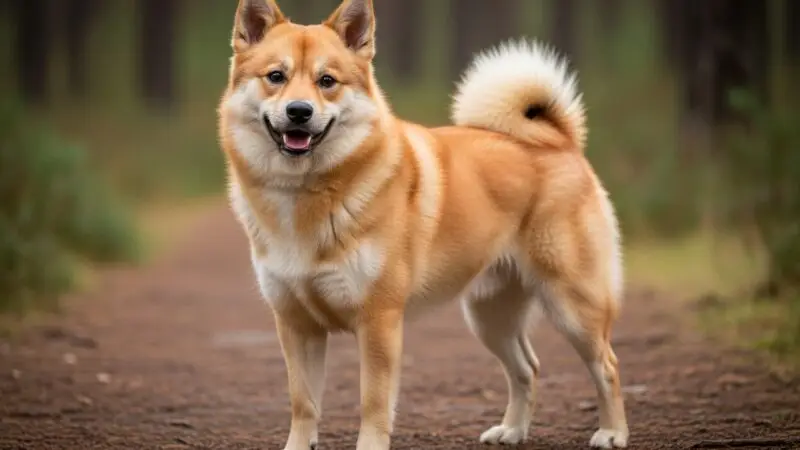
The Smoushond reaches a withers height of 35 to 42 cm and weighs between 9 and 10 kg. Its coat is rough, wiry, and straw-coloured in various shades. Characteristic features are the pronounced beard, bushy eyebrows, and hanging triangular ears. The build is square and compact, without exaggeration. Compared to the Schnauzer, it appears less angular and shows no excessive angulation.
Nature and Character
The Smoushond is considered friendly, affectionate, and balanced. It bonds closely with its reference persons and meets strangers with reserve but without fearfulness. The prey drive is moderately developed; the former use against rats leaves a certain reactivity towards small animals. Barking tendency is present but controllable. Aggression towards conspecifics is rare. In everyday life, it shows itself attentive and calm, with a cooperative working style.
Keeping and Training
The daily exercise requirement is about 60 minutes of moderate activity. Keeping in an apartment is possible; a garden is not required. The Smoushond learns willingly and is also suitable for first-time dog owners with clear, friendly guidance. Harsh corrections are counterproductive as it reacts sensitively to moods. It is suitable for families with children, provided that opportunities for withdrawal are respected.
Care
The rough coat is not shaved but trimmed several times a year. Weekly brushing suffices between trimming sessions. The beard and paws require regular checks for dirt. Moulting is minimal, and the breed sheds little. However, it is not reliably considered hypoallergenic.
Health
The life expectancy is 12 to 15 years. The small breeding base increases the risk of genetic narrowing. Known problem areas are patellar luxation and, in isolated cases, epilepsy. The Dutch breed club maintains a strict studbook with inbreeding coefficient control and mandatory examinations.
Suitable for whom?
The Smoushund suits quiet to moderately active owners who are looking for an uncomplicated, affectionate companion dog and are willing to wait for a puppy. Those who prefer a well-established breed will find comparable alternatives with better availability in the Wirehaired Schnauzer or Cairn Terrier.
10Line reality
Show line, working line, breeder market
The Dutch Smoushond does not have a pronounced differentiation into lines in the sense of working and show lines, as exists in larger breeds such as the Labrador or the German Shepherd. The breeding base is too narrow to develop parallel lines with different selection priorities.
Breeding as a whole is focused on the Dutch breed club, which keeps type, health and temperament stability in view. As the breed was completely reconstructed after the Second World War, genetic diversity is structurally limited. The club works with control of inbreeding coefficients to keep the gene pool as broad as possible.
Regional differences within the breed hardly exist, as almost all puppies come from a single national breeding network. Anyone buying a Smoushond from abroad should check whether the parent dogs are registered in the official studbook of the Dutch breed association; otherwise, the basis for a serious health assessment is missing.
11Health · Reality
What you need to plan for medically with your Dutch Smoushond
The life expectancy of the Dutch Smoushond is between 12 and 15 years, a typical range for small breeds. Reliable breed-specific health statistics hardly exist due to the small population size; the available data comes predominantly from the stud books of the Dutch breed club.
Known health risks include patellar luxation (a displacement of the kneecap, which generally occurs more frequently in small breeds) and, occasionally, epilepsy. The breed club mandates compulsory examinations and actively monitors inbreeding coefficients to prevent further narrowing of the genetic base.
The structurally greatest risk is the narrow breeding base itself. A small number of breeding animals increases the likelihood that recessive hereditary traits will occur more frequently. Buyers should inquire about the inbreeding coefficients of the parent animals before purchase; values below 6.25% are considered the desired upper limit in animal breeding (Source: Veterinary Association for Animal Welfare e.V., TVT Breeding Leaflet, status 2020).
Overweight is a real risk with moderate exercise requirements and incorrect feeding. Small breeds tend to gain weight quickly on calorie-rich nutrition, which puts strain on joints and the cardiovascular system. Regular weight checks at the vet are recommended.
Preventive examinations should take place annually, and every six months from the seventh year of life onwards. Patella screening of parent animals before breeding is a minimum standard that reputable breeders adhere to.
12Structured data
Health by the numbers
Prone to diseases
Patellar luxation, epilepsy, genetic narrowing due to small breeding base
Recommended health tests
Patella examination, eye examination, inbreeding coefficient analysis
13Myths ↔ Reality
What is often said incorrectly about this breed
Five myths, five realities, five sources.
The Smoushund is a Miniature Schnauzer under a different name and differs little from it.
The Dutch Smoushund and the Miniature Schnauzer share a rough coat and certain morphological similarities, but they are distinct breeds with different breeding histories. The Smoushund is more compact, less angular and shows no excessive angulation. Its character is considered somewhat less temperamental than that of the Schnauzer. The FCI lists both breeds separately.
As a rare breed, the Smoushund is particularly robust and healthy.
Rarity does not protect against hereditary diseases; on the contrary. A narrow breeding base increases the risk of genetic narrowing. In the Smoushund, patellar luxation and, in isolated cases, epilepsy are known problem areas. The breed club works actively against this with inbreeding coefficient control, which improves the situation but does not eliminate it.
The Smoushund hardly sheds and is therefore suitable for allergy sufferers.
The rough coat of the Smoushund does indeed shed little, which makes cleaning the home easier. However, the breed is not reliably considered hypoallergenic. Dog allergies are usually triggered by the protein Can f 1 in saliva and skin flakes, not solely by hair. A reliable statement on allergy tolerance cannot be made without individual testing.
Because the Smoushund is so rare, it can be easily imported from abroad.
Offers outside the official Dutch breed federation should be scrutinised with increased caution. The narrow breeding base makes dubious offers with unclear origins particularly risky. An import without studbook proof from the breed federation can jeopardise the genetic integrity of the breed and offers the buyer no assurance regarding health examinations of the parent animals.
14animal welfare
The animal welfare perspective
Breeder market, designer versions, animal shelter reality — what no one writes in the puppy ad.
The Dutch Smoushond is not a breed endangered by mass production or fashion trends; the opposite is the case. Its rarity protects it from commercial overbreeding pressure, but creates its own risks.
The narrow breeding base is the central animal welfare-relevant issue for this breed. Only a few dozen puppies per year, almost exclusively from a national breeding network, means that every litter carries weight for the gene pool. Breeders working outside the breed association and not practising inbreeding coefficient control endanger the long-term health of the entire population. Buyers who accept offers outside the official network contribute to this, not out of malicious intent, but out of ignorance. Education is more effective here than accusation.
Designer versions or deliberate crosses with the Smoushond appearance hardly exist on the market because the breed is too unknown to function as a trend product. This is a structural advantage. However, anyone who acquires a dog with a similar appearance without stud book documentation may be funding backyard breeders who market the appearance without conducting health examinations.
Breeding- or husbandry-related problems such as brachycephaly or extreme exaggeration of type are not an issue for the Smoushond. The breed standard specifies a functional, not exaggerated, body structure. This is a plus point compared to many other small breeds.
Rehoming adult Smoushonds through the breed club or animal welfare organisations is an equally valid option to buying a puppy. Adult dogs from the breed environment are rare but available. If you are flexible, you should actively inquire about this possibility; the breed club is the first point of contact.
15Costs · Transparency
What this breed realistically costs
A puppy from reputable Smoushond breeding usually costs between 1,500 and 2,500 euros. Offers significantly below this are a warning signal; for a breed with such a small breeding base and complex stud book management, low prices are rarely compatible with reputable work.
Based on experience, the annual living costs for a dog of this size are between 1,200 and 2,000 euros. This includes food (approx. 400–600 euros/year depending on quality), care including several grooming appointments per year (approx. 200–400 euros), as well as basic equipment and accessories.
Veterinary costs vary considerably. For routine examinations, vaccinations and parasite prevention, 300–500 euros per year is realistic. If treatment is added (for example for patellar luxation, which must be treated surgically), individual costs of 1,500 to 3,000 euros can arise.
Dog health insurance or a health protection package is recommended for this breed, as the narrow breeding base increases the risk of hereditary diseases. Monthly premiums are between 30 and 80 euros depending on the provider and scope of benefits.
If you calculate the total costs over ten years, you realistically land at 15,000 to 25,000 euros, excluding extraordinary veterinary costs.
16Puppy search
What you need to consider when choosing a breeder
- Starting your search for a Smoushond inevitably leads through the Dutch breed club.
- This body maintains the official stud book and facilitates contact with tested breeders.
- Waiting times of one year or more are not an exception but the rule; if you do not plan for this, you will come under pressure and make poorer decisions.
- Reputable breeders provide health certificates for the parent animals, particularly regarding patellar luxation and eye health.
- They ask questions about your planned daily routine and decline a sale if the profile does not fit.
- Anyone offering a puppy without a waiting period, without asking questions, and at a suspiciously low price should be treated with caution.
- Offers on general classifieds platforms outside of the breed association are particularly critical to scrutinise for this breed.
- The rarity of the Smoushond makes it susceptible to fakes—dogs with a similar appearance but without proven pedigree.
- The rehoming of an adult Smoushond through the breed club or specialised animal welfare organisations is an equally valid option.
- Adult dogs bring the advantage of a known temperament.
- If you are open to this possibility, you should ask the breed club directly whether rehoming animals are available.
FAQ
Frequently asked questions about the Dutch Smoushond
Is Dutch Smoushond suitable for beginners?
Dutch Smoushond is considered suitable for first-time dog owners.
Is Dutch Smoushond a family dog?
Dutch Smoushond is considered suitable for families with good socialisation and species-appropriate care.
How much exercise does Dutch Smoushond need?
At least around 60 minutes of exercise per day.
Does Dutch Smoushond suit an apartment?
With enough exercise and enrichment, Dutch Smoushond can also be kept in an apartment.
What is the size and weight of Dutch Smoushond?
Fully grown, Dutch Smoushond reaches about 35–42 cm at the withers and weighs around 9–10 kg.
What is the life expectancy of Dutch Smoushond?
The life expectancy of Dutch Smoushond is approximately 12–15 years.
Which diseases are common in Dutch Smoushond?
Patellar luxation, epilepsy, genetic narrowing due to small breeding base
17Breed clubs
Official breed clubs in DACH
19Related
Similar breeds – and their differences
You might also be interested in


Participate
Do you have a good photo of your Dutch Smoushond?
We are looking for expressive images for our breed profiles. Submit yours; the editorial team reviews every submission before publication.
Does this breed suit you?
Uncomplicated, affectionate companion dog for quiet to moderately active owners. Extremely rare breed with waiting times often exceeding one year – virtually all reputable litters are in the Netherlands.