
01Summary
In a paragraph
If you only have 30 seconds.
The Maremmano Abruzzese is not a companion dog in white fur. It is a livestock guardian specialist whose genetic programme was designed for independent decision-making against predators, not for obedience. Anyone keeping one takes responsibility for a territorially minded, reserved-with-strangers dog with a pronounced protective instinct. This demands experience, space and a realistic picture of this breed.
02Introduction
What makes the Maremmano Abruzzese special
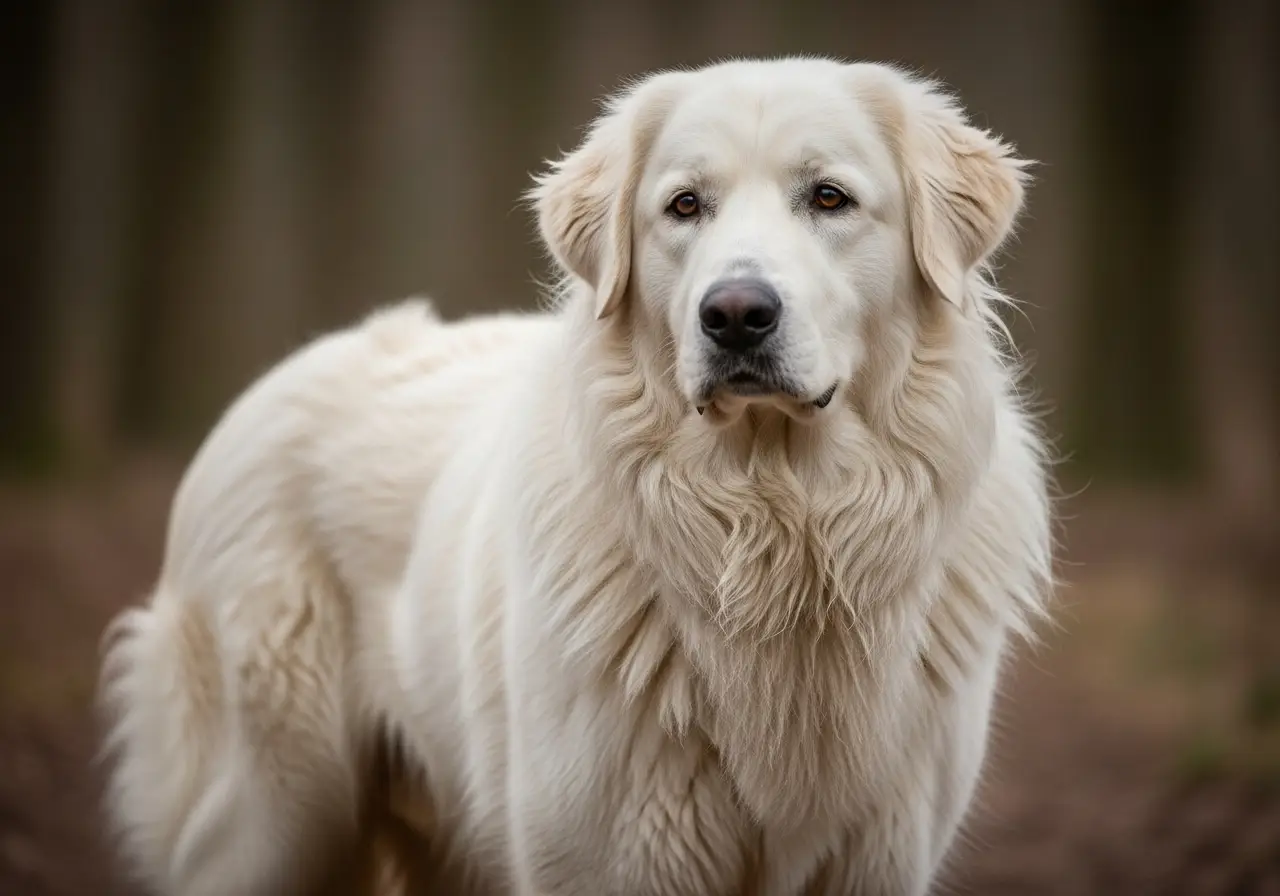
The Maremmano Abruzzese is a white Italian livestock guardian dog, FCI Group 1, from the Abruzzes, extremely hostile towards strangers, withers height 60–73 cm.
03Profile
Key facts and suitability
- Origin
- Italien
- Original purpose
- Livestock protection against wolves and bears in the Abruzzes
- FCI
- No. 201 · Group 1 · Section 1
- height at the withers
- 60–73 cm
- Weight
- 30–45 kg
- Life expectancy
- 11–13 Years
- Coat type
- Long-haired
- Minimum exercise
- 60 min/day
- Puppy price
- 800–1'500 CHF
- Waiting period
- 12 months
- Sports
- Schutzhund
04Temperament
How the Maremmano Abruzzese shows up in everyday life
The difference between internal need and external behaviour in the Maremmano becomes particularly clear when returning home after a long day at work. The dog greets its primary caregiver calmly and without exuberant reaction, not because it is uninterested, but because its bond is based on reliability rather than seeking attention. However, if an unknown visitor comes along, the Maremmano immediately positions itself between the door and the stranger. This is not an attack; this is its programming.
Internally, the Maremmano requires a defined territory that it can perceive as its domain. Without this structure, it lacks the foundation for its behaviour. A fenced property is not a matter of comfort but a prerequisite for psychological balance. The need for social contact with its own reference group is moderate; it does not seek constant proximity but tolerates no isolation.
Externally, it reacts to strangers with persistent mistrust. A tradesperson entering the property will not be accepted after a few minutes. The Maremmano observes, positions itself and decides for itself. This independence is not a training error; it is the result of millennia of selection for precisely this behaviour.
Towards other dogs, it shows territoriality, particularly on its own property. When off-leash outside its domain, it is generally less reactive, but even there it is not a dog that actively seeks contact.
Mental work in the classical sense (fetching, nose work, agility) interests it little. Its mental stimulation arises from guarding, observing and structuring its environment. Anyone who does not offer it this task will end up with a dog that seeks its own enrichment, usually loudly and at the expense of the neighbourhood.
05Needs
What this breed needs daily
The Maremmano requires 60 to 90 minutes of exercise daily, preferably in quiet terrain without high stimulus load. However, more important than the pure exercise time is the quality of its living conditions structure: A secured, generous property, with specialist associations recommending at least 2,000 m², forms the basis for its well-being. There it can patrol, observe and structure its territory.
Mental stimulation in this breed does not arise from classical training sessions, but from the opportunity to exercise or at least simulate its original function. Anyone who keeps sheep, goats or other livestock offers the Maremmano optimal conditions. Without a herd, it requires at least a clearly structured territory with defined boundaries and a reference group that it perceives as "its own".
Being left alone is possible if the dog is allowed to guard its territory. Up to six hours are acceptable with appropriate keeping conditions. Keeping in a cramped apartment or confinement in small rooms, on the other hand, leads to stress and behavioural abnormalities.
Grooming requires regular effort: The dense, white double coat must be brushed daily, especially during moulting (spring and autumn), to avoid matting. Outside of the moulting period, weekly care is sufficient.
Training and guidance require consistency without pressure. The Maremmano only accepts guidance from people it perceives as reliable and self-assured. Inconsistent behaviour or attempts to control it through coercion generate resistance. An accompanying dog training school with experience in livestock guardian dogs is recommended, not as obedience training, but as an orientation framework for owner and dog.
Exercise
Medium
mental work
Medium
Social needs
Low
training
Experts
06Sport & Mental and Physical Stimulation
What sports the Maremmano Abruzzese is suited for
Realistic in terms of physiology and genetics – not every breed suits every sport.
Structurally and physiologically suitable: CaniCross / bikejoring possible.
07Quick Check
08Suitability
Who this breed is suitable for – and who it isn't
✓Matches
The Maremmano Abruzzese suits owners who have already gained experience with independently thinking dogs or livestock guardian dogs. Anyone keeping the breed for the first time should demonstrably work together with an experienced trainer or breeder specialising in livestock guardian dogs.
In terms of keeping conditions, a house with at least 2,000 m² of secured, fully fenced property is a prerequisite, no compromise. Rural or village environments correspond to the breed's original profile. Owners who keep livestock (sheep, goats, poultry) offer the Maremmano optimal conditions, as it can exercise its original protective function.
Families with older children (from approx. 12 years), who are experienced in dealing with large dogs and respect the dog's independence, are suitable, provided that socialisation is carried out consistently and early on. Visitor frequency and neighbourhood density should be low, as the dog permanently classifies strangers on its territory as a potential threat.
Owners who are prepared to consistently comply with legal framework conditions (liability insurance, fencing, possibly leash requirement in the municipality) and who understand the dog as an independent specialist, not as a companion dog, will find a reliable, calm watchdog in the Maremmano.
×Doesn't match
The Maremmano Abruzzese is unsuitable for owners without prior experience with livestock guardian dogs or independently thinking breeds. Anyone who has previously kept only companion dogs and expects a close, cooperative human-dog relationship in the sense of classical obedience work will be structurally overwhelmed by this breed.
Keeping in an apartment, even with daily walks, is out of the question. Likewise, keeping in densely populated residential areas with frequent visitor traffic, narrow property boundaries or communal areas. The dog requires a clearly demarcated territory; if this is missing, conflicts arise with neighbours and passers-by.
Owners who equate the Maremmano's calm character with approachability towards strangers fundamentally underestimate this breed's external behavioural axis. Anyone who expects the dog to accept visitors after a short period of adjustment or to react neutrally in public spaces is choosing the wrong breed.
Families with young children or with frequently changing reference persons are also unsuitable. Owners who are away from home during the day and cannot provide a secured outdoor area should also not consider this breed. The Maremmano is not a dog for people seeking flexibility in keeping conditions.
10Line reality
Show line, working line, breeder market
The Maremmano Abruzzese is kept to this day in two functionally different contexts: as an active livestock guardian dog in working use and as a household dog without herd contact. This distinction is more relevant for keeping practices than a classic show/working line separation, as exists with other breeds.
Working-oriented breeding programmes that produce dogs for active livestock guarding place value on pronounced guarding traits, threshold of irritation and endurance in open-country use. These dogs are generally even more independent and less conditioned to human leadership than dogs from hobby breeding programmes.
In Europe, particularly in Italy, there are breeding programmes that breed the dog primarily as a companion dog or guard dog for private properties. These lines tend to be somewhat more amiable in a family context but retain the territorial instinct and reserve towards strangers as breed-typical characteristics.
A formal FCI-recognised line separation (working/show) does not exist for the Maremmano. Anyone looking for a puppy should specifically ask the breeder about the use context of the parent dogs: Are the dogs actively used in livestock guarding, or are they pure companion dog breeding programmes? This information significantly influences the expected temperament and effort required for leadership.
11Health · Reality
What you need to plan for medically with your Maremmano Abruzzese
Compared to many other large breeds, the Maremmano Abruzzese is considered robust. The average life expectancy is 10 to 13 years, with dogs in active working use under good husbandry conditions being able to reach the upper end of this range.
Hip dysplasia (HD) is the most frequently documented orthopaedic disease in the breed. Data from the German Club for Livestock Guardian Dogs (DCHSH) and comparable European breeding associations show HD prevalences of approximately 15–25 % in studied populations, depending on the breeding line and examination standard. Elbow dysplasia (ED) occurs less frequently but is also documented. Reputable breeders X-ray both parent animals before mating; proof of these examinations should be mandatory when buying a puppy.
Gastric dilatation and volvulus (GDV) is generally a risk in large, deep-chested breeds. For the Maremmano, prophylactic advice from the vet as well as avoiding feeding directly before or after intense exercise is recommended.
The dense double coat favours skin problems and parasite infestation (ticks, fleas) if care is lacking, which are difficult to detect under the coat. Regular coat checks, especially after time spent outdoors, are mandatory.
Overweight is an underestimated risk in this breed, particularly for dogs without active livestock guardian work. A Maremmano kept on a property without receiving sufficient daily exercise tends to gain weight, which exacerbates orthopaedic pre-existing conditions. Body weight should be checked regularly; vets recommend semi-annual weight checks from the fifth year of life.
12Structured data
Health by the numbers
Prone to diseases
Hip dysplasia, generally robust
Recommended health tests
Hip X-ray
13Myths ↔ Reality
What is often said incorrectly about this breed
Five myths, five realities, five sources.
"The Maremmano is a calm dog; it also suits quiet city families.
A calm temperament in this breed does not mean adaptability to urban environments. The Maremmano requires a clearly defined territory that it can guard. Without this structural provision, it develops behavioural issues such as uncontrolled barking, aggression towards visitors or attempts to escape. Keeping the dog in a city without a secure property contradicts its genetic basic needs.
"All white livestock guardian dogs are the same; a Pyrenean Mountain Dog behaves similarly to a Maremmano.
Although several white livestock guardian dog breeds show external similarities, they differ considerably in temperament, threshold of irritation and bonding behaviour. Compared to the Pyrenean Mountain Dog, the Maremmano is considered more independent and reserved towards strangers. Blanket comparisons lead to false expectations and are a common reason for owners feeling overwhelmed and subsequently rehoming the dog.
"With enough socialisation, the Maremmano becomes friendly towards strangers.
Socialisation influences how stimuli are handled but does not change genetically anchored behavioural traits. The guarding and territorial instinct of the Maremmano is the result of centuries of selection for precisely these characteristics. A well-socialised Maremmano reacts more controllably, but it remains a dog with pronounced mistrust towards strangers. Anyone expecting an amiable family dog chooses the wrong breed.
"The Maremmano is a beginner's dog because it is not aggressive.
Lack of aggression in everyday life is no indicator of trainability. The Maremmano makes independent decisions, does not accept inconsistent leadership and reacts to pressure with resistance. Without experience with independently thinking dogs, situations can quickly arise that become dangerous for the owner and their surroundings, particularly towards visitors or in public spaces.
"A Maremmano in the garden guards the property automatically, without training.
Although the guarding instinct is genetically present, uncontrolled guarding behaviour without a clear leadership structure is problematic from a legal and safety perspective. A Maremmano kept without integration into a leadership structure may classify visitors, tradespeople or children as threats. Legal requirements for keeping dogs (leash requirement, fencing, liability insurance) apply regardless of the guarding instinct.
14animal welfare
The animal welfare perspective
Breeder market, designer versions, animal shelter reality — what no one writes in the puppy ad.
The Maremmano Abruzzese is among the breeds that regularly appear in animal welfare organisations and shelters, not because it is a difficult dog, but because it is often acquired by owners who underestimate its profile. The most common reasons for surrender are conflicts with neighbours due to territorial behaviour and barking, being overwhelmed when handling independently thinking dogs, and inadequate husbandry conditions (property too small, apartment keeping).
On the puppy market, there are providers who market the Maremmano as a "calm family dog" or "natural guard dog without effort". These representations are misleading. A Maremmano from dubious origins (without HD/ED examination of the parent animals, without socialisation in a structured environment) carries an increased risk of health problems and behavioural abnormalities. Low prices (under 800 euros) or offers without pedigree and breeding association proof are warning signs.
Designer versions or crosses with other livestock guardian dogs (e.g. Kangal-Maremmano mixes) are occasionally offered. These dogs may combine protective traits of several breeds without a predictable temperament profile, posing a considerable risk for inexperienced owners.
Placement via specialised animal welfare organisations or breed rescues (e.g. via the DCHSH or Italian livestock guardian dog rescues) is an equivalent option to buying a puppy. Many placed Maremmanos are young dogs that were given up due to husbandry errors, not due to behavioural abnormalities. An honest assessment by the placing organisation and a trial visit on your own property are crucial here. Anyone who meets the keeping requirements often finds an already socialised dog with a known behaviour profile through placement.
15Costs · Transparency
What this breed realistically costs
The purchase price for a Maremmano puppy from reputable breeding with FCI papers, HD/ED examination of the parent animals and breeding association proof is between 1,200 and 2,000 euros in Germany and Austria. Offers significantly below this indicate missing breeding health examinations or backyard breeding.
The annual keeping costs consist of: food (large dog, approx. 600–900 euros/year depending on the type of food), grooming (approx. 100 euros/year for care products and tools with home grooming, 200–400 euros/year with professional care), as well as basic equipment (lead, collar, transport box, dog kennel/shelter for outdoor keeping: one-off approx. 300–600 euros).
Basic veterinary costs (vaccinations, parasite prevention, annual examination) are approx. 300–500 euros/year. Orthopaedic assessments (HD/ED X-rays in puppyhood) cost one-off approx. 150–300 euros. In the event of illnesses or operations (e.g. GDV emergency), individual costs of 2,000–5,000 euros can arise.
Dog liability insurance is strongly recommended for this breed and mandatory in some federal states. Annual premiums range between 60 and 150 euros depending on the provider and coverage sum. Pet health insurance is optional but significantly reduces the financial risk in the event of orthopaedic diseases (annual premium: approx. 400–800 euros for large breeds).
16Puppy search
What you need to consider when choosing a breeder
- Reputable breeders of the Maremmano Abruzzese can be found in Germany via the German Club for Livestock Guardian Dogs (DCHSH) or the VDH, in Austria via the ÖKV and in Switzerland via the SKG.
- Proof of membership in a breeding association is the minimum criterion; it confirms that breeding admission tests and health examinations have taken place.
- The following points should be checked on first contact with a breeder: Are HD and ED X-ray results available for both parent animals?
- Are the puppies raised in a structured environment with contact to people and various stimuli?
- Is the breeder willing to inspect or at least enquire about the buyer's property and keeping conditions?
- Reputable breeders ask these questions; they do not sell without assessing the buyer.
- Warning signs are: puppies under 800 euros without papers, immediate availability without waiting time, no opportunity to inspect the mother bitch, offers via general classifieds platforms without proof of membership in a breeding association.
- Placement via specialised livestock guardian dog rescues or animal welfare organisations is a fully valid alternative.
- Many placed dogs are young and were given up due to husbandry reasons, not because of behavioural abnormalities.
- A trial visit on your own property before taking the dog in is particularly important for this breed.
FAQ
Frequently asked questions about the Maremmano Abruzzese
How much exercise does Maremmano Abruzzese need?
At least around 60 minutes of exercise per day.
What is the size and weight of Maremmano Abruzzese?
Fully grown, Maremmano Abruzzese reaches about 60–73 cm at the withers and weighs around 30–45 kg.
What is the life expectancy of Maremmano Abruzzese?
The life expectancy of Maremmano Abruzzese is approximately 11–13 years.
Which diseases are common in Maremmano Abruzzese?
Hip dysplasia, generally robust
17Breed clubs
Official breed clubs in DACH
19Related
Similar breeds – and their differences
You might also be interested in

Participate
Do you have a good photo of your Maremmano Abruzzese?
We are looking for expressive images for our breed profiles. Submit yours; the editorial team reviews every submission before publication.
Does this breed suit you?
White Italian livestock guardian dog. Barking non-stop at night. Species-appropriate keeping only as a working dog.