
01Summary
In a paragraph
If you only have 30 seconds.
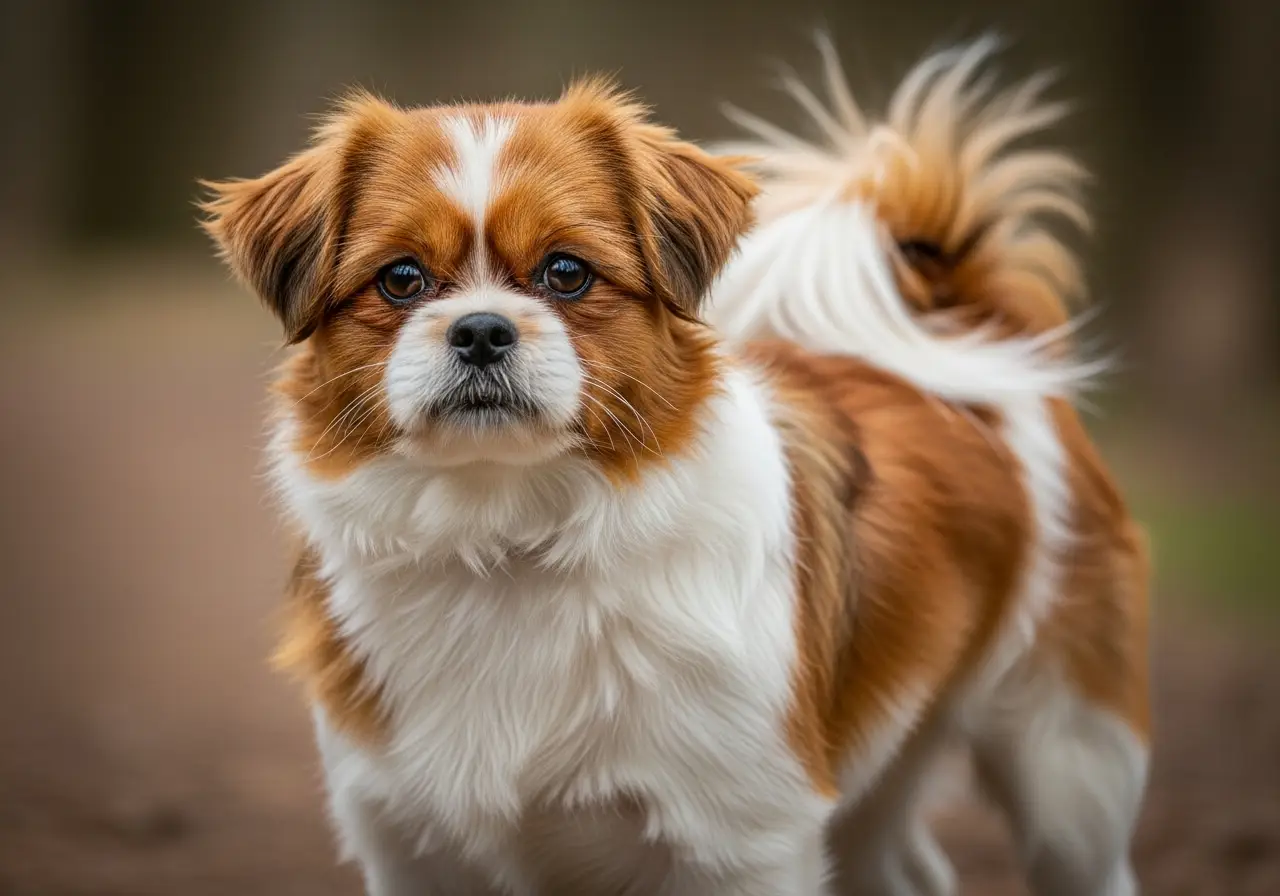
The Shiranian is a cross between Shih Tzu and Pomeranian, lively, people-oriented and variable in appearance and temperament. Anyone who keeps one takes responsibility for a dog whose characteristics depend heavily on the parent animals. Consistent training, regular grooming and a watchful eye on the respiratory tract and joints are not options, but basic requirements.
02Introduction
What makes the Shiranian special
Shiranian: cross between Shih Tzu and Pomeranian, trusting and playful, with highly variable appearance
03Profile
Key facts and suitability
- Origin
- USA
- Original purpose
- Companion dog
- height at the withers
- 15–30 cm
- Weight
- 2–7 kg
- Life expectancy
- 12–15 Years
- Coat type
- Long-haired
- Minimum exercise
- 30 min/day
- Puppy price
- 600–1'200 CHF
- Waiting period
- 2 months
- Sports
- Tricks
04Temperament
How the Shiranian shows up in everyday life
When you come home, the Shiranian shows what "people-oriented" means concretely: it immediately registers the return of its primary caregiver, announces it loudly and seeks immediate physical contact. This need for social contact is high; three hours alone are the upper limit for most individuals before stress signals such as barking, scratching or restlessness appear.
In everyday life, two poles emerge directly from the parent breeds. The Pomeranian component brings alertness, an alert instinct and a certain independence: the dog registers changes in its environment and comments on them. The Shih Tzu component, on the other hand, tends towards clinginess and a calmer baseline mood. Which pole predominates depends on the individual animal, and this is not a cliché, but a direct consequence of the lack of standardisation.
Towards strangers, the Shiranian often behaves reservedly or wait-and-see. A high need for social contact with one's own family does not automatically mean openness towards unknown people. Anyone expecting visitors must expect alert barking and actively train this behaviour; it does not disappear on its own.
Initial contact with other dogs is often cautious. Early and broad socialisation in the first weeks of life is decisive for how the dog later reacts to conspecifics. When living with children, the rule is: children who handle small dogs calmly and respectfully are a good prerequisite; toddlers at grabbing age are less so.
05Needs
What this breed needs daily
The Shiranian needs 45 to 60 minutes of active exercise daily, divided into several sessions. Long hikes are not the goal; varied walks with sniffing opportunities and short play phases better suit its profile of needs than monotonous distances.
Mental work is not a bonus, but a must. Nose work, simple search games or short training sessions of five to ten minutes keep the Shiranian mentally balanced. Without this stimulation, excess energy discharges into barking, restlessness or clinginess, which can turn into separation anxiety.
The need for social contact is high. The dog needs the reliable presence of its primary caregiver and only tolerates being alone if it has been trained in a clearly structured, step-by-step manner. Three hours are a realistic maximum for most individuals; anyone who is regularly away from home for longer periods needs a reliable care solution.
Grooming is an independent time factor: brushing several times a week, regular checks of the ears, eyes and paws, as well as professional care every six to eight weeks. Anyone who underestimates this effort risks matting and skin problems.
Training requires consistency from the start. Small dog tolerance (i.e. tolerating behaviour that would be corrected immediately in large dogs) is the most common mistake in keeping a dog. Clear rules, calm communication and a reliable daily structure are the basis for a balanced Shiranian.
Exercise
Low
mental work
Medium
Social needs
High
training
Medium
06Sport & Mental and Physical Stimulation
What sports the Shiranian is suited for
Realistic in terms of physiology and genetics – not every breed suits every sport.
Structurally and physiologically suitable: not an endurance sport (brachycephaly / BOAS).
07Quick Check
08Suitability
Who this breed is suitable for – and who it isn't
✓Matches
The Shiranian suits people or households who spend a large part of the day at home or can organise a reliable care solution. Specifically: working from home, part-time work with flexible hours or retirees with an active daily routine are good prerequisites.
Anyone who already has experience with small or lively dogs and knows that consistent leadership is not a question of physical size will find an attentive companion in the Shiranian. Willingness to train and the ability to set boundaries calmly and clearly are decisive.
Households with children from about eight years of age, who are guided in dealing with dogs, are suitable, provided that the dog is not treated as a toy and always has a place to retreat to.
Anyone who enjoys grooming or is prepared to visit a dog groomer regularly brings an important basic requirement. Keeping a dog in an apartment works if exercise and enrichment are planned in a structured way. A garden is not a must, but daily outings to varied environments are.
×Doesn't match
The Shiranian does not suit people who are away from home for eight or more hours a day and cannot organise a care solution. Its high need for social contact is not a characteristic that disappears through habituation; it is genetically anchored.
Anyone who expects a calm, independent dog that can easily occupy itself will not be happy with the Shiranian. The Pomeranian component brings alertness and a barking instinct; anyone living in an apartment building who does not actively train against barking risks conflicts with neighbours.
Households with toddlers under five years of age, where calm handling of the dog cannot be guaranteed, are not a suitable environment. The Shiranian is not a dog that tolerates grabbing and squeezing.
Anyone who regards grooming as negligible effort or does not want to plan regular care significantly underestimates the requirements of keeping the dog. Anyone who also expects that a small dog does not need consistent training should familiarise themselves with the actual behavioural risks before making a decision.
10Line reality
Show line, working line, breeder market
The Shiranian has no recognised breeding lines in the sense of working lines, show lines or field trial lines. As a crossbreed not recognised by the FCI, there is no overarching breeding organisation that could define or control lines.
In practice, factual differences still arise: providers who focus more on Shih Tzu parent animals with pronounced muzzle shortening produce dogs with a higher risk of brachycephalic airway problems. Providers who prefer Pomeranian parent animals with a pronounced spitz type achieve livelier, more alert offspring with a stronger alert instinct.
However, these informal "lines" are not documented and are hardly traceable for potential buyers. Anyone buying a Shiranian must assess both parent animals personally; photos and descriptions in the advertisement do not replace this step. The variability in appearance and character is structurally determined and is not a quality feature, but a direct consequence of the lack of standardisation.
11Health · Reality
What you need to plan for medically with your Shiranian
The life expectancy of the Shiranian is, based on the parent breeds, around 12 to 15 years. According to VDH figures, Shih Tzus reach an average of 13 years, Pomeranians also 12 to 16 years, with small dogs generally living longer than large breeds.
Patellar luxation is documented in both parent breeds. In the Pomeranian, the prevalence is around 25% of the animals examined according to a study by the OFA (Orthopedic Foundation for Animals, as of 2022). Similar values are known for the Shih Tzu. A Shiranian puppy should be examined by a vet for patellar luxation before purchase.
Brachycephalic airway problems occur if the Shih Tzu component inherits a strongly shortened muzzle. Symptoms such as snoring, shortness of breath under exertion or heat intolerance must be taken seriously and require veterinary investigation. In the worst case, surgical intervention is necessary.
Dental problems are common in both parent breeds: narrow jaw conditions lead to malocclusion and an increased risk of cavities. Regular dental care and annual veterinary checks are mandatory.
Eye problems — including keratoconjunctivitis sicca (dry eye) and corneal irritation from fur — occur frequently in Shih Tzus and can be inherited. Weight management is also relevant: overweight puts strain on the joints and exacerbates breathing problems.
12Structured data
Health by the numbers
Prone to diseases
Respiratory problems Eye problems
Recommended health tests
Eye examination Respiratory check
13Myths ↔ Reality
What is often said incorrectly about this breed
Five myths, five realities, five sources.
"The Shiranian is a low-maintenance lap dog that requires little effort.
The dense coat of both parent breeds requires brushing several times a week and regular professional care. Neglect leads to matting, which can be painful and damaging to the skin. In addition, there is the training effort: small dogs without clear guidance often develop problem behaviours such as excessive barking or resource guarding.
"Crossbreeds are automatically healthier than purebred dogs.
The so-called heterosis effect does not occur reliably if both parent breeds carry the same genetic risks. Shih Tzu and Pomeranian share predispositions for patellar luxation, dental problems and, with a short muzzle, brachycephalic airway syndrome. An uncontrolled crossbreeding can accumulate these risks rather than reduce them.
“Small dogs do not need consistent training.
Body size has no influence on the need for training. The Shiranian exhibits spitz-typical guarding behaviour and a pronounced alert instinct. Without clear rules and consistent guidance from the start, behaviours such as persistent barking, resource guarding or leash reactivity develop, regardless of the dog's weight.
"The Shiranian gets along easily with every dog and every person.
The Pomeranian component brings a reserved to confident attitude towards strangers. Friendliness towards unknown people and other dogs is in the medium range and depends heavily on early socialisation. A Shiranian that had little contact with various stimuli in its first weeks of life may react noticeably cautiously or reactively.
"Because he is so small, a short walk around the block daily is sufficient.
The Shiranian needs 45 to 60 minutes of active exercise and mental stimulation daily. Under-stimulation in this crossbreed often manifests as restlessness, excessive barking or destructive behaviour. Exercise alone is not enough; structured enrichment such as nose work or short training sessions are an integral part of species-appropriate keeping.
14animal welfare
The animal welfare perspective
Breeder market, designer versions, animal shelter reality — what no one writes in the puppy ad.
The Shiranian stands as an example of a market that has grown strongly in recent years: designer dogs without breed standards, without a breeding association and without binding health checks. This creates structural risks that potential buyers should know about, not to shame them, but because this information improves decision-making.
Backyard breeder market: As no breeding organisation conducts checks, the Shiranian market is particularly vulnerable to backyard breeders and puppy farms. Dogs are produced there primarily based on demand and appearance, not health parameters. High litter frequency, lack of socialisation and inadequate veterinary care are common problems. Advertised prices between 800 and 2,500 euros are no guarantee of a reputable origin.
Designer versions and trends: The Shiranian benefits from the ongoing demand for small, plush-looking dogs. This demand fuels crosses where appearance takes precedence over health, particularly when both parent breeds carry brachycephalic traits. Anyone buying a dog with a very short muzzle because it looks "cute" contributes to the demand for exactly these traits.
Breeding and husbandry-related problems: Respiratory issues, patellar luxation and dental misalignments are cumulative risks with careless selection of parent animals. Overweight, often underestimated in small dogs, exacerbates both problem areas. Anyone keeping a Shiranian is responsible for active weight management and regular preventive examinations.
Adoption as an equally valid option: Many Shiranians end up in animal welfare shelters because their temperament, care requirements or need for social contact were underestimated. An adult dog from a shelter comes with a known character, completed socialisation and often already has basic training. This is not a stopgap solution; it is an informed decision.
15Costs · Transparency
What this breed realistically costs
The purchase price for a Shiranian from reputable providers is between 1,200 and 2,500 euros. Offers under 800 euros are a clear warning sign of dubious origins. In animal welfare rehoming, protection fees of 300 to 600 euros are customary.
The annual living costs consist of: food (high-quality wet food or dry food for small breeds) approx. 400 to 700 euros/year, professional grooming every six to eight weeks approx. 600 to 1,000 euros/year, basic equipment (lead, harness, transport box, sleeping place) one-off approx. 200 to 400 euros.
Average vet costs: annual preventive care including vaccinations approx. 150 to 250 euros. In the case of patellar luxation, surgery costs can be between 1,500 and 3,500 euros per joint. Surgery for brachycephalic airway syndrome costs 800 to 2,500 euros depending on the procedure. Dog health insurance for small breeds is approx. 40 to 80 euros/month and, given the breed-specific risks, is a sensible consideration. The total costs in the first year, including purchase, realistically lie between 3,500 and 6,000 euros.
16Puppy search
What you need to consider when choosing a breeder
- As the Shiranian is not an FCI-recognised breed, there is no breeding association that prescribes health tests or monitors breeding facilities.
- This considerably increases the risk of encountering backyard breeders or puppy farms.
- Reputable providers enable visits to the litter, multiple times, not just for collection.
- Both parent animals should be visible on site and healthy.
- Health certificates for patellar luxation and, in the case of a short muzzle, a documented breathing test are minimum requirements.
- Vaccination records, deworming certificates and a veterinary health certificate are part of the handover.
- Anyone looking for a Shiranian should actively involve animal welfare organisations and rehoming centres.
- Many individuals end up in animal welfare because their temperament or care requirements were underestimated.
- An adult dog from a rehoming centre has the advantage that its character and health status are already known.
- Ad prices of under 500 euros or offers without personal contact are clear warning signs.
- Reputable providers ask questions about the planned daily routine and refuse to sell if the living conditions do not match.
FAQ
Frequently asked questions about the Shiranian
Is Shiranian suitable for beginners?
Shiranian is considered suitable for first-time dog owners.
Is Shiranian a family dog?
Shiranian is considered suitable for families with good socialisation and species-appropriate care.
How much exercise does Shiranian need?
At least around 30 minutes of exercise per day.
Does Shiranian suit an apartment?
With enough exercise and enrichment, Shiranian can also be kept in an apartment.
What is the size and weight of Shiranian?
Fully grown, Shiranian reaches about 15–30 cm at the withers and weighs around 2–7 kg.
What is the life expectancy of Shiranian?
The life expectancy of Shiranian is approximately 12–15 years.
Which diseases are common in Shiranian?
Respiratory problems Eye problems
17Breed clubs
Official breed clubs in DACH
19Related
Similar breeds – and their differences
You might also be interested in

Participate
Do you have a good photo of your Shiranian?
We are looking for expressive images for our breed profiles. Submit yours; the editorial team reviews every submission before publication.
Does this breed suit you?
Cross with highly variable appearance – health dependent on parent dogs