
01Summary
In a paragraph
If you only have 30 seconds.
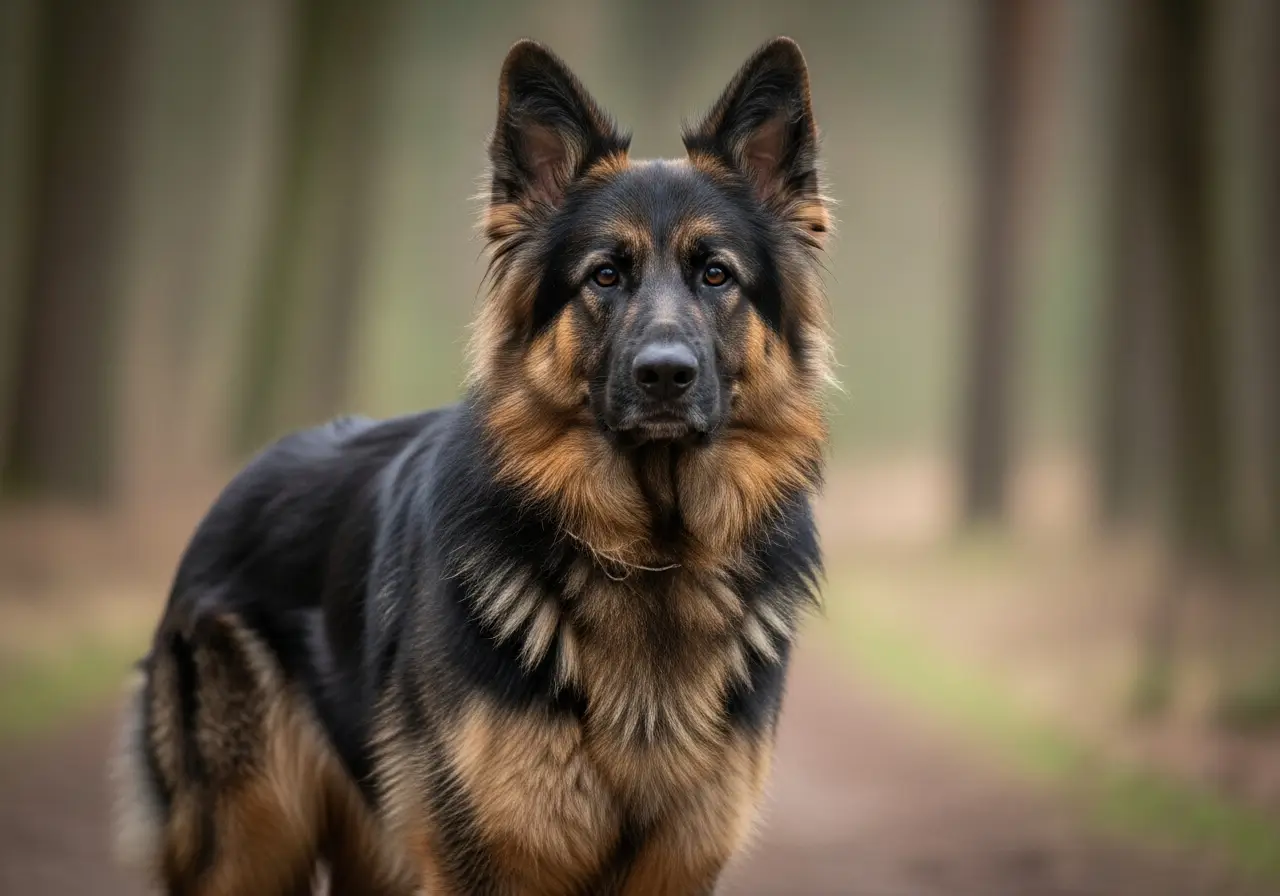
The Old German Shepherd Dog is not an independent FCI breed but a long-coated variety of the German Shepherd Dog, with all that entails: pronounced bond with the handler, high exercise needs, strong guarding instinct. The breeding line determines which dog actually stands in front of you. Anyone who underestimates this will end up with a dog that fills the gaps in leadership itself, in its own way.
02Introduction
What makes the Old German Shepherd Dog special
The Old German Shepherd Dog is a traditional German herding dog type, not standardised by the FCI, with a withers height of 55–65 cm.
03Profile
Key facts and suitability
- Origin
- Deutschland
- Original purpose
- Sheep herding, herd management
- height at the withers
- 55–65 cm
- Weight
- 22–40 kg
- Life expectancy
- 11–14 Years
- Coat type
- Long-haired
- Minimum exercise
- 90 min/day
- Puppy price
- 600–1'200 CHF
- Waiting period
- 6 months
- Sports
- Herding work · Agility · Scent work · Obedience
04Temperament
How the Old German Shepherd Dog shows up in everyday life
When you come home, the Old German Shepherd Dog registers every change: who arrives late, who smells unfamiliar, who behaves differently than usual. This attentiveness is no coincidence but genetic programming: The dog has been selected for vigilance and bond with the handler over decades.
Internally (i.e. in what the dog needs daily), a high level is shown on all axes simultaneously. The need for social contact with the primary caregiver is pronounced: hours alone in the apartment without prior training lead to restlessness, not relaxation. The need for mental work demands more than a walk; nose work, tracking, structured obedience training or protection dog sports fulfil this need. Less than 90 minutes of exercise daily is insufficient in the long term.
Externally, i.e. in reaction to external stimuli, a different picture emerges. Towards strangers, the Old German Shepherd Dog behaves reservedly or cautiously. The guarding instinct is present and comes to the fore in unclear situations. This means concretely: A tradesperson entering the property unannounced triggers a different reaction than a known visitor. These two axes (high need for social contact with the family on the one hand, reserve towards strangers on the other) must not be confused. A close family dog is not automatically a sociable dog for everyone.
In everyday life with other dogs, compatibility depends heavily on early socialisation. Dogs from lines with strong drives show clearer body language towards conspecifics and react sensitively to signals that other dogs would ignore. Dog parks without structure are rarely the right place for this type.
05Needs
What this breed needs daily
The Old German Shepherd Dog needs at least 90 minutes of active exercise daily, structured, not just free-running. Pure walks without training or tasks are insufficient to occupy the mind. Dog sports such as IPO/IGP, tracking work, search and rescue work or nose work correspond to the genetic potential of this line.
Mental stimulation is just as important as physical exercise. A dog that is physically tired but mentally under-stimulated will develop strategies for self-entertainment that rarely align with the owner's expectations. Daily training sessions of 15 to 20 minutes, tailored to the dog's level, are more effective than one long session per week.
Being left alone must be trained early and systematically. The close bond with the primary caregiver makes this dog prone to separation stress if gradual habituation does not take place. Four hours alone are realistic for a well-trained dog of this breed; more should remain the exception.
The herding instinct manifests in everyday life through controlling behaviour: the dog observes movements, reacts to changes in its environment and tries to structure situations. If this instinct is not channelled, you end up with a dog that takes matters into its own hands, following its own rules.
A house with a garden makes everyday life easier but does not replace enrichment. City living is possible if socialisation has been built up consistently and sufficient stimulation is ensured. Grooming requires daily attention, especially during moulting periods; the long rough coat will tangle without regular brushing.
Exercise
High
mental work
A lot
Social needs
High
training
Medium
06Sport & Mental and Physical Stimulation
What sports the Old German Shepherd Dog is suited for
Realistic in terms of physiology and genetics – not every breed suits every sport.
Structurally and physiologically suitable: Suitable for herding work, treibball and coursing · CaniCross / bikejoring possible.
07Quick Check
08Suitability
Who this breed is suitable for – and who it isn't
✓Matches
The Old German Shepherd Dog suits owners with proven experience in handling dogs with strong drives. Anyone who has already handled a working dog or actively trains in a dog sports club brings the basic prerequisites with them.
Specific profiles: Active individuals or couples who can plan at least 90 minutes of structured stimulation daily, not as an exception but as part of their daily routine. Families with children from around eight years old, in whom all family members learn respectful interaction with the dog and consistently adhere to clear rules. Owners with access to a dog sports club, a dog training school with experience in working dog breeds or a trainer who understands guarding and herding instincts.
Those living in the countryside or in a house with a garden have logistical advantages, but what is decisive is the willingness for daily training, not the type of housing. Owners who enjoy a close, task-oriented human-dog relationship will find an exceptional partner in this dog. The external axis (reserve towards strangers, pronounced guarding instinct) additionally requires a social environment that can cope with a watchful dog: visitors who respect the dog and an everyday life without uncontrolled encounters with strangers in confined spaces.
×Doesn't match
The Old German Shepherd Dog does not suit owners keeping a dog for the first time who do not plan to attend a dog training school with working dog experience. The guarding and herding instincts require a primary caregiver who can read, interpret and control these impulses; this is not a matter of good will but of experience.
This dog is not suitable for households where it regularly spends more than four hours alone without a care concept in place. The close bond with the handler makes separation stress likely if training is insufficient.
Anyone who assesses reserve towards strangers as temporary shyness that will resolve itself underestimates this dog's external behavioural axis. The guarding instinct is not a training error but a genetically anchored trait; it demands active management, not waiting and seeing.
Households with very young children under six years old, where consistent supervision and structuring are not possible, should only consider this breed after an honest self-assessment. Anyone who has little time for daily training or regards dog sports as optional will be permanently overwhelmed by this dog, regardless of how much space is available or how well-intentioned the motives may be.
10Line reality
Show line, working line, breeder market
The designation "Old German Shepherd Dog" masks considerable line heterogeneity. Three types can be distinguished in practice, even if the boundaries are fluid.
Work-oriented lines originate from breeding programmes that prioritise temperament tests, protection dog trials (IPO/IGP) and endurance. These dogs show pronounced drive structure, high resilience and a strong bond with the handler. They are suitable for experienced owners with a clear enrichment concept, and for no one else.
Appearance-oriented lines select primarily for coat, colour and appearance. The temperament is more variable, the drive structure often less pronounced, but not necessarily weaker. Without temperament tests of the parent animals, an assessment is difficult. These lines are frequently marketed under the term "Old German Shepherd Dog" without any affiliation to a kennel club or a uniform standard behind them.
Mixed lines from both philosophies exist and are most common in practice. Anyone purchasing a dog of this category receives a dog with unclear drive structure, which is neither good nor bad but makes an honest assessment more difficult.
For the decision on ownership, the following applies: The kennel club, temperament tests of the parents and personal impression of the mother are more informative than the designation in the advertisement. A visit to the breeder before purchase is not an option but a prerequisite.
11Health · Reality
What you need to plan for medically with your Old German Shepherd Dog
The life expectancy of the German Shepherd Dog, and thus of the long-coated type, is on average 10.3 years according to a study by the University of Göttingen (2022), with a range of 9 to 13 years. Size, breeding line and living conditions significantly influence this value.
Hip dysplasia (HD) remains the most well-known health risk. The OFA (Orthopedic Foundation for Animals) reports an HD rate of around 20% among tested German Shepherd Dogs (as of 2023). Elbow dysplasia (ED) occurs less frequently but is also documented. Both conditions are polygenic; responsible breeding with proven X-ray results from parent dogs reduces the risk, but does not eliminate it.
Degenerative Myelopathy (DM) is a progressive spinal cord disease that has been genetically confirmed in the German Shepherd Dog. A DNA test for the SODBI gene is available. Affected dogs show increasing hindquarter weakness from the sixth year of life onwards. There is no cure, and the progression is gradual.
Lines with a strongly sloping topline show increased orthopaedic strain in the lumbar-pelvic area. In the Old German Shepherd Dog from lines with a straight back, this risk is lower but not excluded.
Preventive examinations: HD/ED X-rays from the 12th month, DM DNA test before breeding, annual weight checks (overweight increases joint strain), eye examination if abnormalities are noted. The long coat requires regular checks for ectoparasites and skin irritation, especially in summer.
12Structured data
Health by the numbers
Prone to diseases
Hip dysplasia, Degenerative Myelopathy, Gastric Dilatation-Volvulus
Recommended health tests
Hip X-ray, DNA test for Degenerative Myelopathy
13Myths ↔ Reality
What is often said incorrectly about this breed
Five myths, five realities, five sources.
"The Old German Shepherd Dog is an independent, recognised breed.
The FCI does not list a separate standard under this designation. It is a long-coated variety of the German Shepherd Dog (FCI Standard No. 166). The term is a common trade name that does not establish any independent status in dog breeding.
"The long coat makes the Old German Shepherd Dog gentler in character.
The coat has no influence on drive structure or temperament. The breeding line is decisive. A dog from a work-oriented line shows the same pronounced guarding and herding instinct as its short-coated relative, regardless of coat structure.
"Old German Shepherd Dogs are suitable for families with children without any problems.
The pronounced guarding and herding instinct requires consistent socialisation and clear structures in everyday life with children. Dogs from lines with strong drives may perceive toddlers as a group to be led. Without appropriate training, conflicts arise. There is no general suitability for families.
"HD and ED are no longer a major issue in Old German Shepherd Dogs.
Hip dysplasia (HD) and elbow dysplasia (ED) remain relevant health issues. According to the OFA database (as of 2023), around 20% of examined German Shepherd Dogs show HD findings. Without proven X-ray results for the parent animals, the risk cannot be assessed.
"A large garden replaces daily stimulation.
A garden provides space for movement but does not replace structured mental and physical stimulation. Without targeted enrichment (training, nose work, dog sports), dogs of this breed develop behavioural issues such as excessive barking, digging or restlessness.
"Old German Shepherd Dogs from reputable breeding have no back problems.
Degenerative myelopathy (DM) is a genetically determined disease that has been identified in the German Shepherd Dog and also affects long-coated lines. A DNA test for the SODBI gene is possible and should be available for parent animals. Reputable breeding reduces the risk but does not eliminate it completely.
14animal welfare
The animal welfare perspective
Breeder market, designer versions, animal shelter reality — what no one writes in the puppy ad.
The German Shepherd Dog, including the long-coated type, is among the breeds most commonly represented in animal shelters in German-speaking countries. The main reasons for surrender are documented: underestimated exercise needs, unwanted protective behaviour, and owners being overwhelmed. This is not a coincidence but a structural problem linked to the marketing of these dogs.
The term "Old German Shepherd Dog" is used by reputable breeders as well as by multipliers responding to demand for the "original" or "natural" Shepherd Dog. Anyone buying a dog under this designation without checking the breeding line, parent dogs, and breeding philosophy takes considerable risks, not only for themselves but also for the dog. Dogs from litters without temperament tests and health checks end up disproportionately often in animal shelters or with owners who cannot cope with the behaviour.
Designer versions under names such as "Ur-Shepherd Dog", "Old German Wolfhound" or similar constructions are not defined cynologically. They cater to a demand for authenticity without a uniform breeding standard behind them. This makes it difficult to assess the expected temperament and health.
Adopting an adult dog from animal welfare organisations is an equally valid alternative to buying a puppy. Adult dogs show an assessable temperament, are often already basic socialised, and require a structured settling-in period, not fundamentally different competence than a puppy. Organisations such as the German Animal Welfare Federation or TASSO regularly place dogs of this breed. Anyone choosing this path often receives comprehensive information about the dog's previous behaviour, a basis rarely available to this depth when buying a puppy.
15Costs · Transparency
What this breed realistically costs
A puppy from a reputable breeder with breeding association membership, health checks and pedigree costs between 1,200 and 2,000 euros in Germany and Austria. Offers significantly below this, especially without proof of HD/ED and DM, signal missing breeding standards, not a good deal.
Annual living costs for an adult dog of this size realistically lie between 2,000 and 3,500 euros. Included are: high-quality food (600–1,000 euros/year depending on diet), grooming supplies and occasional professional grooming (100–200 euros/year), basic equipment, leads, toys and training material.
Average vet costs: routine checks, vaccinations and parasite prevention sum up to 300–500 euros annually. For orthopaedic diseases such as HD or DM, diagnosis and treatment can quickly reach 1,500 to 5,000 euros and more. Pet insurance with surgical cover costs between 50 and 120 euros monthly for this breed depending on provider and coverage, and is a sensible consideration given the known health risks.
Dog sport membership and training: 200–600 euros annually, depending on club and intensity. Anyone using professional individual trainers should budget 60–120 euros per session.
16Puppy search
What you need to consider when choosing a breeder
- A reputable breeder of Old German Shepherd Dogs (whether in the SV, VDH or another recognised breeding association) provides X-ray findings for both parent dogs regarding HD and ED, proves a DNA test for degenerative myelopathy (SODBI gene) and shows puppies only from the eighth week of life onwards.
- The mother lives visibly in the household and displays a balanced temperament.
- Anyone who does not provide documentation or refuses visits before purchase is ruled out as a contact.
- Caution is advised with advertisements that focus exclusively on the coat and appearance without providing information on the breeding line, temperament testing of the parents or health examinations.
- The term "Old German Shepherd Dog" is not protected; it can be used for dogs from very different breeding philosophies.
- Adoption via animal welfare organisations is an equally valid option.
- German Shepherd Dogs and their varieties are among the most frequently surrendered breeds in shelters, often due to underestimated exercise needs or undesirable guarding behaviour.
- An adult dog from adoption comes with an assessable temperament and requires a structured settling-in period.
- Platforms such as TASSO or the adoption databases of animal welfare associations offer a starting point.
- An experienced dog training school can meaningfully accompany the settling-in process.
FAQ
Frequently asked questions about the Old German Shepherd Dog
Is Old German Shepherd Dog a family dog?
Old German Shepherd Dog is considered suitable for families with good socialisation and species-appropriate care.
How much exercise does Old German Shepherd Dog need?
At least around 90 minutes of exercise per day. As an active breed, more so — plus mental stimulation.
What is the size and weight of Old German Shepherd Dog?
Fully grown, Old German Shepherd Dog reaches about 55–65 cm at the withers and weighs around 22–40 kg.
What is the life expectancy of Old German Shepherd Dog?
The life expectancy of Old German Shepherd Dog is approximately 11–14 years.
Which diseases are common in Old German Shepherd Dog?
Hip dysplasia, Degenerative Myelopathy, Gastric Dilatation-Volvulus
17Breed clubs
Official breed clubs in DACH
19Related
Similar breeds – and their differences
You might also be interested in
Participate
Do you have a good photo of your Old German Shepherd Dog?
We are looking for expressive images for our breed profiles. Submit yours; the editorial team reviews every submission before publication.
Does this breed suit you?
Working dog with herding instinct for active owners in rural areas. No FCI standard – an umbrella term for traditional shepherd dog types.