
01Summary
In a paragraph
If you only have 30 seconds.
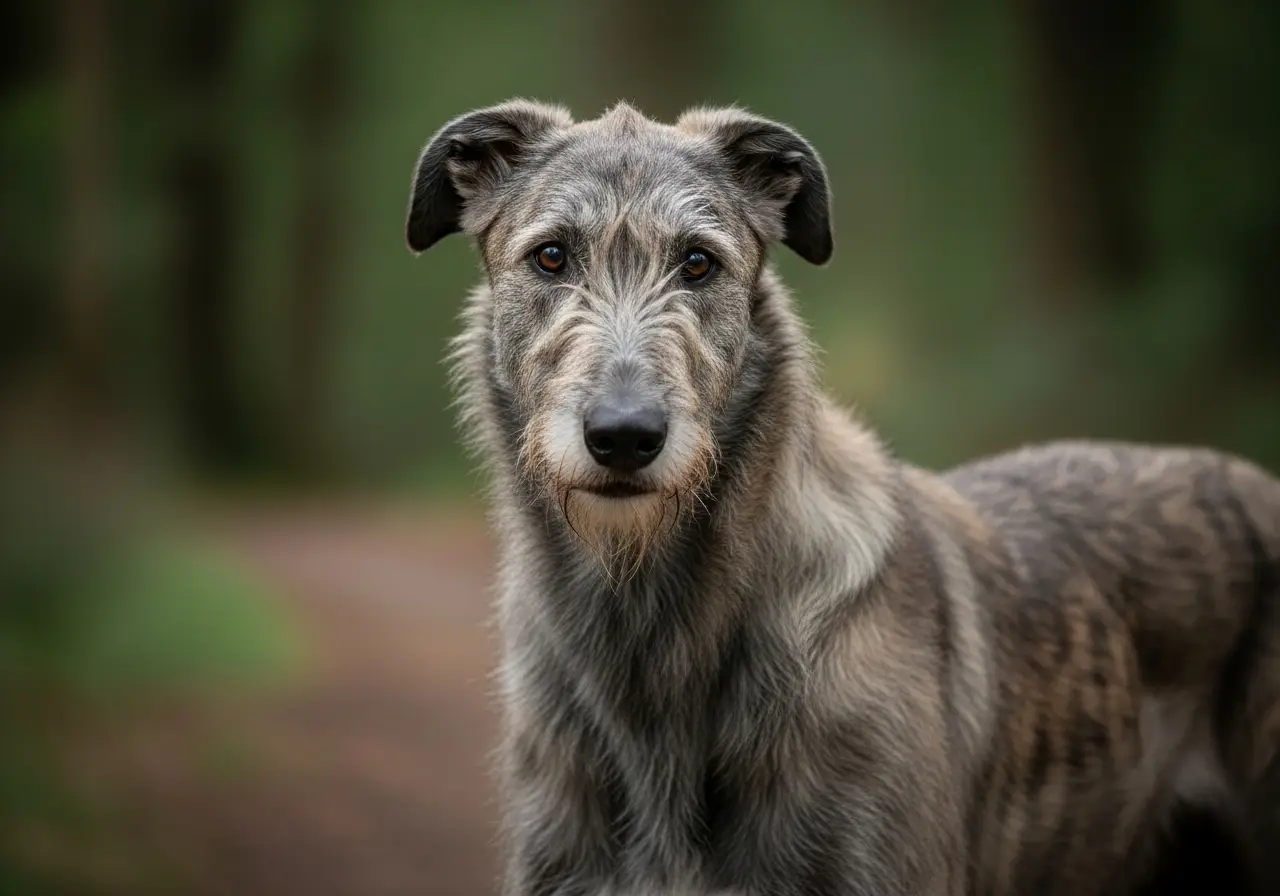
The Irish Wolfhound is one of the largest dog breeds in the world and combines a calm, people-oriented temperament with a strong prey drive and a short life expectancy of six to eight years. Keeping this breed requires spacious living conditions, financial stability, and the willingness to actively manage breed-specific health risks (cardiomyopathy, osteosarcoma, gastric torsion). Experience with large dogs is not optional but a prerequisite.
02Introduction
What makes the Irish Wolfhound special
The Irish Wolfhound is the largest dog breed in the world, FCI Group 10, from Ireland, gentle in character and short-lived, with a withers height of 71–86 cm.
03Profile
Key facts and suitability
- Origin
- Irland
- Original purpose
- Wolf hunting and elk hunting in Ireland
- FCI
- No. 160 · Group 10 · Sektion 2: Rauhhaarige Windhunde
- height at the withers
- 71–86 cm
- Weight
- 41–55 kg
- Life expectancy
- 6–10 Years
- Coat type
- Wire-haired
- Minimum exercise
- 60 min/day
- Puppy price
- 2'000–4'000 CHF
- Waiting period
- 12 months
- Sports
- Lure Coursing
04Temperament
How the Irish Wolfhound shows up in everyday life
When you come home, the Irish Wolfhound greets you calmly and without exuberant jumping, which is also practical given its body size of up to 86 cm at the withers. It seeks the closeness of its primary caregivers without being intrusive. In the house, it prefers to lie down near the action and sleeps a lot.
Internally, what the dog needs: The need for social contact is high. The Irish Wolfhound is not a dog that can easily spend long hours alone. Four hours are a realistic maximum; beyond that, stress signals arise. It requires mental work in the classic sense (nose work, search games) to a moderate extent. Its exercise requirement is surprisingly moderate for its size: structured walks and occasional free running on secure terrain are sufficient.
Externally, how the dog reacts: It generally shows itself open and friendly towards strangers, without being intrusive. However, this friendliness does not mean that it interacts with every dog without problems; its body size can intimidate conspecifics, and its prey drive activates quickly in response to visual stimuli. On the street, it reacts to passing animals with concentration and pulling on the lead. These two axes (high need for social contact internally, friendly but prey-drive-driven externally) must not be confused. A dog that appears gentle in the house can react to visual stimuli within seconds outside and develop considerable force.
05Needs
What this breed needs daily
The Irish Wolfhound requires 60 to 90 minutes of structured exercise daily. For puppies up to 18 months, the following applies: no long running distances, no excessive stair climbing, no intense jumping sports; the skeleton is not yet load-bearing in this phase.
Free running is important but must take place on secure terrain. Given the prey drive, a fence of at least 180 cm in height is not excessive caution but a basic requirement. Open fields without fencing are not suitable exercise areas.
The need for social contact is high. The dog requires the regular presence of a primary caregiver and tolerates being alone only to a limited extent; four hours daily should be considered the upper limit. Anyone who is regularly away from home for longer periods needs a reliable care solution.
It requires moderate mental stimulation. Nose work, calm search games, and structured training sessions are sufficient. Intensive performance sports are neither typical for the breed nor medically advisable.
The space requirement is considerable. An apartment without direct garden access is only justifiable for this breed if sufficient exercise and free running on secure terrain are possible several times a day. Narrow stairwells, small lifts, and cramped living conditions make everyday life considerably more difficult. A house with a garden is the clearly more suitable form of keeping.
Exercise
Medium
mental work
Something
Social needs
High
training
Medium
06Sport & Mental and Physical Stimulation
What sports the Irish Wolfhound is suited for
Realistic in terms of physiology and genetics – not every breed suits every sport.
Structurally and physiologically suitable: Suitable for mantrailing, dummy work and tracking.
07Quick Check
08Suitability
Who this breed is suitable for – and who it isn't
✓Matches
The Irish Wolfhound suits owners with experience in handling large dogs who can provide a calm, structured daily routine. Specifically: individuals or families with their own house, a secure garden (fence min. 180 cm), and sufficient time for 60 to 90 minutes of exercise daily.
Families with children from around eight years old are suitable if the children are familiar with handling large dogs and the dog is clearly socialised from the start. The dog's body size requires that children also learn to act calmly and predictably.
Owners who are prepared to actively plan regular heart examinations, gastric torsion prophylaxis, and veterinary supervision of puppy growth are well positioned. Anyone who emotionally and financially factors in the short life expectancy of six to eight years and still makes a conscious decision is making an informed choice. Experienced dog owners who value calmness and reliability and are not looking for a high-performance sports partner will find a dignified companion in this breed.
×Doesn't match
The Irish Wolfhound does not suit owners who are regularly away from home for more than four hours daily and cannot organise a care solution. The high need for social contact is non-negotiable.
Anyone living in a small city apartment without a garden and without regular access to secure free-running terrain greatly underestimates the space requirement of this breed. First-time owners without prior experience with large dogs should also not underestimate the physical strength and weight of up to 55 kg; a friendly nature does not replace solid basic training.
Anyone who cannot or will not financially cope with the short life expectancy and the associated veterinary costs is not making a realistic decision with this breed. Anyone who also considers the prey drive to be "bred out" and wishes to forgo secure free running exposes the dog and other animals to an avoidable risk. The gentle demeanour must not be confused with low demands; this is the most common misconception about this breed.
10Line reality
Show line, working line, breeder market
The Irish Wolfhound is now bred exclusively as a companion dog; an active working line in the hunting sense no longer exists. The original use for wolf and red deer hunting has been obsolete since the 17th century.
Nevertheless, differences can be observed within breeding lines: Some breeding lines focus on type consistency and show success (show line), while others prioritise health parameters such as heart health, life expectancy and skeletal development. These differences are relevant for prospective buyers, as they can directly affect health risks and life expectancy.
Reputable breeders carry out heart examinations (echocardiography) on breeding animals and disclose the results. Anyone looking for a line with documented heart health and above-average life expectancy should specifically ask for this evidence. Breeding lines without such documentation are not a quality feature; they are a warning sign. According to the FCI standard, there is no international working test for this breed.
11Health · Reality
What you need to plan for medically with your Irish Wolfhound
The life expectancy of the Irish Wolfhound is between six and eight years, one of the shortest among all dog breeds. Studies from the Irish and British breed club environment consistently confirm this figure.
The most common causes of death are:
- Dilated cardiomyopathy (DCM): A heart muscle disease that occurs disproportionately frequently in Irish Wolfhounds. Regular echocardiography from the third year of life is recommended.
- Osteosarcoma (bone cancer): Large breeds are generally more affected; for the Irish Wolfhound, osteosarcoma is considered one of the most common cancer diagnoses.
- Gastric torsion (Gastric Dilatation-Volvulus, GDV): Deep-chested dogs of this size carry an increased risk. Prophylactic measures (several small meals, no exercise immediately after eating) are standard.
Puppy growth is extremely rapid and places considerable strain on bones and joints. Veterinary-supervised feeding with breed-appropriate puppy food (controlled calcium and phosphorus content) is essential in the first 18 to 24 months. Excessive stress during this phase permanently increases the risk of joint problems.
Preventive examinations: Annual heart echo from the third year of life, regular blood count checks, weight monitoring. The Irish Wolfhound Club e.V. recommends structured health monitoring for breeders and owners.
12Structured data
Health by the numbers
Prone to diseases
Heart problems (dilated cardiomyopathy), osteosarcoma, hip dysplasia, portosystemic shunt
Recommended health tests
Cardiac examination, hip X-ray
13Myths ↔ Reality
What is often said incorrectly about this breed
Five myths, five realities, five sources.
"The Irish Wolfhound is a good guard dog because of its size.
The Irish Wolfhound generally shows a friendly to neutral reaction towards strangers. Protective or guarding instincts are not pronounced in this breed. The FCI standard describes it as gentle and sociable; anyone looking for a guard dog is choosing the wrong breed.
"Large dogs need lots of exercise, so the Irish Wolfhound needs hours of activity daily.
The exercise requirement of the Irish Wolfhound is moderate, not extreme. About 60 to 90 minutes of structured exercise per day are sufficient for adult dogs. Excessive strain is particularly harmful to puppies, whose skeletons are not fully developed until they are 18 to 24 months old.
"The Irish Wolfhound lives 10 to 12 years like all large dogs.
The average life expectancy is six to eight years, significantly below the average of many other large breeds. Heart disease (dilated cardiomyopathy), osteosarcoma and gastric torsion (bloat) are the most common causes of death. This short lifespan is a central emotional and financial reality of keeping the breed.
"Such a gentle dog is also suitable for first-time owners.
The calm nature belies the physical strength and weight of up to 55 kg. Loose-leash walking, impulse control when seeing triggers and management in everyday life, such as during vet visits or in crowds, require experience with large dogs. Lack of basic training can quickly become dangerous with this body mass.
"The prey drive has long been bred out of this breed.
The Irish Wolfhound is a sighthound. The prey drive is genetically retained and triggered by moving stimuli (hares, deer, cyclists, joggers). Off-leash exercise without secure fencing poses a significant risk. A fence of at least 180 cm in height is considered the minimum standard.
14animal welfare
The animal welfare perspective
Breeder market, designer versions, animal shelter reality — what no one writes in the puppy ad.
The Irish Wolfhound is not a breed at the centre of breeding for harmful traits (Qualzucht) debates; its health problems are not due to extreme physical features but rather to the genetic consequences of the breed's reconstruction in the 19th century and its typical body size. Nevertheless, there are animal welfare-relevant aspects that should be known before making a decision.
Backyard breeder market: Due to the trend towards large, imposing dogs, Irish Wolfhounds occasionally appear with backyard breeders and on dubious online platforms. Puppies without heart health documentation for the parent animals, without membership in a breeding association, and without litter inspection are a clear warning sign. The price pressure in such offers directly comes at the expense of preventive healthcare.
Breeding-related problems: The short life expectancy of six to eight years is not a law of nature but a breeding problem. Breeders who consistently select for heart health and life expectancy achieve demonstrably better results. Anyone buying a puppy without asking about this data indirectly supports breeding lines without a focus on health.
Risk of obesity: Irish Wolfhounds tend to become overweight if fed incorrectly, which increases joint stress and the risk of gastric torsion. Veterinary-supervised nutrition is crucial, especially during the puppy phase.
Adoption as an equal option: Irish Wolfhounds end up in shelters less often than smaller breeds, as their size deters many potential owners. Nevertheless, breed-specific rescue organisations and foster networks exist that rehome adult dogs with a known character and health status. An adult dog from a rescue is not a makeshift solution but an informed decision with the advantage that temperament and health condition are already assessable.
15Costs · Transparency
What this breed realistically costs
The acquisition costs from reputable breeders with association membership, heart health documentation, and litter inspection usually lie between 1,800 and 2,800 euros. Offers significantly below this, under 1,000 euros, indicate a lack of preventive healthcare or backyard breeding.
The ongoing costs are considerable: The food alone for an adult Irish Wolfhound amounts to 100 to 180 euros per month, depending on quality and feeding method. In addition, there are grooming costs (trimming the rough coat), accessories in extra-large sizes, and transport means suitable for a dog of this size.
Veterinary costs are above average for this breed: Annual heart echos cost 150 to 300 euros depending on the practice. In case of illness (cardiomyopathy, osteosarcoma, gastric torsion), treatment costs can quickly rise into the four-digit range. Pet insurance with surgical coverage is not a luxury option for this breed. The annual premium lies between 600 and 1,200 euros depending on the provider and scope of cover.
Over the entire lifespan of six to eight years, total costs of 30,000 to 50,000 euros are realistic, depending on the health trajectory and insurance model.
16Puppy search
What you need to consider when choosing a breeder
- Reputable breeders are members of a recognised breed club, in Germany for example the Irish Wolfhound Club e.V., and subject their breeding animals to regular heart examinations (echocardiography).
- Anyone buying a puppy should inspect the heart health documentation of both parent dogs, visit the litter in person, and get to know the mother bitch.
- Warning signs: puppies without pedigree, sale without personal contact, offers on general classifieds platforms without the breeder's club membership, prices below 1,000 euros.
- Adoption as an equal option: Breed-specific rescue organisations and animal welfare associations occasionally rehome adult Irish Wolfhounds with a known health status and temperament.
- An adult dog from a rescue offers the advantage that its character and behaviour are already assessable, and the breed's short life expectancy also makes older dogs a conscious, fully valid choice.
- The Irish Wolfhound Club e.V.
- (iw-info.de) provides guidance when looking for a breeder or considering adoption.
FAQ
Frequently asked questions about the Irish Wolfhound
Is Irish Wolfhound suitable for beginners?
Irish Wolfhound is considered suitable for first-time dog owners.
Is Irish Wolfhound a family dog?
Irish Wolfhound is considered suitable for families with good socialisation and species-appropriate care.
How much exercise does Irish Wolfhound need?
At least around 60 minutes of exercise per day.
What is the size and weight of Irish Wolfhound?
Fully grown, Irish Wolfhound reaches about 71–86 cm at the withers and weighs around 41–55 kg.
What is the life expectancy of Irish Wolfhound?
The life expectancy of Irish Wolfhound is approximately 6–10 years.
Which diseases are common in Irish Wolfhound?
Heart problems (dilated cardiomyopathy), osteosarcoma, hip dysplasia, portosystemic shunt
17Breed clubs
Official breed clubs in DACH
19Related
Similar breeds – and their differences
You might also be interested in
Participate
Do you have a good photo of your Irish Wolfhound?
We are looking for expressive images for our breed profiles. Submit yours; the editorial team reviews every submission before publication.
Does this breed suit you?
Largest dog breed in the world. Gentle giant. Short life expectancy – heart disease is breed-typical. Factor in enormous food costs.