
01Summary
In a paragraph
If you only have 30 seconds.
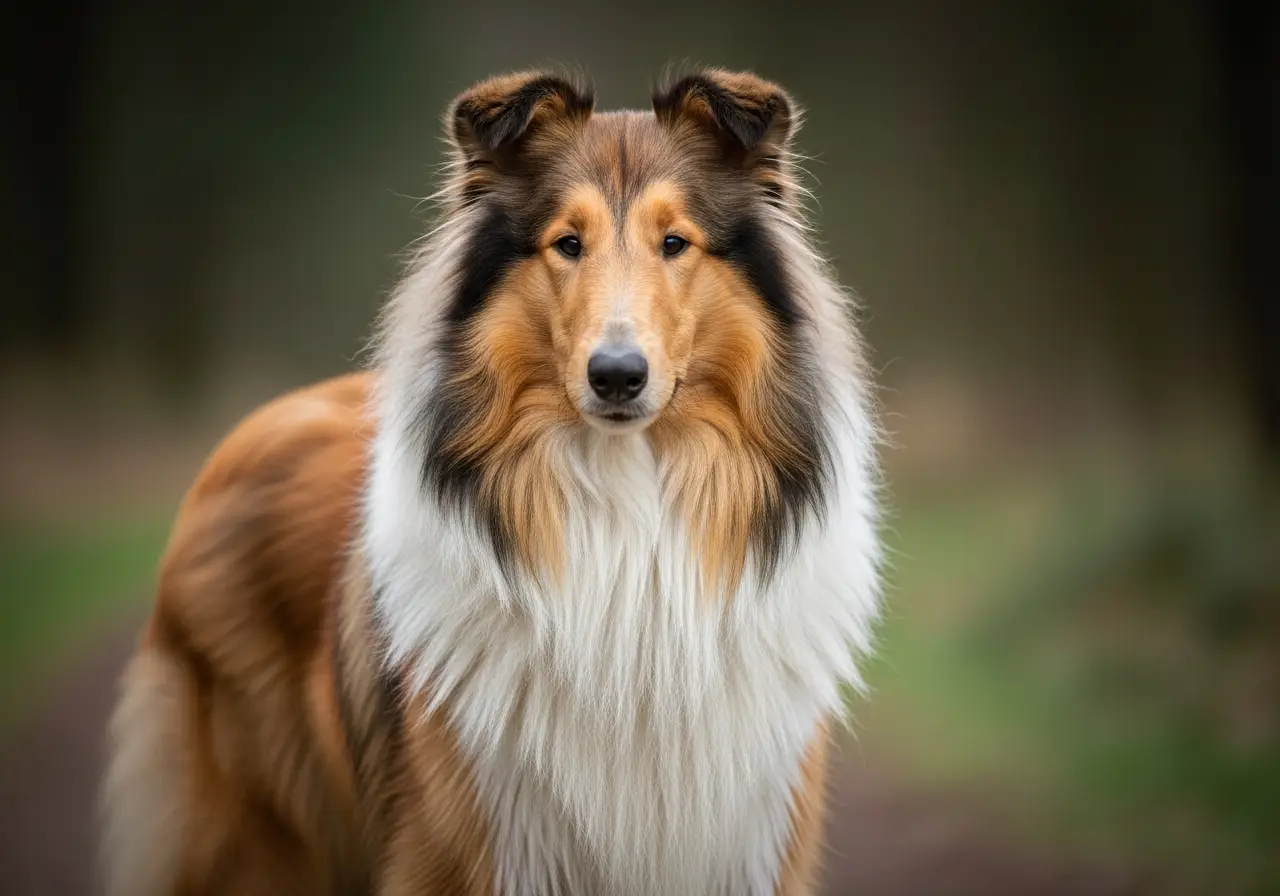
The Rough Collie is an intelligent herding dog from Scotland, whose public image has been greatly simplified by "Lassie". Behind the elegant coat lies a dog with a high need for social contact, pronounced herding instinct and fine stimulus processing. Anyone who underestimates structured guidance, daily mental work and a drug-sensitive dog will not be happy with this dog, and the dog will not be happy with them.
02Introduction
What makes the Rough Collie special
The Rough Collie is the famous «Lassie» dog, FCI Group 1, elegant and suitable as a family dog, with MDR1 drug intolerance, shoulder height 51–61 cm.
03Profile
Key facts and suitability
- Origin
- Grossbritannien
- Original purpose
- Sheep herding in Scotland (Lassie breed)
- FCI
- No. 156 · Group 1 · Sektion 1: Schäferhunde
- height at the withers
- 51–61 cm
- Weight
- 18–34 kg
- Life expectancy
- 12–14 Years
- Coat type
- Long-haired
- Minimum exercise
- 60 min/day
- Puppy price
- 1'500–2'500 CHF
- Waiting period
- 9 months
- Sports
- Agility · Obedience · Herding work · Therapy dog
04Temperament
How the Rough Collie shows up in everyday life
When you come home, the Rough Collie registers every change in your mood; haste, tension or restlessness are immediately transferred to its behaviour. It seeks eye contact, positions itself near you and observes. This is no coincidence, but genetically anchored herding work: the dog reads its primary caregiver like a working animal reads its flock.
**Internal axis, what the dog needs:** The need for social contact is high (value 4 out of 5). The Rough Collie is not a dog that accepts being alone as a normal state. A maximum of four hours alone is realistic if being left alone has been carefully built up. Mental work is just as important as exercise: trick training, nose work or structured search tasks challenge it in a way that a simple walk cannot achieve. The herding instinct is pronounced; without an outlet for it, it develops substitute behaviours such as circling family members or fixing on moving objects.
**External axis, how the dog reacts:** Towards strangers, the Rough Collie shows reserve (friendliness-strangers: 4 out of 5, i.e. moderately open but not intrusive). This means: a visit to the house initially triggers observation, not spontaneous greeting. With good socialisation from puppyhood, it develops a calm tolerance towards unknown people, but openness is not its profile.
These two axes diverge: A high need for social contact with the primary caregiver does not mean that the dog gets along with every person. Anyone who confuses this will experience a dog that cuddles on the sofa in the evening but disappears under the table at the next family gathering. Both reactions are typical of the breed, and both require clear communication from the owner.
05Needs
What this breed needs daily
The Rough Collie needs 60 to 90 minutes of active exercise with a primary caregiver daily. Off-leash running on secure terrain, structured walks with tasks and occasional field work correspond to its exercise profile. Pure exercise hours without a mental component are not sufficient.
Mental work is not an option but a basic need. The mental work requirement is 4 out of 5. Concrete formats: nose work (mantrailing, search games), trick training with positive reinforcement, agility at a medium level or controlled herding tasks within the framework of herding courses. At least one structured mental work session daily is realistic to plan in.
Need for social contact: The dog requires regular, calm contact with its primary caregiver. It is not a kennel dog and not a dog that feels comfortable in isolation. Being left alone must be built up gradually; four hours are the realistic maximum for a well-conditioned dog.
Grooming as a time factor: Two to three brushing sessions per week are the minimum outside of moulting periods. During moulting (twice a year, lasting four to six weeks), daily brushing is necessary. Anyone who does not plan for this time commitment risks matting with skin-related consequences.
Stimulus management: The dog processes environmental stimuli finely and intensely. Hectic households, frequent loud noises or inconsistent daily structure demonstrably burden it. A calm, predictable daily routine is not a comfort; it is a basic prerequisite for a balanced animal.
Exercise
Medium
mental work
A lot
Social needs
High
training
Easy
06Sport & Mental and Physical Stimulation
What sports the Rough Collie is suited for
Realistic in terms of physiology and genetics – not every breed suits every sport.
Structurally and physiologically suitable: Suitable for herding work, treibball and coursing · CaniCross / bikejoring possible.
07Quick Check
08Suitability
Who this breed is suitable for – and who it isn't
✓Matches
The Rough Collie suits owners who can plan 90 minutes daily for exercise and mental work, not as an exception, but as part of everyday life. Suitable are individuals or families with a calm, structured household who enjoy cooperative partnership with the dog.
Families with children from about eight years of age are suitable if the interaction is calm and respectful and children are included in the training routine. A garden is helpful but does not replace structured activity.
Owners with experience in handling sensitive herding dogs benefit most. First-time owners are not fundamentally excluded, however, they require a dog training school with experience in herding breed profiles and should be prepared to actively reflect on their own communication.
Those interested in dog sports (Agility, Obedience, Herding, Nosework) will find a willing-to-learn partner in the Rough Collie. The internal axis (high need for social contact, high need for mental work) demands an owner who is present. The external axis (moderate openness towards strangers) demands an owner who actively manages visitor situations and offers the dog opportunities to withdraw.
×Doesn't match
The Rough Collie does not suit owners who are regularly away from home for more than four hours a day without having a reliable care solution. Bond-oriented herding dogs develop stress behaviour under chronic isolation, which is difficult to reverse.
The breed is not suitable for households with very high noise levels, frequently changing primary caregivers or a daily routine without recognisable structure. The dog's fine stimulus processing is not a weakness that can be trained away; it is a characteristic trait that requires a suitable environment.
Anyone who expects the dog to become friendly with every person on its own, like "Lassie", underestimates the external axis: reserve towards strangers is typical for the breed and not a training error. Anyone who views this behaviour as a problem and tries to correct it with pressure will cause lasting harm to the dog.
Anyone who considers the grooming effort negligible should not choose this breed. Two to three brushing sessions per week plus intensive care during moulting are non-negotiable. Anyone who also lacks the willingness to know the dog's MDR1 status and inform the vet about it exposes the animal to an avoidable health risk.
10Line reality
Show line, working line, breeder market
In Central Europe, the show line dominates for the Rough Collie. The original working line (selected for sheep herding work, with a stronger herding instinct and higher endurance) is hardly represented anymore in Germany, Austria and Switzerland. Anyone specifically looking for a dog with a pronounced work drive for herding sports must actively seek breeders who select for working traits and should have the parent dogs assessed regarding their drive structure.
The show line produces dogs with a potentially calmer temperament and a stronger focus on human bonding. This does not mean that the herding instinct is absent; it is genetically anchored, but the intensity varies considerably between lines and individuals.
For herding courses or herding sports, a dog from a line with documented drive structure is more sensible than a pure show dog. For everyday life as a family and companion dog with dog sport ambitions (agility, nose work, obedience), show line dogs are generally well suited, provided that the need for social contact and mental work requirements are met.
Regional differences exist: In Great Britain and the USA, working line Collies are bred more actively than in Central Europe. When buying a puppy, it is worth asking about the working titles in the pedigree.
11Health · Reality
What you need to plan for medically with your Rough Collie
According to a study by the Kennel Club UK (2024), the life expectancy of the Rough Collie is an average of 12.3 years, with a range of 10 to 14 years depending on health management and breeding quality.
MDR1 gene defect (Multidrug Resistance 1): This is the most significant breed-specific health issue. Studies by Washington State University show that, depending on the population, 50 to over 70% of Rough Collies carry at least one mutated MDR1 allele (heterozygous or homozygous). Homozygously affected dogs react to Ivermectin, Loperamide, Vincristine and other active ingredients with severe neurological poisoning. A DNA test (available via laboratories such as Laboklin or the WSU laboratory) is mandatory before the first vet visit. Cost: approx. 50–80 EUR.
Collie Eye Anomaly (CEA): A hereditary eye malformation that is widespread in the Collie population. Reputable breeders have parent animals examined ophthalmologically and tested for the CEA gene. Mild forms hardly impair vision; severe forms can lead to retinal detachment.
Hip dysplasia (HD): Less prevalent than in large breeds, but present. Responsible breeding includes HD X-rays of the parent dogs. Eye examinations and MDR1 testing should be documented by the breeder.
Preventive care: Annual eye checks by an ophthalmologist, weight monitoring (overweight puts strain on joints), and providing the vet with full information about the MDR1 status in every treatment case are standard measures for a healthy Rough Collie.
12Structured data
Health by the numbers
Prone to diseases
MDR1 mutation, Collie Eye Anomaly, epilepsy, progressive retinal atrophy
Recommended health tests
DNA test for MDR1 and CEA, eye examination, hip X-ray
13Myths ↔ Reality
What is often said incorrectly about this breed
Five myths, five realities, five sources.
"The Rough Collie is like Lassie, gentle, uncomplicated and suitable for everyone.
The character Lassie is a media construct, not a behavioural description. The Rough Collie is a sensitive herding dog with a high need for social contact and a pronounced herding instinct. Without structured guidance and daily mental work, it develops stress-related behaviours such as excessive barking, circling or insecurity around strangers. It requires an experienced, calm owner.
„The MDR1 gene defect affects only a few Collies and is not a real problem.
Studies by Washington State University show that in some Collie populations, over 70 % of the animals carry at least one mutated MDR1 allele. Affected dogs react to common medications such as ivermectin, loperamide or certain chemotherapeutic agents with severe to life-threatening poisoning. A DNA test before purchase and informing the vet are absolutely necessary.
„The Collie’s long coat takes care of itself; it is a robust dog.
The Rough Collie’s double coat requires at least two to three intensive brushing sessions per week, and daily during shedding periods. Mats form particularly behind the ears, on the thighs and in the armpit area. Neglected care leads to skin problems and pain. The care requirement is a frequent reason for surrender in animal welfare.
„Collies are so intelligent that they can occupy themselves.
High intelligence without stimulation leads not to self-occupation but to problem behaviour in herding dogs. The Rough Collie develops stereotypies such as shadow chasing, excessive barking or fixation on moving objects when under-stimulated. Mental work (trick training, nose work, controlled herding tasks) must be actively provided.
„A garden replaces the daily exercise for the Rough Collie.
A garden does provide the Rough Collie with freedom of movement, but it does not replace structured activity with a primary caregiver. The dog needs 60 to 90 minutes of active exercise with social contact and mental stimulation daily. Left alone in the garden, it tends towards boundary-patrolling behaviour and barking.
14animal welfare
The animal welfare perspective
Breeder market, designer versions, animal shelter reality — what no one writes in the puppy ad.
The Rough Collie regularly ends up in animal welfare shelters, and the reasons for surrender are strikingly consistent: underestimated care requirements, being overwhelmed by the dog's sensitivity, and disappointed expectations after the "Lassie image". This is no coincidence, but a structural problem linked to the breed's media legacy.
Backyard breeder market: Rough Collie puppies are regularly offered on classifieds platforms without pedigree, without health tests, and without MDR1 documentation. Prices under 800 EUR are a warning sign. Anyone buying a dog without CEA test and MDR1 documentation bears the health risk alone and finances breeding without selection pressure for health.
Designer variants: "Mini-Collies" or unusual colour variants (e.g. Merle-Merle pairings) appear in offers. Merle-to-merle pairings statistically produce a high proportion of deaf and/or blind puppies. Such offers are relevant to animal welfare and excluded from responsible breeding.
Keeping-related problems: The most common reasons for surrender (barking, fear behaviour, insecurity around strangers) are usually not character flaws, but consequences of under-stimulation, lack of socialisation, or inconsistent handling. Many of these dogs can be rehabilitated with the right support.
Adoption as an equal option: Breed-typical Collies from animal welfare shelters or via breed protection organisations are a serious alternative to buying a puppy. The Club for British Herding Dogs e.V. (cfbrh.de) places dogs in need and can facilitate contact with rescue centres. An adult dog from adoption has the advantage of an already recognisable temperament; the sensitivity and drive structure can be assessed better in an adult animal than in a puppy.
15Costs · Transparency
What this breed realistically costs
A puppy from responsible breeding with complete health documentation costs between 1,200 and 1,800 EUR in Germany. Offers without MDR1 test or CEA documentation are often lower; the follow-up costs for health problems regularly exceed the savings.
The annual living costs for a Rough Collie realistically amount to 2,000 to 3,500 EUR. Included are: high-quality food (approx. 600–900 EUR/year depending on size and feeding method), professional grooming or care products (approx. 150–300 EUR/year), basic equipment and accessories, as well as dog training school (first year approx. 300–600 EUR).
Veterinary costs for routine care (vaccinations, parasite prevention, annual check-up) amount to 300–500 EUR/year. Ophthalmological check-ups are added (approx. 80–150 EUR per examination). For MDR1-homozygous dogs, anaesthesia and treatments require more complex planning, which can increase individual treatments by 20–40%.
Dog health insurance for a Rough Collie costs between 50 and 120 EUR/month depending on the provider and scope of cover. Given the breed-typical eye issues and MDR1 risk, insurance is recommended. The total costs over the lifespan (12 years) realistically amount to 30,000 to 50,000 EUR.
16Puppy search
What you need to consider when choosing a breeder
- A reputable breeder provides the following documentation before purchase: MDR1 DNA test of both parent animals, ophthalmological report (CEA test), HD X-ray findings and a VDH/FCI pedigree.
- Anyone who does not show these documents or evades questions is not a suitable contact.
- A visit to the breeder on site is mandatory, not optional.
- The puppy should grow up with its mother; the mother should appear calm and people-oriented.
- Hectic, anxious or aggressive parent animals statistically pass on these traits.
- The purchase price for a Rough Collie from reputable breeding in Germany is between 1,200 and 1,800 EUR.
- Significantly cheaper offers without health documentation are a clear warning sign.
- Adoption via animal welfare organisations or the Club for British Herding Dogs e.V.
- (cfbrh.de) is an equally valid option.
- Adult dogs from adoption have an already recognisable temperament, which makes it easier to assess whether dog and household are a good match.
- A rehoming fee of 200 to 400 EUR is customary and covers the organisation's vet costs.
FAQ
Frequently asked questions about the Rough Collie
Is Rough Collie suitable for beginners?
Rough Collie is considered suitable for first-time dog owners.
Is Rough Collie a family dog?
Rough Collie is considered suitable for families with good socialisation and species-appropriate care.
How much exercise does Rough Collie need?
At least around 60 minutes of exercise per day.
Does Rough Collie suit an apartment?
With enough exercise and enrichment, Rough Collie can also be kept in an apartment.
What is the size and weight of Rough Collie?
Fully grown, Rough Collie reaches about 51–61 cm at the withers and weighs around 18–34 kg.
What is the life expectancy of Rough Collie?
The life expectancy of Rough Collie is approximately 12–14 years.
Which diseases are common in Rough Collie?
MDR1 mutation, Collie Eye Anomaly, epilepsy, progressive retinal atrophy
17Breed clubs
Official breed clubs in DACH
19Related
Similar breeds – and their differences
You might also be interested in
Participate
Do you have a good photo of your Rough Collie?
We are looking for expressive images for our breed profiles. Submit yours; the editorial team reviews every submission before publication.
Does this breed suit you?
«Lassie» – one of the most famous dogs in the world. MDR1 mutation means: many medications are toxic for this breed.