
01Summary
In a paragraph
If you only have 30 seconds.
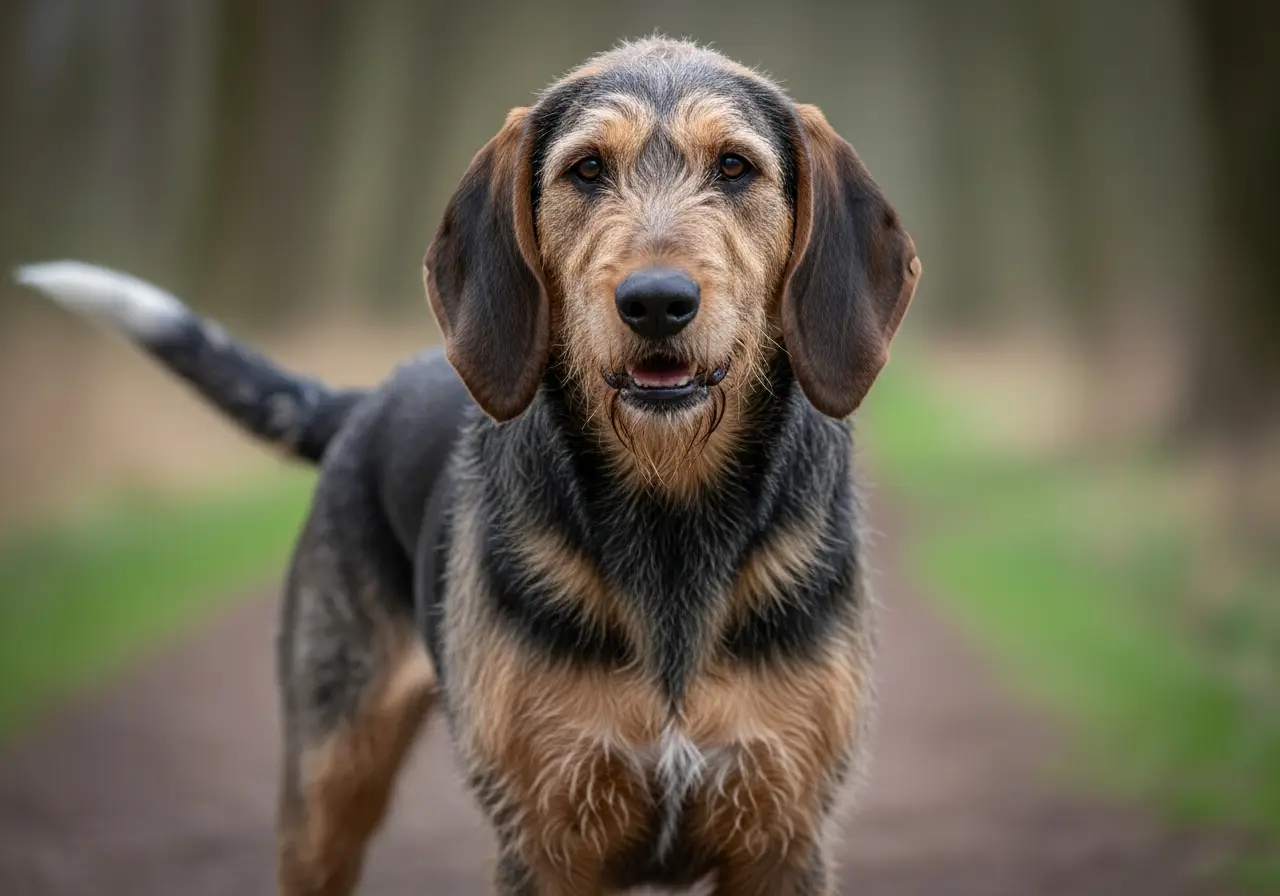
The Otterhound is a large, rough-coated British scenthound with an exceptional nose and a genuine passion for water. It is considered one of the rarest dog breeds in the world. Its exercise needs are high, its prey drive is genetically deeply rooted, and it is highly independent. Anyone keeping one requires experience with hounds, secure grounds, and at least two hours of active stimulation daily, including nose work.
02Introduction
What makes the Otterhound special
Otterhound: one of the rarest dog breeds worldwide, water-loving with dense curly coat from Great Britain
03Profile
Key facts and suitability
- Origin
- Grossbritannien
- Original purpose
- Otter hunting
- FCI
- No. 294 · Group 6 · Sektion 1.1: Große Laufhunde. Ohne Arbeitsprüfung.
- height at the withers
- 60–68 cm
- Weight
- 30–52 kg
- Life expectancy
- 10–13 Years
- Coat type
- Gelockt
- Minimum exercise
- 90 min/day
- Puppy price
- 2'000–3'000 CHF
- Waiting period
- 6 months
- Sports
- Swimming Scent work Mantrailing
04Temperament
How the Otterhound shows up in everyday life
On the morning walk, the Otterhound shows what it is: as soon as an interesting scent trail crosses its path, it lowers its head, its nose works at full capacity, and the rest of the world hardly exists for it anymore. This focus on olfactory information is not a obedience problem; it is genetically programmed working behaviour.
Internally, the Otterhound requires intensive mental stimulation through scent work every day. A walk without a search task is not sufficient. Mantrailing, tracking work, or structured nose games are not extras, but basic care. The need for social contact is high: the breed was traditionally kept in packs and seeks closeness to key people as well as to other dogs.
Externally, the Otterhound behaves rather neutrally to reservedly towards strangers, not aggressively, but also not enthusiastically open. This reserve is not a sign of insecurity, but typical hound temperament. Anyone expecting a dog that greets every visitor joyfully will be disappointed.
In everyday life at home, it is calm and balanced, provided it has been sufficiently stimulated. After a long tracking session or an extensive swimming outing, it lies down contentedly. Without this stimulation, it becomes restless, vocal, and inventive in occupying itself, which is rarely in the owner's interest.
Vocalisation is another everyday characteristic that must not be underestimated. The Otterhound possesses a deep, carrying voice, which it knows how to use. In multi-storey buildings or densely populated residential areas, this regularly leads to conflicts.
05Needs
What this breed needs daily
The Otterhound requires at least 120 minutes of active exercise daily, and this does not mean leisurely strolling, but movement with purpose. Tracking work, mantrailing, swimming, or extensive cross-country runs correspond to its working profile. At least one of these sessions should contain scent work daily, as olfactory stimulation is just as important for this breed as physical exhaustion.
Water is not a bonus, but a central element of species-appropriate keeping. The Otterhound is anatomically built for water work: oily coat, webbed feet, enormous endurance in wet conditions. Regular access to a body of water (stream, lake, river) belongs to the basic equipment of a suitable owner environment.
Securely enclosed land is non-negotiable. A fence that withstands a large, enduring hound with a pronounced prey drive must be dimensioned accordingly: at least 180 cm high, without possibility of digging underneath. Off-leash running in unsecured terrain is only justifiable in fully fenced areas.
Mentally, the Otterhound requires tasks that correspond to its scenting performance. Simple obedience exercises are not sufficient. Tracking dog sport (FH), mantrailing, or comparable scent work sports offer the necessary cognitive depth.
The need for social contact is high. Being left alone for more than four hours is stressful for this breed and should remain the exception. A second dog in the household can partially cover the need for social contact, but does not replace active interaction with the owner. Structured training with calm, consistent communication is necessary daily.
Exercise
Very high
mental work
A lot
Social needs
Medium
training
Demanding
06Sport & Mental and Physical Stimulation
What sports the Otterhound is suited for
Realistic in terms of physiology and genetics – not every breed suits every sport.
Structurally and physiologically suitable: Suitable for mantrailing, dummy work and tracking · CaniCross / bikejoring possible.
07Quick Check
08Suitability
Who this breed is suitable for – and who it isn't
✓Matches
The Otterhound suits owners with proven experience in handling hounds or hunting dogs. Anyone who has already handled a Beagle, Bloodhound, or similar breeds and knows the characteristics of independently working dogs brings an important foundation.
The breed is suitable for owners who can plan at least two hours of active stimulation daily, including scent work and swimming if possible. A house with a securely enclosed garden and access to bodies of water or extensive terrain is almost mandatory.
Families with older children from about ten years old, who actively participate in dog sports and understand the dog as a working partner, can live well with the Otterhound. The prerequisite is that all household members communicate consistently and uniformly with the dog.
Owners who actively practice tracking dog sport, mantrailing, or comparable scent work disciplines, or are willing to learn them, find an exceptionally capable partner in the Otterhound. The breed is suitable for people who enjoy a dog that thinks independently and does not function on command.
×Doesn't match
The Otterhound does not suit owners keeping a dog for the first time. The combination of high exercise needs, pronounced prey drive, and independence regularly overwhelms owners without prior experience with hounds.
The breed is not suitable for owners who are away from home for more than four hours daily and cannot organise reliable care. The high need for social contact of the Otterhound is incompatible with long periods alone.
Anyone who interprets the Otterhound's reserve towards strangers as a training problem and expects an openly friendly dog that warmly welcomes every visitor will be permanently dissatisfied with this breed. The external reaction to strangers is typical of the breed, not a training deficit.
City dwellers without access to securely enclosed free land and bodies of water should avoid this breed. Also, owners who consider scent work an optional hobby underestimate the basic needs of the Otterhound. Anyone looking for a calm companion dog for short walks will not find the right profile in this breed.
10Line reality
Show line, working line, breeder market
Today, the Otterhound exists practically exclusively as a breed without an active working line in the original sense. With the ban on otter hunting in Great Britain in 1978, the only basis for selection based on working performance disappeared. Since then, the breed has been bred primarily as a show and companion dog, with the preservation of the breed taking precedence given the extremely small world population.
A formal separation into show lines and working lines, as exists in other hunting dog breeds, is not documented for the Otterhound. Breeding is concentrated in a few countries, mainly Great Britain and the USA, with very low litter numbers per year.
For interested parties in the German-speaking region, this means: there is no regional line differentiation. Breeders are rare, waiting times are long, and selection is limited to a few available litters worldwide. Anyone looking for an Otterhound with a particular focus on nose work sports must communicate directly with breeders and ask about the working background of the parent animals, even though formal working trials for this breed are not prescribed according to the FCI standard.
11Health · Reality
What you need to plan for medically with your Otterhound
The Otterhound has a life expectancy of an average of 10 to 13 years, whereby the small data base due to the small world population entails limitations in statistical significance.
As a large breed, the Otterhound carries an increased risk of hip dysplasia (HD). The Orthopedic Foundation for Animals (OFA) maintains an evaluation database for the Otterhound; there, HD findings appear in a relevant proportion of the examined animals, which is why an HD X-ray of both parent animals before breeding is considered a minimum standard. Reputable breeders disclose OFA or BVA results.
Epilepsy is documented as a breed-typical health risk in the Otterhound. Owners should actively ask the breeder about the history of epilepsy in the line. First seizures often occur between the second and fifth year of life.
The long, folded ear flaps predispose to ear infections (otitis externa). Weekly ear checks and cleaning after every contact with water are necessary preventive measures. Chronic ear problems can lead to permanent damage without consistent care.
The oily coat tends towards skin irritation after frequent contact with water if it is not sufficiently dried and cared for. Regular skin checks under the dense undercoat are recommended.
Recommended preventive examinations include: HD X-rays from 12 months of age, annual ear checks by the vet, and eye examinations in puppyhood. Overweight is a real risk for this breed as soon as movement decreases with age; calorie intake must be adjusted accordingly.
12Structured data
Health by the numbers
Prone to diseases
Hip dysplasia Blood clotting disorders
Recommended health tests
Hip X-ray Blood clotting test
13Myths ↔ Reality
What is often said incorrectly about this breed
Five myths, five realities, five sources.
"Due to its friendly nature, the Otterhound is an uncomplicated family dog for beginners.
Although the Otterhound displays a balanced, friendly temperament, it is a genetically driven scenthound oriented towards independent hunting work. Its pronounced prey drive, endurance, and independence require experience in handling scenthounds. Without consistent leadership and daily stimulation, behavioural problems arise. The breed is not suitable for owners without prior knowledge of scenthounds.
"The shaggy coat of the Otterhound cares for itself and requires little effort.
Although the rough, oily wire hair of the Otterhound protects it in water, it tends to mat and carries dirt and moisture deep into the undercoat after swimming. Regular brushing, checking the long feathering for inflammation, and care after every contact with water are necessary. Neglected care leads to skin problems and ear infections.
"A large garden replaces the daily walk for an Otterhound.
Although a secure area is indispensable for the Otterhound, it does not replace active stimulation. The breed was developed for multi-hour hunting expeditions and requires at least 120 minutes of guided exercise and targeted nose work daily. A garden alone leads to under-stimulation, which can manifest as barking, digging, or restlessness.
"Due to its rarity, the Otterhound is particularly healthy and free from hereditary diseases.
Small gene pools increase the risk of recessive hereditary diseases, not the other way around. Hip dysplasia (HD) and epilepsy are documented as breed-specific health risks in the Otterhound. The low number of puppies worldwide makes comprehensive health data collection difficult. Reputable breeders conduct HD X-rays and epilepsy screening and disclose the results.
"The Otterhound follows reliably because it is a friendly, people-oriented dog.
Friendliness towards people and reliable recall under prey drive are two different behavioural levels. The Otterhound works highly independently on the scent trail and ignores the owner's signals once it has picked up a scent. A reliable recall requires years of consistent training and is not guaranteed under strong drive pressure.
14animal welfare
The animal welfare perspective
Breeder market, designer versions, animal shelter reality — what no one writes in the puppy ad.
The Otterhound occupies a special position in the context of animal welfare: it is one of the rarest dog breeds worldwide, practically never appears in shelters or placement platforms, and is not served by any significant backyard breeder market. This sounds positive at first, but carries its own risks.
The extreme rarity of the breed means that gene pool protection is the top priority for reputable breeders. Anyone buying an Otterhound shares responsibility for the survival of an endangered breed. This significantly increases the duty of care when choosing a breeder.
Because demand far exceeds supply, entry points arise for unscrupulous providers who import puppies from abroad or sell crossbreeds as purebred Otterhounds. Caution is advised without a pedigree from a recognised breeding association (VDH, SKG, Kennel Club UK) and without accessible health results of the parent animals.
Breeding-related problems in the sense of cruel breeding characteristics are not documented for the Otterhound. The breed is not brachycephalic, not bred to be excessively large, and not selected for extreme physical traits. This is a genuine advantage over many modern breeds.
However, the living conditions present a real animal welfare problem: an Otterhound kept in a city apartment without sufficient stimulation suffers from chronic under-stimulation. Behavioural problems, vocalisation, and destructiveness are the result, and lead to rehoming in some cases. Anyone seriously considering the breed should honestly assess whether their own living conditions can permanently meet the exercise and nose work needs.
Adoption via specialised hound rescue organisations is rare, but should be considered as an equal option. Contacts with breed club networks can help to find the few available dogs.
15Costs · Transparency
What this breed realistically costs
An Otterhound puppy from a reputable breeder recognised by the VDH or Kennel Club usually costs between 1,500 and 2,500 EUR, in individual cases even more, depending on the line, health tests of the parent animals, and availability. Offers significantly below this price range without verifiable health documentation are a warning sign.
The annual living costs for an adult Otterhound are estimated at 2,000 to 3,500 EUR. High-quality food for a large, active dog amounts to 800 to 1,400 EUR per year. Grooming, including occasional professional care, costs an additional 200 to 400 EUR annually.
Basic veterinary care (vaccinations, parasite prevention, annual check-up) amounts to 300 to 600 EUR per year. Unforeseen treatments, particularly for ear infections or joint problems, can exceed this amount considerably. A dog health insurance policy or a health budget of at least 1,000 EUR per year as a reserve is recommended.
Dog sport costs (scent hound courses, mantrailing seminars) are added and are not optional expenses for this breed, but part of species-appropriate keeping.
16Puppy search
What you need to consider when choosing a breeder
- Due to the extreme rarity of the Otterhound, finding a puppy is more involved than with common breeds.
- The first point of contact are the national umbrella organisations: the VDH in Germany and the SKG in Switzerland maintain affiliated breeding clubs and can facilitate contacts with reputable breeders.
- For the Otterhound, direct contact with the Kennel Club (UK) and the Otterhound Club of America is also recommended, as most active breeders are based in Great Britain and the USA.
- A reputable breeder discloses pedigrees, OFA or BVA results for HD, and epilepsy documentation of the parent animals.
- They allow a visit to the litter, show both parent animals, or explain convincingly why one parent is not on site.
- Waiting lists of one to two years are normal for this breed; no breeder who can deliver immediately is automatically reputable.
- Adoption as an equal option: Specialised hound rescue organisations or breed club networks occasionally place adult Otterhounds.
- An adult dog with a known character and health status can be a very good choice for experienced owners.
- No named breeder recommendations; the breed club networks provide contacts directly.
FAQ
Frequently asked questions about the Otterhound
Is Otterhound a family dog?
Otterhound is considered suitable for families with good socialisation and species-appropriate care.
How much exercise does Otterhound need?
At least around 90 minutes of exercise per day. As an active breed, more so — plus mental stimulation.
Does Otterhound suit an apartment?
With enough exercise and enrichment, Otterhound can also be kept in an apartment.
What is the size and weight of Otterhound?
Fully grown, Otterhound reaches about 60–68 cm at the withers and weighs around 30–52 kg.
What is the life expectancy of Otterhound?
The life expectancy of Otterhound is approximately 10–13 years.
Which diseases are common in Otterhound?
Hip dysplasia Blood clotting disorders
17Breed clubs
Official breed clubs in DACH
19Related
Similar breeds – and their differences
You might also be interested in
Participate
Do you have a good photo of your Otterhound?
We are looking for expressive images for our breed profiles. Submit yours; the editorial team reviews every submission before publication.
Does this breed suit you?
Rare British breed – robust, loves swimming and family-friendly with sufficient mental and physical stimulation