
01Summary
In a paragraph
If you only have 30 seconds.
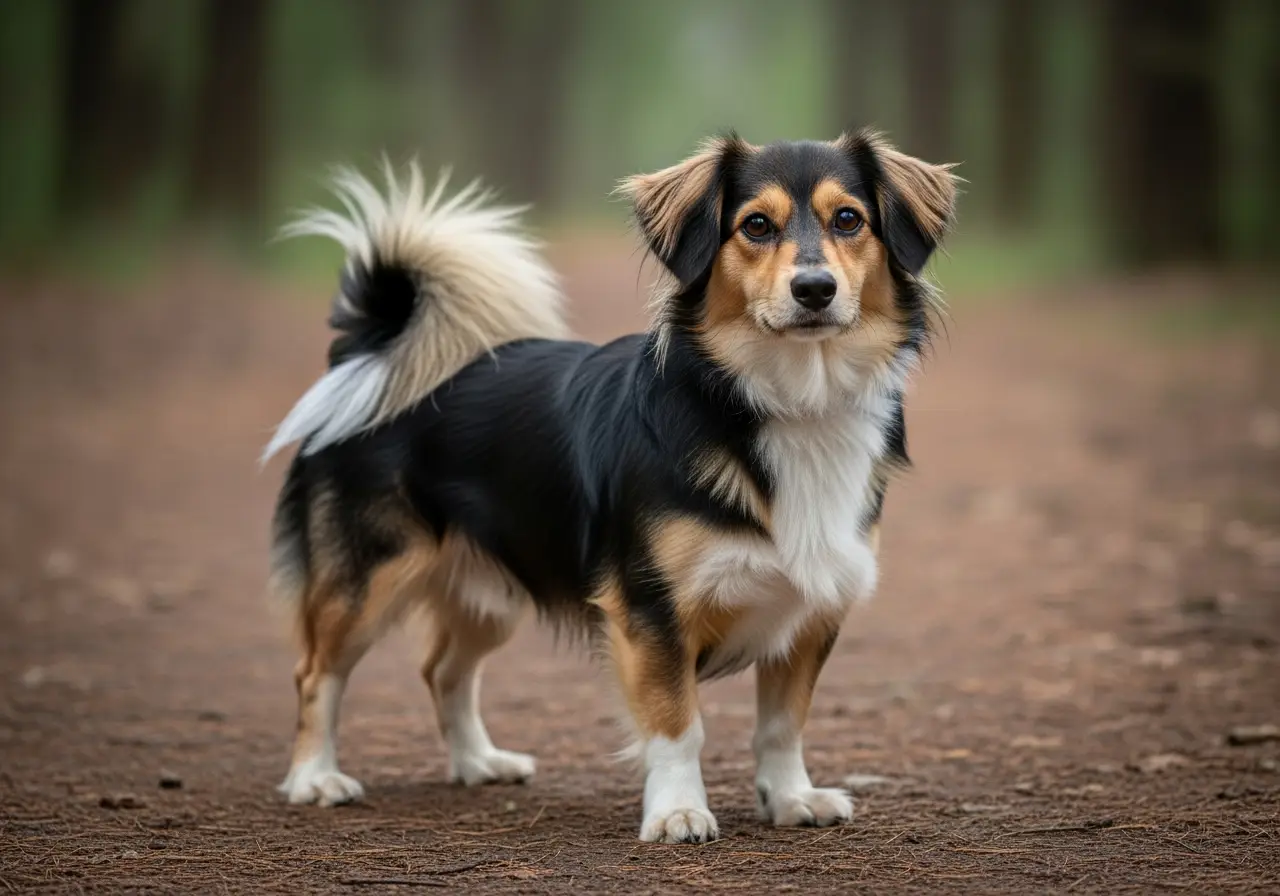
The Kokoni is a regionally developed Greek companion dog with a robust constitution and an alert temperament. It bonds closely with its key people, demands clear daily structure and reacts sensitively to inconsistent guidance. Anyone who expects it to be a passive lapdog underestimates it. Anyone who provides it with exercise, mental work and reliable rules receives a long-lived, character-strong companion.
02Introduction
What makes the Kokoni special
The Kokoni is a rare Greek small dog, FCI Group 9, robust and long-lived, withers height 20–28 cm.
03Profile
Key facts and suitability
- Origin
- Griechenland
- Original purpose
- Companion dog, pet
- height at the withers
- 20–28 cm
- Weight
- 3–5 kg
- Life expectancy
- 13–16 Years
- Coat type
- Long-haired
- Minimum exercise
- 20 min/day
- Puppy price
- 1'000–2'000 CHF
- Waiting period
- 9 months
- Sports
- Agility · Obedience · Tricks
04Temperament
How the Kokoni shows up in everyday life
When you come home, the Kokoni announces itself, not hysterically, but clearly. It registers changes in its environment and communicates them. This is not a flaw, but an expression of its alert basic attitude.
In everyday life, it actively seeks proximity to its key people. It follows you through the apartment, positions itself within sight, and makes contact when it wants attention. At the same time, it remains independent enough not to demand confirmation for every movement, a difference from more clingy small dog breeds.
Towards strangers, it initially behaves in a wait-and-see manner. The external axis value for friendliness towards strangers is 4 out of 5, which means: it is fundamentally open but requires a short orientation phase. Anyone who greets it intrusively right away will meet with reserve. Anyone who gives it space will be accepted after a few minutes.
Internally, it shows a clear need for social contact (value 3 out of 5). This means concretely: it requires genuine daily interaction, walks with nose work, short training sessions, or search games. Mere presence without enrichment is not enough.
With conspecifics, it is compatible given good socialisation. It works in multi-dog households if the settling-in period is structured. It gets along well with children, provided that handling is respectful; it does not tolerate sustained overstimulation and would rather withdraw than escalate. This signal should be taken seriously.
05Needs
What this breed needs daily
The Kokoni requires 45 to 60 minutes of active exercise daily. This means not just walks, but movement with stimulation: sniffing courses, varying routes, occasional free running on secure terrain. Monotonous walks without variety only partially meet its needs.
Its mental workload requirement is moderate (value 2 out of 5). Two to three short training sessions per week (nose work, simple search tasks, impulse control exercises) are sufficient to keep it mentally occupied. Extensive dog sport programmes are not necessary, but short thinking tasks in everyday life make a noticeable difference in its behaviour.
It tolerates being left alone for up to about four hours if this has been built up gradually. Anyone who consistently accustoms it to short separation phases from the start creates a stable basis. Anyone who neglects this risks restlessness or barking in your absence.
Social proximity is no luxury for it. It requires genuine daily contact with its key people, not just physical presence, but active interaction. This can be a joint game, a training session, or a quiet evening with physical contact.
A clear daily structure is its foundation. Fixed feeding times, reliable walk times, and consistent rules in the house give it orientation. Without this structure, it tends towards increased alert behaviour, not out of malice, but because it compensates for uncertainty through activity.
Exercise
Low
mental work
Something
Social needs
Medium
training
Easy
07Quick Check
08Suitability
Who this breed is suitable for – and who it isn't
✓Matches
The Kokoni suits individuals or families who can devote at least 60 minutes daily to active enrichment and are regularly present at home. Anyone working from home or with flexible working hours meets its need for social contact well.
Families with children from about 7 years old are suitable if the children are guided in handling dogs and understand calm interaction. The Kokoni tolerates lively households but requires a retreat space that it can access itself.
Experienced first-time owners with a willingness for consistent training are suitable, provided they inform themselves in advance about small dog-typical leadership errors (coddling, lack of boundaries) and work together with a supporting dog training school.
Active seniors or couples of retirement age who integrate regular walks into their daily routine and spend a lot of time at home fit its profile well. Its moderate exercise requirement and body size make it practical in this life phase.
Anyone living in an apartment without a garden can keep a Kokoni, provided that daily outings outdoors and nose work are firmly planned into everyday life. A garden is an advantage, but not a prerequisite.
×Doesn't match
The Kokoni is not suitable for people who are regularly away from home for more than four hours a day and cannot organise reliable dog care. Its need for social contact is real; long periods alone without training to build up tolerance lead to restless behaviour.
Anyone looking for a completely passive companion that occupies itself and requires no guidance underestimates this breed. The Kokoni responds to a lack of structure with alerting behaviour and can make its own decisions in unclear situations, which can be disruptive in everyday life.
Households with very young children under 5 years old, where no quiet retreat for the dog can be guaranteed, should be viewed critically. The Kokoni withdraws when overstimulated; if this retreat is missing, stress levels rise.
People who want to keep a dog without prior experience and without willingness to attend a dog training school should not underestimate the sensitivity of this breed to inconsistent guidance. Small dogs are often misjudged; anyone who equates "small" with "undemanding" does the Kokoni no favours.
Anyone seeking the rarity of the breed as a status symbol and willing to buy from questionable sources should know: dubious imports from Greece without complete health documentation are a real risk for this breed.
10Line reality
Show line, working line, breeder market
The Kokoni does not have an established line differentiation in the sense of working and show lines, as is known with retriever or herding dog breeds. As a naturally occurring type without decades of targeted performance breeding, there are no documented field trial or working line branches.
Breeding has focused on type preservation and health since the official standardisation by the Greek Kynological Association (KOE) and provisional FCI admission in 2014. The breeding goal is a robust, temperamentally balanced companion dog, not a specialist for sport or protection.
In the DACH region, the breeding base is so small that line differentiation is practically unobservable. Interested parties mostly encounter dogs from Greek breeding facilities that follow the FCI Provisional Standard, and occasionally dogs from animal welfare contexts without papers. The latter may vary in body structure and do not necessarily correspond to the breed standard; this should be taken into account when selecting a dog, but it is not a quality feature per se.
11Health · Reality
What you need to plan for medically with your Kokoni
The Kokoni is considered a healthily robust breed with a documented life expectancy of 13 to 16 years. This range is based on information from the Greek Kynological Association (KOE) and aligns with experience values from Greek breeding facilities.
As a naturally occurring type without extreme breeding traits, breed-typical extreme burdens such as brachycephaly or exaggerated body proportions are absent. Nevertheless, known risk areas exist for small dogs of this size class:
Patellar luxation occurs frequently in small dog breeds. According to a study by the Hannover Veterinary School (2012), the prevalence in small dogs ranges between 7 and 24 percent depending on the breed. No breed-specific surveys exist for the Kokoni, but an orthopaedic basic examination at purchase and as part of annual preventive care is nevertheless recommended.
Dental problems (tartar, malocclusions) are common in small dogs with a narrow jaw ratio. Regular dental checks by the vet, at least once a year, as well as getting used to dental care from puppyhood reduce the risk.
Overweight is an underestimated risk in small dogs kept as companion animals. Already 10 percent overweight measurably burdens joints and heart function (Source: British Veterinary Association, 2020). Calorie management and regular weight monitoring are mandatory.
Preventive examinations: annual general examination, dental check, weight measurement, orthopaedic assessment in case of lameness. Breeders should have had parent animals examined for patellar luxation.
12Structured data
Health by the numbers
Prone to diseases
No known breed-typical hereditary diseases, very robust
Recommended health tests
No specific mandatory examinations
13Myths ↔ Reality
What is often said incorrectly about this breed
Five myths, five realities, five sources.
"The Kokoni is a typical lap dog, it lies on the sofa all day.
The Kokoni needs 45 to 60 minutes of active exercise and mental enrichment daily. Without sufficient stimulation, it develops restless behaviour or increased barking. Its need for exercise is moderate but real; no dog of this breed gets by with pure apartment atmosphere without activity.
"Small dogs do not need training, the Kokoni regulates that itself.
The Kokoni reacts sensitively to missing structure. Without clear rules, it tends towards increased alert behaviour and can develop leadership behaviour towards visitors. Consistent, calm training from the first day is not an option, but a prerequisite for a balanced life together.
"The Kokoni is easy to leave alone, it is small and undemanding.
The Kokoni has a pronounced need for social contact (axis value 3 out of 5). It tolerates being alone only up to about four hours if this has been built up gradually. Anyone who is regularly away from home for longer than four hours must plan a reliable care solution.
"As a Greek street dog, the Kokoni is robust and requires hardly any veterinary preventive care.
Even naturally occurring breeds are not free from health risks. In the Kokoni, patellar luxation and dental problems have been documented. Regular preventive examinations, dental checks, and weight management are just as necessary for this breed as for other small dogs.
"The Kokoni is rare, so you have to buy it abroad; animal welfare is not a real option.
While there are hardly any breeding facilities in the DACH region, reputable animal welfare organisations in Greece also facilitate the rehoming of Kokonis or similar local small dogs. Rehoming through an animal welfare organisation from the country of origin is an equally valid option, provided that health checks and entry documents are complete.
14animal welfare
The animal welfare perspective
Breeder market, designer versions, animal shelter reality — what no one writes in the puppy ad.
The Kokoni is an exceptionally rare breed in the German-speaking region. This rarity protects it from the mass market so far, but carries its own risks.
Backyard breeder market and dubious imports
Because demand exceeds local supply, grey areas arise: dogs without complete papers, without health examinations of the parent animals and without veterinary entry documentation are offered from Greece via social media and classifieds portals. An offer without FCI pedigree proof, without evidence of patella examination of the parents and without a complete EU pet passport is a warning signal, regardless of how sympathetic the contact seems.
Designer versions and name misuse
The term "Kokoni" is occasionally used for non-standardised small dogs from Greece that do not meet the breed standard. This is not an automatic quality problem, but interested parties should know that they may not be acquiring a purebred dog in the FCI sense. Anyone who chooses this consciously makes an informed decision. Anyone expecting a purebred dog should request papers.
Animal welfare as an equally valid option
Greek animal welfare organisations regularly rehome small local dogs that are similar to or match the Kokoni type. Rehoming through reputable organisations with complete health documentation, vaccination records and entry papers is an equivalent alternative to buying from a breeder. The decision lies with the owner; both paths are legitimate provided the documentation is in order.
Obesity and keeping errors
Small dogs kept as companions are disproportionately often affected by overweight. For the Kokoni, which is kept as an adaptable house dog, the risk is real. Anyone who keeps their dog as a lapdog without sufficient exercise harms it, not out of malicious intent, but due to underestimating its actual needs.
15Costs · Transparency
What this breed realistically costs
A Kokoni puppy from a reputable breeding facility affiliated with the KOE or VDH costs between 1,200 and 2,000 EUR in the DACH region. Imports directly from Greece via reputable breeders fall within a similar range, plus transport costs of 150 to 400 EUR depending on the route.
Offers significantly below 800 EUR without papers and health certificates are a warning sign for backyard breeding or pet smuggling.
Annual running costs for a Kokoni (approx. 4–5 kg body weight) realistically amount to:
- Food: 300–500 EUR/year (quality dry food or wet food)
- Vet basic care (vaccinations, preventive care, deworming): 200–350 EUR/year
- Care (coat, claws, dental care): 100–200 EUR/year
- Dog training school/training: 200–400 EUR in the first year
Pet insurance for a small dog costs between 30 and 70 EUR/month depending on the provider and scope of coverage (as of 2024, comparison portals DACH). With a life expectancy of 13–16 years and possible orthopaedic interventions (patellar luxation: surgery 800–2,500 EUR per joint), financial protection is sensibly calculable.
16Puppy search
What you need to consider when choosing a breeder
- Reputable Kokoni breeders in the DACH region are rare.
- Anyone looking for a puppy should expect waiting times of a year or more.
- This is not a disadvantage; it protects against impulse purchases.
- Characteristics of a reputable source: The breeder is registered with the VDH, ÖKV, SKG or directly with the Greek KOE.
- The parent animals have been examined for patellar luxation and the results are documented.
- Puppies leave the breeding facility no earlier than eight weeks of age, are vaccinated, dewormed and equipped with an EU pet passport.
- The breeder asks questions about the planned daily routine and answers counter-questions fully.
- Warning signs: No proof of pedigree, no evidence of health examinations of the parents, immediate availability of multiple litters, sale via classifieds portals without personal contact.
- Animal welfare rehoming from Greece is an equivalent option.
- Reputable organisations provide complete entry documents, vaccination records and veterinary certificates.
- A dog from animal welfare may require more settling-in time; this is not a defect, but a different starting situation that can be well supported with patience and structure.
FAQ
Frequently asked questions about the Kokoni
Is Kokoni suitable for beginners?
Kokoni is considered suitable for first-time dog owners.
Is Kokoni a family dog?
Kokoni is considered suitable for families with good socialisation and species-appropriate care.
How much exercise does Kokoni need?
At least around 20 minutes of exercise per day.
Does Kokoni suit an apartment?
With enough exercise and enrichment, Kokoni can also be kept in an apartment.
What is the size and weight of Kokoni?
Fully grown, Kokoni reaches about 20–28 cm at the withers and weighs around 3–5 kg.
What is the life expectancy of Kokoni?
The life expectancy of Kokoni is approximately 13–16 years.
Which diseases are common in Kokoni?
No known breed-typical hereditary diseases, very robust
17Breed clubs
Official breed clubs in DACH
19Related
Similar breeds – and their differences
You might also be interested in



Participate
Do you have a good photo of your Kokoni?
We are looking for expressive images for our breed profiles. Submit yours; the editorial team reviews every submission before publication.
Does this breed suit you?
Rare Greek small dog. Lively and long-lived. Hardly known in D-A-CH.