
01Summary
In a paragraph
If you only have 30 seconds.
The American Pit Bull Terrier is an athletic, human-oriented dog without FCI recognition and with considerable legal baggage. It demands an experienced primary caregiver who provides 60 to 90 minutes of intensive exercise daily, structured training, and a secure environment. Anyone who does not clarify the restricted breed regulations in their respective federal state or canton in advance risks a ban on keeping or surrendering the dog to an animal shelter.
02Introduction
What makes the American Pit Bull Terrier special
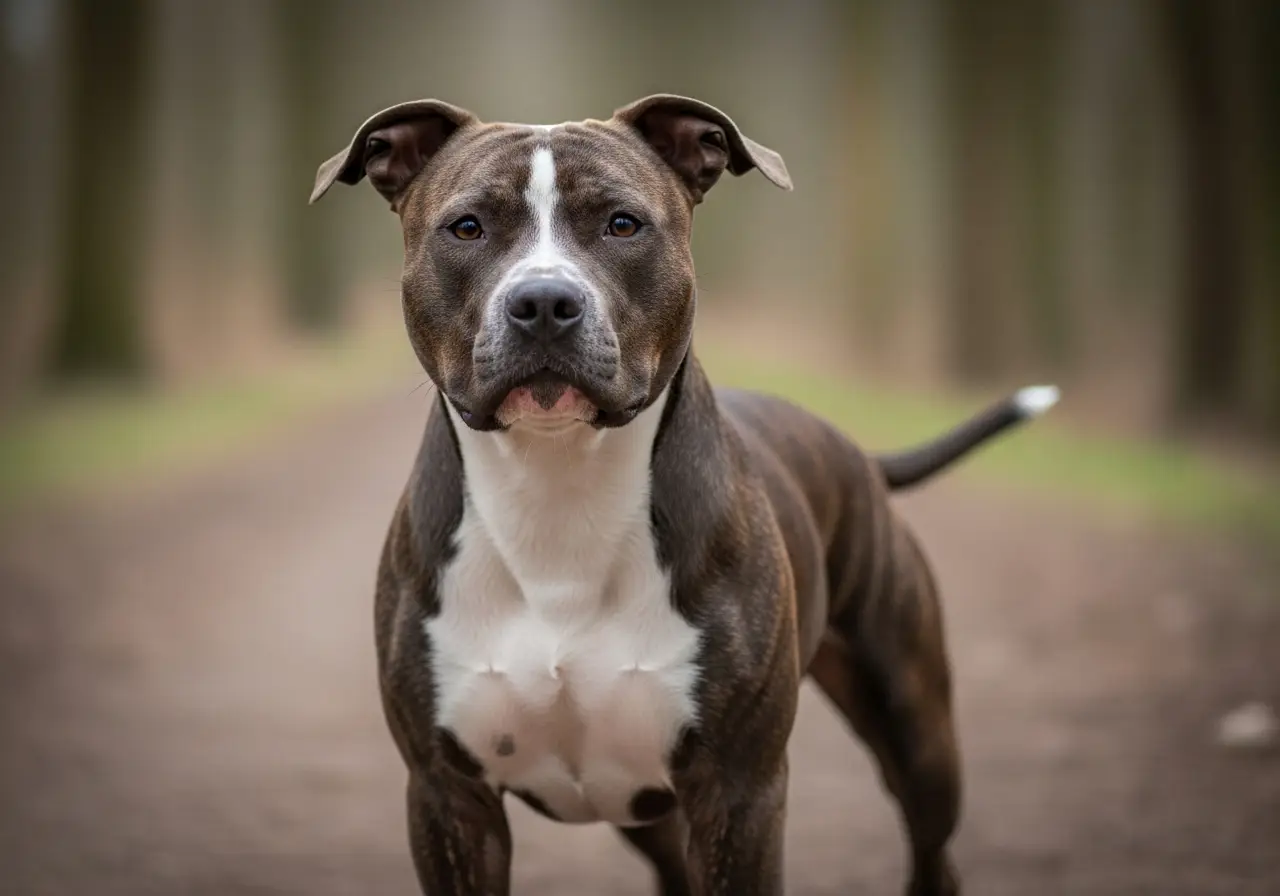
The American Pit Bull Terrier is a US terrier not recognised by the FCI, classified as a restricted breed in the D-A-CH region, with a withers height of 43–53 cm.
03Profile
Key facts and suitability
- Origin
- USA
- Original purpose
- Dog fighting (historically), today companion dog
- height at the withers
- 43–53 cm
- Weight
- 14–27 kg
- Life expectancy
- 12–16 Years
- Coat type
- Short-haired
- Minimum exercise
- 90 min/day
- Puppy price
- 500–2'000 CHF
- Waiting period
- 3 months
- Sports
- Agility · Obedience · Weight Pulling · Schutzhund
04Temperament
How the American Pit Bull Terrier shows up in everyday life
When you come home, the American Pit Bull Terrier greets its primary caregiver with full body engagement, tail wagging, leaning in, direct eye contact. This human-orientation is a central internal characteristic of the breed: the dog actively seeks closeness, reacts to mood changes in the household and is strongly oriented towards its primary caregiver. A need for social contact of 4 out of 5 means in practice: long periods alone are stressful for this dog.
On the external axis, i.e. in behaviour towards strangers, a different picture emerges. Towards unknown people, a well-socialised Pit Bull usually behaves neutrally to attentively, rarely overly openly. Guarding behaviour is present but not in the foreground. This combination (strong bond with the family, more reserved attitude towards strangers) is often misunderstood. Intense family bonding does not automatically mean openness to every visitor.
Behaviour towards other dogs varies considerably depending on the line and socialisation. Dog compatibility is not automatic in this breed. In everyday life, this means: off-leash exercise in mixed groups requires observation, encounters with unknown dogs are better structured than left to chance.
On a walk, the dog shows high endurance and pulls on the lead if loose-leash walking has not been actively trained. Mental work, such as nose work or training sequences, noticeably reduces overall tension. A dog that has done 20 minutes of nose work in the morning will be calmer on the lead in the afternoon.
05Needs
What this breed needs daily
The American Pit Bull Terrier requires 60 to 90 minutes of intensive exercise daily, not a walk, but stimulation: running, fetching, structured play or pulling work (weight pull). In addition, there are at least two shorter sessions for loose-leash walking and everyday training.
Mental stimulation is not a bonus, but a basic need. The need for mental work is 4 out of 5: nose work, search games, training sequences with clear tasks or trick training belong in the weekly plan. A dog that is physically stimulated but cognitively under-challenged develops frustration patterns, chewing, barking, restlessness.
Being left alone can be trained, but is not self-evident. The maximum guideline is about four hours if the dog has been gradually accustomed to being alone. Longer absences without preparation or a care solution are incompatible with the need for social contact of this breed.
Structure in everyday life is not drilling, but orientation. The dog reacts to clear, consistent signals, not to harshness, but to reliability. Inconsistent boundaries create uncertainty, which manifests itself in testing behaviour.
A secure environment is necessary: fences with sufficient height (min. 1.80 m), secured gates, no unsupervised off-leash exercise in multi-dog households without knowledge of the dog dynamics. Legal requirements (leash requirement, muzzle requirement depending on the state) are part of everyday life and must be planned for, not as an exception, but as the norm.
Exercise
High
mental work
A lot
Social needs
High
training
Demanding
06Sport & Mental and Physical Stimulation
What sports the American Pit Bull Terrier is suited for
Realistic in terms of physiology and genetics – not every breed suits every sport.
Structurally and physiologically suitable: CaniCross / bikejoring possible.
07Quick Check
08Suitability
Who this breed is suitable for – and who it isn't
✓Matches
The American Pit Bull Terrier suits owners with proven experience in handling dogs with strong drives and high physical performance. Anyone who has already successfully handled a dog with a high need for movement and structure brings an important prerequisite.
A suitable household provides at least 90 minutes of active stimulation daily, divided between exercise and mental work. Working owners who leave the dog alone for a maximum of four hours and organise reliable care solutions for longer absences can meet this requirement.
Families with children aged around ten or older are possible, provided there are clear rules for handling the dog and adults take charge. Younger children and a dog of this body weight and drive strength require constant supervision.
Owners living in a federal state or canton with mandatory permits must plan for proof of competence, temperament tests, and increased liability insurance, and accept these requirements as an integral part of keeping the dog, not as a one-off hurdle.
Those interested in dog sports (weight pull, protection work, nose work) will find a performance-ready partner in this breed, provided the training is professionally guided.
×Doesn't match
The American Pit Bull Terrier is not suitable for owners who are handling a dog for the first time. The combination of high drive strength, physical power, and variable social behaviour towards conspecifics demands experience, not just good will.
Anyone who is away from home for more than four hours a day and cannot organise care arrangements will not meet the need for social contact of this breed. A dog left alone permanently develops behavioural problems that are difficult to correct afterwards.
Owners who understand "cuddle dog" and "open to everyone" as synonyms will be surprised by reality: High human-relatedness towards the family does not automatically mean openness towards strangers or compatibility with other dogs. Anyone who confuses these two axes plans everyday situations incorrectly.
In federal states with a ban on keeping, such as Bavaria or Hamburg, keeping the dog without an exemption permit is legally impossible. Anyone who does not clarify the legal situation in advance or perceives legal requirements as disproportionate should choose another breed.
Households with multiple cats or small dogs require special caution: hunting and prey drive vary individually but are pronounced in working lines. Unsupervised contact is not a calculable risk.
10Line reality
Show line, working line, breeder market
The American Pit Bull Terrier does not have a uniform FCI breeding line. Instead, several parallel breeding traditions with different focuses exist.
The ADBA line (American Dog Breeders Association) is based on the athletic working dog: slender, muscular build, high endurance, pronounced drive strength. These dogs were historically bred for weight pulling and protection work. The need for movement and mental work is particularly high here.
The UKC line (United Kennel Club) is more broadly defined and also includes companion-dog-oriented breeding. The focus is less on extreme performance and more on character and suitability for everyday life. Nevertheless, drive strength and physical power remain distinctive features.
In addition, so-called "Bully" lines exist, which were selected for extreme muscle mass development and a compact build. These dogs are sometimes marketed as "American Bully", a breed that has been independent since 2004 with its own UKC recognition. Confusion with the American Pit Bull Terrier is common in everyday life and leads to false expectations on both sides.
Anyone looking for an American Pit Bull Terrier should actively ask about the breeder's breeding line and understand what selection stands behind the dog. An ADBA working dog and a UKC companion dog from moderate breeding place different demands on keeping and stimulation.
11Health · Reality
What you need to plan for medically with your American Pit Bull Terrier
The American Pit Bull Terrier is considered a robust breed with a life expectancy of 12 to 14 years. Extreme breeding characteristics such as brachycephaly or exaggerated skin folds are not typical for the breed, which narrows the spectrum of hereditary diseases compared to other popular breeds.
Hip dysplasia (HD) is documented: The Orthopedic Foundation for Animals (OFA) reports an HD prevalence of approximately 16% for the American Pit Bull Terrier (OFA database, status 2023). Elbow dysplasia (ED) occurs less frequently but should be X-rayed in parent animals. Owners should only obtain puppies from litters where both parents are OFA-certified or equivalently certified.
Skin diseases (allergic dermatitis, demodectic mange) occur more frequently in this breed than the breed average. Regular checks of skin and coat, along with high-quality nutrition, reduce the risk. Recurring skin changes warrant a dermatological examination by a vet.
Heart diseases, particularly aortic stenosis, are documented in individual lines. A heart examination of the parent animals by a specialist vet is recommended.
Overweight is a real risk: The dog shows high food motivation and quickly builds up fat mass when lacking exercise, which strains joints and the cardiovascular system. Body weight should be checked regularly; a visible waist and palpable ribs are orientation points.
Preventive examinations: Annual vet checks, HD/ED screening of parent animals, heart examination for lines with known predisposition, skin checks every six months.
12Structured data
Health by the numbers
Prone to diseases
Hip dysplasia, heart problems, skin allergies, thyroid problems
Recommended health tests
Hip X-ray, heart examination
13Myths ↔ Reality
What is often said incorrectly about this breed
Five myths, five realities, five sources.
„The Pit Bull is naturally aggressive towards humans and unpredictable.
Historical breeding practices actively excluded people-aggressive dogs from reproduction, as handlers had direct physical contact with the animals during fights. Temperament tests by the American Temperament Test Society (ATTS) show pass rates of over 86% for the American Pit Bull Terrier, comparable to breeds such as the Golden Retriever. People aggression is not a breed characteristic, but a result of mistreatment, lack of socialisation or pathological breeding.
„Pit Bulls have a jaw locking mechanism that prevents them from letting go.
An anatomical jaw locking mechanism does not exist in the American Pit Bull Terrier. The jaw anatomy does not differ fundamentally from other dogs of comparable size. What is observed is high bite endurance, which goes back to historical selection for stamina, a behavioural and motivational trait, not an anatomical one.
„Raising a Pit Bull as a puppy solves the aggression problem.
Socialisation in puppyhood is important, but does not replace continuous leadership and management. Dog compatibility can change with sexual maturity in this breed, regardless of how the dog was raised. Experienced owners plan multi-dog households and free-run areas accordingly and actively monitor changes in social behaviour.
"The Pit Bull is banned throughout Germany.
There is no nationwide ban on keeping the breed in Germany. Regulations are a matter for the individual states (Länder) and vary considerably: Bavaria, Berlin and Hamburg have extensive bans or strict permit requirements, while other states allow ownership upon proof of expertise and a temperament test. A current review of the relevant state legislation before getting a dog is mandatory (as of 2024).
"A muscular Pit Bull is automatically sufficiently stimulated.
Physical muscle mass is not an indicator of mental stimulation. The American Pit Bull Terrier requires daily cognitive tasks in addition to physical exercise: nose work, training sessions with specific tasks or structured play forms. A physically trained dog that is mentally under-stimulated often develops frustration or destructive behaviour.
14animal welfare
The animal welfare perspective
Breeder market, designer versions, animal shelter reality — what no one writes in the puppy ad.
The American Pit Bull Terrier is one of the breeds most frequently found in German and Swiss animal shelters. The reasons are structural: Many owners underestimate the combination of keeping effort, legal requirements, and societal perception. The result is surrenders that affect the dog, not the owner.
The backyard breeder market is particularly active for this breed. As there is no FCI stud book requirement, entry into breeding is low-threshold. Puppies without health documentation, socialisation, or affiliation to a breeding association are offered on classifieds portals at low prices. Buyers who prioritise price over origin finance structures that systematically subordinate animal welfare.
Designer variants such as the "Pocket Pit" or extreme Bully lines are sometimes equated with the American Pit Bull Terrier or marketed as an evolution of it. In fact, they represent independent breeding directions with their own health risks, including breathing problems due to compact skull structure and joint strain from excessive muscle mass on short limbs. Anyone buying such a dog should be aware of the differences and specifically ask for health certificates.
Problems arising from keeping conditions often stem from lack of exercise and insufficient structure. A dog with high drive and inadequate stimulation develops behavioural patterns that are interpreted as "aggressive", leading to surrender. Obesity caused by overfeeding combined with lack of exercise is another documented problem in households that underestimate the breed's energy requirements.
Adopting from an animal shelter is a fully valid option. Adult dogs from shelters come with an assessable temperament, are often already basic socialised, and benefit from a structured settling-in period. Protection organisations specialising in Pit Bull-type dogs provide professional support during the adoption process and assist in assessing whether the dog and household are a good match.
15Costs · Transparency
What this breed realistically costs
The acquisition costs for a puppy from reputable UKC or ADBA breeding range between 1,200 and 2,500 EUR in Germany and CHF in Switzerland. Offers significantly below this usually originate from backyard breeding without health documentation.
In many federal states, mandatory costs apply: proof of competence (100 to 300 EUR depending on the provider), temperament test (50 to 150 EUR) and increased liability insurance for listed breeds (150 to 400 EUR/year, depending on provider and federal state). These costs are not an exception but a basic requirement of ownership.
Annual living costs amount to approximately 2,000 to 3,500 EUR: High-quality food for a dog of this body mass (25 to 35 kg) costs 600 to 1,200 EUR/year. Care, accessories and dog training school add another 500 to 800 EUR.
Veterinary costs: Basic care (vaccinations, parasite prevention, annual check-up) amounts to 300 to 600 EUR/year. In the case of orthopaedic problems or skin diseases, both documented in the breed, individual treatments can reach 500 to 2,000 EUR. Pet insurance for this breed and size class costs 60 to 120 EUR/month and is a calculable safeguard given the potential treatment costs.
16Puppy search
What you need to consider when choosing a breeder
- The American Pit Bull Terrier is not recognised by the VDH or the FCI.
- Serious breeding takes place through the UKC or the ADBA, both of which maintain stud books and issue pedigrees.
- A puppy without papers from one of these organisations is not a quality feature but a warning sign.
- Serious breeders provide health documents for the parent animals: hip X-rays, eye examinations, and possibly heart examinations.
- They ask questions about the household, experience, and legal situation at the place of residence.
- Anyone who sells a puppy without asking questions operates without a sense of responsibility.
- Caution is advised with offers on classifieds portals without affiliation to a breeding association, very low prices, and puppies given away before the eighth week of life.
- Adoption through animal shelters and rescue organisations is an equally valid option.
- In Germany and Switzerland, there are disproportionately many Pit Bull-type dogs in animal shelters, often because owners underestimated the legal situation or the effort involved.
- An adult dog from adoption comes with an assessable temperament and requires a structured settling-in period.
FAQ
Frequently asked questions about the American Pit Bull Terrier
Is American Pit Bull Terrier a family dog?
American Pit Bull Terrier is considered suitable for families with good socialisation and species-appropriate care.
How much exercise does American Pit Bull Terrier need?
At least around 90 minutes of exercise per day. As an active breed, more so — plus mental stimulation.
What is the size and weight of American Pit Bull Terrier?
Fully grown, American Pit Bull Terrier reaches about 43–53 cm at the withers and weighs around 14–27 kg.
What is the life expectancy of American Pit Bull Terrier?
The life expectancy of American Pit Bull Terrier is approximately 12–16 years.
Which diseases are common in American Pit Bull Terrier?
Hip dysplasia, heart problems, skin allergies, thyroid problems
17Breed clubs
Official breed clubs in DACH
19Related
Similar breeds – and their differences
You might also be interested in
Participate
Do you have a good photo of your American Pit Bull Terrier?
We are looking for expressive images for our breed profiles. Submit yours; the editorial team reviews every submission before publication.
Does this breed suit you?
Not FCI-recognised. In Switzerland and Germany, classified as a restricted breed or banned in many cantons/states. Check the legal situation carefully before getting a dog.