
01Summary
In a paragraph
If you only have 30 seconds.
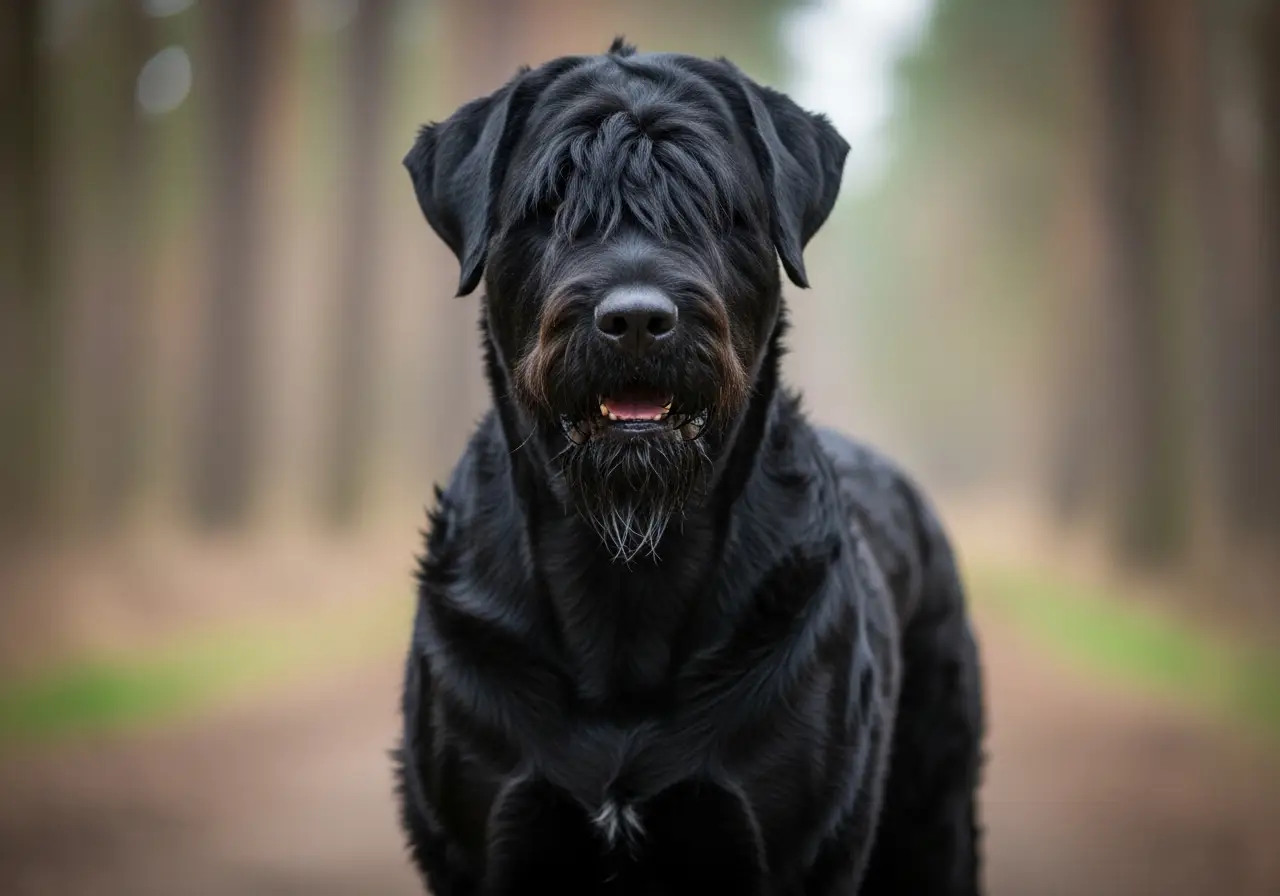
The Russian Black Terrier is not a classic terrier, but a deliberately developed service and guard dog from Soviet military breeding. It exhibits pronounced vigilance, high exercise needs, and clear guarding instincts. Anyone keeping this breed requires proven experience with guard dogs, consistent leadership, and sufficient space. Underestimated leadership demands are the most common reason for surrenders.
02Introduction
What makes the Russian Black Terrier special
Russian Black Terrier: powerful Russian working dog, despite the name not a classic terrier but a guard and service dog
03Profile
Key facts and suitability
- Origin
- Russland
- Original purpose
- Military and service dog
- FCI
- No. 327 · Group 2 · Sektion 1.4: Tchiorny Terrier, ohne Arbeitsprüfung
- height at the withers
- 66–77 cm
- Weight
- 36–65 kg
- Life expectancy
- 10–14 Years
- Coat type
- Wire-haired
- Minimum exercise
- 90 min/day
- Puppy price
- 2'000–3'000 CHF
- Waiting period
- 6 months
- Sports
- Schutzhund Obedience
04Temperament
How the Russian Black Terrier shows up in everyday life
The nature of the Russian Black Terrier becomes clearly apparent on the morning walk: it does not simply walk alongside you, but systematically observes its surroundings. If the group encounters a stranger, it moves into an attentive, slightly forward position, not aggressive, but unmistakably vigilant. This is not misbehaviour, but the breed-typical guardian instinct.
Internally, this dog needs at least 90 minutes of active exercise and structured mental work every day. Anyone who comes home in the evening and simply lets the dog into the garden does not meet this need. The Russian Black Terrier expects a task, be it nose work, obedience training or structured fetching. Without this stimulation, it will find its own entertainment, which quickly becomes problematic in a household of this size.
Externally, it behaves reservedly to distrustfully towards strangers. These two axes (high internal need for social contact with the primary caregiver on the one hand, low friendliness towards unknown people on the other) must not be confused. A dog that is closely attached to its primary caregiver is not automatically open to every visitor. When guests visit, it needs clear signals from the owner and sufficient space to assess the situation.
It shows a readiness for dominance towards conspecifics, especially towards dogs of the same sex. Keeping multiple dogs is possible, but requires careful introduction and consistent management.
In family life with clear structure, it is calm and reliable. It seeks the closeness of its primary caregivers without being intrusive. It accepts children who treat it respectfully and grow up in a structured household, provided that the owner sets clear boundaries and does not leave the interaction to chance.
05Needs
What this breed needs daily
The Russian Black Terrier needs at least 90 minutes of active exercise every day, not as a relaxed walk, but as a structured activity with varying demands. Free running on secured terrain, trotting alongside the bicycle or targeted search exercises count towards this. Pure walks on constant routes are not sufficient.
Mental work is equal to physical exercise. Nose work, obedience training at an advanced level, trick training or structured fetching cover the high mental need (mental work need: 4/5). Anyone who neglects this component risks frustration and loss of control behaviour.
The need for social contact relates primarily to the primary caregiver. The Russian Black Terrier needs a present, reliable leader who shows clear body language and acts consistently. Being left alone is possible if it has been built up gradually and stably; a maximum of four hours is considered an acceptable upper limit for an adult, well-conditioned dog.
A securely fenced area is not a comfort solution, but a safety requirement. Given the body mass and protective instinct, the fence must be stable and sufficiently high.
Training and education must be accompanied in the long term and professionally. Accompaniment by a dog training school specialising in working dogs is recommended from puppyhood. The Russian Black Terrier learns attentively and purposefully, but it does not forgive errors in leadership. Uncertainty on the part of the owner is immediately registered and tested.
Exercise
High
mental work
A lot
Social needs
High
training
Demanding
06Sport & Mental and Physical Stimulation
What sports the Russian Black Terrier is suited for
Realistic in terms of physiology and genetics – not every breed suits every sport.
Structurally and physiologically suitable: CaniCross / bikejoring possible.
07Quick Check
08Suitability
Who this breed is suitable for – and who it isn't
✓Matches
The Russian Black Terrier suits owners with proven experience in handling guard or working dogs. Anyone who has already responsibly kept a Rottweiler, Malinois or Giant Schnauzer brings a suitable starting basis.
Suitable are owners who can plan at least 90 minutes of structured activity every day, not just at the weekend. Having your own, securely fenced property considerably facilitates management. City dwellers without a garden must realistically factor in the increased organisational effort for free running and stimulation.
Families with children from about ten years of age, in which all household members know how to handle and respect a large guard dog, are conceivable, provided that the leadership competence of the adults is clear and consistent.
Owners who are prepared to invest permanently in professional guidance from a dog training school focused on working dogs create the structural prerequisite for stable ownership. The dog requires a primary caregiver who reacts with composure and calmness even in unexpected situations.
×Doesn't match
The Russian Black Terrier is not suitable for owners keeping a dog for the first time or who have previously only handled small to medium-sized dogs without guarding instincts. The combination of body mass, readiness to dominate, and pronounced guarding instinct structurally overwhelms inexperienced owners, regardless of motivation and good will.
Those who are away from home for more than four hours daily and cannot organise reliable dog care do not meet the need for social contact of this breed. Those who misinterpret the reserve towards strangers as temporary shyness that is completely resolved through socialisation underestimate what is typical for the breed.
Owners looking for a large dog primarily as a status symbol or as a deterrent without active leadership work cause harm with this breed, to the dog and to third parties. Living conditions without escape options for a dog of this size, as well as households with very small children under six years of age where continuous supervision is not guaranteed, are also unsuitable. Those who regard mental work and structured training as an optional addition will permanently fail to meet the needs of this breed.
10Line reality
Show line, working line, breeder market
The Russian Black Terrier does not have as pronounced a split between show and working lines as, for example, the Labrador or the Belgian Shepherd. Breeding historically took place under military control with primarily functional selection pressure, which favoured strong uniformity in the working type.
In today's breeding, differences can nevertheless be observed: breeders with a focus on shows select more strongly for exterior, coat structure, head proportions and body build according to the FCI standard. Breeders with a working dog background focus on nerve strength, drive strength and resilience under everyday conditions.
This distinction is relevant for owners: a dog from a show-oriented line may appear more balanced in temperament, while dogs from working-oriented breeding may have a higher surplus of drive. In both cases, the protective instinct remains present as typical for the breed. Anyone acquiring a Russian Black Terrier should specifically ask the breeder about the working background of the parent animals and their character test results.
11Health · Reality
What you need to plan for medically with your Russian Black Terrier
As a large breed with considerable body mass, the Russian Black Terrier carries a structurally increased risk of hip dysplasia (HD) and elbow dysplasia (ED). Reputable breeders provide X-ray findings for both parent animals, a minimum standard required by the FCI standard for approved breeding animals. No puppy should be acquired without this documentation.
According to the Schwarzer Terrier Club Schweiz, life expectancy is on average 10 to 12 years, with dogs from health-selected lines tending towards the upper end of this range.
Overweight poses a serious risk for this breed. Given the body mass of up to 65 kg, even moderate overweight significantly stresses the joints and accelerates degenerative changes. Regular weight checks at the vet, at least twice a year, are recommended.
The dense coat requires special attention to skin health: matting promotes moisture and parasite infestation. Ears and the beard area must be regularly checked for inflammation.
Preventive examinations should include HD/ED screening (from the 12th month of life), annual heart auscultation, and eye checks. In cases of limping, sudden loss of performance, or behavioural changes, veterinary investigation must be initiated without delay. Gastric dilatation (bloat) is generally a risk in large, deep-chested breeds; owners should know the symptoms and act immediately in an emergency.
12Structured data
Health by the numbers
Prone to diseases
Hip dysplasia Elbow problems Eye problems
Recommended health tests
Hip X-ray Elbow X-ray Eye examination
13Myths ↔ Reality
What is often said incorrectly about this breed
Five myths, five realities, five sources.
"The Russian Black Terrier is a terrier like the Airedale or Yorkshire, lively and playful.
Despite the name, the Russian Black Terrier does not belong to the classic terrier group. The FCI classifies it in Group 2, Section 1.4 as an independent breed. It was bred as a service and guard dog and shows the corresponding temperament: self-assured, vigilant and work-oriented, rather than displaying typical terrier independence or playfulness.
"The dense black coat of the Russian Black Terrier largely cares for itself.
The dense, rough topcoat with a thick undercoat requires regular brushing several times a week and professional trimming or clipping every 3 to 4 months. Without consistent care, the coat mats, which can lead to skin irritation and parasitic infestation. The care effort is considerable and should be planned for before getting a dog.
"A well-trained Russian Black Terrier is open and friendly towards strangers.
The FCI standard describes the breed as dignified and self-confident, with a pronounced guarding instinct. Reserved to distrustful behaviour towards strangers is typical of the breed and not a training error. Even with extensive socialisation, the guarding instinct remains. Anyone expecting an outgoing greeting dog has chosen the wrong breed.
"The Russian Black Terrier is suitable as a family dog for active families without special prior knowledge.
The combination of pronounced guarding instinct, body mass (up to 65 kg), tendency towards dominance with conspecifics and high leadership demands makes this breed exclusively suitable for very experienced owners with proven working dog competence. Lack of leadership security leads to uncontrollable guarding behaviour; this is the most common reason for surrenders.
"As a large breed, the Russian Black Terrier primarily needs plenty of exercise; mental stimulation is secondary.
The Russian Black Terrier was bred for complex working tasks and has a high need for mental work (internal axis: 4/5). Pure physical exercise without structured tasks, nose work or obedience training leads to frustration and undesirable behaviours. Physical exercise and mental stimulation are equally important areas of need.
14animal welfare
The animal welfare perspective
Breeder market, designer versions, animal shelter reality — what no one writes in the puppy ad.
The Russian Black Terrier is a rare breed in the German-speaking region, which limits the backyard breeder market but does not exclude it. Anyone offering puppies via classifieds portals or social networks without club membership, without HD/ED certificates, and without personal inspection operates outside the minimum standards of reputable breeding. The low awareness of the breed does not protect against dubious offers; it merely complicates comparability for inexperienced interested parties.
Designer versions or trend crosses are not yet a widespread phenomenon with the Russian Black Terrier. The breed is too specialised and demanding to be marketed as a lifestyle dog. This could change if the breed gains visibility through social media presence, a pattern already observed in other large guard dog breeds.
The most common problem related to breeding and keeping is not physical but behavioural in nature: Russian Black Terriers are taken on by owners who underestimate the need for leadership. When protective instincts and a readiness to dominate meet an insecure leader, a dog emerges that makes its own decisions, with corresponding consequences for third parties. This is the most common reason for rehoming.
Rehoming via animal welfare organisations is an option equal to breeding. Russian Black Terriers rarely come into rehoming, but when they do, it is with a known history and often already completed basic training. Breed-knowledgeable rescue stations carefully check prospective owners, which is a quality feature for both sides, not an obstacle. Those who meet the requirements will find a dog with character and a story here.
15Costs · Transparency
What this breed realistically costs
The acquisition costs for a puppy from reputable breeding affiliated with VDH or SKG are, based on experience, between 1,500 and 2,500 EUR or CHF in the German-speaking region. Offers significantly below this without complete health documentation of the parent animals are a warning signal.
The annual living costs for an adult Russian Black Terrier are considerable due to its body size. For species-appropriate food (quality dry food or BARF) alone, 1,200 to 2,000 EUR/year is realistic for a dog of this weight class. Professional trimming or shearing every 3 to 4 months costs between 80 and 180 EUR per session depending on the region, resulting in 320 to 720 EUR/year for grooming.
Basic veterinary care (vaccinations, parasite prevention, annual check-up) amounts to 300 to 600 EUR/year. Orthopaedic assessments or treatments for HD/ED findings can quickly mean an additional 500 to 2,000 EUR.
Dog liability insurance is strongly recommended for this breed and mandatory in several federal states as well as in Switzerland for dogs above a certain size or on specific breed lists. Annual premiums range from 80 to 200 EUR depending on the provider and coverage amount. Given the joint risks, health insurance for the dog is a sensible consideration.
16Puppy search
What you need to consider when choosing a breeder
- Reputable breeders of the Russian Black Terrier are rare in the German-speaking region.
- The Schwarzer Terrier Club Schweiz (STCS) and the VDH list affiliated breeders who must adhere to minimum standards in health examinations and socialisation.
- A reputable breeder voluntarily provides X-ray findings for hip and elbow dysplasia (HD/ED) of both parent animals, allows several visits to the litter, and asks targeted counter-questions regarding the living conditions.
- Caution is advised with providers who offer puppies without a waiting period, without the possibility of inspection, or at prices significantly below the market rate.
- Imports from Eastern Europe without complete documentation and without personal contact with the breeder are a clear warning signal.
- Placement via animal welfare organisations is an equally valid option.
- Russian Black Terriers rarely come into placement, but when they do, it is often due to underestimated leadership demands, which means that prior experience at the adopting home is particularly carefully assessed.
- Breed-knowledgeable animal welfare associations and specialised rescue stations for working dogs are the first points of contact.
- No named recommendations for individual breeders are made on this platform.
FAQ
Frequently asked questions about the Russian Black Terrier
Is Russian Black Terrier a family dog?
Russian Black Terrier is considered suitable for families with good socialisation and species-appropriate care.
How much exercise does Russian Black Terrier need?
At least around 90 minutes of exercise per day.
What is the size and weight of Russian Black Terrier?
Fully grown, Russian Black Terrier reaches about 66–77 cm at the withers and weighs around 36–65 kg.
What is the life expectancy of Russian Black Terrier?
The life expectancy of Russian Black Terrier is approximately 10–14 years.
Which diseases are common in Russian Black Terrier?
Hip dysplasia Elbow problems Eye problems
17Breed clubs
Official breed clubs in DACH
19Related
Similar breeds – and their differences
You might also be interested in
Participate
Do you have a good photo of your Russian Black Terrier?
We are looking for expressive images for our breed profiles. Submit yours; the editorial team reviews every submission before publication.
Does this breed suit you?
Large guard dog from Soviet breeding – dominant, self-assured and for experienced owners