
01Summary
In a paragraph
If you only have 30 seconds.
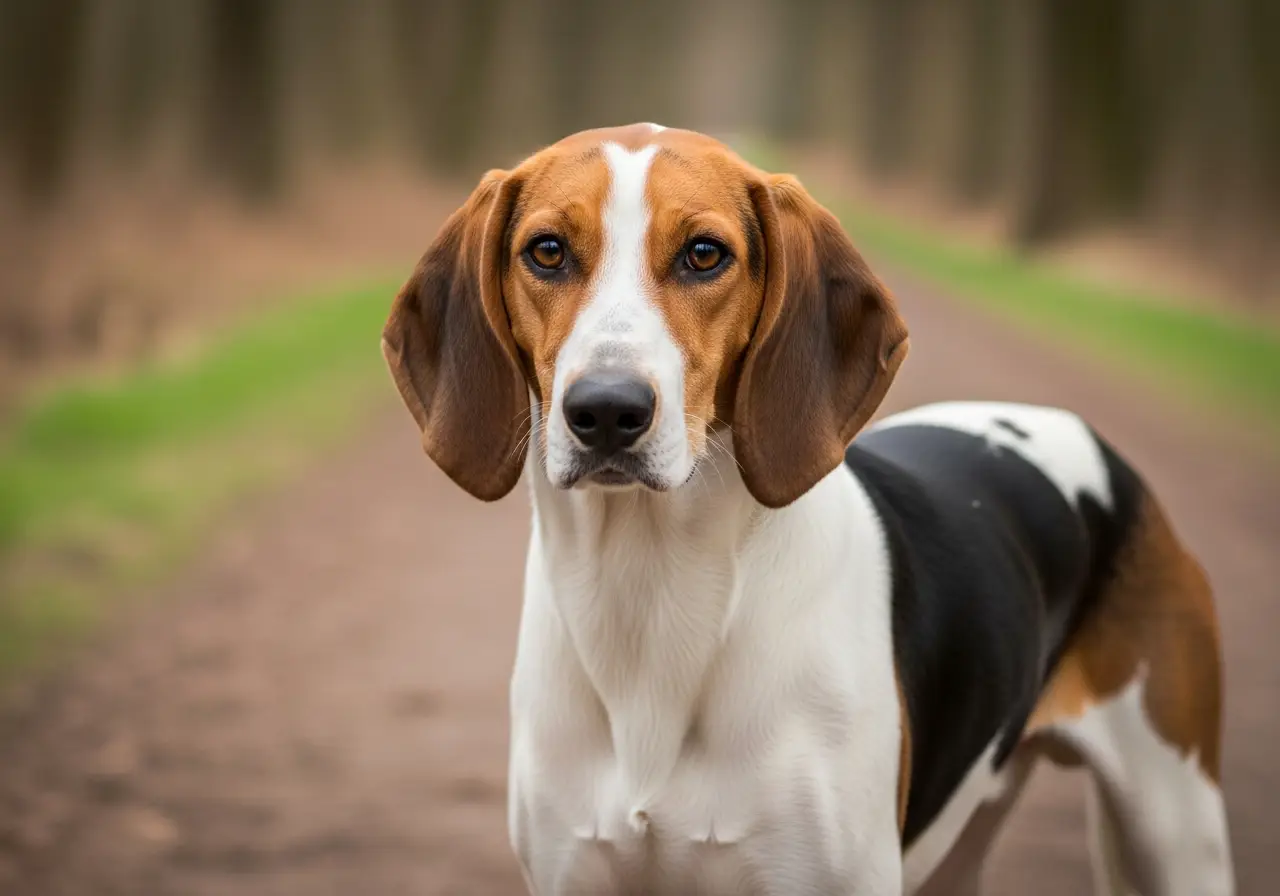
The Anglo-French Hound is a functionally bred pack dog from the crossbreeding of English Foxhounds with French hounds. Its prey drive is genetically deeply anchored, its exercise need lies at a minimum of 120 minutes of intensive workload daily. The breed exists in very small populations in Germany, Austria and Switzerland and is aimed exclusively at experienced owners with a hunting background or an equivalent substitute programme.
02Introduction
What makes the Medium Anglo-Français Hound special
Medium Anglo-Français Hound: classic French-English hunting dog, robust and nose-driven, rare in Switzerland
03Profile
Key facts and suitability
- Origin
- Frankreich
- Original purpose
- Small game hunting
- FCI
- No. 325 · Group 6 · Sektion 1.2: Mittelgroße Laufhunde
- height at the withers
- 48–56 cm
- Weight
- 25–32 kg
- Life expectancy
- 12–14 Years
- Coat type
- Short-haired
- Minimum exercise
- 90 min/day
- Puppy price
- 1'000–1'800 CHF
- Waiting period
- 5 months
- Sports
- Tracking work Mantrailing
04Temperament
How the Medium Anglo-Français Hound shows up in everyday life
Anyone who puts on the lead in the morning immediately notices: This dog switches to work mode. The nose goes to the ground, the pace increases, and every whiff of wild scent is registered. This is not misbehaviour; this is the profile for which this breed has been selected over generations.
Internally, the Medium-sized Anglo-Français requires a high degree of exercise and mental stimulation. The need for social contact with conspecifics is pronounced: The breed was traditionally kept in packs of around 20 animals, and orientation towards pack members is deeply rooted. Anyone who keeps only a single dog of this breed must compensate for this need for social contact through regular contact with other dogs and intensive enrichment.
Externally, the dog behaves rather reservedly towards strangers. The friendliness-strangers axis lies significantly below the need for social contact with known reference persons and conspecifics. This means: A high need for social contact does not automatically translate into openness towards unknown people. Anyone who does not understand this difference will experience a dog that flourishes in the pack but remains distant towards visitors.
In everyday life without hunting-related workload, the breed shows signs of frustration: persistent vocalisation, restlessness, attempts to escape. A secure area is not a recommendation but a basic prerequisite. Being left alone is possible for up to four hours if exercise and structure are ensured beforehand, not as a rule but as an exception.
05Needs
What this breed needs daily
The Anglo-French Hound requires at least 120 minutes of intensive exercise daily. Pure loose-leash walking on asphalt does not meet this need. Suitable forms include cross-country runs, tracking work, mantrailing or hunting work under expert guidance.
The need for mental stimulation is high. The nose is the primary sense organ of this breed; nose work in the form of search exercises, scent trailing or structured tracking belongs in the weekly programme. Without this mental component, frustration arises even in physically exercised dogs.
The need for social contact with conspecifics is pronounced. Regular contact with other dogs (ideally in structured situations, not just at the dog park) supports well-being. Those who keep several dogs meet the pack profile of this breed.
Being left alone is possible for up to four hours if the dog has been sufficiently exercised beforehand. Longer periods without a primary caregiver and without conspecifics are not suitable for this breed.
The environment must be rural or at least spacious. A securely fenced area is mandatory; the pronounced prey drive makes free running without security in open terrain a considerable risk. The fence height should be at least 180 cm; digging under must be prevented structurally.
Exercise
Very high
mental work
A lot
Social needs
Medium
training
Demanding
06Sport & Mental and Physical Stimulation
What sports the Medium Anglo-Français Hound is suited for
Realistic in terms of physiology and genetics – not every breed suits every sport.
Structurally and physiologically suitable: Suitable for mantrailing, dummy work and tracking · CaniCross / bikejoring possible.
07Quick Check
08Suitability
Who this breed is suitable for – and who it isn't
✓Matches
The Anglo-French Hound suits owners with active hunting operations who can utilise the dog in the pack or as a single dog with hunting work. A hunting licence or close contact with hunting structures that enable regular tracking work is a prerequisite.
Very sporty owners with a rural living environment are also suitable, who can offer at least two hours of structured exercise with nose work daily, mantrailing, scent trailing or comparable forms of occupation as a permanent programme, not as an occasional supplement.
Multi-dog households where experience with independently working hunting dogs already exists meet the pack profile of this breed. The need for social contact with conspecifics is high; a household with conspecifics significantly eases keeping.
Owners who can cope with the reserved reaction towards strangers and do not expect open everyday friendliness towards visitors are at an advantage. The external axis of this breed, friendliness towards strangers, is significantly lower than the internal need for social contact. Those who plan for this will experience no contradiction.
×Doesn't match
The Anglo-French Hound is not suitable for owners looking for an amiable everyday companion that integrates easily into urban environments. Those who are out of the house for eight hours daily and cannot organise a dog carer with hunting understanding assume responsibility that this breed cannot bear.
First-time owners without experience with high-drive, independently working dogs should not choose this breed. Recall under wild scent is one of the most demanding tasks in dog training; without a solid foundation, a permanent safety risk arises.
Those who equate the high need for social contact of this breed with openness towards strangers will be disappointed. The breed requires intensive bonding with known primary caregivers and conspecifics; it remains reserved towards unknown people. Those who take visitor friendliness for granted will experience a dog that does not meet this profile.
Apartments, terraced houses without secure areas and urban residential locations without direct access to spacious terrain are unsuitable as living conditions. Families with very young children and little experience in handling high-drive dogs should also not consider this breed.
10Line reality
Show line, working line, breeder market
The Medium-sized Anglo-Français exists practically exclusively as a working line. Show lines in the sense of breeding focused on exterior have not developed in this breed; breeding is concentrated in France and oriented towards hunting use in the pack.
This means for interested parties: The dogs that are available come almost without exception from active hunting operations. Breeders without verifiable working trials or a hunting background are an exception in this breed, which should be questioned critically.
There is hardly any regional differentiation within the breed. The populations in the German-speaking area are so small that pronounced regional lines cannot be spoken of. Anyone looking for a puppy will usually be referred to French breeders or mediated through hunting associations.
Field trial lines in the Anglo-Saxon sense do not exist for this breed. The working trial prescribed by the FCI standard is tied to pack hunting of high game, a format that is only practised to a limited extent in the German-speaking area. Owners without a hunting licence must therefore check particularly carefully whether they can permanently ensure the necessary alternative stimulation.
11Health · Reality
What you need to plan for medically with your Medium Anglo-Français Hound
The Medium-sized Anglo-French Hound is considered a functionally and robustly bred breed, as the primary selection criterion over decades was hunting performance, not exterior. Brachycephaly, exaggerated skin folds or other breeding-related extreme traits do not exist in this breed.
The life expectancy is approximately 10 to 13 years according to available information from hunting dog circles. Reliable population-wide studies do not exist due to the small number of individuals in the German-speaking region.
As with large and medium-sized hounds with high levels of physical activity, diseases of the locomotor system are relevant. Hip dysplasia (HD) and elbow dysplasia (ED) can occur; systematic screening data for this specific breed are not publicly available. Breeders with serious standards provide X-ray findings of the parent dogs; this is a minimum criterion when choosing a puppy.
The ears of this breed are medium-length and hang to the sides of the head. This anatomy promotes heat and moisture buildup in the ear canal, which increases the risk of otitis externa. Regular ear checks, at least weekly after field work, are mandatory.
For dogs with high levels of physical activity in the field, tick prophylaxis and regular checks for injuries on paws, pads and fetlock joints are part of routine care. An annual vet visit with a blood test is recommended; if there is a drop in performance, lameness or chronic ear problems, timely investigation is required.
12Structured data
Health by the numbers
Prone to diseases
Hip dysplasia Ear infections
Recommended health tests
Hip X-ray Ear check
13Myths ↔ Reality
What is often said incorrectly about this breed
Five myths, five realities, five sources.
The Medium-sized Anglo-Français is an amiable family dog that can be easily integrated into city life with a little patience.
The breed has been selected over generations for work in the pack on high game. The prey drive is genetically hard-wired and cannot be fundamentally dampened by training. Apartment keeping and urban environments offer neither the scope of movement nor the stimulus structure that this dog needs. The FCI standard explicitly describes it as a pack hound for hunting high game.
Hounds of this group are easy to train because they work cooperatively in the pack.
Cooperation in the pack means working together with conspecifics under hunting stimuli, not obedience towards humans in everyday situations. Under wild scent or on a trail, recall for this breed is one of the most demanding exercises at all. Experience with independently working hunting dogs is a prerequisite, not an option.
Because the breed is so rare, the few puppies automatically come from reputable breeding.
Rarity does not protect against dubious multiplication. Especially with little-known breeds, publicly accessible health data and breeding records are often lacking. A reputable breeder proves membership in a recognised association, provides health examinations and keeps the dogs in an active hunting operation or with verifiable working trials.
Two walks a day are sufficient if the dog has a large garden.
A garden does not replace structured stimulation. The exercise requirement of this breed is at least 120 minutes of intense activity daily, with nose work, tracking or comparable forms of enrichment. A garden without mental stimulation leads to frustration, vocalisation and destructive behaviour in this breed.
14animal welfare
The animal welfare perspective
Breeder market, designer versions, animal shelter reality — what no one writes in the puppy ad.
The Medium-sized Anglo-French Hound is one of the rarest breeds in the German-speaking region. The backyard breeder market plays hardly any role in this breed; demand is too low and breeding operations are too specialised for commercial mass production to be economically attractive. This is a structural advantage, but it should not lead to carelessness.
Anyone looking for a puppy will almost exclusively come across breeders with active hunting operations in France. The distance, the lack of opportunity for personal inspection and language barriers increase the risk of not recognising dubious offers in good time. Anyone importing a puppy from abroad without personally knowing the parent dogs and the breeding operation is taking a considerable risk.
Designer versions or trend crossbreeds do not exist for this breed. The risk lies elsewhere: dogs from disbanded hunting packs or from packs that are abandoned occasionally end up in animal welfare organisations, without the rehoming centres having the necessary expertise for this breed. A hound from animal welfare is an equally valid option, but it requires an honest assessment of your own capacities and close support from experienced hunting dog owners.
The biggest keeping-related problem with this breed is under-stimulation. A dog bred for pack hunting of large game that waits on a city balcony every day suffers, not dramatically visibly, but continuously. Chronic under-stimulation manifests itself in vocalisation, restlessness and attempts to escape. Anyone who treats these signals as a training problem is solving the wrong problem.
Rehoming as an equally valid option to acquiring a puppy explicitly applies to this breed too, with the note that specialised hunting dog animal welfare organisations are better places to turn than general animal shelters, which are rarely familiar with the profile of this breed.
15Costs · Transparency
What this breed realistically costs
The acquisition costs for a puppy of the Medium-sized Anglo-French Hound are typically between 800 and 1,500 euros with reputable breeders, depending on the breeding operation and country of origin. Offers significantly below this range without verifiable health checks of the parent dogs are a warning sign.
The annual living costs consist of food (high-quality, for active medium-sized dogs: approx. 600–900 euros/year), care (ear cleaning, paw care, tick protection: approx. 150–300 euros/year) as well as basic equipment and wear and tear.
Average vet costs: An annual preventive examination with vaccination costs approx. 100–200 euros. For field dogs with a high activity profile, treatments for injuries (paws, pads, cuts) should be budgeted, typically an additional 100–400 euros/year. A dog health insurance policy with surgery cover costs approx. 30–70 euros/month for this size class, depending on the provider and excess.
Anyone who wants to use the dog for hunting should additionally budget for working tests, hunting dog training and possibly hunting lease fees. These items vary greatly and must be enquired about individually.
16Puppy search
What you need to consider when choosing a breeder
- Reputable breeders of the Anglo-French Hound are active almost exclusively in France and use their dogs in verifiable hunting operations.
- An initial contact route leads via the Club for French and Swiss Hounds and via the SKG (Swiss Kynological Society), which manages the stud book and breed standard.
- Characteristics of reputable breeding: The parent animals can be viewed in person, health examinations of the parents are available in writing, the breeder asks questions about the planned keeping and the hunting background.
- Anyone who sells a puppy without follow-up questions and without waiting time should be questioned critically.
- No named breeder recommendation is made at this point; the platform rundum.dog refers to the official breed club entries for current lists of breeding sites.
- Placement via animal welfare organisations specialising in hunting dogs is an equally valid option.
- Dogs from dissolved packs or hunting dissolutions require experienced owners who know and can assess the profile of the breed.
- An adult dog from placement has the advantage that character and drive structure are already assessable.
FAQ
Frequently asked questions about the Medium Anglo-Français Hound
Is Medium Anglo-Français Hound a family dog?
Medium Anglo-Français Hound is considered suitable for families with good socialisation and species-appropriate care.
How much exercise does Medium Anglo-Français Hound need?
At least around 90 minutes of exercise per day. As an active breed, more so — plus mental stimulation.
Does Medium Anglo-Français Hound suit an apartment?
With enough exercise and enrichment, Medium Anglo-Français Hound can also be kept in an apartment.
What is the size and weight of Medium Anglo-Français Hound?
Fully grown, Medium Anglo-Français Hound reaches about 48–56 cm at the withers and weighs around 25–32 kg.
What is the life expectancy of Medium Anglo-Français Hound?
The life expectancy of Medium Anglo-Français Hound is approximately 12–14 years.
Which diseases are common in Medium Anglo-Français Hound?
Hip dysplasia Ear infections
17Breed clubs
Official breed clubs in DACH
19Related
Similar breeds – and their differences
You might also be interested in
Participate
Do you have a good photo of your Medium Anglo-Français Hound?
We are looking for expressive images for our breed profiles. Submit yours; the editorial team reviews every submission before publication.
Does this breed suit you?
Medium hunting dog from the Franco-Anglo sphere – enduring and designed for small game hunting