
01Summary
In a paragraph
If you only have 30 seconds.
The Slovakian Cuvac is not a companion dog with white fur; it is a livestock guardian dog from the Carpathians, genetically characterised by independence and territorial protection. Whoever keeps one takes responsibility for a dog that makes independent decisions, critically assesses strangers, and requires a clearly defined territory. Experience with guarding dogs is not a recommendation, but a prerequisite.
02Introduction
What makes the Slovak Cuvac special
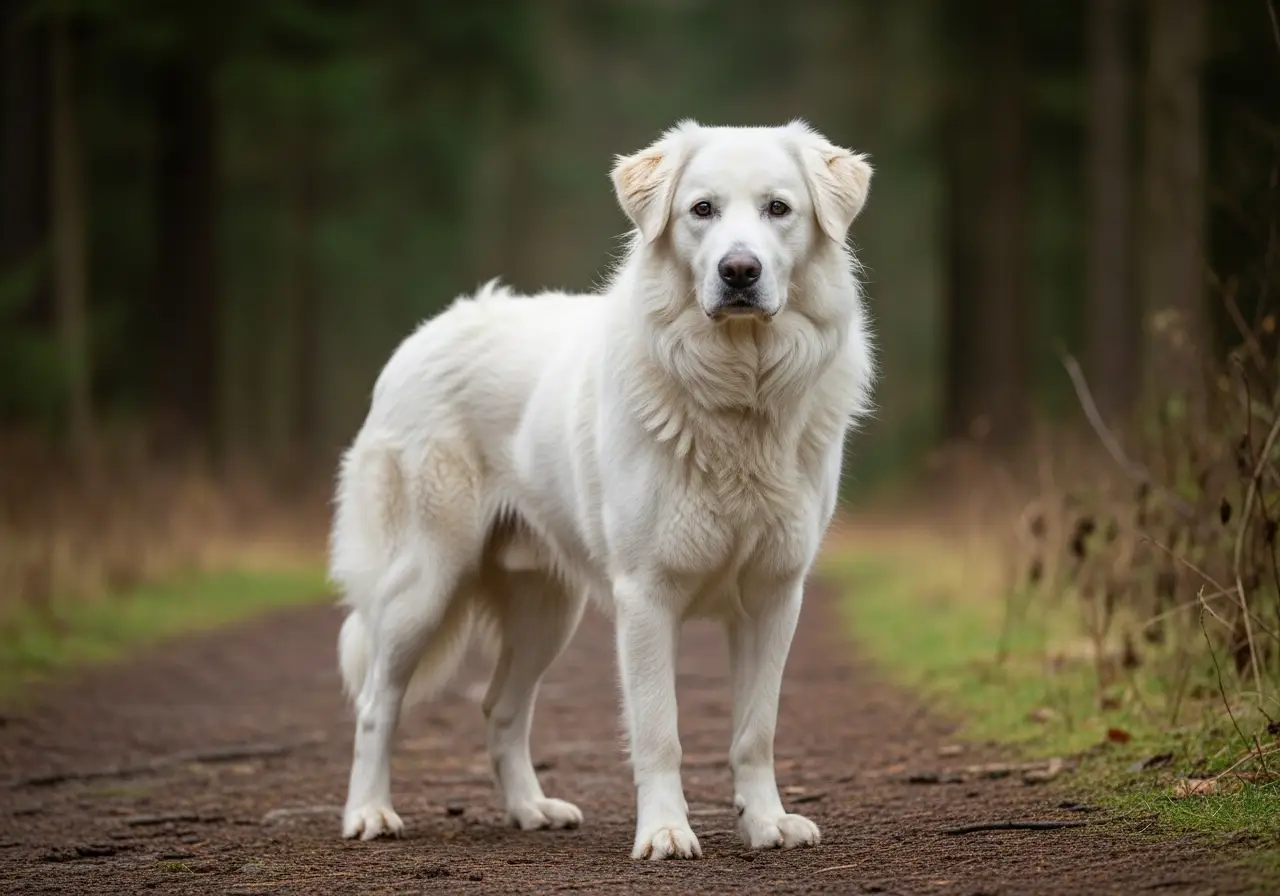
Slovak Cuvac: white Slovakian mountain dog, bred for livestock guarding and very rare in Switzerland
03Profile
Key facts and suitability
- Origin
- Slowakei
- Original purpose
- Livestock guarding
- FCI
- No. 142 · Group 1 · Sektion 1: Schäferhunde
- height at the withers
- 59–70 cm
- Weight
- 36–44 kg
- Life expectancy
- 11–13 Years
- Coat type
- Doppel
- Minimum exercise
- 90 min/day
- Puppy price
- 1'200–2'000 CHF
- Waiting period
- 5 months
- Sports
- Hiking
04Temperament
How the Slovak Cuvac shows up in everyday life
When a visitor enters the property, the Cuvac does not react with barking out of insecurity; instead, it positions itself, observes and assesses. This is not a sign of aggression but genetically ingrained livestock guarding behaviour. Only when the primary caregiver clearly defines the situation does the dog relax. This pattern repeats daily.
Internally, that is towards its own family, the Cuvac shows a deep, calm bond. It does not seek exuberant affection but remains present and attentive. During an evening walk on its own territory, it appears relaxed; as soon as it detects any change in its area, it switches modes immediately. These two states (calmness among familiar surroundings, alertness towards the unknown) transition fluidly.
Externally, that is towards strangers, it remains reserved to rejecting. A Cuvac that greets an unfamiliar person in a friendly manner is the exception, not the rule. Anyone who regularly receives visitors must actively manage this aspect: introduction rituals, clear signals from the primary caregiver and sufficient space for the dog to retreat.
The Cuvac's need for social contact is directed towards its reference group; it requires closeness to the people it is bonded with and suffers from isolation. At the same time, this need for social contact should not be equated with openness towards strangers. Anyone who fails to understand this difference significantly underestimates the leadership demands.
In everyday life, the Cuvac requires a clearly defined territory, a confident primary caregiver and an environment where its guarding behaviour does not lead to conflicts on a daily basis.
05Needs
What this breed needs daily
The Slovakian Cuvac needs 60 to 90 minutes of exercise daily in the form of calm, structured activity, such as long walks on its own or secured terrain. Intensive endurance activities like jogging or accompanying cyclists do not match its working profile; it is not an endurance athlete but a guardian with consistent baseline activity.
More decisive than the daily exercise time is the available space. A large, securely fenced property is not an option but a fundamental prerequisite. The Cuvac needs a territory it can perceive and control as its own. Without this spatial framework, it develops frustration that may manifest in uncontrolled guarding behaviour.
Mental stimulation for this breed does not arise from classic obedience exercises or toys but from meaningful tasks within its guarding function: observing the terrain, patrolling the territory, accompanying the primary caregiver. Anyone wishing to engage it in fetch exercises or agility will encounter little response.
Socialisation during the puppy and young dog phase is time-intensive and crucial. The Cuvac must be systematically introduced to different people, noises, vehicles and situations, not to suppress its guarding behaviour but to make it controllable. This work requires consistency over months, not weeks.
The owner needs experience with independently thinking dogs, clear body language and the willingness to act daily as a confident primary caregiver. Inconsistency or uncertainty will be registered by the Cuvac and lead it to make its own decisions, which is problematic for a dog of this size and guarding instinct.
Exercise
Medium
mental work
Medium
Social needs
Medium
training
Demanding
07Quick Check
08Suitability
Who this breed is suitable for – and who it isn't
✓Matches
The Cuvac suits owners with proven experience in handling livestock guardian dogs or similarly independent breeds. A property of at least 500 m², securely fenced to a height of at least 1.80 metres, is a prerequisite, not a wish list item.
Suitable owners lead a calm, structured daily life with low visitor frequency and are prepared to consistently implement introduction rituals for strangers. Families with older children from around 12 years of age who respect the dog and do not treat it as a playmate may be suitable, provided both parents take on the leadership role.
Anyone living on a farm or in a rural environment and able to offer the dog a meaningful guarding task creates optimal conditions. Owners willing to invest intensively in socialisation and training during the first two years and involve a dog training school with experience in guardian dogs are clearly at an advantage.
The Cuvac is also suitable for individuals with sufficient time, space and experience, provided the dog receives adequate daily contact with its primary caregiver and is not kept in permanent isolation.
×Doesn't match
The Cuvac does not suit first-time dog owners nor those whose previous experience is limited to sociable, biddable breeds. Anyone who believes a calm temperament means easy keeping fundamentally underestimates the leadership demands of this breed.
Households in urban or densely populated areas without secured outdoor space are unsuitable. Keeping the dog in an apartment, even a large one, does not meet the Cuvac's basic needs and leads to frustration and uncontrollable guarding behaviour.
Those who regularly receive many visitors, have children under 10 in the household, or are looking for a dog that reacts openly and friendly towards strangers will be permanently overwhelmed by the Cuvac. Those who assess the dog's external reserve as temporary or completely surmountable through training misunderstand the genetic foundation of this breed.
Owners who are heavily committed professionally and must leave the dog alone for more than six hours a day should also refrain. The Cuvac needs the presence of its primary caregiver, not as a cuddling need, but as a basis for a functioning leadership structure.
10Line reality
Show line, working line, breeder market
The Slovak Cuvac is bred exclusively as a working dog with protective function in the DACH region; a pronounced differentiation into show and working lines, as exists for example with the German Shepherd Dog, is not established for this breed.
Breeding is based on FCI Standard No. 142 and focuses on health, temperament stability and the preservation of the breed-typical protective instinct. Since the population in Germany, Austria and Switzerland is very small, there are no regionally differentiated lines with their own breeding profile.
On the Polish side of the Tatra Mountains, a related breed, the Goral dogs (mountain dogs), is kept. Particularly robust specimens are colloquially referred to as "Liptauers", a reference to their shared Slovak origin. This relationship is historically documented but does not lead to breeding intermixing in the modern sense.
Anyone looking for a Cuvac will find a very limited number of active breeders in the DACH region, all of whom are exclusively members of the breed club. Imported dogs from Slovakia or the Czech Republic are possible and occur occasionally. In such cases, ensure that both parent dogs have complete health documentation, regardless of their country of origin.
11Health · Reality
What you need to plan for medically with your Slovak Cuvac
The Slovakian Cuvac is considered a robust breed with a life expectancy of an average of 11 to 13 years. As a large dog, it carries an increased risk for hip dysplasia (HD) and elbow dysplasia (ED). Reputable breeding associations require mandatory X-ray examinations for both parent animals before breeding; Club Slovensky Cuvac e.V. refers to corresponding breeding conditions.
Concrete population-wide HD statistics for the Cuvac are not widely available due to the low number of animals in the DACH region, unlike those existing for Labrador or Golden Retriever. Reference value from comparable livestock guardian dogs: according to the OFA database (Orthopedic Foundation for Animals, status 2023), HD prevalence in large herding dog breeds is between 15% and 25%, depending on the breed, which is why X-ray reports of the parent animals must be reviewed before purchase.
The dense double coat increases susceptibility to overheating at high temperatures. On hot days, the dog needs access to shade and fresh water; intensive exertion during the midday heat should be avoided.
Overweight is a relevant risk for this breed, as the Cuvac is not an endurance athlete and gains weight quickly with incorrect feeding. Regular weight checks at the vet, at least once a year, are recommended. Preventive examinations should include HD/ED screening, eye examination, and heart auscultation. In cases of lameness, sudden restlessness, or behavioural changes, veterinary investigation should be initiated without delay.
12Structured data
Health by the numbers
Prone to diseases
Hip dysplasia Elbow problems
Recommended health tests
Hip X-ray Elbow X-ray
13Myths ↔ Reality
What is often said incorrectly about this breed
Five myths, five realities, five sources.
„The Cuvac is an uncomplicated family dog due to its calm temperament.
Calm appearance in this breed does not mean adaptability, but self-confidence. The Cuvac independently decides whether it assesses a situation as a threat and acts accordingly. Without consistent socialisation and experienced leadership, this behaviour can lead to serious problems in everyday family life. The breed is explicitly considered unsuitable for first-time owners.
„The white coat of the Cuvac makes it easy to care for.
The dense, weatherproof double coat of the Cuvac requires regular and intensive care, especially during moulting. Tangles form quickly if care is neglected. Anyone who does not plan for a considerable time commitment for grooming significantly underestimates this aspect of keeping.
„As a livestock guardian dog, the Cuvac is satisfied with a large property; training is secondary.
A secure property is a necessary prerequisite, but does not replace training. Without early, consistent socialisation and a clear leadership structure, the Cuvac develops uncontrolled protective behaviour towards visitors, tradesmen and strangers. The genetically anchored protective instinct requires leadership to remain manageable in everyday life.
„The Cuvac gets along well with other dogs.
Towards conspecifics, the Cuvac appears self-confident and sometimes dominant. Conflicts can arise, particularly with dogs of the same sex. Early and broad socialisation reduces the risk, but does not eliminate it completely. Keeping with other large dogs requires careful observation and experience.
„The Cuvac is a rare dog, so hardly affected by breeding problems.
Small population size increases the risk of inbreeding and associated health problems, including hip dysplasia (HD) and elbow dysplasia (ED). Serious breeding requires mandatory X-ray examinations of both parent animals. The rarity of the breed makes it more difficult to find tested breeding animals and increases the risk of encountering untested providers.
14animal welfare
The animal welfare perspective
Breeder market, designer versions, animal shelter reality — what no one writes in the puppy ad.
The Slovakian Cuvac is one of the rarest dog breeds in Germany, Austria and Switzerland. This rarity has a direct consequence: the backyard breeder market is hardly pronounced for this breed because demand is low and keeping requirements are known. This is one of the few situations where rarity actually protects.
Nevertheless, risks exist. Those who search via classified ad portals or international intermediaries occasionally encounter providers without club affiliation, without health documentation and without knowledge of breed-specific characteristics. A puppy without HD/ED reports for the parent animals, without socialisation in a structured environment and without guidance by an experienced breeder is not a bargain; it is a considerable risk for owner and dog.
Designer versions or trend crosses with the Cuvac do not currently exist to any significant extent. The risk lies more in misjudging the dog itself: the imposing, white appearance attracts interested parties looking for a calm companion dog and underestimating the guarding instinct. A Cuvac that ends up in an unsuitable environment develops behaviours that are burdensome for all involved.
Rehoming via animal welfare organisations is rare for this breed, but not excluded. Occasionally, animals from abroad, particularly from Slovakia or the Czech Republic, are rehomed that come from dissolved businesses or surplus litters. Those who bring the experience of integrating an adult Cuvac will find an equally valid option to buying a puppy here. Crucial in every case is: complete prior information about the animal's history, socialisation and health status.
15Costs · Transparency
What this breed realistically costs
A puppy from a reputable, club-affiliated breeder costs between 1,200 and 1,800 EUR in the DACH region. Offers significantly below this, particularly from abroad without club affiliation, should be critically examined; missing health examinations of the parent animals can later cause considerable vet costs.
Based on experience, the annual living costs for a breed of this size are between 2,000 and 3,500 EUR. This includes high-quality food (approx. 600–1,000 EUR/year depending on the type of diet), regular grooming (own effort or professional groomer, approx. 200–400 EUR/year) as well as basic equipment and accessories.
Basic veterinary care (vaccinations, annual preventive examination, parasite treatment) amounts to approx. 300–500 EUR per year. Orthopaedic assessments or treatments for HD/ED can cost 500–1,500 EUR as a one-off expense. Dog health insurance or surgery cost insurance is recommended for large breeds; the annual premium is between 400 and 900 EUR depending on the provider and scope of benefits.
Anyone keeping a Cuvacets for the first time should additionally plan for an accompanying dog training school with experience in protection dogs, costs approx. 300–600 EUR for a basic course.
16Puppy search
What you need to consider when choosing a breeder
- A reputable breeder of the Slovakian Cuvac is a member of Club Slovensky Cuvac e.V.
- or a comparable recognised breed club.
- They present HD/ED X-ray reports for both parent animals before breeding, allow a visit to the litter in a domestic environment, and ask questions about the prospective owner's own daily life and experience.
- Warning signs are: no club membership proof, no health documentation, several litters available simultaneously, puppy handover under eight weeks, no personal contact before handover, shipping without the possibility of inspection.
- The rehoming of an adult Cuvac via animal welfare organisations or directly through the breed club is an equally valid option.
- Adult dogs bring a known character structure with them, which can be a real advantage for a breed with pronounced guarding instincts, provided that history and socialisation are documented.
- Those looking for a puppy should plan waiting times of six to twelve months; the breed is rare, and reputable breeders do not have ongoing puppy production.
- No named breeder recommendation by rundum.dog; Club Slovensky Cuvac e.V.
- provides contacts to tested breeding facilities upon request.
FAQ
Frequently asked questions about the Slovak Cuvac
Is Slovak Cuvac a family dog?
Slovak Cuvac is considered suitable for families with good socialisation and species-appropriate care.
How much exercise does Slovak Cuvac need?
At least around 90 minutes of exercise per day.
What is the size and weight of Slovak Cuvac?
Fully grown, Slovak Cuvac reaches about 59–70 cm at the withers and weighs around 36–44 kg.
What is the life expectancy of Slovak Cuvac?
The life expectancy of Slovak Cuvac is approximately 11–13 years.
Which diseases are common in Slovak Cuvac?
Hip dysplasia Elbow problems
17Breed clubs
Official breed clubs in DACH
19Related
Similar breeds – and their differences
You might also be interested in
Participate
Do you have a good photo of your Slovak Cuvac?
We are looking for expressive images for our breed profiles. Submit yours; the editorial team reviews every submission before publication.
Does this breed suit you?
Independent livestock guardian dog – very territorial not suitable for city living